
The brushes that come with your paint by numbers kit are a decent starting point. But if you want to seriously up your game and make the process way more enjoyable, upgrading to a dedicated set is the single best thing you can do.
Better brushes for paint by numbers give you more control, help the paint go on smoother, and let you nail those tiny, intricate details. It really turns a fun hobby into a truly rewarding artistic escape.
Why Better Brushes Transform Your Painting Experience
Ever found yourself fighting to fill a teeny-tiny numbered spot with a clumsy, frayed brush? Or maybe you've tried to paint a larger section only to be left with ugly, frustrating streaks? You are definitely not alone.
The basic brushes tossed into most kits get the job done, but they just don't have the precision or durability needed for a really polished look. Think of it like trying to cook a gourmet meal with a butter knife—you might manage, but it's not going to be easy or pretty.
From Kit Brush to Artist Brush: A Quick Comparison
See the immediate benefits of swapping out standard kit brushes for dedicated artist brushes in your paint-by-numbers projects. The right tool makes all the difference.
| Painting Task | Standard Kit Brush Result | Upgraded Brush Result |
|---|---|---|
| Filling tiny details | Frayed bristles, paint bleeding over lines | Crisp, clean edges and precise fill-ins |
| Covering large areas | Streaky, uneven paint coverage | Smooth, consistent coat of color |
| Creating fine lines | Thick, wobbly, and inconsistent lines | Sharp, controlled, and delicate lines |
| Long-term use | Bristles lose shape quickly, handle feels cheap | Bristles hold their shape, comfortable grip |
As you can see, investing in even a small, well-chosen set of brushes pays off right away, helping you get cleaner lines and more professional-looking results.
The Real Impact of Quality Tools
It's no surprise that as more people get into creative hobbies, the demand for better supplies has shot up. The global paintbrush set market was valued at an impressive USD 2.1 billion in 2023 and is expected to hit USD 3.4 billion by 2032, all thanks to a booming DIY culture. You can dig into the numbers yourself by checking out the full paint brush set market report.
Upgrading your brushes isn’t about trying to become a professional artist overnight. It’s about removing the frustration and giving yourself the right tools to fully enjoy the calming, meditative process of painting by numbers.
This simple switch completely elevates your experience. It helps you get the beautiful results you see on the box and transforms your creative time into a truly relaxing escape.
Choosing Between Natural and Synthetic Bristles
When you're ready to upgrade your paint-by-number brushes, one of the first things you'll see is the choice between "natural" and "synthetic" bristles. So, what’s the real difference?
Think of it this way: you wouldn't wear your finest leather shoes to go hiking. You'd grab a pair of sturdy, all-weather boots designed for the terrain. For paint-by-number kits, which almost always use acrylic paint, synthetic brushes are those perfect all-weather boots.
Natural brushes, often made from soft animal hair like sable, are amazing for watery paints like watercolors because they absorb a lot of liquid. But that’s a problem with thick acrylics. They can get waterlogged and floppy, making it tough to get that sharp, precise control you need for staying in the lines.
Synthetic bristles, on the other hand, are usually made from nylon or taklon. They're designed to be less absorbent, a bit stiffer, and way more durable. This gives you the crisp, clean edges that make a paint-by-number piece look sharp and polished.
Why Synthetic Reigns Supreme for Acrylics
Synthetic brushes are simply built for the job. Their smooth fibers let the acrylic paint glide right off the tip and onto your canvas, instead of getting sucked up into the brush. This means more paint goes where you want it and less gets wasted.
They're also a breeze to clean. Since they don’t absorb the paint, you can rinse them out easily, which is a lifesaver for preventing acrylics from drying hard and ruining them. For a complete rundown on the best tools to get started, you can check out our guide on beginner acrylic painting supplies.
This infographic highlights why synthetic bristles are the go-to choice.
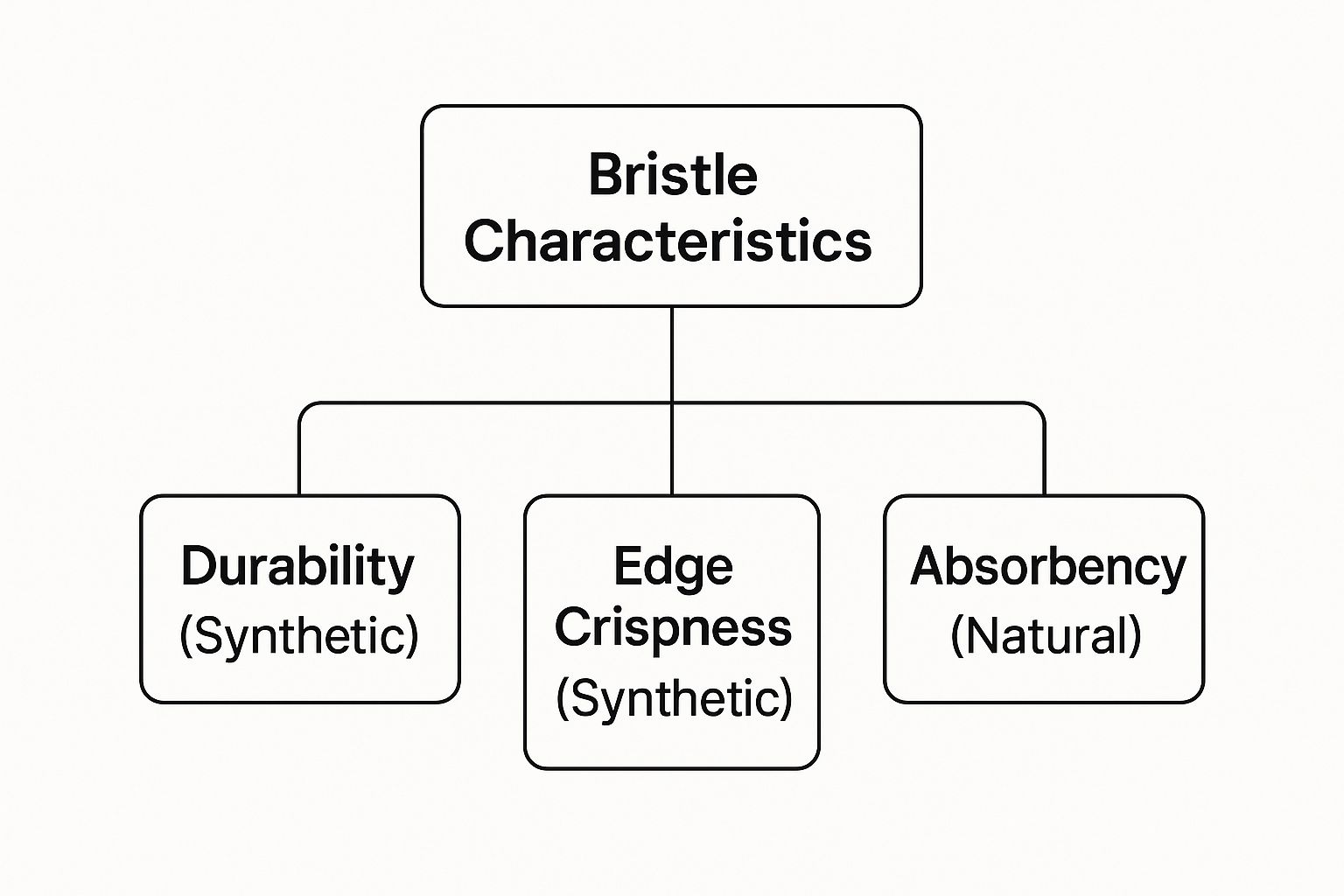
As you can see, the durability and edge control of synthetics are exactly what you need for the detailed work in a paint-by-number project.
For paint-by-number artists, the choice is clear: synthetic brushes offer the resilience, control, and easy maintenance needed to create a clean, professional-looking piece of art without the fuss.
This isn't just a niche preference, either. The importance of the right brush is reflected across the entire painting industry. In 2023, paintbrushes alone made up about USD 3.1 billion in revenue, with North America accounting for nearly 38% of that market. It just goes to show how critical the right tool is, whether you're painting a wall or a tiny numbered section on a canvas.
Matching Brush Shapes to Your Canvas
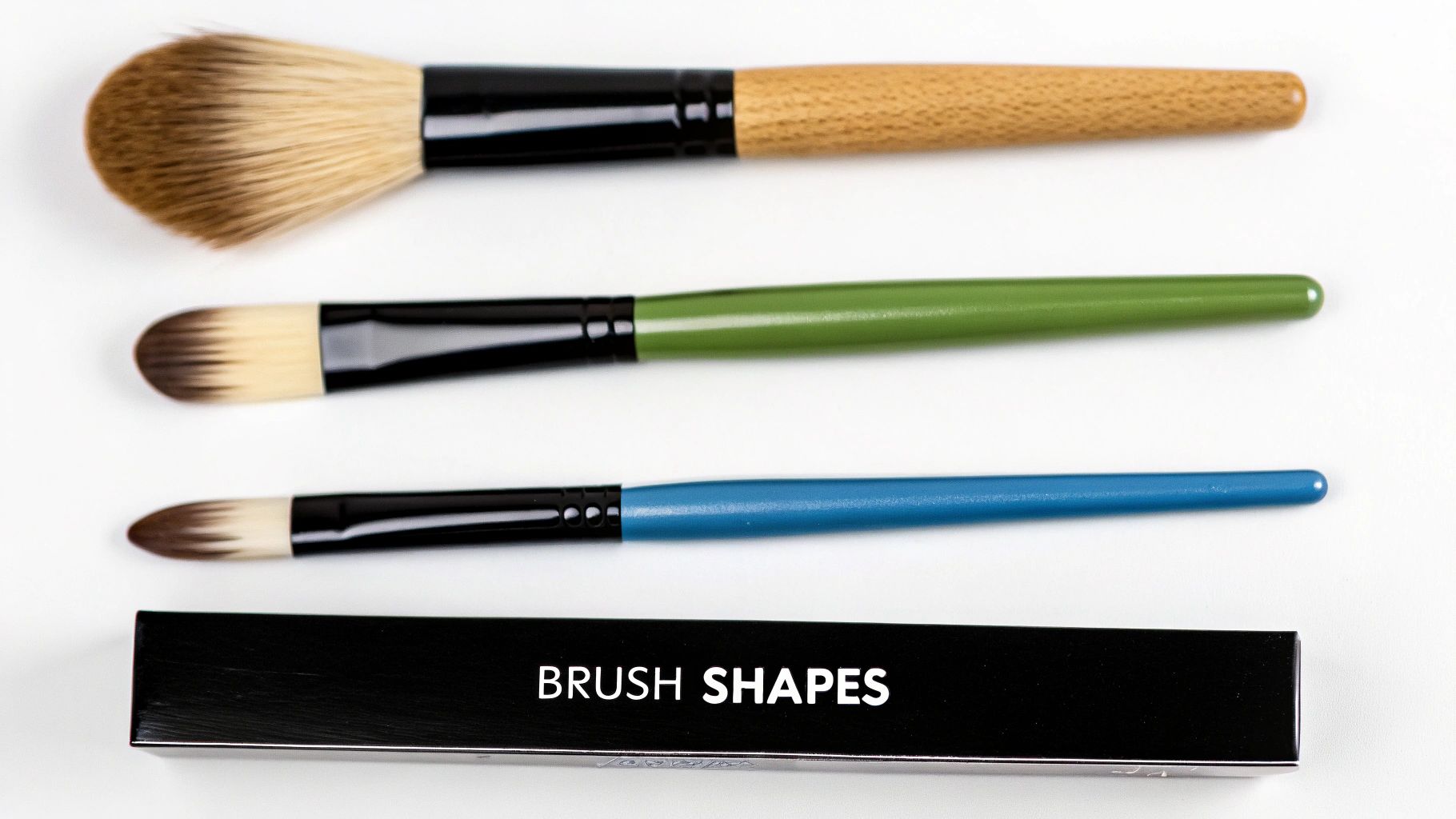
Picking the right brush is a bit like choosing the right kitchen knife. Sure, you could try to chop everything with just one, but using the right tool for the job makes everything easier, cleaner, and a whole lot more fun. When it comes to paint by numbers, you really only need to get familiar with three essential shapes to tackle any canvas with confidence.
Think of them as your core crew: the versatile workhorse, the broad-stroke specialist, and the precision expert. Let's dig into which brush to grab and when.
The Round Brush: Your All-Purpose Tool
This is your go-to, the most adaptable brush in your kit. A round brush has a soft, rounded body that tapers to a nice point, making it a true jack-of-all-trades. You can use that fine tip for crisp lines and getting into smaller, fiddly areas.
Then, with just a little more pressure, the wider belly of the brush comes into play, perfect for filling in those medium-sized shapes. This flexibility is why you’ll probably find yourself reaching for it more than any other.
The Flat Brush: For Broad Strokes
When you get to those big, open areas—a wide-open sky, a grassy field, the side of a building—the flat brush becomes your best friend. Its straight, squared-off edge is designed to load up with paint and lay down smooth, even coats of color.
Using a flat brush for these larger sections will save you a ton of time. It also helps you avoid that streaky look you can get from trying to fill a big space with a tiny brush.
Pro Tip: Use the wide side of a flat brush for filling and turn it on its side to use the thin edge for sharp, straight lines, like a horizon or the edge of a window. It’s a simple trick that makes a huge difference.
The Detail Brush: For Ultimate Precision
Last but not least, we have the detail brush. This is your specialist tool, reserved for the tiniest, most intricate spots on your canvas where you need absolute control. These brushes are usually very thin with a super-fine point.
When you need to paint a delicate eyelash, the glint in an eye, or a distant bird, this is the only brush that gives you that near-surgical precision. It ensures your paint goes exactly where it needs to, keeping your work clean and professional. Mastering the paint flow on these tiny brushes is key, and you can find related tips in our guide on how to blend paint colors.
Your Essential Paint by Numbers Brush Toolkit
To make it even clearer, here’s a quick-glance guide matching each brush to its main job on the canvas.
| Brush Shape | Primary Job | Perfect For |
|---|---|---|
| Round | Versatile outlining and filling | Medium-sized sections, creating soft lines, and general use. |
| Flat | Covering large areas quickly | Skies, backgrounds, buildings, and laying down a base color. |
| Detail | Adding tiny, precise details | Facial features, fine lines, intricate patterns, and tiny numbers. |
Having these three brushes on hand means you’re ready for anything your paint by numbers kit can throw at you.
Selecting the Perfect Brush Sizes
So you've figured out the brush shapes you like. Next up? Picking the right sizes. It's a lot like having a set of screwdrivers—you wouldn't use a giant flathead for a tiny glasses screw. The same logic applies here; trying to fill a tiny numbered area with a big, clumsy brush is a surefire way to get frustrated.
Brush sizes are pretty straightforward. You'll see a number printed on the handle, anything from 000 to 2 or 8. The rule of thumb is simple: a smaller number means a smaller brush head for fine details, while a larger number means a bigger brush for covering more ground.
Building Your Essential Size Toolkit
You don't need a massive, overwhelming set of brushes to create a beautiful painting. In fact, a small, curated collection of just 3 to 5 essential brushes for paint by numbers is all you really need to get started. This core group can handle almost any area on your canvas.
Here’s a simple but effective lineup that will see you through most projects:
- The Detail Specialist (Size 0 to 2/0): Think of this as your precision tool. It’s perfect for those impossibly small spots, sharp lines, and delicate patterns that make a painting pop.
- The Everyday Workhorse (Size 2 to 4): You’ll probably be reaching for this medium-sized brush more than any other. It strikes the perfect balance between detail work and good coverage, making it ideal for most of the numbered sections.
- The Background Filler (Size 6 to 8): When you come across big, open areas like skies, water, or fields, this brush will be your best friend. It helps you lay down a smooth, even coat of paint quickly, without leaving annoying streaks.
The core principle is simple and effective: match your brush size to the area you're painting. This small adjustment makes a huge impact on your control and the final quality of your work.
Quality and Precision Matter
For paint-by-numbers, neatness is everything, which is why it pays to have brushes that can hold their shape and give you a clean edge. You want a tool that works with you, not against you.
This focus on quality tools isn't just for artists. The global paint brushes market, which includes tools for all sorts of projects, is projected to hit around US$4.65 billion by 2025. You can read more about the paint brush market growth on persistencemarketresearch.com.
By picking just a few key sizes, you’re not just saving money—you’re building a smart, functional toolkit. It means you’ll always have the right brush on hand, making your painting experience smoother, more accurate, and a whole lot more fun.
Keeping Your Brushes Clean and Ready to Paint
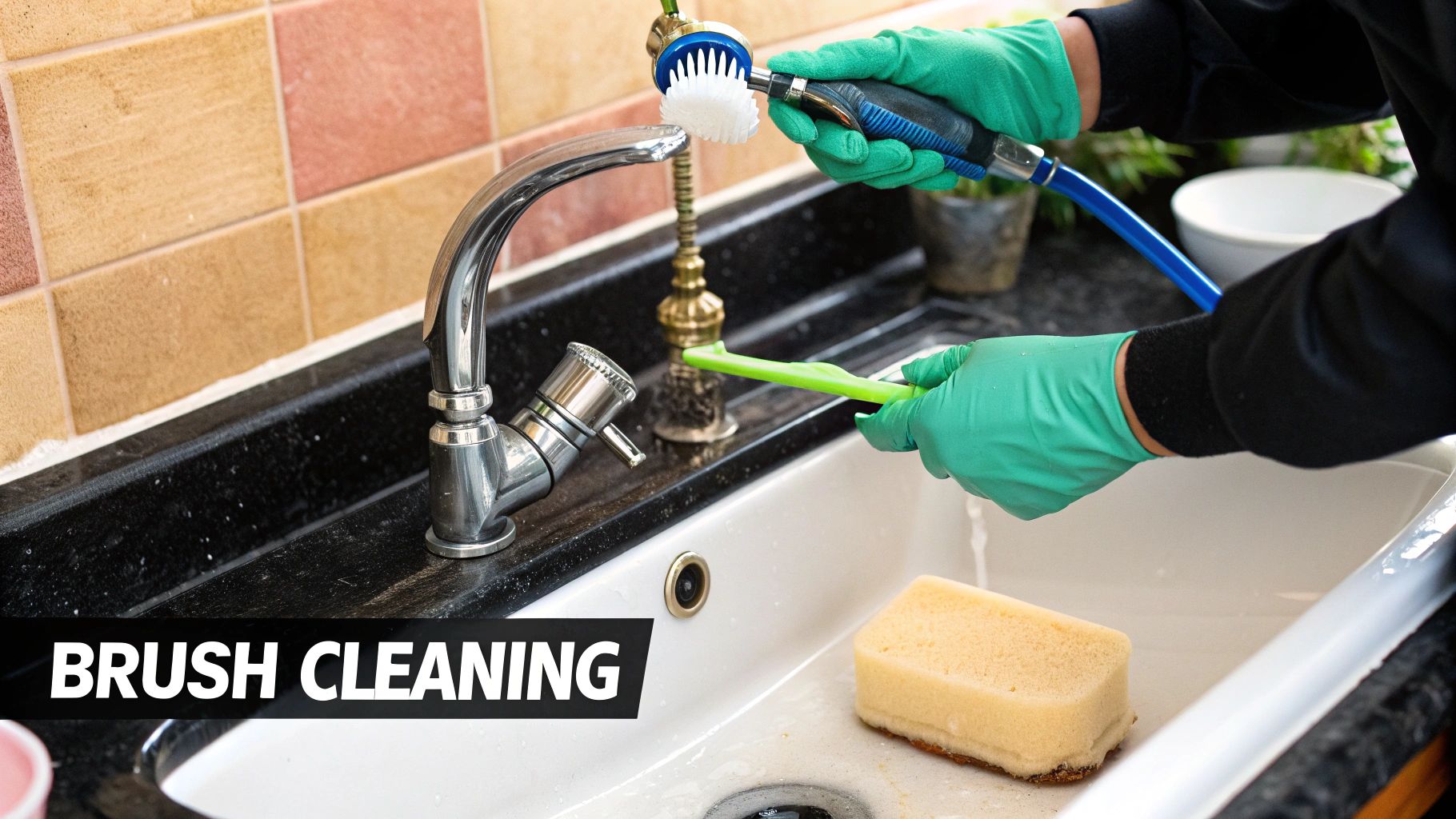
Think of your brushes for paint by numbers as an investment in your hobby. Just like any good tool, a little bit of care goes a long way, and proper cleaning is the secret to making them last project after project. It keeps the bristles from getting stiff, frayed, or hopelessly clumped together.
The golden rule with acrylic paint is this: act fast. Acrylics dry into a hard, plastic-like film. Once that happens deep inside the bristles, the brush is pretty much a goner. So, whatever you do, never let the paint dry on your brush.
The Simple Cleaning Process
Get into the habit of following these steps right after you finish a painting session. It’s a quick routine that will save you a ton of frustration (and money) in the long run.
-
Rinse Immediately: First things first, get the worst of the paint off. Swish your brush around in a cup of clean water, gently pressing the bristles against the side to loosen up the pigment.
-
Wash Gently: Put a small drop of mild soap, like dish soap, in the palm of your hand. Swirl the damp brush in the soap to create a light lather, then rinse it under lukewarm running water. Keep going until the water runs completely clear.
-
Reshape Carefully: Gently squeeze the extra water out with your fingers or a paper towel. Now, carefully coax the bristles back into their original shape, whether it’s a fine point or a flat edge.
-
Dry Correctly: Always lay your brushes flat on a towel to air dry. Never leave them standing bristles-up in a jar while they’re wet! Water will trickle down into the metal ferrule, weakening the glue and eventually ruining the brush.
A well-maintained brush is a painter's best friend. Spending just two minutes on cleaning after each session will dramatically extend the life of your tools and improve your painting experience.
By avoiding simple mistakes like letting paint harden or soaking your brushes for hours, you'll keep your favorite tools precise and reliable for years to come. For a more detailed guide, check out our post on how to clean paint brushes.
Your Top Paint by Numbers Brush Questions, Answered
As you dive deeper into the world of paint by numbers, you're bound to have some questions. It happens to everyone! Think of this as your go-to spot for quick answers about the most important tool in your kit: your brushes.
Let's clear up some of the things new painters ask us all the time.
Can I Use My Watercolor Brushes for This?
I see this question a lot, and the simple answer is, you probably shouldn't. It’s a bit like trying to spread cold butter with a paper napkin—it just doesn't work well. Watercolor brushes are made with super soft bristles designed to soak up water and create delicate washes.
Acrylic paint, on the other hand, is much thicker and heavier. It needs a brush with a bit more backbone to push it around the canvas smoothly. Using a soft watercolor brush will likely leave you with streaky, frustrating results and make it tough to get those clean edges that make a paint-by-number piece look so good.
For paint-by-numbers, a synthetic brush is almost always your best bet. It gives you that perfect mix of stiffness for control and flexibility for a smooth finish, making it the ideal partner for acrylic paints.
How Many Brushes Do I Actually Need to Start?
It's tempting to buy a massive 20-piece set, but honestly, you don't need it. In fact, having too many choices can just get in the way. You can create something truly beautiful with just a handful of good brushes.
For nearly any paint by numbers kit you'll encounter, a core set of three to five brushes is plenty to get the job done right. A great starter trio would be:
- A tiny detail brush (size 0 or 2/0) for getting into all those tight, tricky corners.
- A medium round brush (size 2-4) which will be your go-to for most of the numbered sections.
- A larger flat brush (size 6-8) for covering those big background areas quickly and without streaks.
This little toolkit gives you everything you need for precision and coverage, without breaking the bank or cluttering your workspace.
How Can I Tell When a Brush Is Worn Out?
Don't worry, your brushes will give you some pretty clear signals when they're ready to retire. The biggest clue is when the bristles start to fray out and refuse to snap back into a sharp point or a clean, flat edge, no matter how carefully you clean them.
You might also notice the bristles feel permanently crusty with old paint, or the metal ferrule starts to wiggle on the handle. Basically, the moment a brush stops giving you clean, predictable lines and starts fighting you, it's time to let it go. Giving your brushes a good clean after each painting session is the best way to keep them working for you longer.
Ready to turn a favorite photo into your next masterpiece? At Custom Paint By Numbers, we help you create a one-of-a-kind kit from your own pictures. Take a look at our options and start your next creative adventure today.