
A good paint by numbers brush can be the one thing that separates a frustrating mess from a masterpiece you’re proud to hang on the wall. While your kit comes with a few basic brushes, they often start to fray and lose their shape, making it impossible to get those clean, crisp lines your painting needs.
Honestly, investing in a small, quality set of brushes is the single best upgrade you can make to your whole paint-by-numbers experience.
Choosing The Right Brush For Your Project
The brush is your most important tool, but the ones included in many kits can be a real source of frustration. They're usually a one-size-fits-all solution that just can't handle the tiny, detailed sections that make a painting pop. Upgrading gives you the control you need to get a much more professional-looking result.
The secret isn't owning dozens of brushes; it's knowing which one to grab for the job at hand. Just a few key shapes can completely change the game.
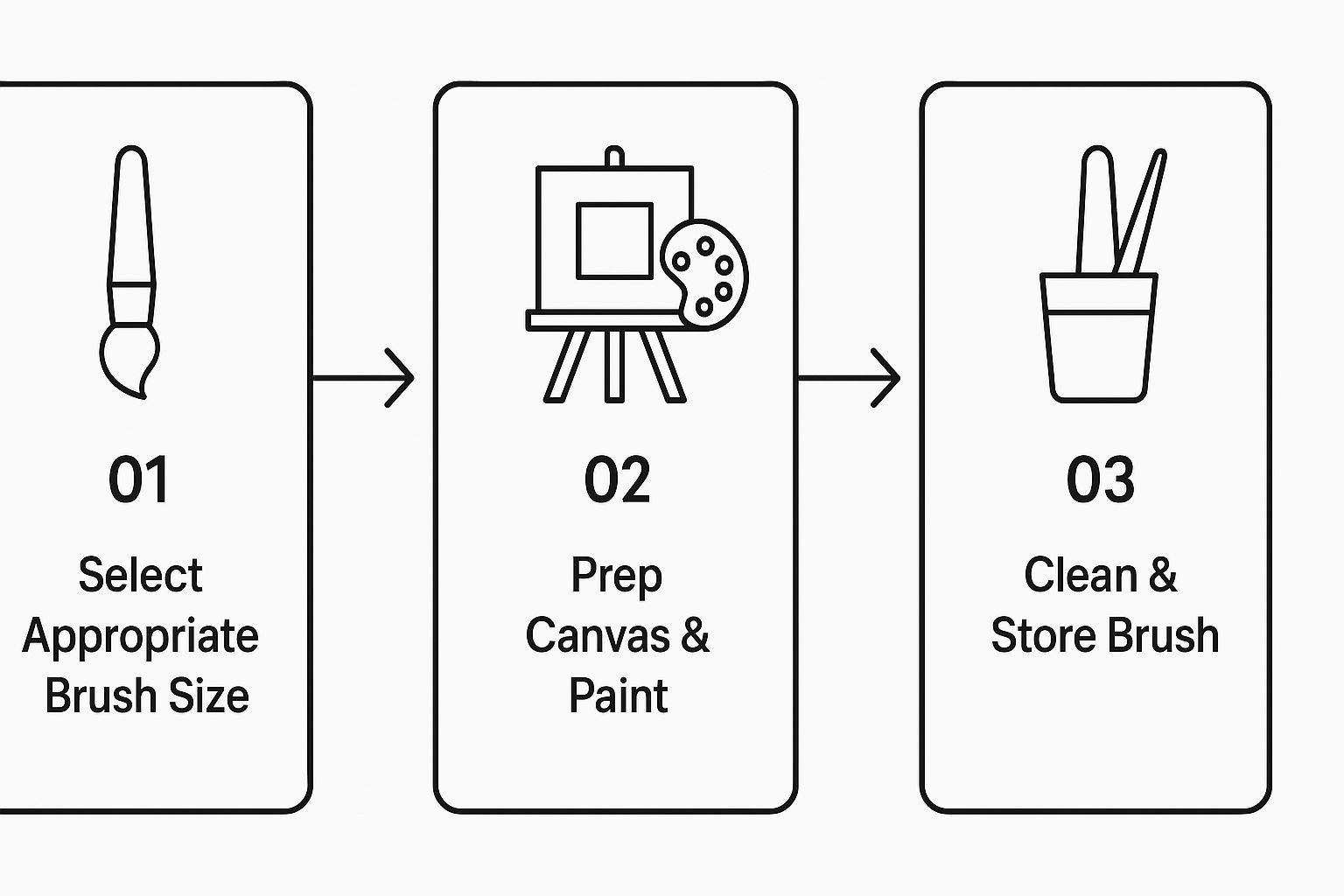
As you can see, thinking about your brush choice before you even dip into the paint sets you up for success. It makes the actual painting easier and even simplifies cleanup later on.
Selecting Your Core Brush Set
The good news is that with the hobby painting market growing so much, you have more options than ever. The paint brush set market was valued at an impressive USD 2.1 billion in 2023 and is expected to hit USD 3.4 billion by 2032. This explosion in popularity means there are plenty of high-quality, affordable brush sets out there for artists like us.
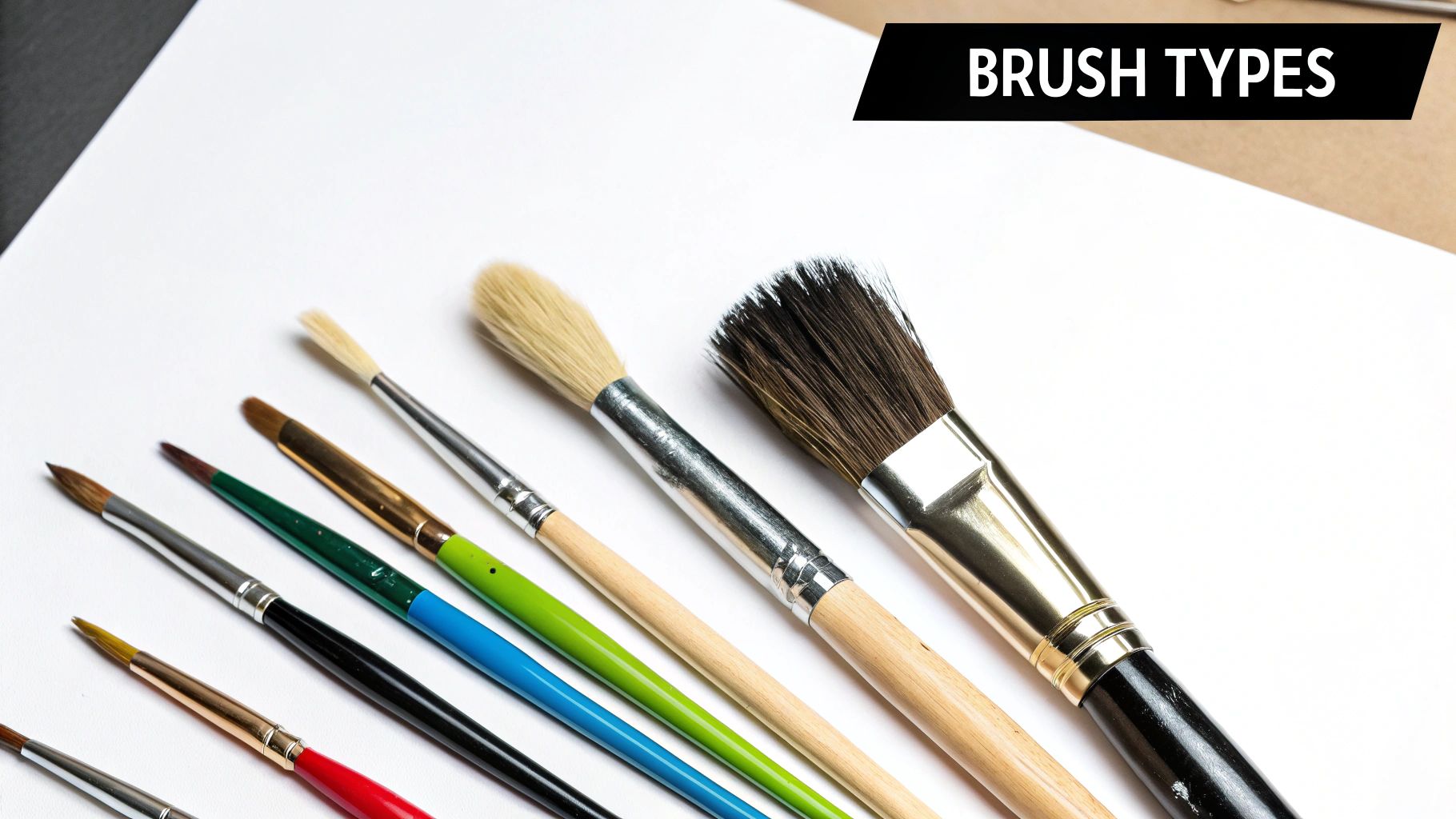
To help you get started, here's a quick rundown of the essential brushes I always keep on hand for my paint-by-numbers projects.
Essential Brush Types for Paint By Numbers
| Brush Shape | Best For | Pro Tip |
|---|---|---|
| Round | Your go-to for most cells. Use a size 2 or 3 for general areas and a tiny 000 for the smallest details. | Keep the tip sharp by gently rolling it on your palette after loading it with paint. |
| Flat | Filling in larger, single-color sections quickly and evenly. | Use the wide side for broad strokes and the thin edge for creating clean, straight lines. |
| Liner | Creating super-fine details like animal whiskers, hair, or the rigging on a ship. | Thin your acrylic paint with a drop of water to help it flow smoothly off the long bristles. |
These three shapes will cover about 99% of what you’ll encounter in any kit, giving you the precision to tackle any section with confidence.
My personal go-to is a synthetic taklon set. They hold their shape remarkably well with acrylics, are a breeze to clean, and give you fantastic control without the hefty price tag of natural hair brushes.
If you're working on a special project, like turning a personal photo into a custom kit, having the right tools is even more crucial. You can find some great pointers in this guide to creating custom art from photos.
For a deeper dive into all the tools you might want, be sure to check out our complete guide on essential art supplies right here: https://paint-by-number.com/blogs/learn-about-paint-by-numbers/art-supplies-for-beginners.
Mastering Techniques for a Flawless Finish
Having the right paint by numbers brush is a great start, but how you use it is what really brings your artwork to life. The right technique is the secret sauce behind those crisp, clean lines and smooth patches of color that make a finished piece pop. It really boils down to having control and being intentional with every single brushstroke.
First things first, let's talk about loading your brush. Avoid plunging the whole thing into the paint pot. You only need to dip the very tip—maybe about one-third of the bristles—and then gently wipe the excess off on the rim. This one simple move prevents globs of paint and gives you a much smoother, more predictable flow.
It also keeps paint from getting up into the ferrule (that metal bit holding the bristles). Trust me, that's the number one reason brushes get stiff and frayed. A clean ferrule means your favorite brush will stick around for a lot more paintings.
Perfecting Your Brush Strokes
Once you've got paint on the brush, your grip is everything. For those tiny, detailed spots, hold the brush close to the bristles, just like you'd hold a pencil. This gives you pinpoint accuracy to stay within the lines. When you move to a larger area, you can hold it further up the handle for a looser, more sweeping stroke.
You can also play around with a few different brushstroke styles:
- Smooth Strokes: When filling in bigger sections, use long, even strokes all going in the same direction. This is your best bet for a streak-free finish.
- Stippling: Need to create some texture for things like foliage or fur? Try dabbing with the tip of your brush. It builds up color in a really nice, organic way.
- Edge Work: To get that perfectly sharp edge, use the side of a flat brush or the fine point of a round brush and gently pull it along the line. Pulling, not pushing, is key here—pushing can make the bristles fan out and smudge your paint.
The real trick is to let the brush do the heavy lifting. A light, steady hand will give you a much cleaner result than a tense, heavy-handed grip. If the paint feels a bit thick, just add a tiny drop of water to thin it out slightly.
This kind of careful execution isn't unique to painting. For instance, creators in other fields find that mastering sublimation techniques for a flawless finish requires a similar level of precision.
If you're looking for more great advice, be sure to check out our ultimate list of https://paint-by-number.com/blogs/learn-about-paint-by-numbers/paint-by-numbers-tips to take your painting to the next level.
Keep Your Brushes in Perfect Shape for Years to Come
If you want your paint by numbers brushes to last, you can't skip on proper care. It’s not negotiable. Acrylic paint is fantastic to work with, but it dries lightning-fast. Left on your brush for even a few minutes, it can harden like a rock and ruin the bristles for good.
The real killer is dried paint, especially when it works its way up to the ferrule—that little metal part holding the bristles to the handle. Once paint hardens in there, it’s game over. The bristles get forced apart, and you lose that sharp, precise point you need for detailed work.
So, what's the secret? Simple: clean your brushes the moment you’re done painting.
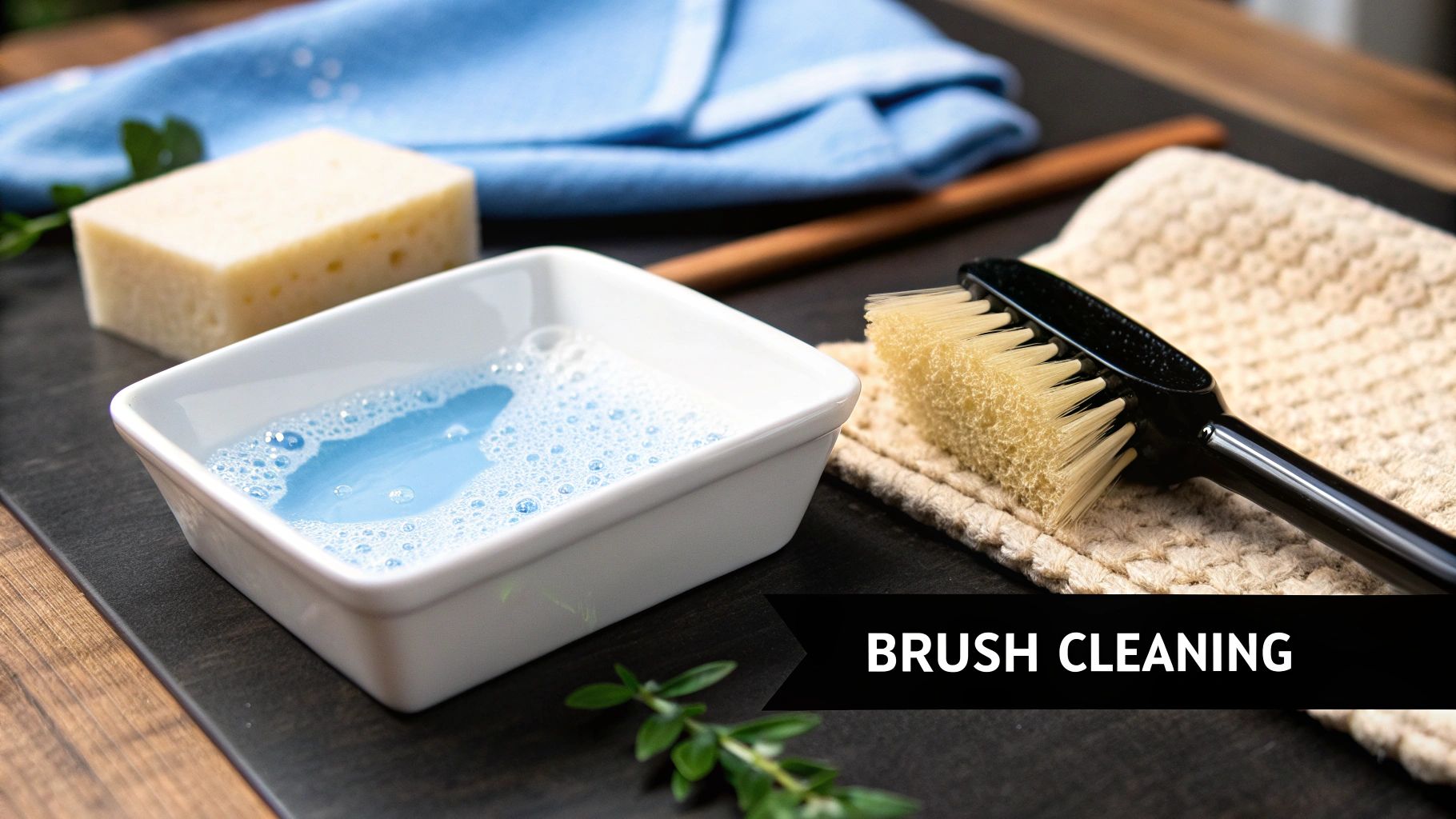
My Go-To Cleaning Method: Rinse, Wash, Reshape
I’ve found that a quick, three-step routine is all it takes to keep my brushes looking and feeling brand new. It's gentle, effective, and gets all that stubborn acrylic out before it has a chance to set.
- Rinse It Out: First, grab a cup of lukewarm water and swirl the brush around to get the worst of the paint off. Steer clear of hot water—it can actually melt the glue in the ferrule, causing the bristles to fall out.
- Wash It Up: Put a tiny drop of mild soap (dish soap works perfectly) into the palm of your hand. Gently swirl the brush tip in the soap, working up a nice lather to break down any leftover pigment.
- Reshape for Next Time: Rinse the brush one last time until the water runs completely clear. Then, carefully squeeze out the extra water with your fingers and coax the bristles back into their original shape, whether it’s a fine point or a flat edge.
Taking a minute to do this is what separates a good brush from a disposable one. It's no surprise the artist brush market is valued at USD 4.2 billion in 2024; artists want tools that last, and proper maintenance is the only way to get there. You can dig into more market trends over on Verified Market Reports.
For an even more detailed walkthrough, check out our complete guide on how to clean your paint brushes.
Here’s a pro tip: Never, ever leave your brushes sitting bristle-down in your water cup. It seems harmless, but it will bend the bristles out of shape permanently. It’s the fastest way to wreck a perfectly good brush.
Once they're clean, always let your brushes dry by either laying them flat or standing them up with the bristles pointing to the sky. This stops water from sneaking down into the ferrule, which protects the handle and keeps the bristles tight.
Solving Common Paint Brush Problems
We've all been there. You're in the zone, happily painting, and suddenly your favorite paint by numbers brush starts acting up. Maybe the bristles are fanning out, there's crusty old paint stuck near the handle, or a rogue bristle decides to embed itself in your beautiful, wet paint. Don't panic—most of these common frustrations are fixable with a little know-how.
The trick is to solve the problem without making it worse. Getting your tools back in working order means you can get back to what you love: painting. It’s always worth learning a few tricks to keep your brushes in top shape.
This idea of tool longevity isn't just for us hobbyists. Think bigger—on an industrial scale, the maintenance of nearly 7.5% of bridges in the United States relies on high-quality, durable brushes to apply protective coatings. That professional-level need for reliable tools isn't so different from our own desire for brushes that perform well and last. You can dive deeper into the paint brush market's diverse applications to see just how important they are.
Reviving Damaged Bristles
Has your go-to detail brush lost its crisp, fine point and now looks more like a tiny, worn-out broom? That's called splaying, and it's a super common issue. It usually happens when paint sneaks up into the base of the bristles (the ferrule) and dries hard.
Here are a few things to try to bring it back from the brink:
- Bring in the Brush Soap: A good brush soap or a dedicated conditioner can be a lifesaver. Gently work up a lather in the bristles, making sure you massage the soap all the way up to the ferrule to break down that hidden, dried paint.
- Give It Some Shape: Once you've rinsed it clean, use your fingers to carefully coax the bristles back into their original pointed shape. Let the brush dry completely while holding that form.
- The Boiling Water Trick: For synthetic brushes that are being particularly stubborn, you can try this. Quickly dip just the bristles into boiling water for a few seconds, then immediately pull them out and reshape them. This often shocks them back into place.
Don't be so quick to toss a brush that seems like a lost cause. You'd be surprised how often a thorough cleaning and conditioning is all it takes to restore a brush to its former glory.
And what about that dreaded loose bristle stuck in your painting? My best advice is to resist the urge to dig it out with the brush you're using. You’ll just make a bigger mess. Instead, let the paint dry for a little bit, then gently lift the bristle out with a pair of tweezers. No smudges, no problem.
Knowing When to Upgrade Your Brush Set
Let's be honest—the free brushes that come in most paint-by-numbers kits are... okay. They're a decent starting point, but they're often the first thing to cause some real frustration. Think of them as single-use tools. If you find yourself genuinely enjoying this hobby, you'll quickly discover their limits.
Figuring out when your brushes are holding you back is the key to a much more relaxing and rewarding painting session.
So, when is it really time to look for a better paint by numbers brush set? The signs are usually pretty clear once you know what to look for. You might see the bristles starting to fray or splay out, making it impossible to get a clean line in those tiny, detailed spots. This is a classic problem with cheap brushes.
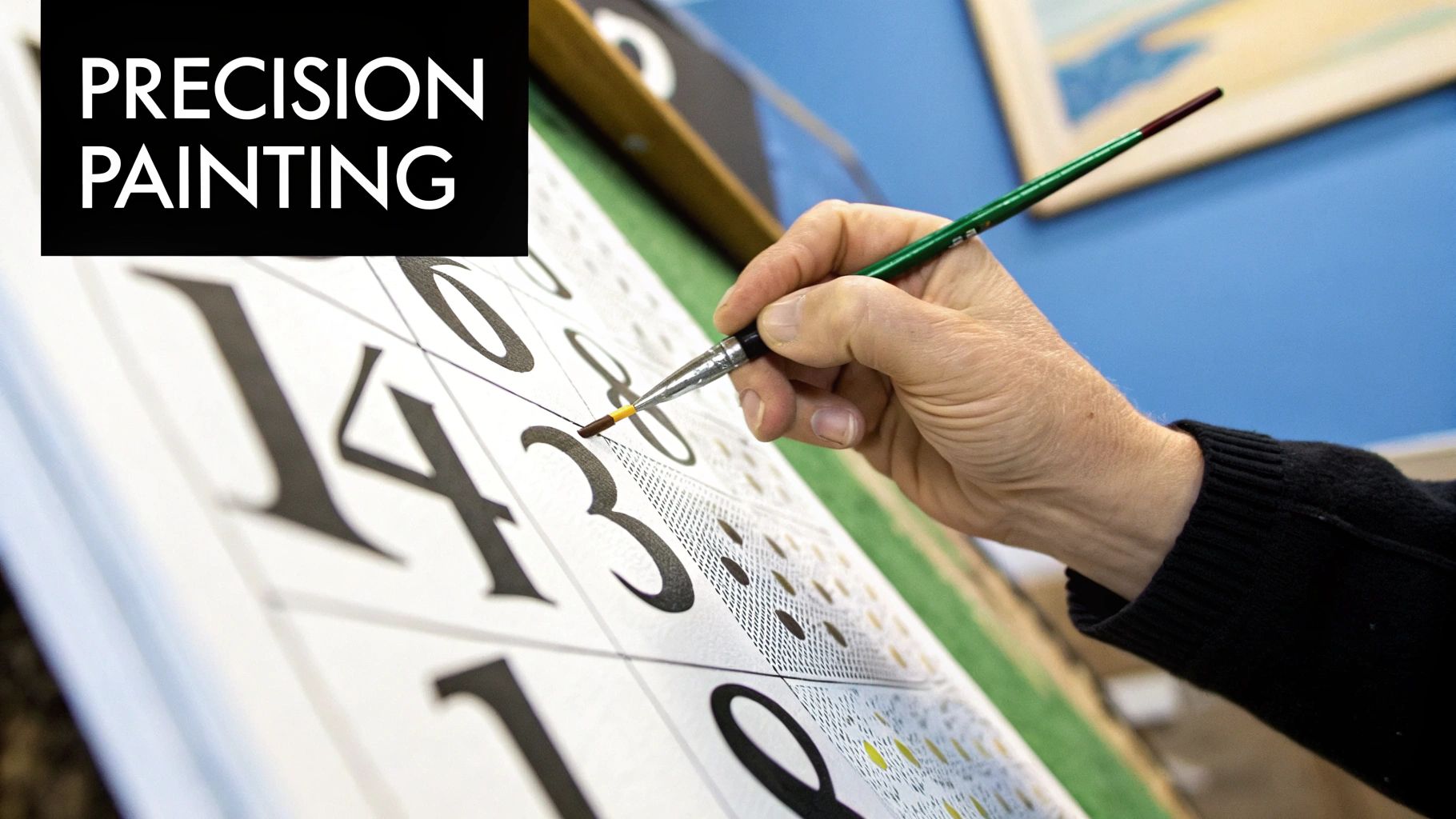
Another tell-tale sign is a wobbly ferrule—that's the little metal piece holding the bristles to the handle. If it wiggles even a tiny bit, your control is shot. Precise strokes become a frustrating game of chance.
Signs It Is Time for an Upgrade
Ever get a cramp in your hand after painting for a while? That’s another big indicator. The handles on those basic kit brushes are often short and pencil-thin, leading to hand fatigue pretty quickly. A better set with more ergonomic, comfortable handles makes a massive difference, letting you get lost in your painting for hours.
Ultimately, if you feel like you're fighting your brush to get the paint to go where you want it to, it's time for a change.
A quality brush should feel like an extension of your hand, not a tool you have to wrestle with. You'd be amazed how much a small investment in a decent brush set can improve your painting and reduce your frustration.
When you're ready to make the switch, look for a good synthetic brush set designed for acrylics. Synthetic bristles are workhorses—they're durable, a breeze to clean, and they hold their shape beautifully. That means you'll get the sharp points and crisp edges you need for a truly polished finish.
Common Questions About Paint By Numbers Brushes
Even when you feel like you've got the hang of things, questions always pop up when you're in the middle of a painting. Getting a straight answer can keep you from getting frustrated and help you stay in that creative zone. Here are a few things people ask all the time.
Should I Thin the Paint?
This is a big one. Yes, you absolutely can thin the acrylic paint, but there's a right way to do it.
If your paint feels a bit thick or tacky, add just a single drop of water to your palette and mix it in there. Never, ever add water directly to the paint pot—you could ruin the whole batch. A tiny bit of water helps the paint glide off your brush beautifully.
Just be careful not to overdo it. Too much water will weaken the pigment, leaving you with a streaky, translucent color that will almost certainly need a second coat.
Are Expensive Brushes Really Worth It?
Not really. You definitely don't need to splurge on professional-grade artist brushes, as that's just overkill for a paint-by-numbers kit.
However, upgrading from the standard brushes included in most kits is one of the best things you can do. A decent, affordable set of synthetic brushes will give you way more control and last much longer. That small investment makes the entire process more enjoyable and the final result look much sharper.
What Brushes Do I Actually Need?
You can get through almost any paint-by-numbers project with a core set of three brushes:
- A fine detail brush (like a size 000) for those impossibly small sections.
- A medium round brush (around a size 2) for your general painting work.
- A small flat brush (maybe a size 4) to fill in the larger, open areas quickly and evenly.
Help! I Let Paint Dry on My Brush!
It happens to the best of us. If you've got rock-hard acrylic paint caked onto your bristles, don't throw the brush out just yet. There's a last-ditch effort you can try.
Soak only the bristles in isopropyl alcohol for a few minutes. This should start to soften the dried paint. Gently work the paint out with your fingers, rinse the brush thoroughly with water, and then give it a final wash with mild soap. Reshape the bristles while they're still damp and let the brush air dry completely.
This method can be a bit harsh on synthetic fibers, but it’s often enough to rescue a brush you thought was a goner.
Ready to turn one of your favorite photos into a masterpiece? We can create a complete, high-quality kit just for you. Explore our options at Custom Paint By Numbers and get started on your next project