
We've all been there—that feeling of being completely overwhelmed. It's a universal human experience, but the good news is you have more power over it than you think. The best relaxation techniques for stress relief aren’t complicated or time-consuming. They’re simple, proven methods you can use anywhere, from a few deep breathing exercises for instant calm to mindfulness practices that build your resilience over time.
Think of this guide as your personal toolkit for dialing down the tension and finding your peace.
Your Guide to Finding Calm in a Hectic World
Stress isn't just "in your head." It's a real, physical response that pumps hormones like cortisol and adrenaline through your body. It's your internal alarm system, designed way back when to help you escape a saber-toothed tiger. The problem is, today that same alarm gets triggered by deadlines, traffic jams, and a constant barrage of notifications, leaving you stuck in a state of high alert.
When that alarm is always on, you start to feel the effects—burnout, anxiety, and that all-too-familiar physical tension in your shoulders and neck.
Effective relaxation techniques are like flipping the "off" switch on that alarm. They activate your body's "rest and digest" response, which is the complete opposite of "fight or flight." This wonderful system slows your heart rate, lowers your blood pressure, and sends a clear signal to your brain that it's safe to relax. It’s like gently easing your foot off the gas pedal after a long, stressful drive, allowing your entire system to return to a state of balance.
The trick is simply finding the right method for the right moment. This handy visual guide can help you choose the best approach based on how much time you have.
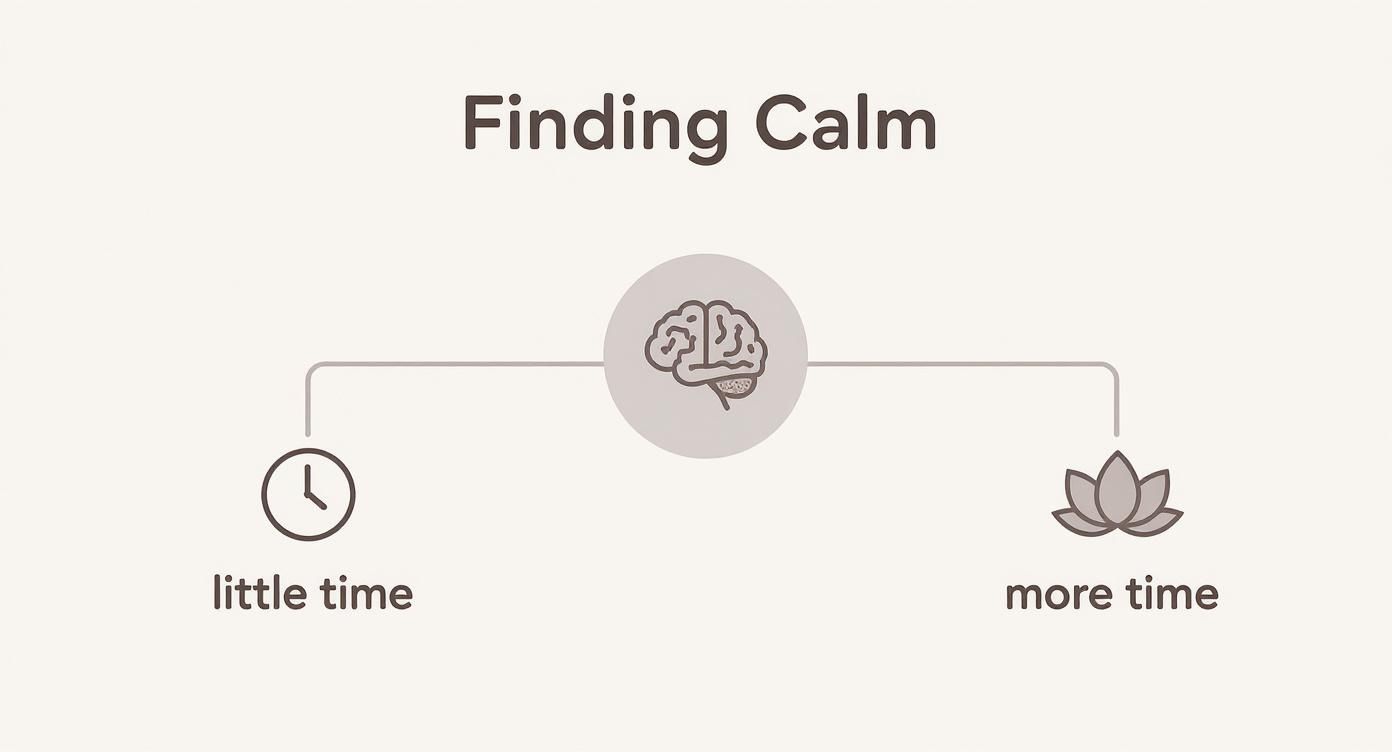
As you can see, you don't need to carve out an hour of your day to feel better. Often, just a few minutes of focused breathing is enough to make a real difference.
Building Your Personal Relaxation Toolkit
You don't need to master every single technique out there. The real goal is to build a small, reliable toolkit with a few methods that genuinely work for you. Try experimenting with one or two that sound interesting. Some people need a physical release to feel calm, while others prefer a more mental escape.
Here are a few ideas to get you started:
- Creative Focus: Getting lost in a hobby that requires light concentration, like painting or drawing, is a fantastic way to quiet a racing mind. Many people discover that the structured process of creative activities offers significant art therapy benefits for mental health.
- Sensory Grounding: Never underestimate the power of your senses. Sometimes the simplest things make the biggest impact. Beyond specific techniques, incorporating natural aids like a cup of tea that relaxes the body and mind can be a lovely and effective part of your stress-relief routine.
- Mindful Awareness: This is as simple as it sounds. Just take a moment to pay attention to your surroundings without judging them. It anchors you in the present moment, pulling you away from worrying about the future or replaying the past.
Which Relaxation Technique Is Right for You?
Feeling stuck? Use this quick guide to choose the best relaxation technique based on your current situation and how much time you have.
| If You're Feeling... | Try This Technique | Why It Helps |
|---|---|---|
| Overwhelmed and scattered | Deep Breathing | Instantly slows your heart rate and grounds you in the present. |
| Physically tense | Progressive Muscle Relaxation | Releases built-up tension by tensing and then relaxing muscle groups. |
| Lost in anxious thoughts | Mindfulness Meditation | Helps you observe your thoughts without getting swept away by them. |
| Stressed and need an escape | Guided Imagery | Uses your imagination to transport you to a calm, peaceful place. |
| Restless or fidgety | Physical Movement (e.g., a walk) | Burns off excess adrenaline and releases endorphins. |
| Mentally drained or bored | Creative Expression (e.g., painting) | Shifts your focus to a rewarding, low-pressure activity. |
Remember, the "best" technique is the one you'll actually use. Be patient with yourself, explore what feels good, and start building a toolkit that helps you navigate life's inevitable stressors with a little more ease.
The Power of Your Breath for Instant Calm
Your breath is the single most accessible tool you have for finding calm. Seriously. It’s always with you, it costs nothing, and it can shift how you feel in less than a minute.
The connection between your breath and your brain is a direct line. When you're stressed, you take short, shallow breaths, which tells your brain there’s danger and keeps that "fight-or-flight" system fired up. But when you consciously switch to slow, deep breathing, you send a powerful message back to your brain: "I am safe." This activates your body's built-in relaxation response.
Think of it like a car. Stress is the accelerator, pushing your heart rate and tension levels sky-high. Deliberate breathing is the brake, gently slowing everything down and bringing you back into balance. It’s a physiological reset button you can press anytime, anywhere.
That’s why getting a handle on a few simple breathing exercises is a game-changer for managing stress. You don't need a special room or a yoga mat—you can do this at your desk, in your car, or even in the middle of a tense meeting without anyone knowing.
How to Use Diaphragmatic Breathing
Diaphragmatic breathing, also known as "belly breathing," is one of the most effective ways to hit that reset button. It engages your diaphragm, the big muscle at the base of your lungs, making sure you get a full, deep breath that floods your system with oxygen and tells your nervous system to chill out.
Here’s a quick guide:
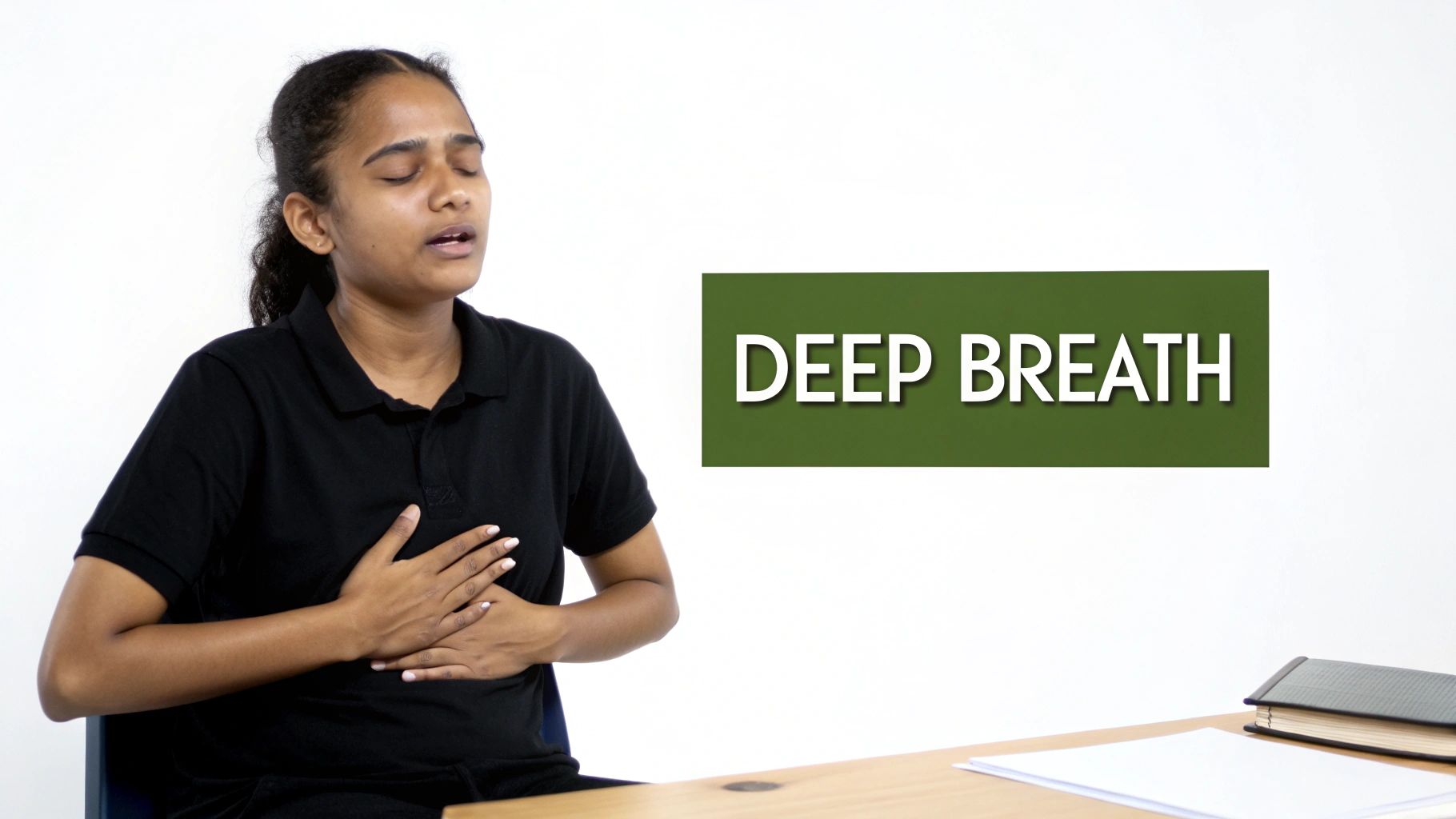
- Get comfortable, either sitting up or lying down. Put one hand on your chest and the other on your belly, right below your rib cage.
- Breathe in slowly through your nose for a count of four. Feel your stomach expand and push your hand out as you inhale. The hand on your chest should barely move.
- Pause for just a moment at the top of your breath.
- Exhale slowly through your mouth for a count of six. Feel your belly fall as the air leaves your lungs.
That simple trick of making your exhale longer than your inhale is scientifically proven to slow your heart rate and lower your blood pressure.
Try Box Breathing for Focused Calm
Another fantastic technique is Box Breathing. It's famously used by Navy SEALs to stay calm and focused under intense pressure. It's incredibly easy to remember because its rhythm gives your racing mind something to focus on.
Picture a box with four equal sides. Each side represents one step in the breathing cycle, and you’ll do each step for a count of four. This structure helps anchor your attention and breaks the cycle of anxious thoughts.
Here's how it works:
- Inhale: Breathe in slowly through your nose for 4 seconds.
- Hold: Gently hold your breath for 4 seconds.
- Exhale: Breathe out slowly through your mouth for 4 seconds.
- Hold: Pause for 4 seconds before your next inhale.
Repeat this cycle four or five times, or until you feel your body and mind start to settle. When things feel especially intense, targeted breathing techniques for anxiety attacks can offer immediate relief and bring you back to the present moment.
Releasing Physical Tension with Your Body
Ever notice how stress seems to settle in your body? That clenched jaw, the shoulders hunched up by your ears, or a stiff neck—these are all physical signs that your nervous system is working overtime. Your body is literally holding onto the stress.
This is exactly where a technique called Progressive Muscle Relaxation (PMR) can be a game-changer. It’s designed to tackle this physical side of stress head-on.
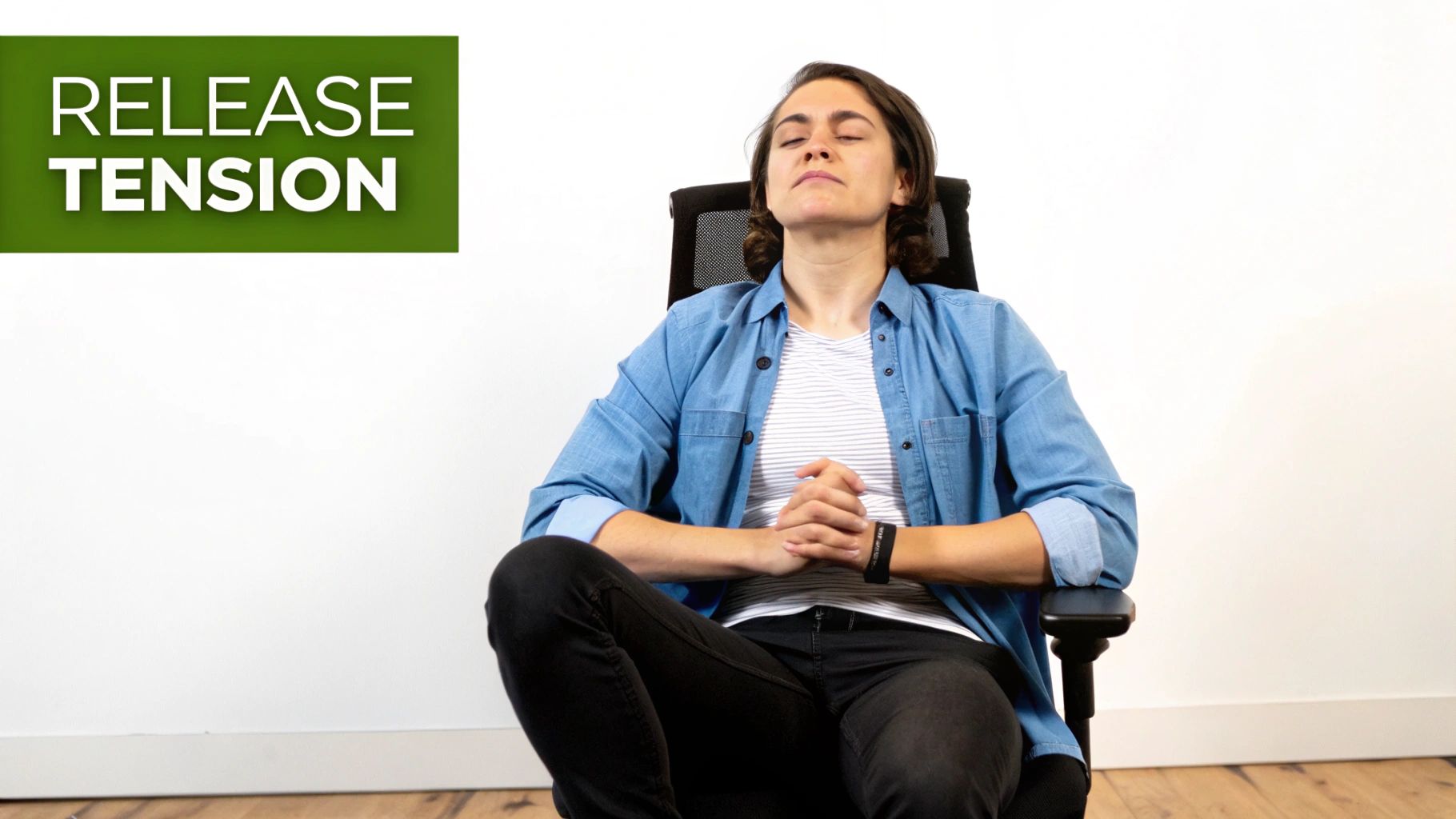
The concept behind PMR is incredibly straightforward. You systematically tense up a muscle group on purpose, hold it for a few seconds, and then let it go completely. By doing this, you learn to feel the stark difference between a tight muscle and a relaxed one. It’s like turning a bright light on the hidden tension you’ve been carrying around all day, giving you the power to consciously release it.
This simple act of tensing and releasing does more than just loosen up your muscles. It sends a powerful "all clear" signal to your brain, helping to slow your heart rate, deepen your breathing, and bring your body back to a calmer, more balanced state.
How to Practice Progressive Muscle Relaxation
Ready to give it a try? Find a quiet spot where you can be undisturbed for about 10-15 minutes. You can lie down comfortably or sit in a chair with your feet flat on the floor. Start by taking a few slow, deep breaths to settle in.
- Feet and Calves: Let’s start from the ground up. Curl your toes downward as tightly as you can, tensing the arches of your feet. Hold that tension for 5-10 seconds, really noticing the strain. Then, release everything. Feel that wave of warmth and looseness? Now do the same for your calves by pulling your toes up toward your shins.
- Thighs and Glutes: Move up to your thighs. Squeeze them hard, as if you’re trying to press them together. Hold, and then let go. Next, tighten your glutes, hold for a few seconds, and release completely.
- Stomach and Chest: Take a deep breath in and tighten your stomach muscles like you’re bracing for impact. Hold it, and then exhale with a sigh as you let it all go. For your chest, you can gently arch your back to create a bit of tension, then relax.
- Arms and Hands: Make tight fists with both hands and squeeze your biceps. Feel the tension shoot up from your knuckles to your shoulders. Hold... and then release. Let your hands fall open and your arms go heavy and limp.
- Shoulders and Neck: This is where many of us hold stress. Shrug your shoulders way up toward your ears, feeling the tightness across your upper back and neck. Hold them there, and then let them drop with a thud. Notice how heavy and relaxed they feel now.
- Face: Finally, let’s get to the face. Scrunch up everything—squint your eyes shut, furrow your brow, and clench your jaw. Hold this "sour face" for a moment, and then release it all. Let your jaw hang a little loose and feel your forehead smooth out.
The real magic is in that moment of release. Pay close attention to the sensation of relief that follows the tension. This contrast is what teaches your body and brain to recognize stress and actively let it go.
A Quick PMR Session for Your Desk
You don't always have time for a full 15-minute session. The good news is, you can do a mini-version right at your desk to combat stress during the workday.
- Hands and Arms: Discreetly clench your fists under your desk for ten seconds, then let them go limp.
- Shoulders: Do a quick shoulder shrug, holding them up by your ears for a few seconds before dropping them.
- Face: Tighten all your facial muscles for a moment, then release into a relaxed expression.
This quick reset can make a huge difference in just a minute or two, helping you release tension before it has a chance to build up and ruin your afternoon.
Using Mindfulness to Anchor Your Thoughts
When we’re stressed, our minds have a tendency to spiral. We get caught replaying past mistakes or fast-forwarding into a future full of "what-ifs." Mindfulness is simply the practice of gently guiding your focus back to right here, right now.
It’s not about forcing your mind to be empty, which is pretty much impossible anyway. A better way to think about it is to picture your thoughts as clouds drifting across the sky. Mindfulness is the art of just observing them pass by without letting yourself get swept up in the storm. This small mental shift can make a world of difference.
This practice is incredible for breaking out of those repetitive, anxious thought patterns. And it's not just a niche idea anymore; the global meditation market was valued at USD 7.98 billion in 2024 and is expected to climb to USD 17.78 billion by 2032. Clearly, more and more people are catching on to how powerful these mental wellness tools are.
Observing Your Thoughts Without Judgment
The real magic of mindfulness lies in non-judgmental awareness. When a stressful thought pops up, you simply notice it. "Okay, there's that worry about the deadline again." Then, you let it go without beating yourself up for having it in the first place.
This creates a bit of distance between you and your thoughts, stripping them of their emotional power. You start to realize they are just temporary mental events, not facts set in stone. Suddenly, they don't seem so overwhelming. If you’re curious about putting this into practice, there are plenty of simple mindfulness activities for adults you can try today.
Mindfulness gives you the space to respond to situations thoughtfully rather than reacting impulsively. It creates a buffer between a stressful trigger and your automatic emotional response, giving you more control and calm.
Creating a Mental Sanctuary with Guided Imagery
Another fantastic mindfulness tool is guided imagery. Think of it as a mini-vacation for your mind. This technique uses your imagination to transport you to a calm, peaceful environment, offering a quick escape when you're feeling overwhelmed.
You can build your own mental getaway spot—a place you can retreat to anytime you need a moment of peace.
- Find Your Place: Close your eyes and imagine a location where you feel completely at ease. Maybe it's a sunny beach, a quiet forest, or a cozy fireside cabin.
- Engage Your Senses: Bring the scene to life. What do you see? What can you hear? Feel the warmth of the sun on your skin, listen to the gentle waves, or smell the fresh scent of pine.
- Stay and Breathe: Just hang out in this peaceful space for a few minutes. Breathe deeply and let the calm soak in.
This works so well because it actively replaces anxious thoughts with pleasant, soothing ones. It gives your brain a genuine break from whatever is causing you stress, allowing you to return to your day feeling clearer and more centered.
Finding Mental Clarity Through Gentle Movement
When you’re stressed, your body is humming with a chemical buzz from hormones like cortisol and adrenaline. One of the best ways to quiet that noise is to simply get moving. We’re not talking about an exhausting workout, but something much gentler—a way to intentionally reconnect your mind with your body.
Think of those stress hormones as restless energy cooped up inside you. A mindful walk or a few simple yoga stretches provides a release valve for that energy. It’s a way to keep it from settling into your shoulders as tension or clenching your jaw. Moving your body also signals your brain to release endorphins, which are basically nature’s feel-good chemicals.
This simple shift turns physical activity from just another task on your to-do list into a form of active meditation. It pulls your focus away from whatever is making you anxious and plants you squarely in the present moment, giving you a welcome sense of calm and control.
Accessible Practices for Daily Stress Relief
The good news is you don’t need a gym membership or fancy gear to get started. The most effective movements are often the simplest ones you can weave into your day.
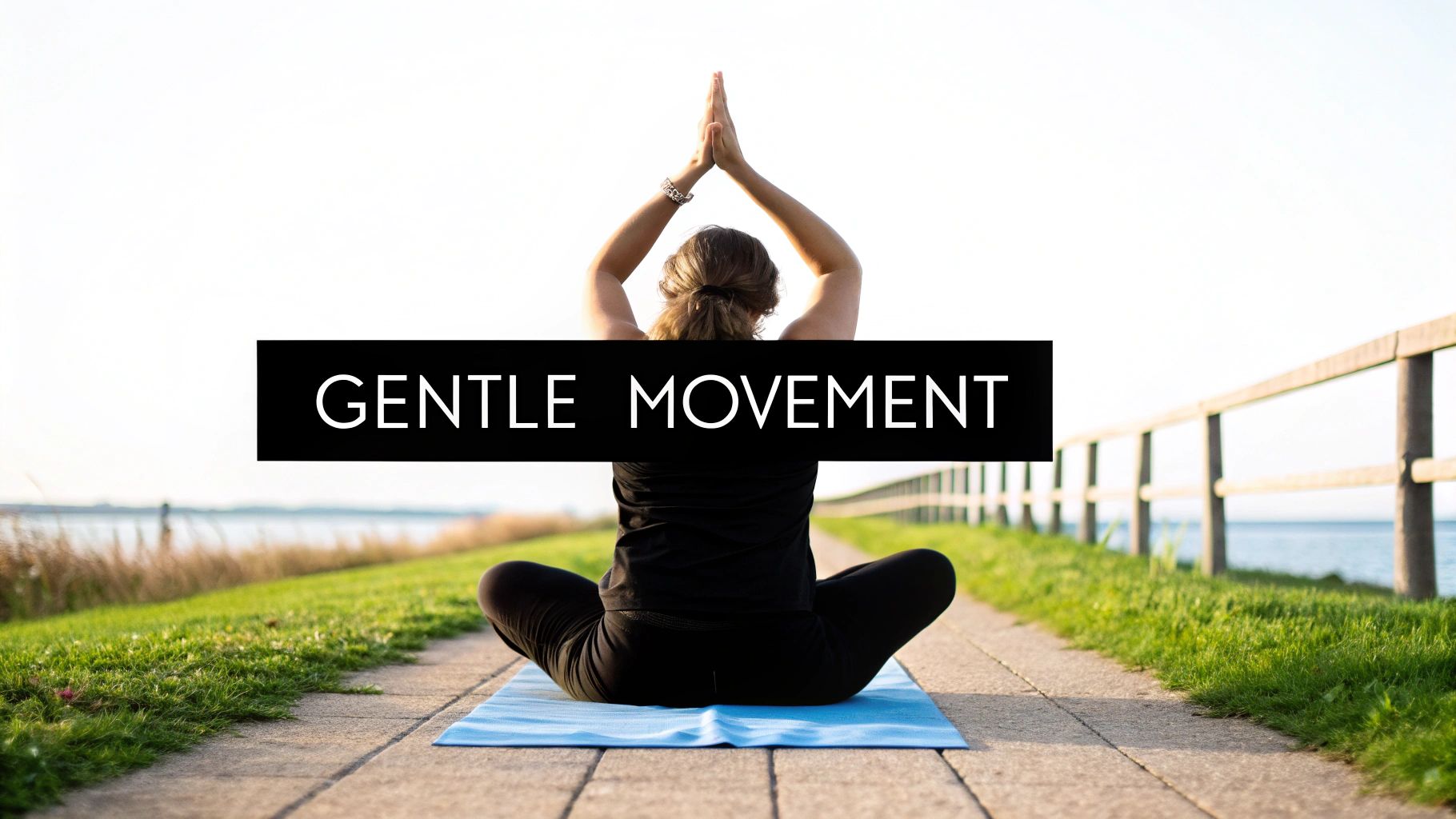
- Yoga: This practice is a triple threat against stress, combining physical poses, controlled breathing, and meditation. That focus on linking your breath to your body is incredibly powerful for soothing a frayed nervous system.
- Tai Chi: People often call this "meditation in motion" for a reason. It’s all about slow, graceful, and flowing movements that are easy on the joints. It’s fantastic for improving balance and easing anxiety.
- Mindful Walking: This is all about paying attention while you walk. Instead of letting your mind race, focus on the feeling of your feet hitting the pavement, the rhythm of your breathing, and the sights and sounds around you.
It's no surprise that these practices are becoming more and more popular. People are looking for real, sustainable ways to manage the pressures of modern life. The numbers back this up, with the yoga and meditation service industry in North America expected to become a USD 53.3 billion market by 2035. You can discover more about this growing wellness trend and see what's behind the shift.
Gentle movement isn't about pushing your limits; it's about listening to your body. It offers a way to kindly acknowledge your stress and physically let it go, leaving you feeling lighter and more centered.
By slotting these simple activities into your week, you’re building a powerful habit for navigating everyday stress. Even just 10-15 minutes of intentional movement can be enough to clear your head and build resilience over time.
Using Creative Hobbies to Find Your Flow
Sometimes, the best way to relax doesn't feel like a "technique" at all. Getting lost in a creative hobby can put you in a state of flow—that feeling of being so completely absorbed in an activity that the rest of the world just melts away.
This isn’t about producing a masterpiece. It’s about giving your mind a much-needed break from the constant churn of anxious thoughts by focusing it on a simple, enjoyable task. Things like sketching, journaling, or diving into a paint-by-number kit can be surprisingly powerful forms of active meditation.
There’s something incredibly calming about the simple, repetitive motions—filling in a numbered section with the right color, sketching a line, or writing a sentence. It’s a tangible, screen-free way to de-stress that leaves you with something you can actually see and feel good about.
Embracing the Process Over Perfection
The secret to using creativity to unwind is letting go of the need for everything to be perfect. The real value is in the doing, not the final product.
When you shift your focus like this, your mind can finally take a breather. You're not thinking about deadlines or what anyone else expects. You're just there, in the moment, with the colors, the textures, and the simple movements. Many people discover that structured creative outlets provide a gentle on-ramp to mindfulness. You can explore a whole range of art therapy activities for anxiety that don't require any artistic talent to start.
The real benefit comes from the quiet focus and gentle rhythm of the activity. It’s a way to tell your brain, "It's safe to slow down," allowing you to find calm without having to sit perfectly still in silence.
This isn't just a niche idea; the demand for accessible, effective stress relief is booming. Just look at the relaxation beverages market, which was valued at USD 529.58 million in 2024. It’s projected to hit USD 1,654.13 million by 2032, showing a massive consumer shift toward anything that supports mental well-being. You can read the full market research to see the data behind this trend.
Practical Tips for Creative Unwinding
Ready to give it a try? Here are a few simple ways to get started:
- Choose Low-Stakes Activities: Begin with something that has clear, easy-to-follow instructions. A paint-by-number kit or an adult coloring book is perfect because it removes the pressure of figuring out what to create.
- Set the Mood: Carve out a calm space for yourself. Put on some quiet music, brew a cup of tea, and find a comfy spot with good light.
- Focus on Your Senses: Tune in to the physical sensations. Notice the feel of the brush in your hand, the slight smell of the paint, and the sounds in the room. This simple act of noticing helps pull you into the present moment.
Got Questions? Let's Talk It Out.
Starting anything new, especially something as personal as a relaxation practice, is bound to bring up a few questions. It’s totally normal to wonder if you’re “doing it right” or when you’ll actually start feeling a difference. Let’s tackle some of the most common ones.
The big one I always hear is: how often should I be doing this? Here’s the secret: consistency beats intensity, every single time. It's far better to practice for just 5-10 minutes every day than to cram in a marathon one-hour session on a Sunday. Think of it like training a muscle. A little bit of daily work helps your nervous system learn how to shift into "calm mode" more quickly, so the skill is right there when you truly need it.
"But What If It's Not Working for Me?"
This is another huge one. What happens when you try a technique and... nothing? Or worse, you feel even more stressed out?
First, don't panic. If you’ve given box breathing a shot and it just makes you feel flustered, that's perfectly fine. It just means that particular tool isn't the right fit for you right now. Forcing it is the last thing you want to do; the whole point is to lower your stress, not add to it.
This is why having a few different options is so important.
- If a mental exercise like mindfulness feels like too much of a battle, pivot to something physical. Try progressive muscle relaxation to get out of your head and into your body.
- Feeling antsy and can't sit still? A mindful walk or some gentle stretching might be just what you need to burn off that nervous energy.
The best relaxation technique is simply the one that works for you and that you'll actually do. There's no magic bullet or one-size-fits-all answer here. Give yourself permission to play around and find what genuinely clicks.
At the end of the day, this is your journey. Be patient with yourself, stay curious, and notice the small victories. Every minute you invest in your own well-being is a powerful step toward building real, lasting resilience.
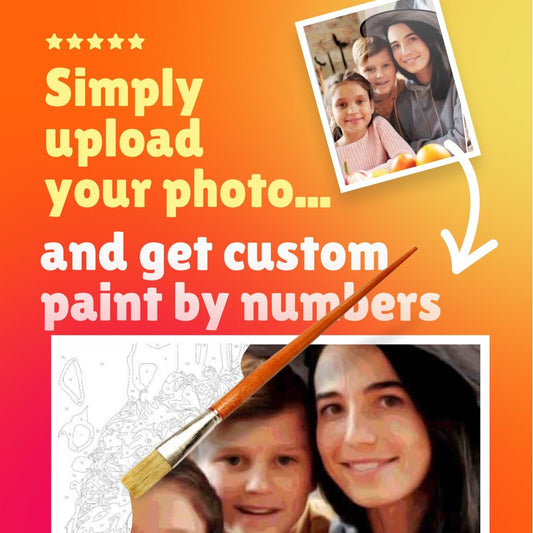
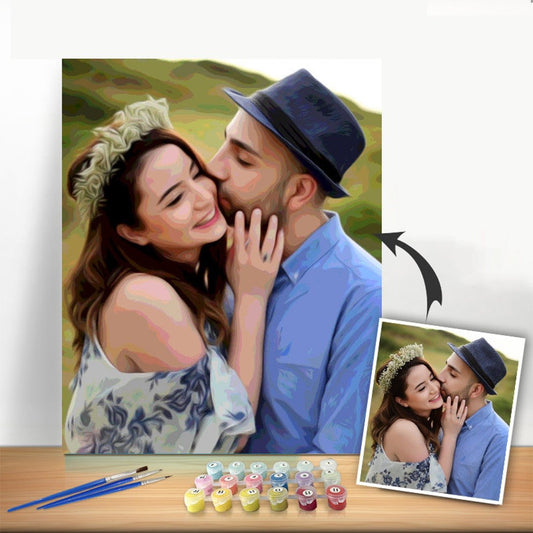
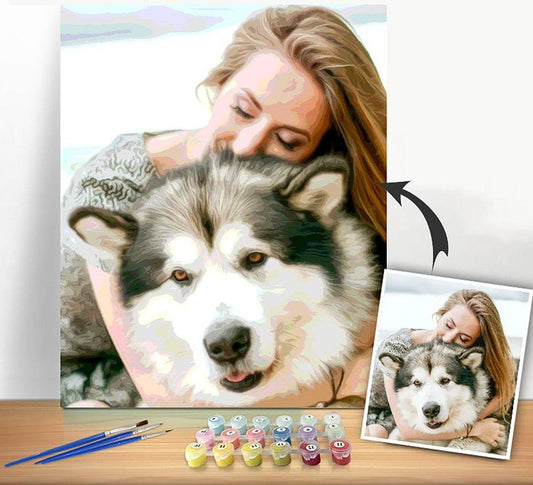
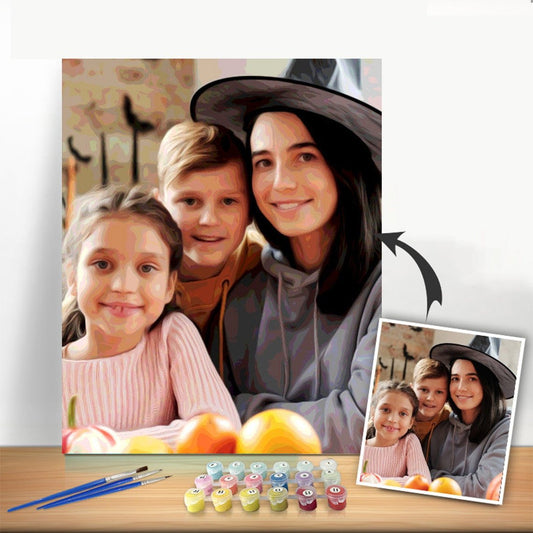
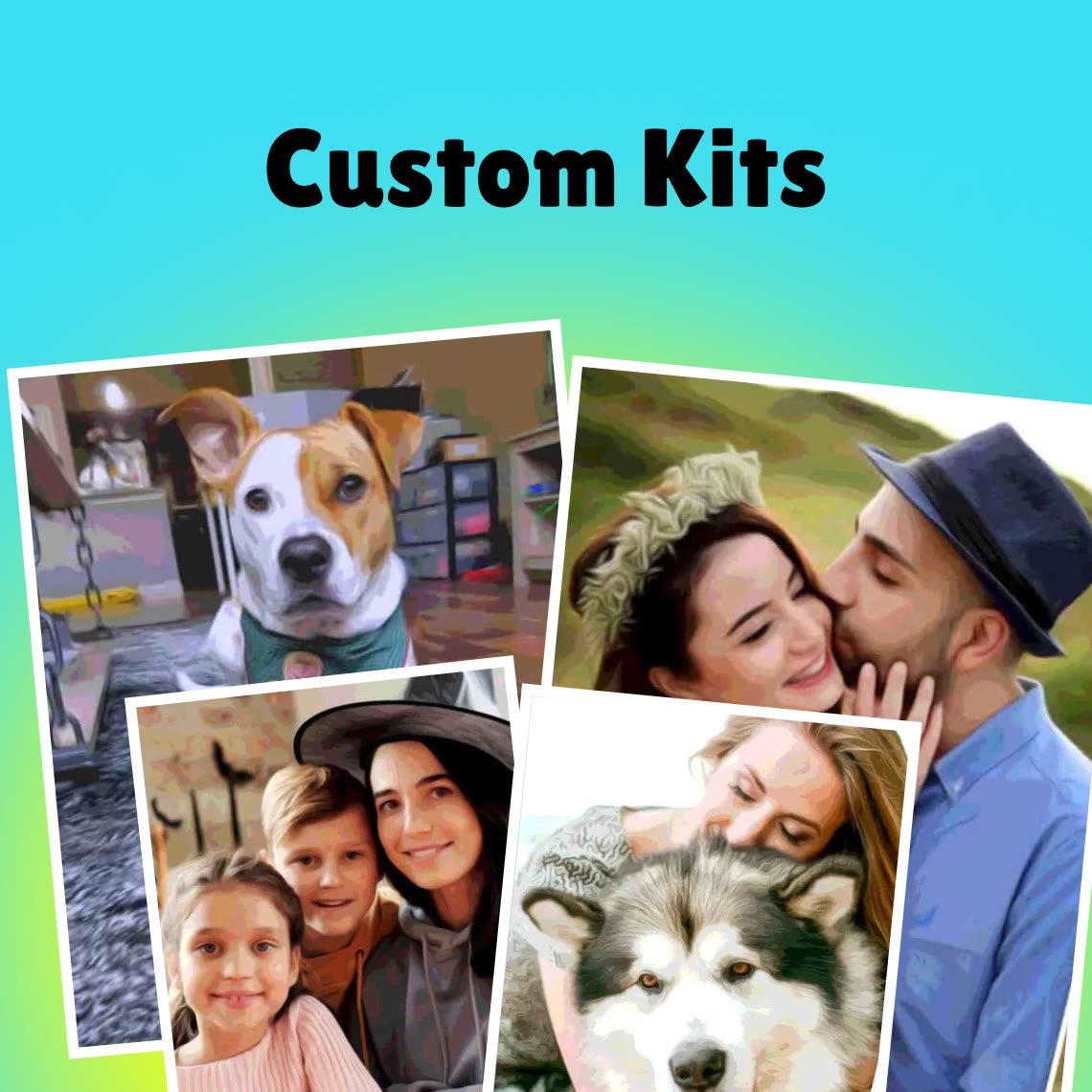
Ready to turn a cherished photo into a calming, creative project? Check out our custom kits at Custom Paint By Numbers and find a beautiful new way to unwind. You can start creating your personalized art today.