
So, you’re ready to dive into the amazing world of acrylic painting? Fantastic! It can feel a bit overwhelming walking into an art store for the first time, but getting started is way easier—and more affordable—than most people think. This guide will cut through the noise and show you exactly what you need.
Starting Your Acrylic Painting Adventure
Acrylics are the perfect medium for a new artist. They’re forgiving, they dry fast, and you can do almost anything with them—from thick, textured strokes to thin, watery washes that look like watercolor. Best of all, you don't need a huge budget or a lifetime of experience to make something you're proud of.
Think of this guide as your personal roadmap. We'll walk through all the tools you’ll need so you feel confident and ready to put paint on canvas. We're building your artist's toolkit from scratch.
Here’s a quick look at what we’ll cover, basically your foundational shopping list:
- Core Supplies: These are the absolute non-negotiables—the paints, brushes, and surfaces you can't do without.
- Essential Tools: Things like palettes and knives that just make the whole process smoother and more fun.
- Workspace Setup: A few simple items to help you create a great spot to get creative.
By the time you're done reading, you won't just know what to buy, you'll understand why. You'll be ready to start your first painting with excitement, not confusion. Let's get to it
Your Core Supplies: Paints, Brushes, and Surfaces
Walking into an art supply store for the first time can feel a little overwhelming. The sheer number of options is exciting, but where do you even begin? Don't worry. To get started, you only need to focus on three core categories.
Think of it this way: you need something to paint with (paints), something to apply it with (brushes), and something to paint on (surfaces). Let's break down the absolute essentials in each category.
Choosing Your First Paints
First up, the fun part: the paint! You'll mainly see two types on the shelves: student grade and artist (or professional) grade. While the artist-grade paints are loaded with pigment for incredibly rich, vibrant colors, they also come with a much higher price tag.
For anyone just starting out, student-grade paints are the perfect choice. They're much more affordable, which means you can experiment, make messes, and learn without feeling like you're wasting precious, expensive materials. You can always upgrade later as you find your style and get more comfortable.
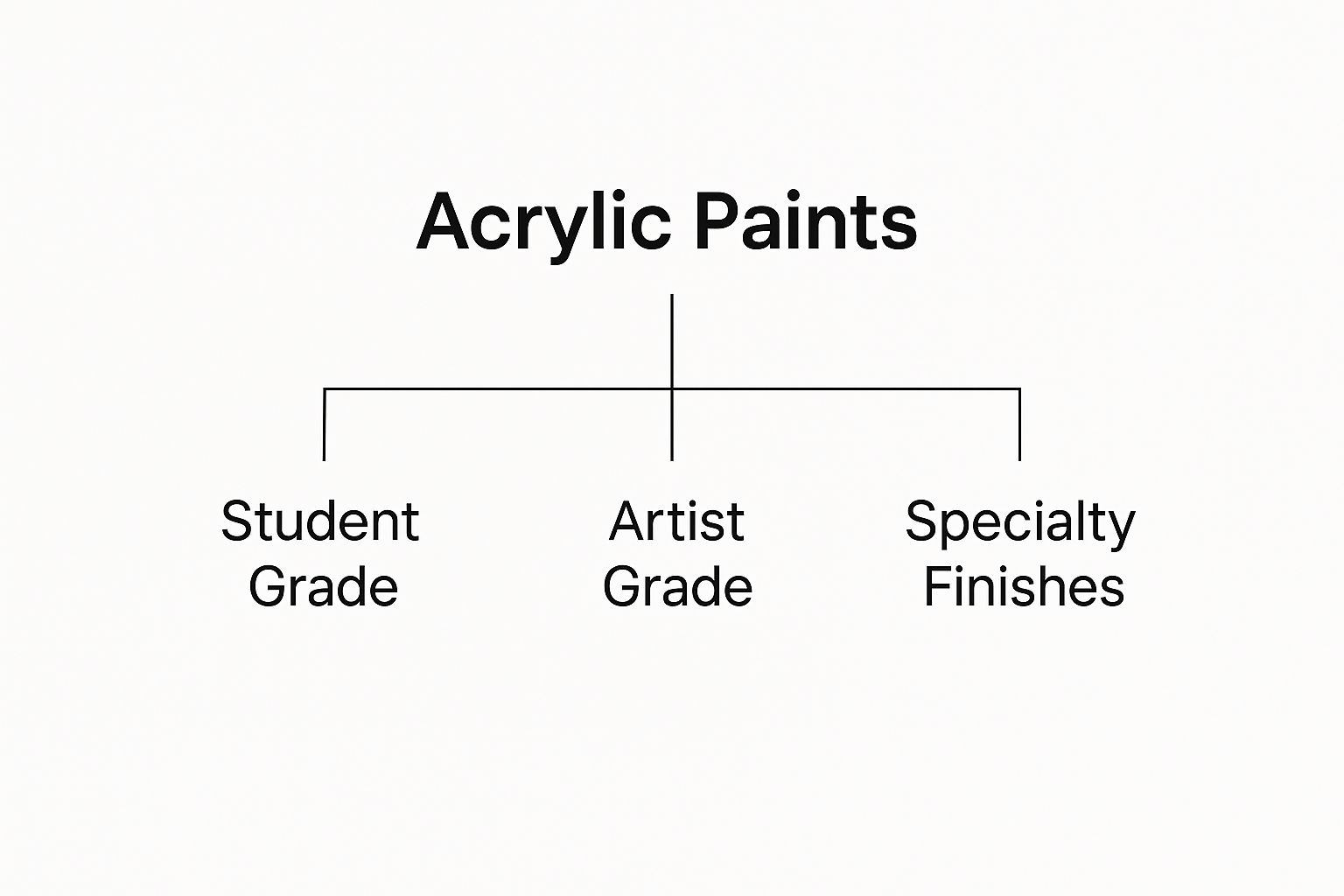
This simple visual helps show that your journey can start with accessible student-grade paints, leaving the professional-grade stuff for when you're ready.
Your First Brushes
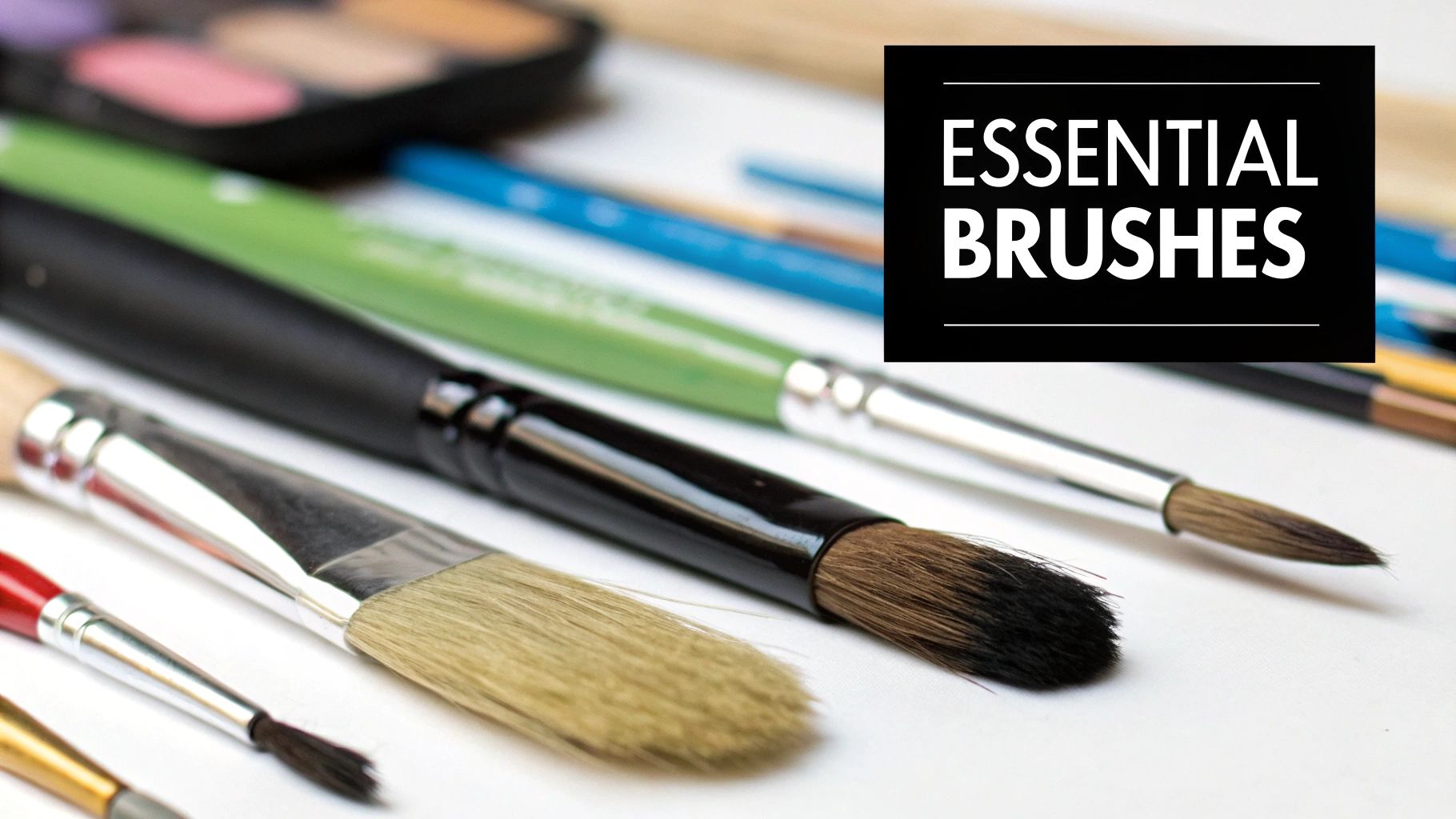
Next are your brushes—the tools that will bring your ideas to life. You absolutely do not need a giant, intimidating set of 30 brushes. In fact, you can create a huge variety of strokes and effects with just a few key shapes.
To start, look for a small pack that includes these three essentials:
- A Flat Brush: With its square end, this is your workhorse for filling in large areas, creating sharp edges, and making bold, confident strokes.
- A Round Brush: The pointed tip makes this your go-to for details, fine lines, and outlining. Think of it as your drawing tool.
- A Filbert Brush: This one is a hybrid—part flat, part round. Its curved end is fantastic for soft blending and creating lovely organic shapes, like flower petals.
Choosing the right brush is like picking the right pen. Each shape has a specific job, and learning what each one does best is the key to controlling your paint and making it do what you want.
Picking a Surface to Paint On
Finally, you need a surface for your masterpiece. While you can paint on almost anything (wood, fabric, you name it), beginners usually stick to one of three main options. Each one offers a different feel and price point.
The popularity of acrylic painting has skyrocketed, fueling massive growth in the art supply market. The acrylic paper market alone was valued at around USD 2.94 billion in 2025 and is projected to nearly double by 2035. You can dig into the full acrylic paper market trends to see just how much this hobby is growing.
Here are your best bets for starting out:
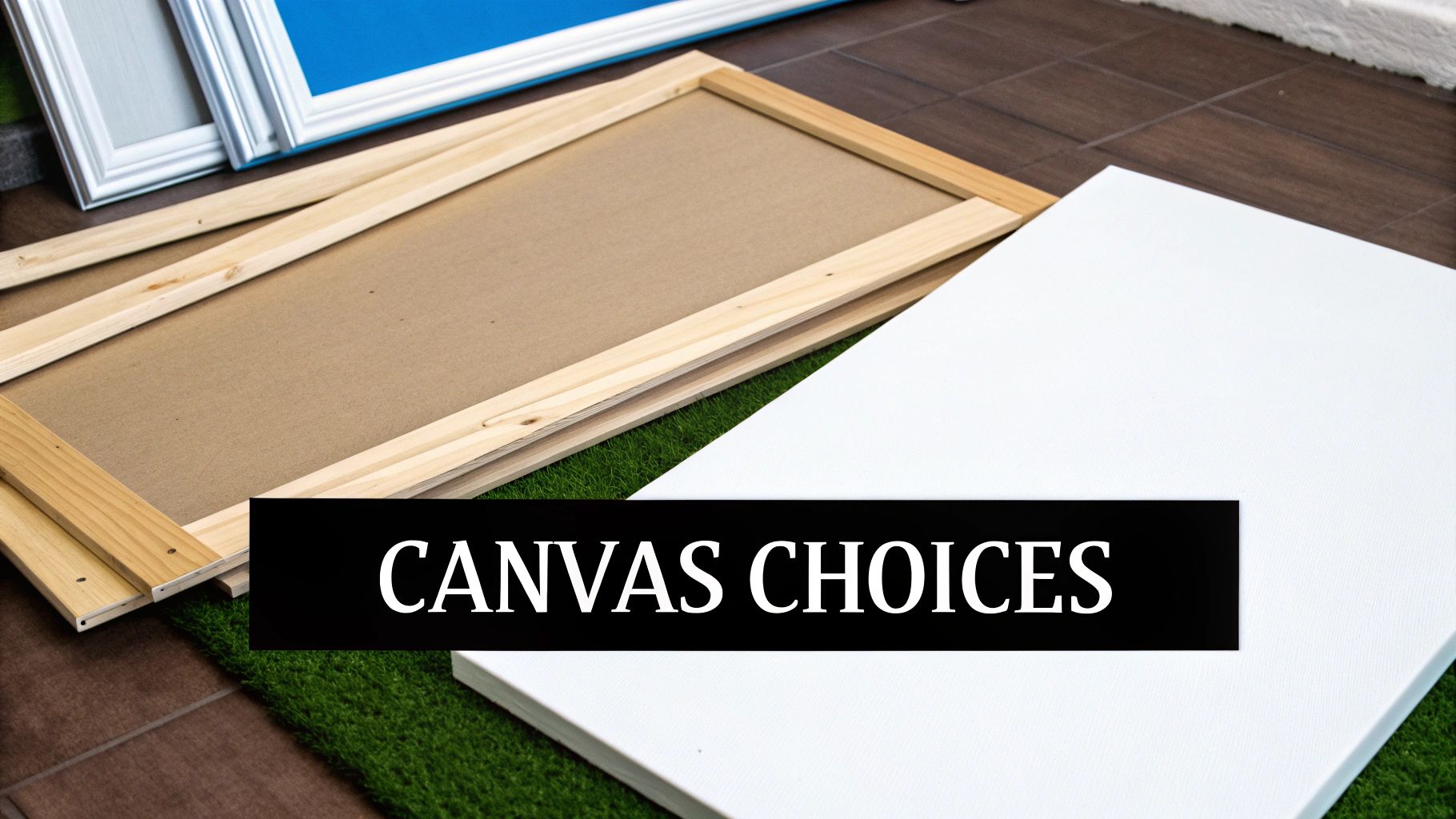
- Stretched Canvas: This is the classic you probably picture. It’s canvas fabric stretched over a wooden frame, ready to paint on and hang right on the wall.
- Canvas Boards: A more budget-friendly and sturdy option. It's a piece of canvas glued to a rigid cardboard backing, making it perfect for practice and easy to store.
- Acrylic Paper: This is a thick, heavyweight paper made specifically to handle acrylics without warping or buckling. It's the most affordable choice and is ideal for sketching out ideas and practicing techniques.
To make things even easier, here’s a quick checklist of the essentials we just covered.
Essential Beginner Supplies Checklist
This table sums up the must-have items to grab on your first trip to the art store. Think of this as your starting shopping list.
| Supply Category | Specific Item | Why It's Essential |
|---|---|---|
| Paints | A basic set of student-grade acrylic paints | Affordable and perfect for learning color mixing and techniques without breaking the bank. |
| Brushes | A small variety pack (Flat, Round, Filbert) | Covers all your basic needs, from broad strokes and backgrounds to fine details and blending. |
| Surfaces | Canvas Boards or Acrylic Paper | Inexpensive and durable surfaces ideal for practice, experimentation, and honing your skills. |
With these core supplies in hand, you'll have everything you need to start painting right away.
How To Choose Your First Acrylic Paints
Walking into an art store for the first time can be overwhelming. You'll quickly notice that not all acrylics are created equal. The most important difference you need to grasp right away is viscosity—that's just a fancy word for how thick or thin the paint is. Getting this right is the first step to creating the art you envision.
Think of it like working in the kitchen. Sometimes a recipe calls for thick, spreadable butter, and other times you need a thin, pourable oil. Paint is no different. The two main consistencies you'll see are Heavy Body and Fluid acrylics.
Heavy Body vs. Fluid Acrylics
Heavy Body acrylics are the ones with a thick, buttery feel straight from the tube. This is what you want if you love seeing brushstrokes and building up texture. It’s perfect for creating paintings with a physical, almost sculptural quality.
On the flip side, Fluid acrylics are thinner and flow more like ink. They're fantastic for smooth blending, pouring, or even creating watercolor-like effects. Because they’re so runny, they tend to flatten out as they dry, leaving a smooth, even surface without much texture.
Your choice of paint directly shapes your style. If you want to build texture and show your brushwork, go for Heavy Body. If you're aiming for smooth, flat color, Fluid acrylics are your best bet. Don't be afraid to try both to see what you enjoy more.
Building Your Starter Palette
You don't need a cart full of every color available. In fact, starting with a limited palette is one of the best ways to learn how colors interact. A basic grasp of understanding color schemes can be surprisingly helpful here. With just a few essential tubes, you can mix a nearly endless rainbow of colors.
Here’s a solid list of beginner acrylic painting supplies to get you started:
- Titanium White
- Mars Black
- Cadmium Red
- Cadmium Yellow
- Ultramarine Blue
- Burnt Sienna (a warm, earthy brown)
This simple set gives you your primary colors, black and white to control your lights and darks, and a versatile earth tone. From these six tubes, you can mix vibrant greens, deep purples, fiery oranges, and just about anything else you can imagine. For a deeper dive into making your own colors, check out our acrylic paint mixing guide.
Picking Your Brushes and Painting Tools
Think of your brushes as your voice. They're what you'll use to translate the ideas in your head onto the canvas, so choosing the right ones is a big deal. Staring at a wall of brushes in an art supply store can be overwhelming, but honestly, you only need a handful to get a fantastic start with your beginner acrylic painting supplies.
When you're looking at bristles, you'll mainly find two types: natural hair (from animals like sables or hogs) and synthetic (usually nylon or polyester). For acrylic painting, synthetic brushes are the clear winner. They're tougher, standing up much better to the chemicals in acrylic paint, they’re a breeze to clean, and they're way friendlier on your wallet. It's a no-brainer for anyone starting out.
Getting to Know the Basic Brush Shapes
You can create just about any effect imaginable with just three fundamental brush shapes. Each one does something a little different, and learning their strengths is the first step to painting with confidence.
- Round Brush: This is your detail brush. With its fine, pointed tip, it's perfect for drawing thin lines, adding tiny highlights, and sketching out your initial design on the canvas.
- Flat Brush: With its broad, squared-off end, this is your workhorse for filling in big areas of color. It’s also great for creating crisp, sharp edges and bold, confident strokes.
- Filbert Brush: A fantastic all-rounder, the filbert has a flat body that tapers to a soft, oval tip. It’s the go-to for blending colors smoothly and painting rounded shapes like clouds or flower petals.
The Other Tools You'll Definitely Need
Besides the brushes themselves, a few other simple tools will make your painting sessions so much smoother and more fun. These aren't fancy or expensive, but they'll completely change your workflow for the better.
First up, you need a palette to mix your colors. A cheap plastic one from the art store works great, but you can also just use an old ceramic plate or even a piece of glass from a discarded picture frame. The goal is to have a dedicated surface for blending paints.
A palette knife is more than just a mixing tool—it's a secret weapon for texture! You can use its edge to scrape and drag thick paint across the canvas, creating incredible effects like rugged mountain ranges or choppy ocean waves that a brush could never replicate.
Lastly, don’t forget the basics: two water jars (one for rinsing dirty brushes and a second one with clean water for thinning your paints) and a roll of paper towels. Keeping your brushes clean is non-negotiable if you want them to last. For a full rundown, check out our guide on how to clean paint brushes and keep them in great shape for years.
5. Carving Out Your Perfect Painting Nook
A great painting session starts long before your brush ever touches the canvas. The real magic begins when you create a dedicated, comfortable space that lets you focus on your art instead of worrying about making a mess. You don't need a professional studio—a quiet corner of a room with a few simple tweaks is all it takes.
One of the most overlooked but essential beginner acrylic painting supplies is an easel. Hunching over a canvas laid flat on a table is a recipe for a sore neck, and it completely messes with your perspective of the artwork. Even an inexpensive tabletop easel holds your work upright, which is a game-changer for your posture and for seeing your painting accurately.
Setting Up a Mess-Free Zone
Here’s the thing about acrylic paint: once it dries, it's permanent. That makes protecting your space a top priority. Luckily, the best solutions are often the simplest.
- Cover Everything: Toss down a drop cloth, old newspapers, or a flattened cardboard box to shield your floors and furniture from those inevitable drips and splatters.
- Let There Be Light: If you can, set up near a window for beautiful, natural light. If not, a bright, neutral-toned lamp will work wonders, helping you see your colors truly without weird shadows.
- Cleanup on Aisle You: Keep paper towels and your water jars within arm's reach. This makes cleaning brushes and tackling spills a quick, painless process.
A well-prepared space is your creative sanctuary. By taking just a few minutes to set it up, you clear away distractions and give yourself the freedom to play, experiment, and make mistakes without a second thought.
Creating a personal art space is part of a huge movement of people diving into creative hobbies. The market for professional painting supplies was valued at around USD 8 billion in 2025 and is only expected to get bigger, reflecting a global passion for making art. A tidy area also means you can always find what you need; for more great tips, check out our guide on how to organize art supplies.
Answering Your Top Questions About Acrylic Supplies
Stepping into the world of painting can feel like learning a new language, and it's totally normal to have questions. Let's clear up some of the most common ones so you can get right to the good stuff—putting paint on canvas!
Getting started with acrylics won't break the bank. You can pull together a solid beginner's kit—we're talking student-grade paints, a few essential brushes, a palette, and some canvas boards—for around $50 to $75. Lots of brands even bundle these into starter sets, which are a great, cost-effective way to get everything you need in one go.
Can I Just Use Water to Thin My Paints?
You sure can! Water is your best friend for making acrylics flow a little more smoothly right out of the tube. A little splash can make a big difference in how the paint glides across your canvas.
Just don't go overboard. A good guideline is to never add more than 30% water to your paint. Too much water breaks down the acrylic binder, which can make your colors look chalky and weak once they dry. Worse, it might not stick to the canvas properly. If you need to make your paint really fluid, an acrylic medium is the way to go.
What's the real difference between student and artist-grade paints? It all comes down to the pigment. Artist-grade paints are packed with a higher concentration of pure pigment, giving you incredibly rich, vibrant, and permanent colors. Student grades use a bit less to keep the price down, making them the perfect starting point for learning and experimenting without a huge investment.
Is an Easel Really Necessary?
Honestly, you don't need one for your very first brushstroke. But you'll want one sooner than you think. Painting with your canvas flat on a table can seriously mess with your perspective and, trust me, your neck will not thank you for it later.
Even a simple tabletop easel is a game-changer. It props your work up so you can see it properly, helps you paint more accurately, and saves you from hunching over. It's one of those tools that feels like a small upgrade but makes a massive difference in your comfort and your art.
Ready to turn a favorite photo into a work of art? We make it simple to create your own personalized masterpiece.