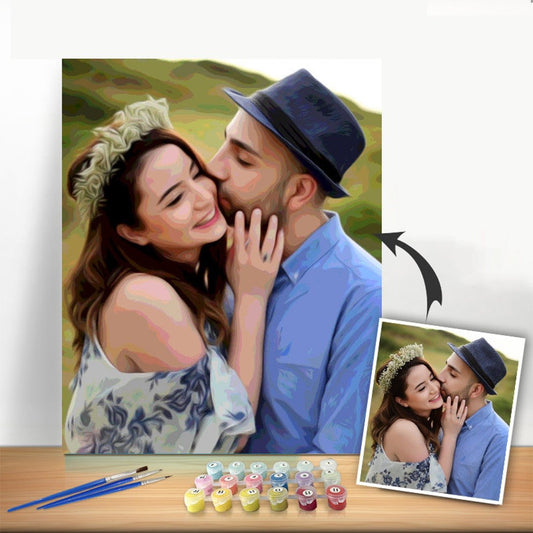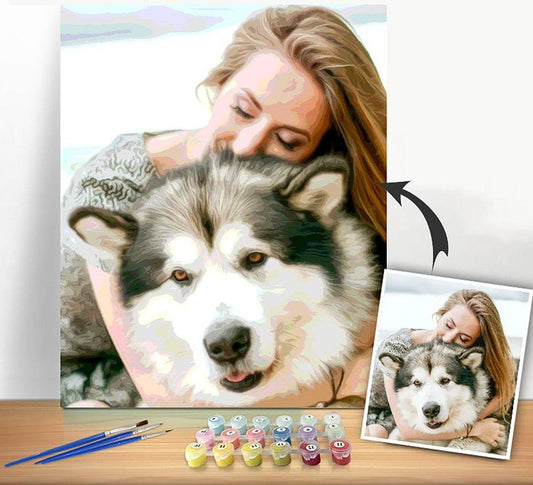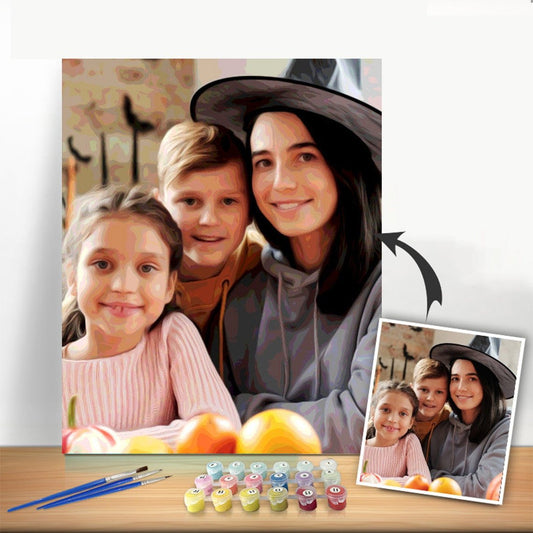

Welcome to the rewarding world of paint-by-numbers, a hobby that blends mindfulness with creativity. Whether you're aiming for a therapeutic escape or looking to create a stunning piece of art, the journey from a numbered canvas to a finished painting is incredibly satisfying. However, a few expert techniques can elevate your artwork from good to gallery-worthy.
In this guide, we'll share six practical, game-changing paint by numbers tips that will help you avoid common pitfalls and achieve a professional, polished result. Mastering these simple strategies will improve your technique, streamline your process, and make your finished piece look more vibrant and cohesive. We'll cover everything from how to organize your workspace for maximum efficiency to the best way to apply paint for smooth, even coverage. Let’s unlock your inner artist and transform that numbered canvas into a masterpiece you'll be proud to display.
1. Start with the Darkest Colors First
A fundamental yet powerful strategy for achieving a professional-looking paint-by-numbers piece is to begin with your darkest colors and work your way to the lightest. This method provides a strong foundation for your artwork, creating depth and contrast from the very beginning. By establishing the shadows and darkest areas first, you build the painting’s structure logically.
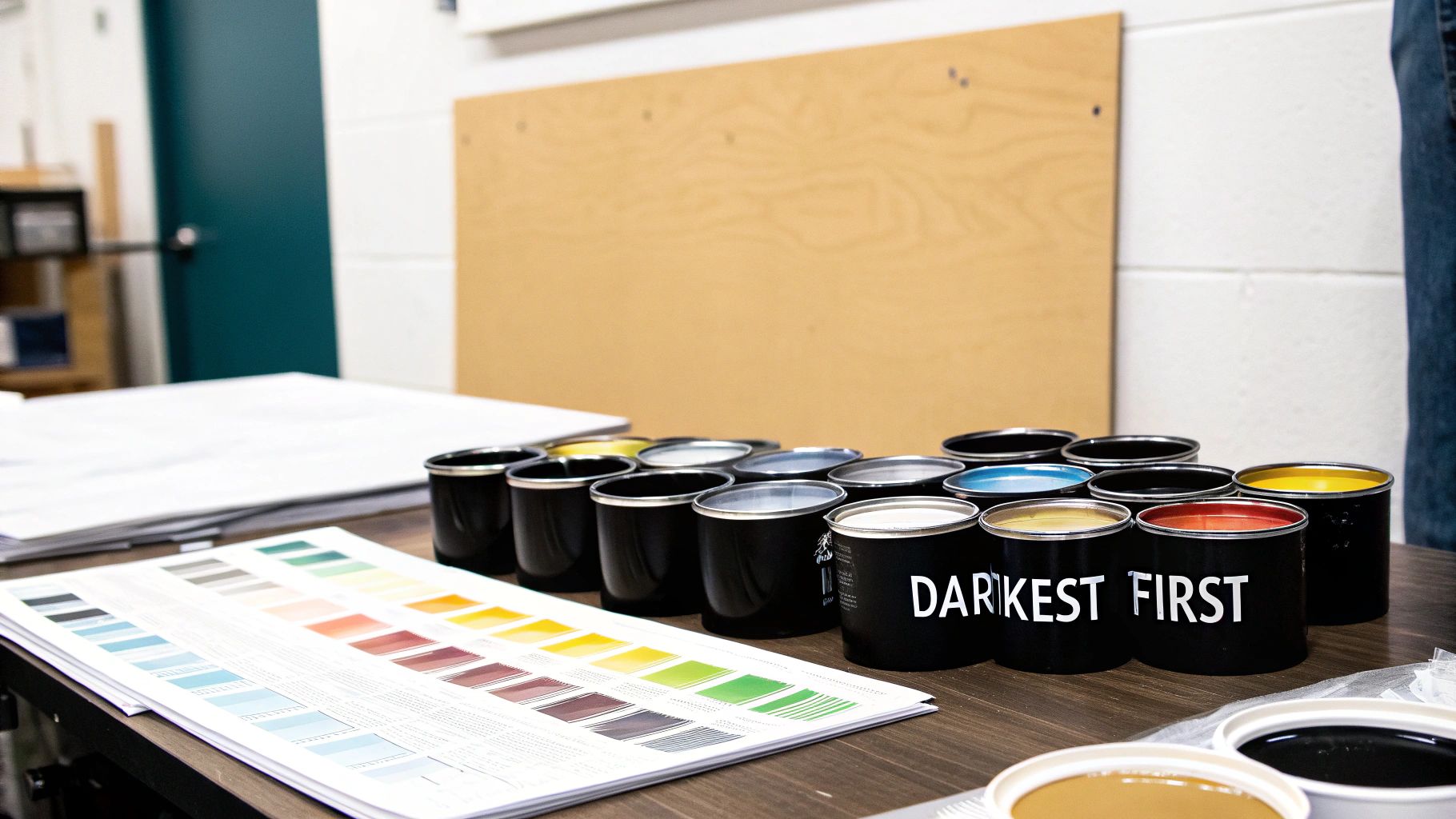
This approach is one of the most practical paint by numbers tips because it simplifies corrections. If you accidentally paint outside a dark-colored section, the mistake is much easier to cover with an adjacent lighter, more opaque paint. The reverse is not true; covering a light-colored mistake with a darker shade often requires multiple coats and can lead to a muddy appearance.
Why This Method Works
Working from dark to light is a classic painting technique that helps maintain clean, crisp lines between colors. Dark pigments can easily bleed into or stain lighter ones, but by letting the dark sections dry completely first, you create a solid, stable border for the lighter paints that will be applied later.
Pro Tip: This method also helps you manage your paint more effectively. You can finish all sections of one dark color across the entire canvas before cleaning your brush and moving to the next, saving time and water.
Actionable Steps for Implementation:
- Organize Your Paints: Before you even dip your brush, arrange your paint pots in order from darkest to lightest. This visual guide makes the process seamless.
- Complete One Color at a Time: Focus on filling in every section numbered for your darkest color. Once finished, move to the next darkest, and so on.
- Allow for Drying Time: Be patient. Ensure each dark area is completely dry before painting a neighboring lighter section to prevent smudging and color mixing.
For those interested in creating custom shades, understanding how pigments interact is key. You can find more information in this essential acrylic paint mixing guide to further refine your color work.
2. Use the Proper Brush Technique and Stroke Direction
Mastering your brush control is a transformative step in elevating your paint-by-numbers project from a simple craft to a piece of art. Using consistent stroke directions, applying the right pressure, and selecting the correct brush for each section ensures smooth, even paint coverage. This technique prevents streaking and creates a clean, professional finish that enhances the overall visual flow of the painting.
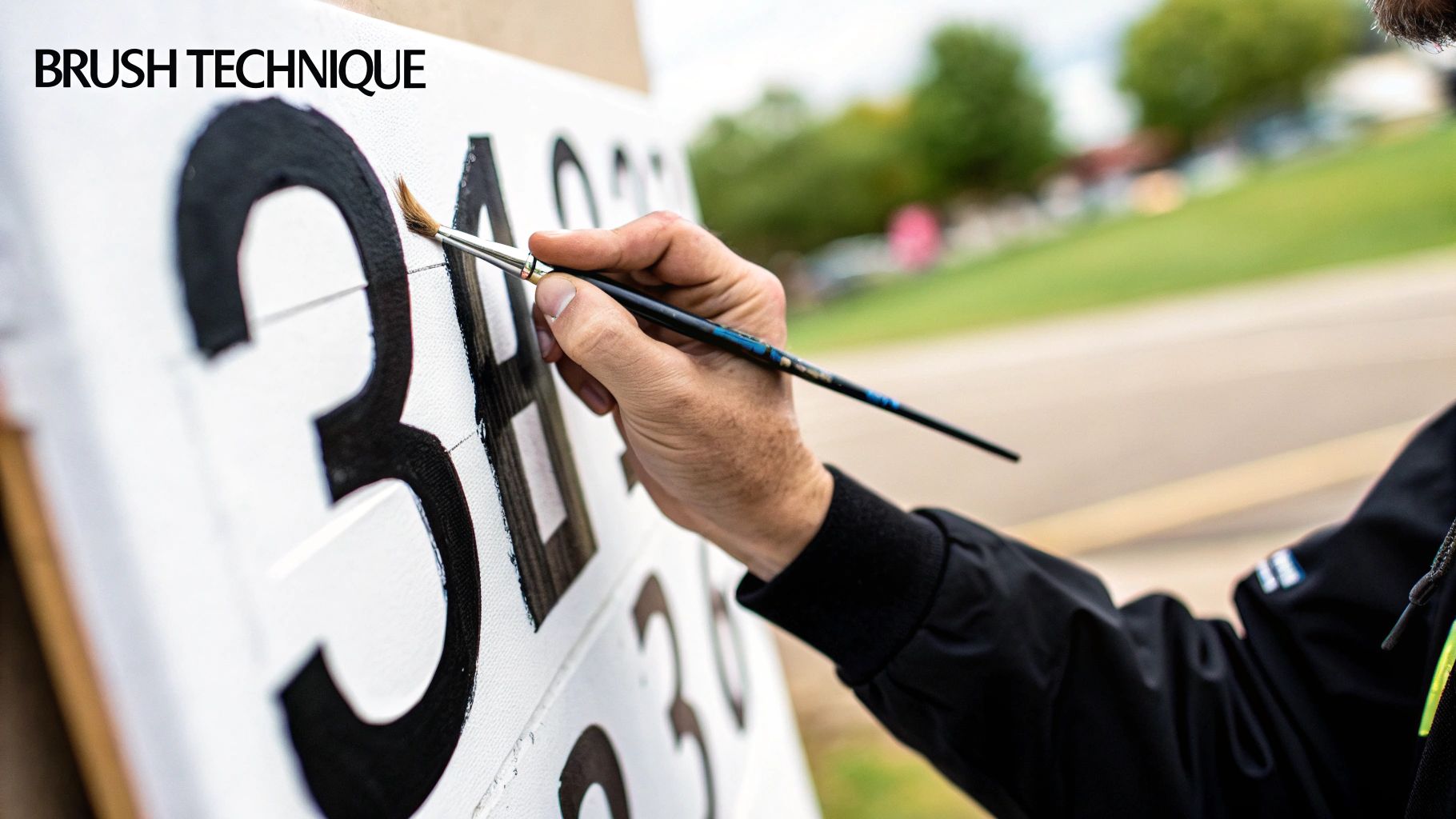
This method is one of the most effective paint by numbers tips because it directly impacts the texture and neatness of your work. By painting in one consistent direction within a single numbered area, you create a cohesive look that mimics the deliberate strokes of a traditional painter. This approach is fundamental in art schools and is a core principle in methodologies like the Bob Ross painting technique.
Why This Method Works
A steady hand and a consistent stroke pattern help manage the paint's application, preventing blotches and uneven layers. When you paint in the same direction, the tiny ridges left by the brush bristles all align, which reflects light more uniformly and gives the finished section a smoother appearance. This prevents the chaotic, textured look that can result from haphazard brushwork.
Pro Tip: For better control, hold the brush like a pencil, not a hammer. This grip gives you more precision and helps reduce hand fatigue during long painting sessions, allowing you to tackle intricate details with ease.
Actionable Steps for Implementation:
- Match the Brush to the Section: Use the smallest brushes for tiny, detailed areas and switch to larger brushes for filling in broad, open spaces. This saves time and prevents you from going outside the lines.
- Maintain a Single Stroke Direction: Within each numbered segment, try to apply all your strokes in the same direction, either horizontally, vertically, or diagonally.
- Apply Light, Even Pressure: Pressing too hard can cause the paint to bleed under the lines and create thick ridges. A light, steady hand ensures a clean and even coat.
- Use the Tip and the Side: Use the very tip of your brush for fine lines and sharp corners. For filling in the middle of a section, use the flat side of the bristles for wider, smoother coverage.
For a visual demonstration of how to control your brush for different effects, this video offers excellent guidance:
3. Organize Your Workspace and Materials Systematically
A well-organized workspace is the unsung hero of a successful paint-by-numbers project. Creating a dedicated and systematic setup not only streamlines the painting process but also enhances your focus and enjoyment. By arranging your lighting, paints, and tools logically, you minimize distractions and prevent common mistakes like spilling water or using the wrong color.

This methodical approach is one of the most effective paint by numbers tips because it helps you maintain a state of creative flow. Instead of searching for a brush or the right paint pot, everything you need is within arm’s reach. This preparation transforms your painting session from a potentially chaotic activity into a relaxing, mindful experience, which is a core appeal of the hobby.
Why This Method Works
An organized environment reduces cognitive load, allowing your brain to focus entirely on the creative task of painting. Proper lighting prevents eye strain and ensures color accuracy, while a systematic layout of materials prevents accidental spills and mix-ups. This principle, popularized by organization experts and taught in art schools, treats your setup as an essential part of the artistic process itself.
Pro Tip: Use two separate water cups. Designate one for rinsing the heavy pigment from your brushes and a second one with clean water for thinning paint or giving the brush a final rinse. This keeps your colors pure and vibrant.
Actionable Steps for Implementation:
- Set Up Proper Lighting: Position your workspace near a window for natural light or use a daylight LED bulb (5000K-6500K) to see colors accurately without shadows.
- Arrange Paints Logically: Line up your paint pots in numerical order. This simple step saves you time and prevents you from grabbing the wrong shade in the middle of a detailed section.
- Keep Tools Within Reach: Place your brushes, paper towels, and cotton swabs for corrections on your dominant-hand side for easy access.
- Angle Your Canvas: Use a small easel or prop your canvas at a comfortable 45-degree angle to improve your posture and get a better view of your work.
A tidy space is the foundation of a great painting experience. For a deeper dive into creating the perfect creative environment, explore these tips on how to organize art supplies for maximum efficiency.
4. Take Regular Breaks and Work in Good Lighting
One of the most overlooked yet crucial paint by numbers tips involves your environment and stamina. Painting in good lighting and taking regular breaks prevents eye strain, reduces errors, and helps maintain focus. This simple practice ensures both the quality of your artwork and your personal comfort during long, creative sessions.
Working for extended periods can lead to hand fatigue and a loss of precision, resulting in smudges or painting outside the lines. Proper lighting is equally important, as it allows you to see the true colors of your paints and the tiny, numbered sections on the canvas, preventing mistakes that are difficult to correct later.
Why This Method Works
Your physical and mental state directly impacts the quality of your painting. By taking scheduled breaks, you give your eyes and hands a much-needed rest, which improves your concentration when you return to the canvas. Good lighting eliminates shadows and color distortion, ensuring you are applying the right paint to the right section with accuracy. Many occupational therapists recommend these practices for hobby painters to avoid repetitive strain.
Pro Tip: Stepping away from your painting during a break gives you a fresh perspective. When you return, you'll see your progress from a distance and can more easily spot areas that need attention or correction.
Actionable Steps for Implementation:
- Set a Timer: Work in focused intervals of 30-45 minutes. When the timer goes off, step away for at least 5-10 minutes.
- Practice Eye Care: Use the 20-20-20 rule. Every 20 minutes, look at something 20 feet away for 20 seconds to reduce eye strain.
- Optimize Your Lighting: Use a daylight or full-spectrum bulb in a desk lamp positioned to shine directly on your canvas without creating shadows from your hand or brush.
- Stretch Regularly: During your breaks, perform simple hand and wrist stretches to prevent cramping and fatigue, keeping your brush strokes steady.
5. Keep Paints Fresh and Properly Sealed
Nothing disrupts a creative session more than discovering your acrylic paints have dried out. Keeping your paints fresh and properly sealed is a crucial practice that ensures consistent color quality, smooth application, and prevents unnecessary waste. Properly maintained paints provide the vibrant, workable consistency you need to bring your artwork to life without interruption.
This simple habit is one of the most effective paint by numbers tips for extending the life of your kit. Acrylic paints, which are standard in most kits, are water-based and begin to dry the moment they are exposed to air. By minimizing air exposure and storing them correctly, you guarantee that your colors remain creamy and usable from the first brushstroke to the last.
Why This Method Works
Proper sealing and storage prevent the water in the acrylic paint from evaporating, which is the primary cause of drying and hardening. An airtight seal locks in moisture, maintaining the paint's intended viscosity and pigment distribution. Storing paints in a cool, dark place also protects them from heat and sunlight, which can accelerate the drying process and alter the paint's chemical composition.
Pro Tip: If you notice a paint pot is starting to thicken, add one or two drops of water or an acrylic flow improver and stir gently with a toothpick. This can often revive the paint to its original consistency.
Actionable Steps for Implementation:
- Seal Immediately: Make it a habit to snap the lid shut on your paint pot immediately after dipping your brush. Don't leave it open while you work.
- Clean the Rims: Before closing a pot for a longer period, wipe the rim and the inside of the lid clean. Dried paint debris can prevent an airtight seal.
- Store Correctly: Keep your paints in a cool, dry location away from direct sunlight or extreme temperatures. A drawer or a sealed plastic bag works perfectly.
- Use a Wet Palette: For extended painting sessions, transfer a small amount of the colors you need onto a DIY or commercial wet palette. This will keep them workable for hours or even days.
To dive deeper into the science of acrylics and how to best manage them, this guide on how long it takes for acrylic paint to dry provides valuable insights into their properties.
6. Clean Brushes Thoroughly Between Colors
One of the most critical yet often overlooked habits for a clean, vibrant paint-by-numbers result is thoroughly cleaning your brushes between each color change. This practice is essential for maintaining color purity, ensuring that a stray speck of dark blue doesn't accidentally turn a brilliant yellow into a murky green. Proper brush care prevents muddying and keeps your painting’s colors true to the artist's original intent.
This simple discipline is one of the most impactful paint by numbers tips for achieving sharp, distinct color boundaries. It also significantly extends the life of your brushes, keeping the bristles in good condition so you can paint fine details with precision from the first section to the last. Without proper cleaning, dried paint can build up in the ferrule (the metal part), causing the bristles to splay and lose their shape.
Why This Method Works
Thorough cleaning removes all residual pigment, so each new color you apply is pure and unadulterated. This prevents accidental mixing on the canvas, which can dull the overall vibrancy of your artwork. A clean brush also performs better, allowing for smoother paint application and better control, which is crucial for navigating the small, intricate sections common in paint-by-numbers kits.
Pro Tip: For a deep clean after your painting session, use a gentle brush soap like The Masters Brush Cleaner. It conditions the bristles while removing stubborn, dried-on paint, restoring them to like-new condition.
The infographic below illustrates a simple yet effective three-step process for daily brush cleaning.
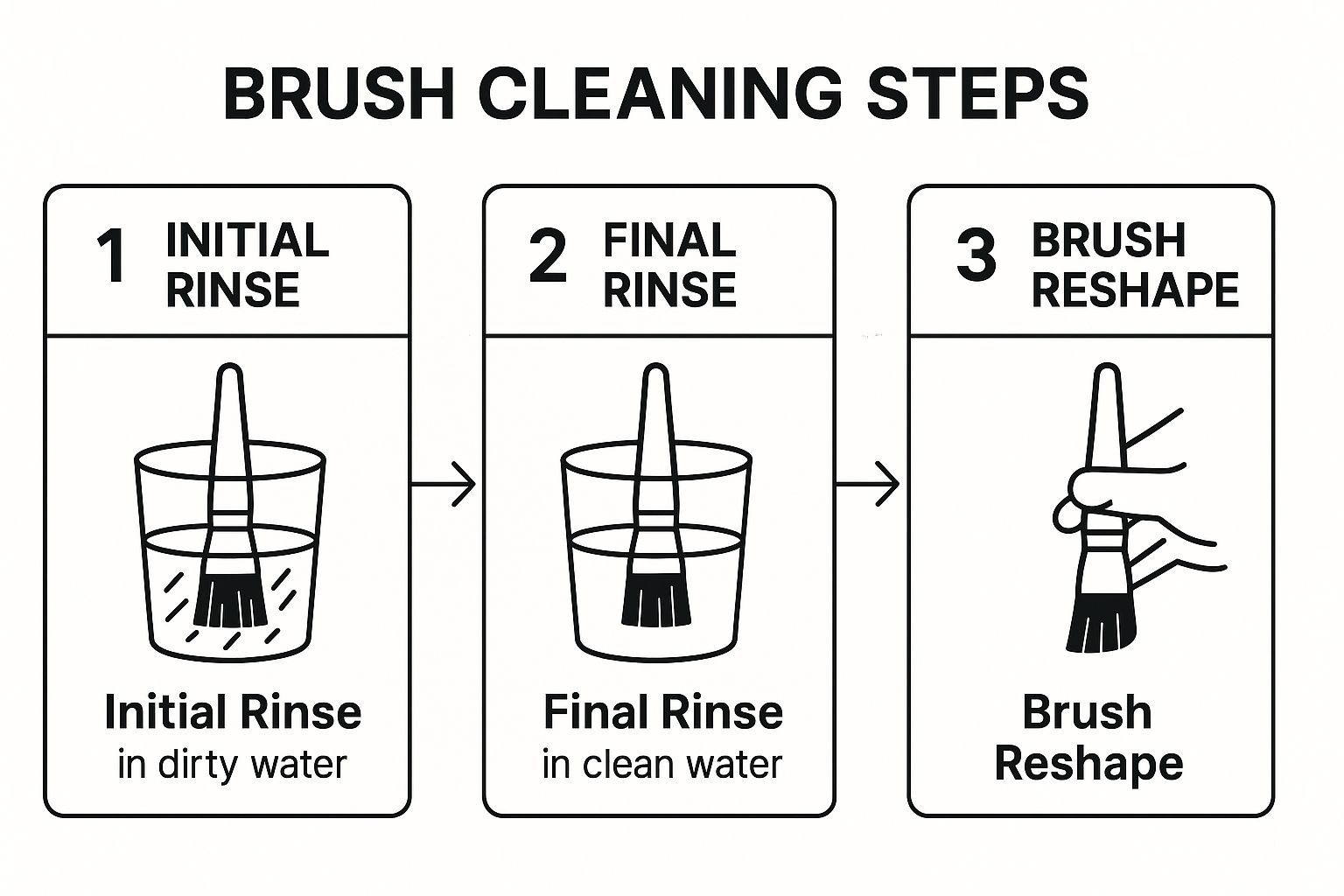
This workflow ensures that pigment is effectively removed and the brush is properly prepared for its next use or for storage.
Actionable Steps for Implementation:
- Use the Two-Cup System: Set up two containers of water. Use the first for the initial rinse to remove the bulk of the paint, and the second for a final, thorough rinse until the water runs clear.
- Wipe, Don't Scrub: After rinsing, gently blot and wipe the bristles on a paper towel or a clean cloth to remove any remaining pigment and excess water. Avoid harsh scrubbing.
- Reshape the Tip: While the bristles are still damp, use your fingers to gently reshape them into a fine point. This helps the brush maintain its original shape for detailed work.
By integrating these steps into your routine, you'll see a noticeable improvement in the quality and crispness of your final piece. For a more detailed guide, you can learn more about how to clean your paint brushes effectively to keep your tools in top shape.
6 Essential Paint by Numbers Tips Comparison
| Technique | Implementation Complexity 🔄 | Resource Requirements ⚡ | Expected Outcomes 📊 | Ideal Use Cases 💡 | Key Advantages ⭐ |
|---|---|---|---|---|---|
| Start with the Darkest Colors First | Low 🔄 (Beginner-friendly) | Moderate ⚡ (Organized paint order) | Clear color boundaries; easier error correction | Paint-by-number kits, beginners, contrast work | Prevents muddy mixing; saves correction time |
| Use Proper Brush Technique and Stroke Direction | Medium 🔄 (Practice needed) | Moderate ⚡ (Various brush sizes) | Smooth, professional finish; uniform texture | Detailed areas; improving brush control skills | Reduces streaking; improves coverage efficiency |
| Organize Workspace and Materials Systematically | Low-Medium 🔄 (Setup time needed) | Moderate ⚡ (Lighting, storage) | Faster workflow; fewer errors; better comfort | Long sessions; hobbyists wanting efficiency | Enhances visibility; prevents accidental mixing |
| Take Regular Breaks and Work in Good Lighting | Low 🔄 (Requires discipline) | Low ⚡ (Good lighting setup) | Reduced eye strain; sustained accuracy | Extended painting sessions; health focus | Improves focus; prevents fatigue and injuries |
| Keep Paints Fresh and Properly Sealed | Medium 🔄 (Ongoing maintenance) | Low-Moderate ⚡ (Storage supplies) | Maintains paint quality; reduces waste | Long-term projects; budget-conscious painters | Extends paint life; consistent application |
| Clean Brushes Thoroughly Between Colors | Medium 🔄 (Time-consuming steps) | Moderate ⚡ (Cleaning tools) | Pure colors; longer brush life; professional look | Multi-color projects; quality-focused painters | Prevents muddy colors; extends brush life |
Your Next Masterpiece Awaits
You now have a complete toolkit of practical, effective paint by numbers tips designed to elevate your art from a simple hobby to a stunning personal creation. The journey to a beautiful finished piece is built on small, intentional actions, and you've just learned the most impactful ones.
Remember that the process begins long before the first drop of paint touches the canvas. By systematically organizing your workspace and materials, you create an environment of calm and focus. This preparation allows you to fully immerse yourself in the creative flow, making each session more productive and enjoyable.
The core of your success, however, lies in the application. Starting with the darkest colors establishes depth and prevents accidental smudging, while mastering deliberate brush strokes brings texture and life to your work. These are not just rules; they are techniques used by artists to build a painting with intention and skill. Paired with diligent habits like keeping your paints fresh and your brushes pristine, these methods ensure your colors remain vibrant and your lines stay crisp from the first number to the last.
Ultimately, these paint by numbers tips are about transforming a guided activity into a personal artistic expression. Each numbered section you complete is a small victory, a step forward in a meditative process that rewards patience and practice. You are no longer just filling in spaces; you are building a masterpiece, one deliberate, confident brushstroke at a time. Embrace the journey, trust the process, and watch as a blank, numbered canvas blossoms into a work of art that is uniquely yours.
Ready to put these expert techniques into practice? Explore our collection of high-quality kits at Custom Paint By Numbers, or turn your most cherished photograph into a personalized canvas. Create a truly unique piece of art that tells your story today by visiting Custom Paint By Numbers.