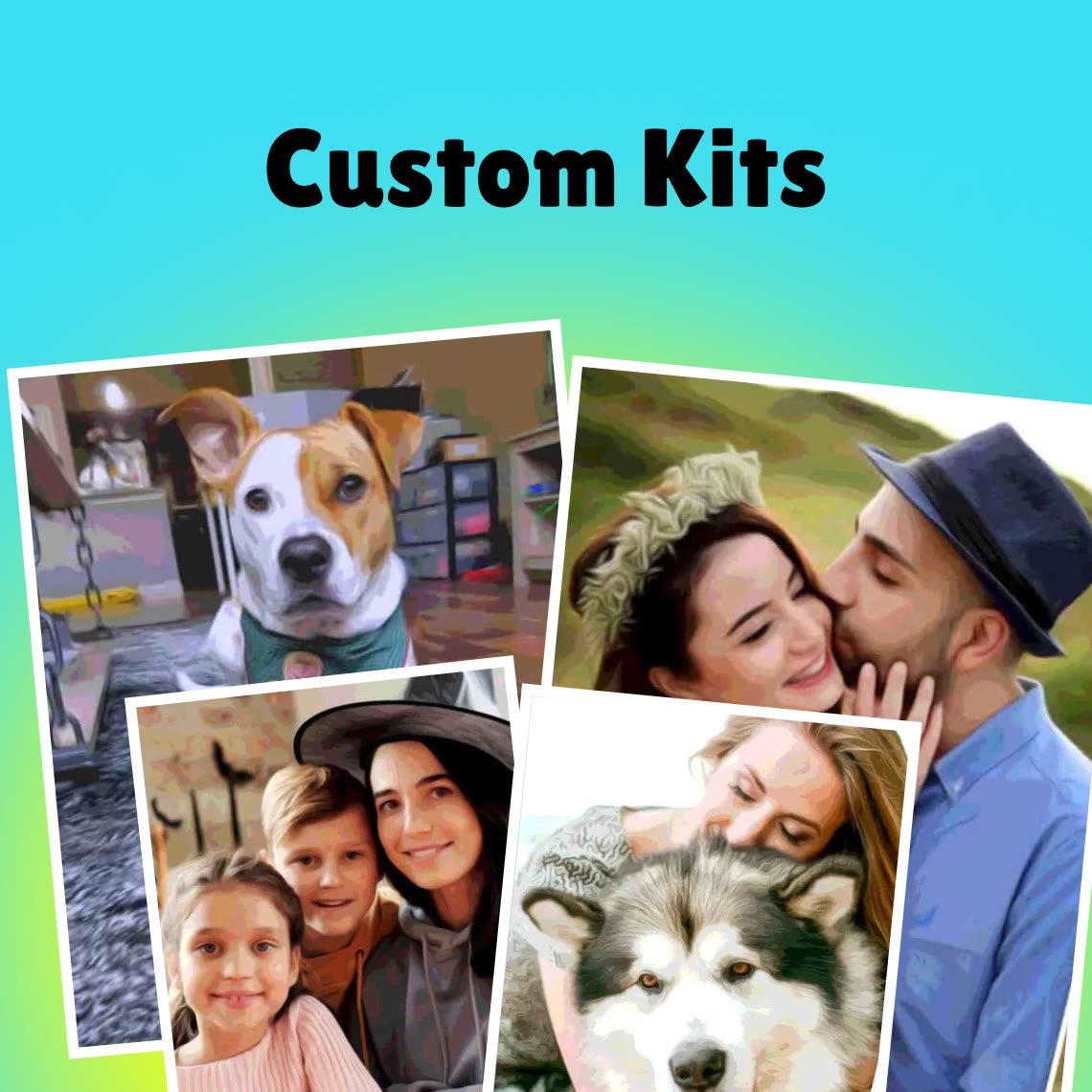

Picking the right custom canvas size can feel a bit daunting. You’ve got this great photo, but get the size wrong, and the final piece just looks… off. Get it right, though, and you have a stunning personal centerpiece for your home. This guide will walk you through how to nail that perfect size every time.
Why Your Custom Canvas Size Matters So Much
Think of choosing a canvas size as the final, crucial step in bringing a memory to life. It’s less about numbers and more about how the art will feel in your space. A small canvas can get totally lost on a large wall, while a massive one can easily overwhelm a cozy corner. The goal is to find that sweet spot where your art enhances the room instead of fighting with it.

This decision is about more than just measurements. It’s about turning an emotional moment into a physical object that fits perfectly into your daily life. The size you choose influences:
- Visual Impact: Is this going to be a subtle accent or a show-stopping focal point? The scale makes all the difference.
- Room Harmony: The right size works with your furniture and layout, not against it, creating a cohesive, professionally designed feel.
- Personal Expression: Custom sizing is your chance to create something truly one-of-a-kind, elevating a simple photo into meaningful art.
The Shift Toward Personalized Decor
It's clear that people are moving away from generic, mass-produced decor. We all want our homes to reflect who we are, and custom art is a huge part of that.
The global canvas frames market is expected to hit US$7.0 billion by 2032, a boom driven almost entirely by our growing desire for personalized home art.
This isn’t just a passing trend. It shows how much we value unique pieces that tell our stories. By figuring out how to select the ideal custom canvas size, you're not just hanging a picture—you're making your space your own. If you're curious about the numbers, you can dive into the canvas frames market trends from Persistence Market Research.
Matching Photo Quality to Canvas Dimensions
The secret to a stunning canvas print? It all starts with a high-quality photo. That great shot on your phone looks sharp on a small screen, but blowing it up for a wall-sized canvas can be a different story. If the resolution isn't there, you'll end up with a blurry, pixelated mess.
Think of it like this: your photo is made of tiny dots called pixels. The more pixels you have (higher resolution), the more detail is packed in. This detail is what allows you to print a large, crisp image without it looking fuzzy.
First Things First: Check Your Photo's Resolution
Before you even start dreaming about that giant canvas over the sofa, you need to know what your photo can handle. It’s a crucial step that prevents any "oh no, it's blurry" moments later on.
Most modern smartphones, typically with 12 megapixels (MP) or more, are fantastic for prints up to 16x20 inches. A professional-grade photo from a DSLR camera, on the other hand, likely has enough detail for a huge 30x40 inch statement piece.
Not sure what you have? Here’s how to quickly check the pixel dimensions:
- On a PC: Right-click your image file, select "Properties," and head to the "Details" tab.
- On a Mac: Open the image in the Preview app, click "Tools" in the top menu, and then "Show Inspector."
As a rule of thumb, make sure your photo has at least 100 pixels for every inch of the canvas. So for a 20x30 inch print, you'll want an image that's at least 2000x3000 pixels.
This quick check is your best defense against disappointment.
To make this even easier, I've put together a quick reference table. It shows the maximum recommended canvas size for common camera resolutions, helping you match your photo's potential to your wall's ambition.
Image Resolution to Max Canvas Size Guide
| Camera/Phone Megapixels (MP) | Image Dimensions (Pixels) | Maximum High-Quality Canvas Size (Inches) |
|---|---|---|
| 8 MP | 3264 x 2448 | 16" x 20" |
| 12 MP | 4000 x 3000 | 20" x 30" |
| 16 MP | 4920 x 3264 | 24" x 36" |
| 24 MP | 6000 x 4000 | 30" x 40" |
| 36 MP+ | 7360 x 4912+ | 40" x 60" or larger |
Just find your camera's megapixel count on the left, and you’ll get a solid idea of how large you can print your photo while keeping everything looking sharp and professional.
Don't Forget the Aspect Ratio
Okay, so your resolution is good to go. The next piece of the puzzle is the aspect ratio, which is just the shape of your photo—the relationship between its width and height.
Ever tried to fit a long, panoramic photo into a square frame? You have to chop off the ends. The same thing happens with canvas. A standard 4x6 photo has a 2:3 aspect ratio. If you try to force it onto a square 20x20 inch canvas, you'll have to crop out a huge chunk of your image, which could completely ruin the original composition.
When you're editing, exploring different wedding photography editing styles can give you ideas on how to crop creatively, but the easiest path is to pick a canvas size that matches your photo’s natural shape. This way, the beautiful scene you captured is the one that ends up on your wall.
And if you want to turn that photo into something truly unique, you could even make it an interactive art piece. Check out our guide on creating a paint by numbers from your photo to get started.
Designing for Your Space with Scale and Placement
Now, let's start thinking like an interior designer. The right custom canvas size doesn't just hang on a wall—it becomes part of the room's atmosphere. A canvas print should feel like it belongs, and getting the scale and placement right is what makes it look intentional and harmonious. Before you even think about ordering, grab a tape measure.
Here’s a simple trick I always recommend: use painter's tape to outline the size of your potential canvas directly on the wall. It takes just a few minutes, but it lets you step back and really see how it will feel. You can check the scale against your furniture and make sure it fits the room's flow before you commit.
Finding the Perfect Spot
Where your canvas will live is a huge factor in choosing its size. A massive print can easily overwhelm a small entryway, while a tiny one will look completely lost floating above a sprawling sofa.
Here are a few common scenarios I run into:
- Above a Sofa or Headboard: A great rule of thumb is to choose a canvas that's about two-thirds the width of the furniture below it. This creates a really balanced, anchored look.
- On a Large, Empty Wall: This is your chance to go big! A single, large-scale piece, maybe a 30x40 or even 40x60 inch canvas, can become an incredible focal point.
- In a Narrow Hallway: Instead of one big piece, try a series of smaller custom canvases hung together or a long panoramic print. This guides the eye down the hallway and adds interest without feeling cramped.
Figuring out how a canvas will fit into your home, especially in cozier spots, often requires some creative thinking. For a little more inspiration, check out these small room decorating ideas.
The photo source you're using also plays a big role in how large you can print your canvas. This chart gives you a quick visual guide.
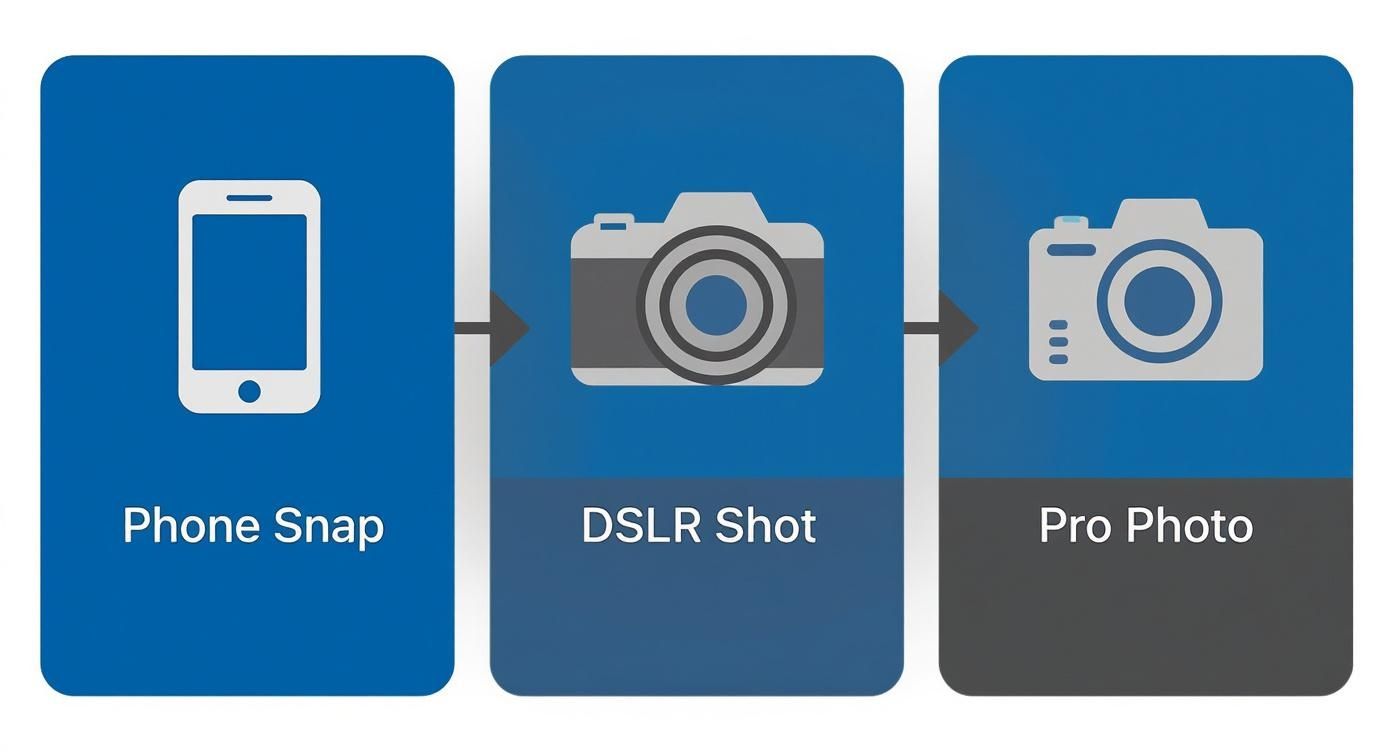
As you can see, a quick snap from your phone is perfect for smaller prints, but you'll need the high resolution from a professional camera to create those truly stunning, large-scale statement pieces.
Pro Tip: Always leave some "breathing room" around your canvas. A good guideline is to hang art so its center is at eye level—usually about 57-60 inches from the floor. And when hanging above furniture like a sofa, leave at least 6-8 inches of space between the top of the furniture and the bottom of the canvas.
The demand for personalized art like this is growing like crazy. The global stretched canvas market was valued at around US$1.5 billion in 2025 and is on track to hit US$2.3 billion by 2032. This boom is all about people's growing interest in DIY projects and visual arts, where custom options let everyone get creative.
Once you’ve found that perfect size, you'll want to make sure it looks its best for years to come. Our guide on how to frame canvas paintings has everything you need to give your new artwork a polished, professional finish.
Picking the Right Wrap and Depth for Your Canvas
Once you've locked in the dimensions, the next step is to think about the finishing touches: the wrap style and the depth of the frame. These details are what truly elevate a print from a simple photo to a piece of gallery-worthy art, defining how it looks from the sides and how much presence it has on your wall.
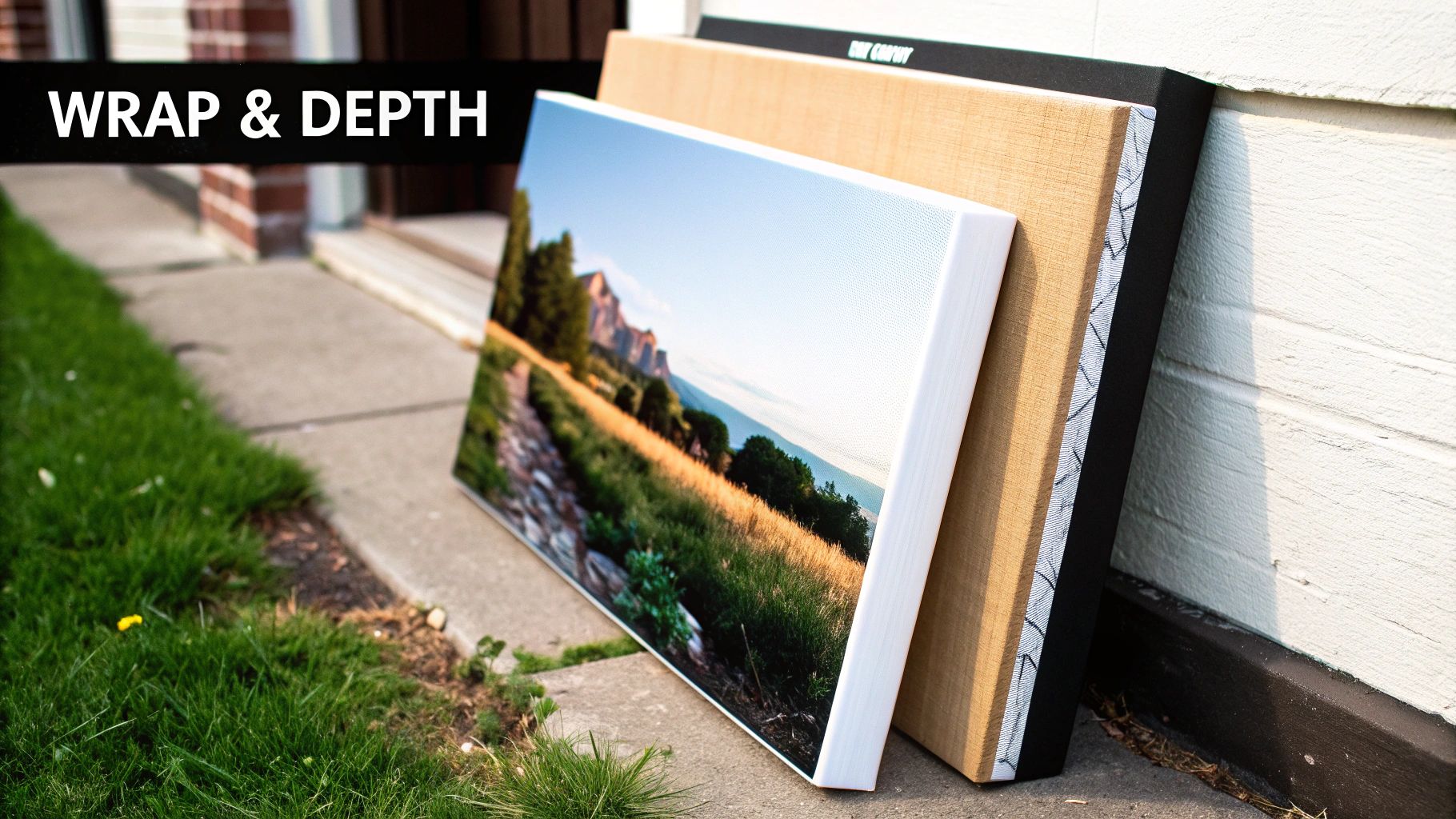
A gallery wrap is a very popular, contemporary look. With this style, your image actually wraps around the edges of the wooden frame. It creates a cool, seamless effect that’s perfect for sprawling landscapes or abstract art where the edges aren’t critical to the main subject.
The alternative is a museum wrap. This keeps your entire photo on the front face of the canvas, while the sides are a solid color—most often black or white. If you're printing a portrait or a photo where every pixel at the edge counts, this is absolutely the way to go. You won't lose an inch of your composition.
How Deep Should the Frame Be?
The thickness of the internal frame, or stretcher bars, also makes a huge visual difference. You’ll usually see two standard options: a slimmer 0.75-inch frame or a chunkier 1.5-inch frame.
- Standard Depth (0.75"): This is a great, understated choice for smaller canvases. It's also the best pick if you think you might want to put the canvas into a separate decorative "floater" frame later on.
- Gallery Depth (1.5"): The thicker frame gives your art some real heft and presence on the wall. It feels more substantial and high-end, making it a fantastic option for medium-to-large pieces that will hang on their own.
From my experience, choosing the deeper 1.5-inch frame instantly makes a canvas feel more like a serious art object. It gives the piece a visual weight that a thinner frame just can't match.
The demand for custom art is booming, with the artist canvas market expected to hit US$5 billion by 2035. People want unique pieces that reflect their personal style, and getting these details right is a huge part of that. If you want to dive deeper into the technical side of things, our guide on how to properly stretch a painted canvas is a great resource. You can also explore the market trends and evolving consumer preferences for canvas from Wise Guy Reports.
Your Final Pre-Order Sanity Check
Alright, before you click that "buy" button, let's just do one last quick run-through. This isn't about having second thoughts; it's about making sure you're absolutely thrilled when that canvas arrives at your door. Think of this as your final once-over to guarantee a perfect fit for both your photo and your wall.
We'll just quickly touch on three key areas. A quick nod to each of these points will give you total peace of mind that you’ve nailed the details.
The Final Three-Point Check
-
Is Your Photo Up to Snuff? Take one last look at your image quality. Is the resolution solid enough for the size you want to print? As a rule of thumb, you really want at least 100 pixels for every inch of canvas to avoid any hint of blurriness.
-
Did You Check Your Space (Twice)? Go back to that spot on the wall. Are your measurements still looking good? That painter's tape outline you made is your best friend here. Make sure the canvas size feels right next to your furniture and has enough breathing room on all sides.
-
Have You Picked Your Finishing Touches? Did you settle on the wrap style and frame depth? Just confirm if you’re going for that clean gallery wrap or the more traditional museum wrap. And remember, that 1.5" depth can really give your photo a substantial, professional presence on the wall.
Walking through this simple checklist is the difference between hoping it looks good and knowing it will look incredible. It’s that final little step to ensure your favorite memory becomes a piece of art you'll love for years.
Still Have Questions About Custom Canvas Sizes?
Even with the best planning, a few practical questions always seem to come up right before you hit that "order" button. Let's tackle some of the most common ones I get asked all the time.
Can My Smartphone Photo Really Look Good on a Big Canvas?
This is a big one, and the answer is almost always yes! You'd be surprised at the quality you can get from a modern phone.
Most smartphone cameras with 12MP or more can handle a 16x20 inch print beautifully, often even larger. The secret isn't the file size (in MB), but the actual pixel dimensions of your photo.
As a quick rule of thumb, you want at least 100 pixels for every inch of the final print. So, for a 16x20 inch canvas, you’d want your image to be at least 1600x2000 pixels. Most phones today easily clear that hurdle.
Any Tips for Picking Sizes for a Gallery Wall?
Ah, the gallery wall! It's an art form in itself. My go-to strategy is to start with one large "anchor" piece—something like a 24x36 inch canvas—to center the whole arrangement.
From there, you can add smaller pieces like 11x14s and 8x10s around it.
Here's a pro tip I swear by: lay everything out on the floor first. This lets you play with the spacing and arrangement until it feels just right, before you put any holes in the wall. A custom canvas is perfect for filling in an awkward gap and giving the layout a truly professional, cohesive look.
What About My Panoramic Shot? Can That Be a Canvas?
Absolutely! Panoramic photos make for incredible, dramatic canvases. They're a perfect fit for those long, narrow spaces above a sofa, a headboard, or down a hallway.
The key here is getting the aspect ratio right. To make sure nothing important gets cropped out, you'll want a canvas that shares the same long-and-skinny shape as your image. While you might find a standard 12x36 or 20x60 inch canvas, ordering a custom canvas size is the only way to guarantee a perfect match to your photo's unique dimensions.
Ready to see your favorite photo come to life? At Custom Paint By Numbers, we can turn any image into a personalized paint-by-numbers kit, made to the exact size you need. Upload your photo today and start creating your masterpiece.