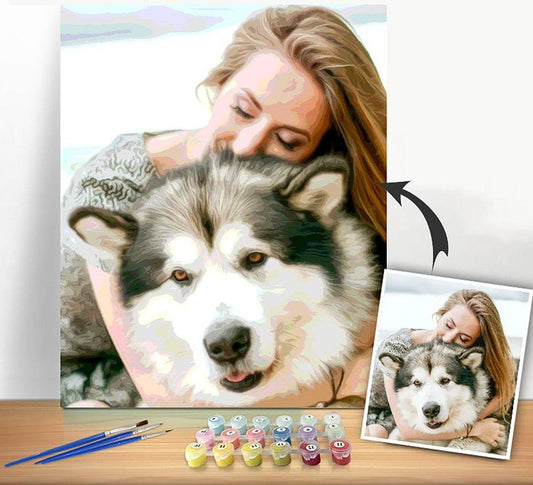

So, what can you actually do with acrylic paint? The short answer: just about anything. It’s the Swiss Army knife of the art world.
This fast-drying, water-based paint is a powerhouse of versatility, sticking to everything from wood and fabric to metal and glass. It brings vibrant, permanent color to fine art canvases, home decor projects, school crafts, and so much more.
Your Quick Guide to Acrylic Paint Possibilities
Think of acrylic paint as the ultimate creative multi-tool. It's the go-to for countless artists, crafters, and DIYers for a few simple reasons: it’s a breeze to work with, it dries quickly, and it cleans up with plain old soap and water when it's wet. But once it dries? It transforms into a tough, water-resistant surface that’s built to last.
This unique combination makes it a perfect match for an incredible range of projects. Whether you're a seasoned artist layering glazes on a massive canvas or a parent helping with a last-minute school diorama, acrylics deliver brilliant, reliable results every time.
A Paint for Every Project
The magic of acrylics goes way beyond traditional painting on a canvas. Its knack for sticking to both porous surfaces (like wood or paper) and non-porous ones (like glass or plastic) opens up a whole universe of creative possibilities.
You can use it to breathe new life into an old piece of furniture, customize a pair of plain white sneakers, or even hand-paint your own ceramic mugs. It’s this incredible adaptability that makes it a must-have in any creative’s toolbox.
To give you a better sense of its range, let's look at where acrylic paint really shines. The table below offers a quick snapshot of its most popular uses.
Common Uses for Acrylic Paint at a Glance
This table breaks down some of the most common applications for acrylic paint, highlighting the surfaces it loves and why it’s often the best tool for the job.
| Application | Surfaces | Why Acrylics Work Best |
|---|---|---|
| Fine Art | Canvas, Wood, Paper | Vibrant color, fast drying time for layering, and permanent finish. |
| Crafts & Hobbies | Clay, Fabric, Glass, Metal | Strong adhesion to diverse materials and excellent durability. |
| Home Decor | Furniture, Walls, Ceramics | Great coverage, easy cleanup, and a tough, lasting surface. |
| Model Painting | Plastic, Resin | High opacity for detailed work and quick curing time. |
As you can see, from the art studio to the workshop, acrylics are up for almost any challenge you can throw at them.
Why Is Acrylic Paint So Incredibly Versatile?
Ever wondered what gives acrylic paint its magic? The secret isn't all that complicated, but it's pretty brilliant. At its heart, acrylic paint is just two things: pigment, which provides the color, and an acrylic polymer binder, which is basically the glue that holds everything together.
Think of that binder as a liquid plastic. While the paint is wet, this polymer lets the color particles float around, making it a dream to spread, blend, and mix. But as the water in the paint evaporates, those tiny polymer particles start linking up and fusing together. They trap the pigment inside, forming a tough, flexible, and permanent film.
This quick-change act—from a water-based liquid to a solid, water-resistant surface—is the key to acrylic's versatility. It's why you can wash your brushes with just soap and water while you're painting, but once your masterpiece is dry, it won't budge or smudge if a little water spills on it.
Student vs. Professional Grade: What’s the Real Difference?
When you start looking at acrylics, you’ll see paints labeled as "student" or "professional" grade. The main thing that separates them is the pigment load—a fancy way of saying how much pure color is packed into the binder.
- Student Grade Paints: These have a lower concentration of pigment and sometimes include fillers to add bulk. This makes them much more affordable, which is perfect when you're just starting out, working on a massive project, or just want to practice without worrying about the cost.
- Professional Grade Paints: You'll find these loaded with high-quality, finely-ground pigments. The result is more vibrant, intense colors and much better lightfastness (meaning they won't fade over time). Serious artists often choose these for their permanence and the huge range of colors available.
For most crafters and hobbyists, student-grade paints are more than good enough to get fantastic results. But if color brilliance and making something that lasts a lifetime are your top priorities, investing in professional paints is the way to go.
Key Takeaway: The acrylic polymer binder is the unsung hero. It gives you the easy cleanup of a water-based paint when wet and the permanence of a water-resistant finish when dry. It’s truly the best of both worlds.
The Magic of Mixing Your Own Colors
The great thing about acrylics is that you’re never stuck with just the colors you can buy in a tube. Because the binder mixes so cleanly, you can create a nearly infinite spectrum of shades. If you're new to painting, learning just a few basics of color theory can completely change your artwork. To get started, check out our detailed acrylic paint mixing guide and learn how to mix almost any color you can imagine from a few simple primaries.
There’s no denying how popular this paint is. The global acrylic paint market is expected to grow from USD 3.65 billion in 2024 to USD 6.36 billion by 2035, which just goes to show how many artists, crafters, and industries rely on it. This incredible growth highlights just how essential this adaptable paint has become for all kinds of creative work.
The Best Surfaces for Your Acrylic Paint Projects
One of the best things about working with acrylics is how forgiving they are. This paint sticks beautifully to a massive range of surfaces, which is why everyone from fine artists to weekend crafters and DIY pros keeps it on hand. Unlike fussier paints, acrylics can grip onto just about anything, from porous materials like wood and paper to slick, non-porous ones like glass or plastic.
This means you can go from painting a classic canvas one day to upcycling a tired piece of furniture the next, all with the same set of paints. The secret to a great result, more often than not, is just a little bit of prep work to make sure your surface is ready to hold that color for good.
This little flowchart gives you a peek into what makes acrylics so adaptable.
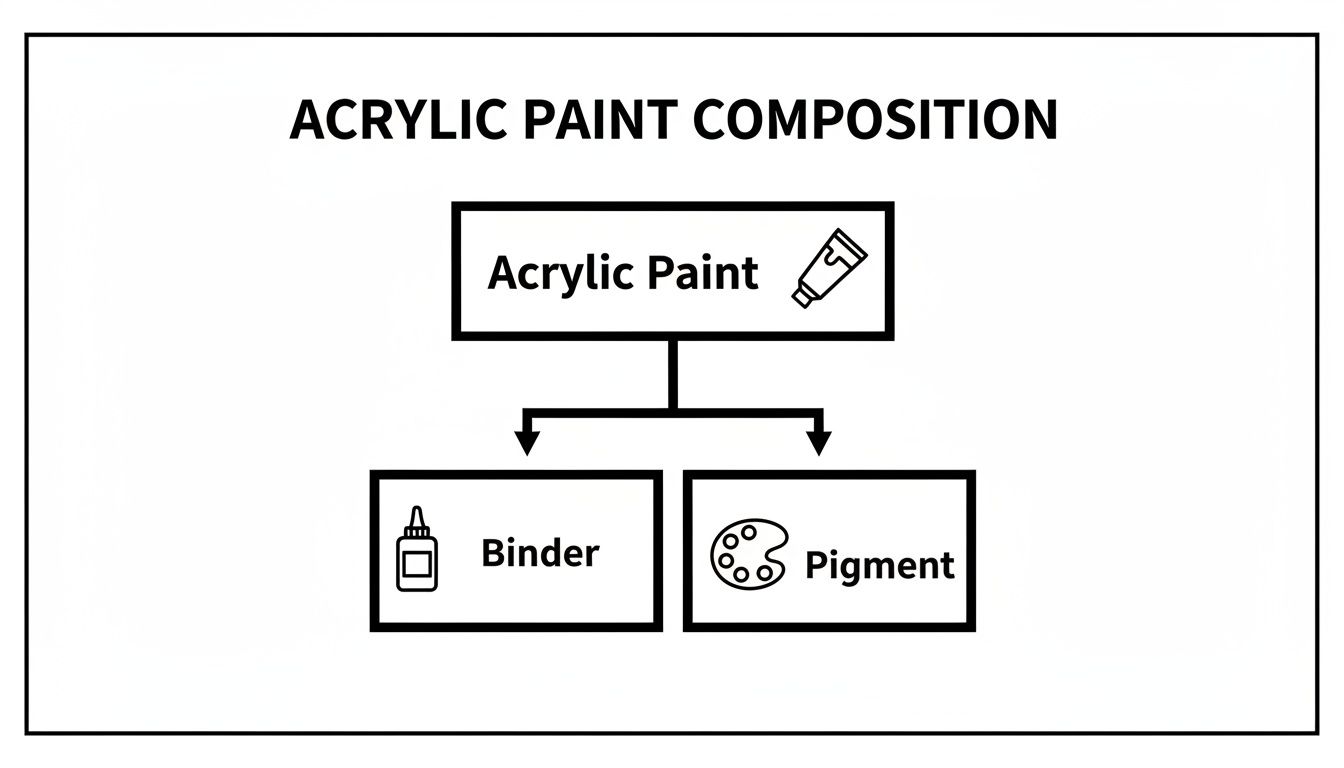
It’s that simple combination of pigment (for color) and a tough polymer binder (for stickiness) that lets acrylics work their magic on so many different materials.
Classic Art and Crafting Surfaces
When most of us think of painting, a few traditional surfaces probably pop into your head. Good news—acrylics are a perfect match for all of them, and you usually don't have to do much to get started.
- Canvas: This is the go-to for a reason. Whether you prefer stretched cotton or linen, most canvases you buy today come pre-primed with gesso. That means they're ready for paint the moment you unwrap them.
- Wood and MDF: Acrylics adhere beautifully to a variety of natural materials like wood, stone, and ceramics. If you're working with raw, unfinished wood, a quick, light sanding and a coat of gesso primer will work wonders. This stops the paint from just soaking into the grain and gives you a smooth, bright base to work on.
- Paper and Cardstock: You can definitely use acrylics on paper, but you'll want to choose a thick, heavy-grade option. Think watercolor or mixed-media paper. Thinner paper will just buckle and warp as the paint dries.
- Air-Dry Clay: This material is porous, so it practically drinks up acrylic paint. Once your clay sculpture is completely dry, you can paint right on it. A layer of primer first can help your colors really pop, though!
Expanding into Creative DIY Projects
Outside of the art studio, acrylics are a DIYer's best friend for home decor and custom projects. With the right prep, you can bring a splash of color to almost anything you can imagine.
Getting paint to stick to slick, non-porous surfaces is all about giving it something to grab onto. This usually just means cleaning the surface really well and then using a special primer designed for that material. For glass or ceramics, for instance, a quick wipe with rubbing alcohol before applying a multi-surface primer does the trick.
Pro Tip: If there's one piece of advice to take away, it's to be patient. Always let your base coat of paint dry 100% before you try to add details or another layer. If the surface is even a little tacky, the new paint can drag, skip, or even pull up the color underneath. It’s a frustrating mess you can easily avoid!
Thinking of customizing a t-shirt or some canvas shoes? You'll need to mix your acrylic paint with a fabric medium. This little additive keeps the paint flexible after it dries, so it won’t crack or peel when the fabric moves and bends.
Finally, don't forget to seal your finished work. This step is super important for durability, especially for anything that will be handled a lot or sit outside. If you want to get into the details, you can learn all about how to seal acrylic paint on canvas and other surfaces. A quick coat of varnish is all it takes to protect your project from dust, UV light, and moisture, keeping it looking great for years.
How to Prep and Seal Surfaces for Acrylic Paint
Getting a professional, long-lasting finish often comes down to what you do before and after you paint. Here’s a quick-reference table to guide you through preparing and protecting your work on some of the most common surfaces.
| Surface | Preparation Needed (Priming/Sanding) | Best Application Technique | Sealing Recommended? |
|---|---|---|---|
| Canvas | Most are pre-primed; no prep needed. You can add more gesso for extra smoothness if you like. | Brushes, palette knives, sponges—anything goes! | Yes. A varnish protects from dust and UV damage. |
| Wood | Yes. Lightly sand smooth, then apply 1-2 coats of gesso or wood primer. | Brushes or rollers for even coverage. | Yes. Use an acrylic varnish (matte, satin, or gloss) for durability. |
| Glass/Ceramic | Yes. Clean surface with rubbing alcohol, then apply a multi-surface or glass primer. | Soft-bristled brushes to minimize streaks. | Yes. Use a dishwasher-safe sealant for functional items, or a spray varnish for decorative pieces. |
| Fabric | No priming needed, but pre-wash fabric to remove sizing. Iron smooth. | Mix paint with a fabric medium. Apply with brushes. Heat-set with an iron when dry (follow medium instructions). | No. The fabric medium acts as the sealant, keeping it flexible. |
| Plastic | Yes. Lightly sand the surface, clean it, and apply a primer designed for plastic. | Thin layers applied with a brush or spray paint work best. | Yes. A clear acrylic sealer will prevent chipping and scratching. |
Following these simple steps ensures your paint has the best possible foundation and protection, so your creative projects look fantastic and last a lifetime.
Inspiring Project Ideas Using Acrylic Paint

Alright, we’ve covered the "what" and "why" of acrylic paint. Now for the fun part: seeing all the amazing things you can actually do with it. The real magic of acrylics is just how well they bend to your imagination, whether you're a serious artist, a weekend crafter, or just someone looking to spruce up your living room.
Its vibrant colors and quick-drying personality make it the perfect partner for a massive range of creative projects. Let's jump into some specific ideas to get those creative gears turning.
Masterpieces in Fine Art
For a lot of people, the first thing that pops into their head is a classic painting on a stretched canvas. And for good reason! Acrylics are a fantastic choice for fine art, giving you that rich, opaque look you get from oils but without the endless drying time and smelly solvents.
You can lay down bold, graphic paintings with super sharp lines, or you can add a thinning medium to create delicate washes that look just like watercolour. Artists also love acrylics for layering. You can build up textures and colors in no time, and if you make a mistake? No problem. Just let it dry and paint right over it. If you're looking for a relaxing way to dip your toes in, consider a fun 'Sip and Paint' experience, which almost always uses easy-going acrylics.
Fun and Functional Crafts and Hobbies
Acrylics really come alive in the world of crafting. Their superpower is sticking to almost anything, which opens up a universe of possibilities for transforming everyday items into one-of-a-kind art.
Here are just a few popular craft ideas:
- Custom Phone Cases: Grab a cheap, clear plastic case and paint your design on the inside. The case itself acts as a permanent, scratch-proof shield for your art.
- Decorated Terracotta Pots: The slightly rough surface of terracotta pots absolutely loves acrylic paint. Just remember to add a quick coat of sealer on the inside to keep water from seeping through and ruining your design.
- Hand-Painted Glassware: With the right primer and a food-safe sealant, you can create gorgeous custom mugs, wine glasses, or plates. They become both beautiful and totally usable.
- Painting on Air-Dry Clay: This is a classic combo. Since acrylics are so forgiving, you can easily paint over any little blips on your clay sculptures, and the paint dries to a permanent, vibrant finish.
A Note on Popularity: Acrylic paints aren't just for a niche group of artists; they are a huge deal. In fact, the acrylic segment of the global paints market is expected to hold a massive 45.9% share through 2035. This growth is all thanks to a booming worldwide interest in creative hobbies and DIY home decor.
Impressive Home Decor Projects
Why settle for generic, store-bought decor when you can create something that’s uniquely you? Acrylic paint is an incredible tool for home improvement, letting you inject your personality into your space without spending a fortune.
You can give an old, tired piece of furniture a second life with a fresh coat of paint and a hand-painted design. Or, create a breathtaking accent wall with some stencils and a few of your favorite colors. Because acrylics are so tough once they're fully cured, they’re perfect for items that see a lot of use, like decorative trays, picture frames, and wooden signs.
Detailed Miniature and Model Painting
The tiny, intricate world of miniatures—from tabletop gaming figures to detailed architectural models—pretty much runs on acrylic paint. The paint’s opacity is a huge plus here, as it provides fantastic coverage in just one or two coats, which is critical when you’re working on something the size of your thumb.
The fast drying time is also a game-changer. It allows model painters to quickly layer colors, add tiny highlights, and apply washes to bring their miniatures to life with incredible depth and realism. It's a perfect example of just how precise and controlled you can be with this paint.
Practical Tips for Better Acrylic Painting
Knowing what acrylic paint can do is one thing, but knowing how to use it well is where the magic really happens. A few simple habits can make the difference between a frustrating mess and a piece you’re truly proud of. These tips will help you sidestep common beginner pitfalls and get a much more professional finish.
The first step? Set yourself up for success. Squeeze out only a small, coin-sized amount of paint at a time. This stuff dries fast, and you don’t want to waste it. Keep a small spray bottle of water handy and give your palette a light mist every 10-15 minutes to keep the paints workable.
Also, make sure your tools are clean and ready to go before you even dip a brush. Building good habits from the start makes the whole creative process feel smoother and more intuitive. For a full checklist, check out our guide on beginner acrylic painting supplies—it covers everything you need to get started right.
Mastering Your Paint and Brushes
One of the biggest questions I hear is about thinning acrylics. You can definitely add a little water to help the paint flow better, but don't go overboard. Adding more than 30% water can break down the acrylic binder, which means your paint might peel off the canvas or dry with a weird, chalky look. If you need to thin it a lot, grab a dedicated acrylic medium instead.
How you load your brush is another one of those small details that makes a huge difference.
- For Clean Lines: Just dip the very tip of your brush in the paint. This gives you way more control and keeps paint from creeping up into the metal part (the ferrule), which is a surefire way to ruin your brushes.
- For Blending: Load a bit more paint onto the brush, then wipe the excess on your palette. This gives you enough paint to work with for creating those smooth, seamless transitions between colors.
Key Insight: A painter’s best friend is patience. Always, always let your first layer of paint become 100% dry before you add another one on top. If you try to paint over a tacky surface, the colors will just mix into a muddy disaster and ruin all your hard work.
Cleaning Up and Protecting Your Art
Proper cleanup isn’t optional if you want your tools to last. Since acrylics are basically plastic once they dry, you have to clean your brushes with soap and water while the paint is still wet. Seriously, don't ever let paint dry in the bristles.
Once your masterpiece is completely done and has had a good 24-48 hours to cure, it's time for the final step: sealing it. A coat of acrylic varnish is a game-changer for two reasons:
- It protects your painting from dust, grime, and the UV light that loves to fade colors over time.
- It evens out the finish, giving your entire piece a consistent look, whether you choose a matte, satin, or gloss varnish.
This final touch makes sure your creation stays vibrant and protected for years to come, preserving the art you worked so hard on.
The Real Pros and Cons of Acrylic Paint
Acrylic paint is a go-to for so many artists and crafters, and for good reason. But like any tool in your creative toolbox, it’s not perfect. Knowing its strengths and weaknesses ahead of time is the key to getting great results and avoiding some common headaches.
The Upside: Why We Love Acrylics
The biggest win for acrylics is their fast-drying nature. This is a game-changer if you love to layer colors without waiting days for things to dry, which is often the case with oil paints. Once it’s dry, it’s locked in—water-resistant and permanent.
This creates a tough, flexible finish that resists cracking and yellowing over time. It’s this very durability that makes acrylics so incredibly versatile, perfect for everything from a delicate painting on canvas to more rugged craft projects.
Just how tough are we talking? Think about road markings. Many of those lines painted on asphalt are specialized acrylics designed to stand up to constant traffic and brutal weather. It's a great real-world example of the powerful polymer binder that also makes your home projects last. You can see just how resilient industrial acrylic paints can be over on intelmarketresearch.com.
Navigating the Challenges
Of course, that same rapid drying time can sometimes feel like a race against the clock. It gives you a very short window to blend colors smoothly on your canvas. If you're not quick on the draw, you can end up with hard edges where you wanted a soft, seamless gradient.
Another little quirk to watch out for is color shift. Most acrylics dry a little darker than they look when they're wet. It’s a classic beginner’s trap: you mix that perfect, vibrant shade, only to watch it deepen as it cures, throwing off your whole color scheme.
Simple Fixes for Common Problems:
- Slow Down Drying: Don't fight the paint—help it out! Mix a little bit of "retarder" or "slow-dri medium" into your colors. This will extend the blending time and keep things workable for longer.
- Prevent Color Shift: Before you commit a color to your masterpiece, paint a quick test swatch on a scrap of paper or a hidden corner of your canvas. Let it dry completely so you can see its true final color.
Once you know what to expect from acrylics, you can easily work around these little quirks. Understanding these traits lets you take full advantage of the versatility that makes this paint a favorite for so many creators.
A Few Common Questions About Acrylic Paint
When you're starting out with acrylics, a few questions pop up again and again. Getting these sorted out early will save you a lot of headaches and help you paint with confidence right from the get-go.
Can I Mix Acrylic Paint with Water?
Absolutely! Adding a little water to your acrylics is one of the easiest ways to get them to flow more smoothly or to create sheer, watercolor-like washes. It's a great technique to have in your back pocket.
But there’s a catch. If you add too much water—and the general rule of thumb is more than 30% water to paint—you risk breaking down the acrylic binder. This is the "glue" that holds the pigment together and makes it stick. When the binder is too diluted, your paint might dry with a chalky, uneven finish or even peel right off the surface later.
If you need to thin your paint significantly, it's much safer to reach for an acrylic medium instead.
Is Acrylic Paint Waterproof When It Dries?
Yes, completely. Once acrylic paint has fully cured, it forms a permanent, water-resistant layer of plastic. This incredible durability is why you can use it for just about anything, from a canvas painting to a decorated coffee mug or even outdoor garden art.
While it’s a breeze to clean up with just soap and water when it’s wet, once it dries, it’s not going anywhere.
A Quick Tip: That fast-drying nature is a double-edged sword. To keep your paints workable on the palette, keep a small spray bottle of water handy. A light mist every 10-15 minutes is all it takes to stop them from skinning over while you're in the zone.
Ready to turn a favorite photo into a masterpiece? At Custom Paint By Numbers, we transform your memories into a personalized paint-by-number kit. It's the perfect way to unwind and create something uniquely yours. You can start your custom painting journey today.