
In a world that never stops, finding a moment of peace can feel like a luxury. But what if calm wasn't a destination, but a skill you could learn? Mindfulness is that skill-a simple practice of paying attention to the present moment without judgment. This guide moves past complex theories and unreachable states of zen. Instead, it offers a practical roundup of proven mindfulness activities for adults designed to fit into your real, busy life.
From five-minute breathing exercises that reset your nervous system to creative pursuits that quiet your inner critic, these techniques are your toolkit for reducing stress and sharpening focus. For those seeking a more tailored approach to quiet the mind, exploring options like personalized meditation sessions can provide one-on-one guidance.
We'll explore each activity with clear, step-by-step instructions, highlighting their unique benefits and offering fresh perspectives to help you start today. Whether you are looking for a quick mental break or a deeper, more structured practice, this list provides actionable steps to move from constant distraction to intentional living. Let's begin.
1. Mindful Breathing Meditation
Mindful breathing is a foundational practice and one of the most accessible mindfulness activities for adults. It involves focusing your attention entirely on the sensation of your breath as it enters and leaves your body. The goal isn't to control your breathing but to observe its natural rhythm, anchoring your awareness in the present moment. This simple act of paying attention helps quiet the mental chatter that often fuels stress and anxiety.
This technique is so effective that it's a cornerstone of major wellness and mental health programs worldwide. For example, Google's popular "Search Inside Yourself" leadership program teaches employees breathing exercises to enhance focus and emotional intelligence. Similarly, the UK's National Health Service (NHS) frequently recommends mindful breathing as a practical tool for managing anxiety and panic attacks.
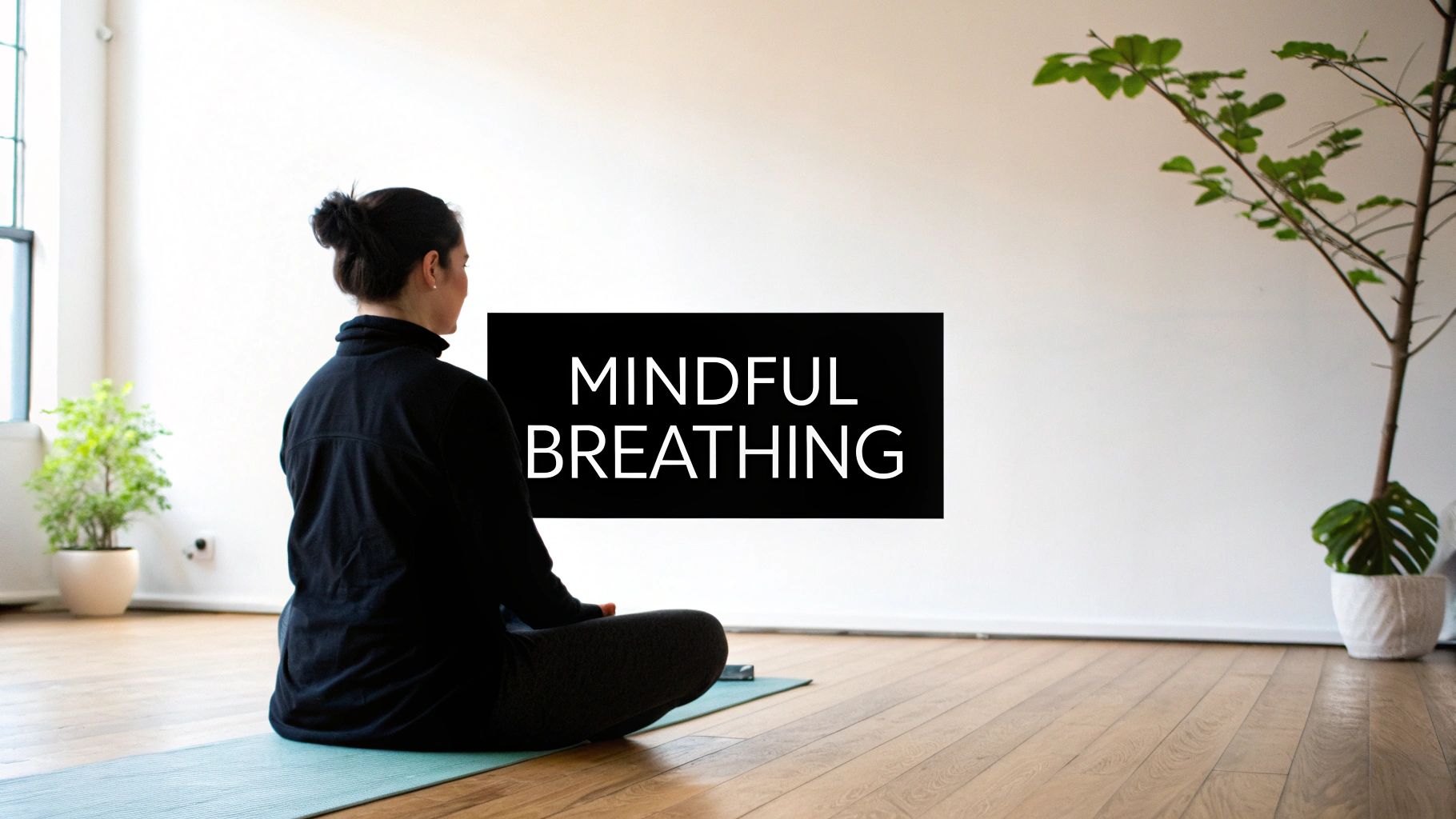
How to Practice Mindful Breathing
Mindful breathing is a powerful tool you can use anytime, anywhere to recenter yourself. It is particularly effective during moments of high stress, before an important meeting, or as a way to wind down before sleep. The practice trains your brain to return to a calm state on command.
Here are some actionable tips to get started:
- Start Small: Begin with just five minutes each day. Consistency is more important than duration. As you get comfortable, you can gradually increase the time.
- Count Your Breaths: To keep your mind from wandering, silently count each exhale. Inhale, then on the exhale, count "one." Inhale again, then exhale and count "two." Continue up to ten, then start over.
- Acknowledge Wandering Thoughts: Your mind will inevitably wander. When you notice it has, gently and without judgment, guide your focus back to your breath. This act of returning your attention is the core of the practice.
- Use Guided Resources: Apps like Headspace or Calm offer excellent guided breathing meditations, which are perfect for beginners who need structure.
- Build a Routine: Try practicing at the same time each day, like first thing in the morning or just before bed, to build a consistent habit.
2. Body Scan Meditation
Body scan meditation is a practice that guides your attention systematically through your entire body, from your toes to the top of your head. Instead of trying to change anything, you simply notice the physical sensations present in each part, like warmth, coolness, tingling, or tension. This technique is a powerful mindfulness activity for adults as it strengthens the mind-body connection, helping to release stored physical stress and grounding you firmly in the present moment.
This method is so effective it is used in clinical and professional settings. The Mayo Clinic, for instance, often integrates body scan meditation into its programs for managing chronic pain. Pioneered in the West by Jon Kabat-Zinn through his Mindfulness-Based Stress Reduction (MBSR) program, it is also a key practice taught at the UCLA Mindful Awareness Research Center and in corporate wellness programs at companies like Adobe to help employees manage stress.
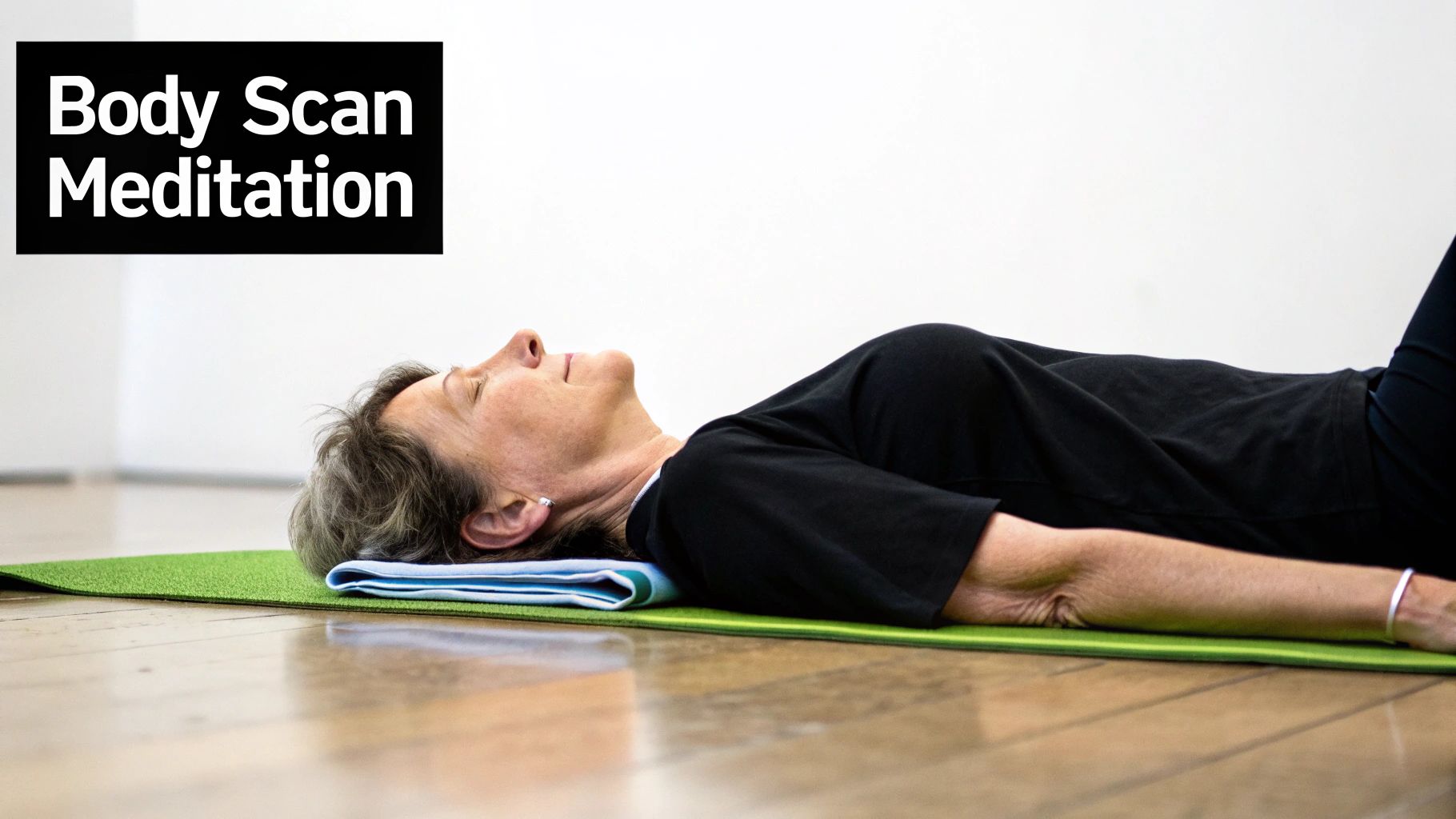
How to Practice a Body Scan
The body scan is ideal for practicing before sleep to release the day's tension or anytime you feel disconnected from your body. It trains your awareness to identify and acknowledge physical discomfort without judgment, which can reduce its intensity over time.
Here are some actionable tips to get started:
- Get Comfortable: Lie down in a quiet, comfortable space where you won't be disturbed. You can use pillows or blankets for support.
- Start with Guided Audio: For beginners, guided meditations are invaluable. Teachers like Tara Brach offer free guided body scans that provide clear instructions and pacing.
- Observe, Don't Judge: As you scan each body part, simply notice what is there. If you find tension in your shoulders, just acknowledge it. There's no need to force it to relax immediately.
- It’s Okay to Fall Asleep: If you doze off during the practice, it simply means your body needed the rest. Don't worry about it; just pick up where you left off the next time.
- Don't Force Sensations: If you don’t feel anything in a particular area, that’s perfectly fine. Just acknowledge the absence of sensation and gently move on.
3. Walking Meditation
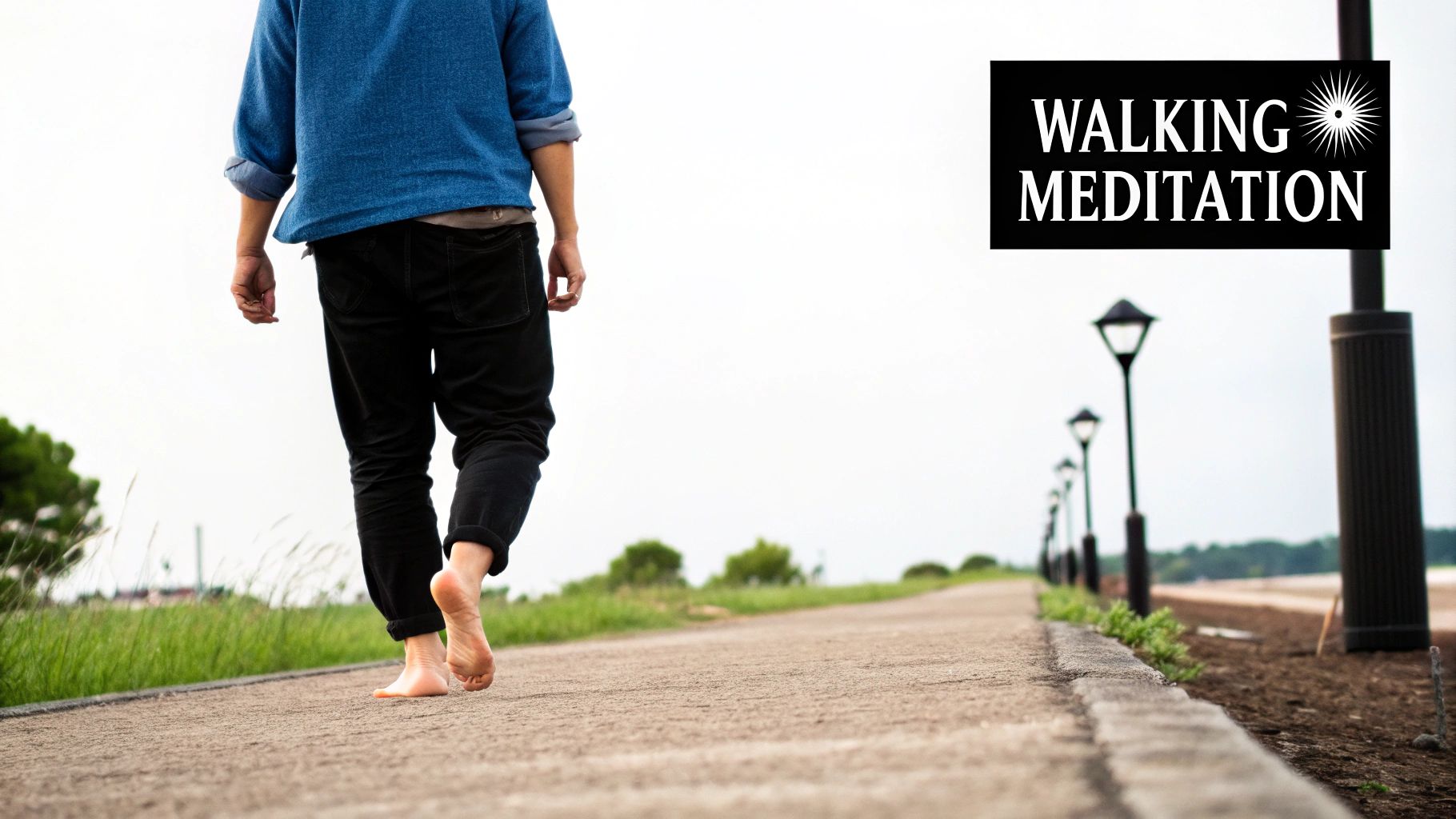
Walking meditation transforms an ordinary activity into a profound mindfulness practice. Instead of focusing on getting to a destination, you focus your attention entirely on the physical act of walking. By tuning into the sensation of your feet connecting with the ground, the movement of your legs, and the subtle shifts in your body, you anchor yourself firmly in the present moment. This practice is an excellent way to bridge formal seated meditation with everyday life, making mindfulness more accessible and integrated.
This form of active meditation is highly regarded in both spiritual and secular contexts. It was famously taught by Zen Master Thich Nhat Hanh to help practitioners carry mindfulness into their daily movements. Its benefits are also recognized in therapeutic settings, such as in Japanese forest bathing (Shinrin-yoku) programs prescribed by hospitals and in walking meditation paths used in addiction recovery centers to help individuals reconnect with their bodies in a healthy, grounded way.
How to Practice Walking Meditation
Walking meditation is a versatile tool that can be practiced in a hallway, your backyard, or a park. It's particularly useful when you feel restless or find sitting still a challenge, providing a way to calm the mind while engaging the body. It helps develop concentration and body awareness.
Here are some actionable tips to get started:
- Designate a Path: Start with a short, clear path, perhaps 10 to 20 steps long. Begin indoors or in a quiet, familiar outdoor space to minimize distractions.
- Focus on Your Feet: Walk at a slow, deliberate pace. Pay close attention to the sensations in each foot as you lift it, move it forward, place it down, and shift your weight.
- Coordinate with Breath: If it helps your focus, you can sync your breathing with your steps. For example, take a few steps as you inhale and a few more as you exhale.
- Practice Barefoot (When Possible): Walking barefoot on a safe, clean surface like grass or sand can heighten the sensory experience, making it easier to stay present.
- Gently Return Your Focus: Just like in seated meditation, your mind will wander. When you notice it, gently guide your attention back to the physical feeling of walking, without self-criticism.
4. Mindful Eating
Mindful eating transforms a routine activity into a powerful mindfulness practice for adults. It involves bringing your full, non-judgmental attention to the experience of eating, engaging all your senses to notice the colors, textures, smells, and flavors of your food. Instead of eating on autopilot, you create an opportunity for presence, which can lead to better digestion, a greater appreciation for your food, and a healthier relationship with your body's hunger and fullness cues.
This practice is recognized for its profound benefits in both corporate wellness and clinical settings. Google famously incorporates mindful eating workshops into its employee well-being programs to reduce stress and improve focus. Moreover, leading institutions like Duke Integrative Medicine and eating disorder treatment programs use mindful eating as a core therapeutic tool to help individuals reconnect with their body's natural signals and heal their relationship with food.

How to Practice Mindful Eating
Mindful eating can be integrated into any meal to break the cycle of rushed, distracted eating. It is especially useful if you find yourself eating while stressed, bored, or watching a screen. The goal is to slow down and savor the moment, which helps you better recognize your body's needs and derive more satisfaction from your food.
Here are some actionable tips to get started:
- Start with One Mindful Bite: You don't need to commit to an entire mindful meal at first. Begin by paying full attention to the very first bite of your next meal, noticing every sensation.
- Put Utensils Down Between Bites: A simple yet effective technique is to place your fork or spoon down after each bite. This forces a pause, allowing you to chew thoroughly and check in with your senses.
- Chew Slowly and Thoroughly: Aim to chew your food until it is almost liquified. This not only aids digestion but also allows you to fully experience the evolving flavors and textures.
- Notice Hunger and Fullness: Before you start eating, rate your hunger on a scale of 1 to 10. Pause midway through your meal to check in again and notice how your fullness level has changed.
- Remove Distractions: For one meal a day, turn off the TV, put your phone away, and sit at a table. Focusing solely on your food is a foundational step in building this habit.
5. Loving-Kindness Meditation (Metta)
Loving-Kindness Meditation, also known as Metta, is a powerful, heart-centered practice that cultivates compassion and goodwill. It involves silently repeating phrases of warmth and kindness, directing them first toward yourself and then gradually extending them outward to loved ones, neutral people, difficult individuals, and eventually all beings. Unlike meditations focused solely on awareness, this practice actively generates positive emotions, helping to dissolve feelings of resentment and foster a deep sense of connection.
This ancient Buddhist practice has gained significant modern validation for its impact on emotional well-being. Stanford's Center for Compassion and Altruism Research has explored its benefits, linking it to increased empathy and happiness. It has also been introduced in settings like prisons to aid in rehabilitation and among healthcare workers to combat burnout, demonstrating its versatility as a tool for emotional resilience.
How to Practice Loving-Kindness Meditation
Metta is an excellent practice for transforming your relationship with yourself and others. It is especially useful when you feel disconnected, irritable, or are struggling with self-criticism. This meditation helps build a reservoir of inner kindness that you can draw upon in challenging situations.
Here are some actionable tips to get started:
- Start with Self-Compassion: Begin by directing the kind phrases toward yourself. It’s often the most challenging but crucial step. You cannot pour from an empty cup.
- Use Resonant Phrases: While traditional phrases include "May you be happy," "May you be healthy," feel free to use words that resonate personally with you. The intention is what matters.
- Don't Force Feelings: The goal is to set an intention of goodwill, not to force an emotional state. Some days you won't "feel" it, and that's okay. The repetition of the phrases is the core of the practice.
- Visualize the Person: As you repeat the phrases for others, bring a clear image of them to your mind. This helps focus your intention and makes the practice more vivid and heartfelt.
- Begin with Someone Easy: After yourself, direct the phrases toward someone you love unconditionally, like a close friend, a child, or a pet. This helps build positive momentum before moving to more neutral or difficult people.
6. Mindful Journaling
Mindful journaling is a reflective writing practice that merges the benefits of journaling with the core principles of mindfulness. It encourages you to observe your thoughts and feelings without judgment, focusing on your present-moment experience. This technique creates a safe space to process emotions, uncover insights, and foster a deeper connection with yourself, making it one of the most effective mindfulness activities for adults.
This practice has been popularized by authors like Julia Cameron, whose "Morning Pages" from The Artist's Way encourage a daily stream-of-consciousness writing habit to clear mental clutter. Similarly, therapeutic journaling is a recognized tool in mental health, helping individuals articulate experiences that are difficult to verbalize. Many corporate wellness programs also now include journaling prompts to enhance employee self-awareness and emotional regulation.
How to Practice Mindful Journaling
Mindful journaling is ideal for processing the day's events, exploring complex emotions, or simply checking in with yourself. It helps transform abstract feelings into concrete words, providing clarity and relief. This practice is especially useful in the morning to set an intention for the day or in the evening to unwind and reflect.
Here are some actionable tips to get started:
- Set a Consistent Time: Dedicate 5-10 minutes each day. A consistent routine, whether in the morning with coffee or before bed, helps build the habit.
- Start with Prompts: If you feel stuck, use prompts to guide your writing. Start sentences with "Right now, I am feeling..." or "Today, I noticed..." to anchor your thoughts in the present.
- Forget Perfection: Let go of grammar, spelling, and punctuation rules. The goal is honest self-expression, not creating a literary masterpiece. Focus on the flow of your thoughts.
- Incorporate Gratitude: A powerful and simple practice is to end each entry by listing three specific things you are grateful for. This shifts your focus toward positivity and abundance.
- Breathe First: Before you begin writing, take a few moments for mindful breathing. This helps calm your nervous system and transition you into a more reflective state of mind.
7. Mindful Technology Use
Mindful technology use is a contemporary practice that involves bringing conscious awareness to how we interact with our digital devices. Instead of mindlessly scrolling or reacting to every notification, this practice encourages intentional engagement. The goal is to reclaim control over your attention, reduce the mental fatigue caused by constant digital stimulation, and foster a healthier relationship with technology. This is one of the most relevant mindfulness activities for adults in our hyper-connected world.
This approach is gaining significant traction in both corporate and tech development circles. Tech giants like Apple and Google have integrated features like "Screen Time" and "Digital Wellbeing" into their operating systems, directly inspired by this movement. Furthermore, thought leaders like Cal Newport, author of Digital Minimalism, and Tristan Harris from the Center for Humane Technology, have championed this cause, highlighting the urgent need to design and use technology in a way that respects human attention and well-being.
How to Practice Mindful Technology Use
Practicing mindful technology use helps you create space between impulse and action, preventing the habitual checking of phones and emails that can fragment your day. It is especially useful when you feel overwhelmed by digital noise, find it hard to focus on important tasks, or feel that technology is infringing on your personal time and relationships.
Here are some actionable tips to get started:
- Create "No-Phone" Zones: Designate specific areas, like the dining table or the bedroom, as tech-free zones. This simple boundary helps you be more present during meals and improves sleep quality.
- Set App Timers: Use built-in phone features to set daily time limits for specific apps, especially social media. Receiving a notification that your time is up serves as a powerful reminder to disengage.
- Practice the STOP Method: Before you pick up your phone, Stop, Take a breath, Observe your intention (why are you checking it?), and Proceed with purpose. This creates a moment of mindfulness.
- Reclaim Your Mornings: Avoid checking your phone for at least the first 30-60 minutes after waking up. Use this time for other mindfulness practices like journaling or stretching to start your day with intention.
- Schedule Digital Detoxes: Plan regular periods, whether it's one evening a week or a full weekend a month, to completely disconnect from your devices. This can reset your mental state and reduce dependency.
8. Mindfulness-Based Stress Reduction (MBSR)
Mindfulness-Based Stress Reduction (MBSR) is a highly structured, eight-week program that serves as a deep dive into mindfulness. It systematically combines various practices like body scan meditations, sitting meditation, and mindful yoga. Developed by Jon Kabat-Zinn at the University of Massachusetts Medical Center, it’s an evidence-based approach designed to help individuals cope with stress, pain, and illness by cultivating present-moment awareness.
The program's effectiveness is demonstrated by its widespread adoption in clinical and corporate settings. Over 200 medical centers and hospitals worldwide, including Veterans Affairs hospitals treating PTSD, utilize MBSR. Major corporations like Aetna and General Mills have also integrated it into their wellness programs to improve employee well-being and resilience, making it one of the most respected mindfulness activities for adults.
How to Practice MBSR
MBSR is ideal for those seeking a comprehensive, guided curriculum rather than a casual practice. It provides the tools and community support needed to build a sustainable mindfulness habit that can fundamentally change your relationship with stress. To delve deeper into this structured program, you can find a comprehensive guide to Mindfulness-Based Stress Reduction.
Here are some actionable tips to get the most out of an MBSR course:
- Commit to the Full Program: The 8-week structure is designed for cumulative benefits. Attending every session, including the full-day retreat, is crucial for the intended outcome.
- Maintain Daily Home Practice: The program requires around 45 minutes of daily home practice. This consistency is where the real transformation happens, as it integrates mindfulness into your daily life.
- Be Patient with Yourself: The benefits of MBSR often accumulate gradually. It's a process of unlearning old habits and building new neural pathways, which takes time.
- Engage in Group Discussions: Sharing your experiences and listening to others in the group sessions is a powerful part of the learning process. It helps normalize challenges and builds a sense of community.
- Apply Techniques in Real-Time: Practice applying mindfulness to stressful situations that arise between sessions. Use moments of frustration or anxiety as opportunities to practice what you've learned.
Mindfulness Activities Comparison Matrix
| Practice | Implementation Complexity 🔄 | Resource Requirements ⚡ | Expected Outcomes 📊 | Ideal Use Cases 💡 | Key Advantages ⭐ |
|---|---|---|---|---|---|
| Mindful Breathing Meditation | Low - simple focus on breath | Minimal - no equipment needed | Stress/anxiety reduction, improved focus | Beginners, anytime/anywhere mindfulness | Accessible, immediate stress relief |
| Body Scan Meditation | Moderate - systematic body awareness scan | Low - quiet space, usually lying down | Releases tension, better sleep, pain management | Relaxation, sleep prep, chronic pain | Effective for body awareness, deep relaxation |
| Walking Meditation | Moderate - mindful movement coordination | Minimal - safe walking area needed | Physical activity plus mindfulness, reduced restlessness | Those who dislike seated meditation | Combines exercise with mindfulness |
| Mindful Eating | Low - awareness during regular meals | Minimal - meal setting focus | Improved digestion, weight management, reduced binge eating | Habit change, emotional eating | Enhances appreciation and healthier habits |
| Loving-Kindness Meditation | Moderate - repeating specific phrases | Minimal - quiet place | Increased compassion, reduced bias, emotional resilience | Emotional well-being, relationship improvement | Builds empathy and positivity |
| Mindful Journaling | Moderate - writing-based reflective practice | Minimal - pen and paper or digital | Emotional processing, self-awareness, insight gains | Emotional health, personal growth | Tangible record of progress |
| Mindful Technology Use | Moderate to High - lifestyle adjustment and boundaries | Requires tech tools/app settings | Reduced digital overwhelm, improved focus | Tech-dependent users, digital wellness | Supports healthy digital habits |
| Mindfulness-Based Stress Reduction (MBSR) | High - structured 8-week program | Significant - qualified instructor, group sessions | Strong reduction in anxiety, pain, improved health | Clinical, chronic stress/pain management | Evidence-based, comprehensive approach |
Bringing Mindfulness Home: Your Next Brushstroke of Calm
You have now explored a diverse palette of mindfulness activities for adults, from the foundational quiet of mindful breathing to the active presence of a walking meditation. The journey through this guide has illuminated one central truth: mindfulness isn't a single, rigid discipline. It is a flexible, personal practice that can be woven into the fabric of your daily life in countless ways.
We've seen how simple shifts, like paying attention to the taste and texture of your food or consciously unplugging from technology, can transform routine moments into opportunities for calm and clarity. The goal isn't to add more tasks to your already busy schedule. Instead, it's about infusing your existing activities with a new quality of awareness.
Your Path to a More Present Life
The most important takeaway is that you don't need to master every technique at once. The power of mindfulness lies in consistency, not complexity. Your next step is simply to choose one activity that resonates with you and commit to trying it.
- If you crave stillness: Begin with five minutes of Body Scan Meditation before bed.
- If you need to move: Turn your daily walk into a Walking Meditation.
- If you feel disconnected: Practice Loving-Kindness Meditation to cultivate compassion.
- If you seek creative focus: Embrace an art-based practice to anchor your attention.
Think of these practices not as chores, but as invitations. They are invitations to step out of the frantic pace of modern life and reconnect with yourself, even for just a few moments each day. This consistent, gentle effort is what builds the mental resilience to navigate stress and find joy in the present.
The Brushstroke of Mindfulness
For many, especially those who find traditional meditation challenging, the most effective path to presence is through creative engagement. This is where art-based mindfulness activities for adults become so valuable. When you immerse yourself in a structured, tactile project, your mind naturally quiets down. The endless loop of worries and to-do lists fades into the background, replaced by the simple, satisfying task at hand.
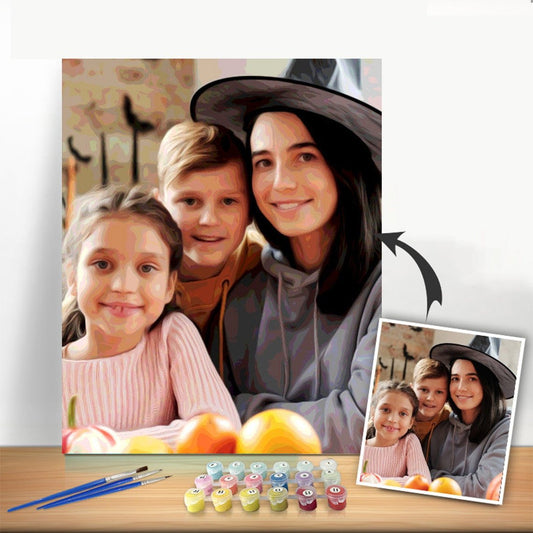
Consider the act of painting by numbers. It’s a perfect example of meditation in motion. As you focus on matching the paint to the corresponding number on the canvas, your attention becomes anchored. Each deliberate brushstroke is an act of mindfulness. You are not thinking about the past or worrying about the future; you are fully engaged in the simple, rhythmic process of creation unfolding before you. This focused state, known as "flow," is the very essence of mindfulness. It quiets the inner critic and allows for a profound sense of peace and accomplishment.
Whether your first step is a single conscious breath, a mindful meal, or transforming a cherished photograph into a personal masterpiece, the journey begins now. The tools are in your hands. Choose the one that feels right and begin painting a more peaceful, present, and centered version of your life, one moment at a time.
Ready to experience the calming power of creative focus? Transform your favorite photo into a work of art with a kit from Custom Paint By Numbers. Discover how this engaging and meditative activity can become your new favorite way to practice mindfulness by visiting Custom Paint By Numbers today.