
When you're stuck in a creative block, the first move is often the hardest. The secret is to make it a small one. Forget about the masterpiece for a moment and focus on a single, tiny action to break the inertia. This simple first step isn't about producing anything—it’s about diagnosing what's really going on. Are you burned out? Scared? Or just plain uninspired? Figuring that out is the key to choosing the right path forward.
The real goal is just to start moving again.
Your First Steps Out of a Creative Rut

We've all been there: staring at a blank page or an empty canvas, the pressure mounting with every second. It can be completely paralyzing. Instead of trying to force some brilliant idea to appear, the best thing you can do is lower the stakes.
Your first objective isn't to create; it's just to change your state of mind. This can be as simple as getting up from your desk and walking into another room, tidying up your workspace, or even just putting on a different playlist. These little environmental shifts are surprisingly effective at disrupting the mental patterns that keep you stuck, signaling to your brain that it's time for a reset.
Pinpoint the Source of Your Block
Before you can fix the problem, you need to know what you’re dealing with. Creative blocks rarely pop up out of nowhere. They're usually symptoms of something deeper. So, take a moment and ask yourself what you’re really feeling.
- Are you burnt out? If you feel totally drained and mentally exhausted, the problem is likely a need for rest, not more hustle. Trying to push through it will only dig you deeper into the rut.
- Are you afraid? Fear of failure, of not being good enough, or of what others will think is a powerful creativity killer. This often shows up looking like procrastination or a sudden obsession with perfection.
- Are you uninspired? Sometimes, the creative well is just dry. You might need new input—fresh experiences, interesting conversations, or different kinds of art—to get the ideas flowing again.
Getting to the root cause is everything. If burnout is the culprit, the only cure is rest. If fear is holding you back, the solution is self-compassion. And if you’re just uninspired, the answer lies in seeking out new stimulation. For those exploring how creativity can be a tool for well-being, learning what is art therapy can shed light on how to process these exact feelings.
Key Takeaway: A creative block isn't a failure—it's a signal. It’s your brain’s way of telling you that something needs to change, whether it's your environment, your mindset, or your energy. The best thing you can do is listen to it instead of fighting it.
Creative Block First Aid Kit
When you feel that familiar sense of being stuck, you need a quick, immediate action to jolt your brain out of its rut. Think of these as your first-aid options—small, non-threatening, and designed to get you moving again.
Here’s a quick summary of what you can do right now:
| Action | Primary Goal | Time Commitment |
|---|---|---|
| Change your environment | Mental Reset & Fresh Perspective | 5-10 minutes |
| Switch to a different tool | Lower the Stakes & Reduce Pressure | 10-15 minutes |
| Write a list of random words | Engage in Playful Brainstorming | 5 minutes |
| Mix paint colors with no goal | Reconnect with a Physical Process | 10 minutes |
| Listen to a new genre of music | Stimulate Different Senses | 5-15 minutes |
| Do a 2-minute "doodle dump" | Silence the Inner Critic | 2 minutes |
These micro-actions are designed to be so small and effortless that your inner critic doesn’t even have time to object. The point isn’t to create anything good; it's just to shift your energy from a state of pressure to one of playful curiosity.
This feeling of being stuck is so universal that an entire industry has sprung up to help. A 2025 market analysis projected the "creative block solutions" market to be worth around $2.0 billion, with an expected annual growth of 13.5% through 2033. That growth is fueled by the relentless demand for new content and the tools needed to keep creatives producing.
Ultimately, you're just experimenting, with zero attachment to the outcome. For a deeper dive into more comprehensive strategies, you can explore these proven methods for overcoming creative blocks and find what clicks for you.
What’s Really Behind Your Creative Block?
To get past creative block, you have to dig deeper than the symptom—that terrifying blank page. A creative block isn't just a mysterious void where your ideas used to be. It’s a stop sign your brain throws up for a very good reason. Uncovering that reason is the only way to truly tear it down.
Most of the time, that block is born from the silent battles we’re fighting inside our own heads. These are the struggles that quietly sap our creative energy before we even think about picking up a pen or a brush. The good news? Once you can put a name to them, you can start to deal with them.
The Internal Battles Every Creator Faces
That stuck feeling almost always comes from a handful of common psychological triggers. Picture a designer who spends hours cycling through fonts, not because they’re perfecting their work, but because they’re frozen by the fear of choosing the wrong one. That’s a creative block in action.
And you know what? These internal pressures are incredibly common.
- The Fear of Failing: This is the big one. The worry that what you create won't be good enough, that others will judge it, or that it won't match the grand vision in your mind. This fear can be so paralyzing that it feels safer to just not start at all.
- The Pressure to Be Original: We are drowning in content. The internal demand to make something 100% new and groundbreaking is immense, and it’s often what crushes our best ideas before they can even take shape.
- The Voice of the Inner Critic: We all have that nagging little voice that whispers doubts in our ear. It's the part of you that says, "This is terrible," or "Who do you think you are?" When that voice gets too loud, it drowns out everything else.
For a deeper dive, check out these Top Strategies to Unlock Creativity to see what might be shutting your own creative mind down.
Remember This: Creative block is often just fear wearing a mask. Fear of imperfection, fear of judgment, and fear of not being good enough are the real villains here. The moment you acknowledge the fear, you can start moving past it.
How Your Environment Can Siphon Your Energy
Of course, it's not all in your head. The world around you has a massive impact on your ability to create. Your physical space and your daily pressures can either be a creative incubator or a total buzzkill. Sometimes, the quickest way to beat a block is to change something outside of you.
Think about it: a musician stuck on the same chord progression for days might not be lacking inspiration. They might be completely drained from a chaotic home life or stressed about a looming deadline. These external factors chip away at the mental bandwidth needed for creative thinking.
Keep an eye out for these common external triggers:
- Tight Deadlines and High Pressure: Sure, some people work well under pressure, but for many, it just squeezes the life out of creative thought. When the goal shifts from playful exploration to pure output, your creative brain tends to go into hiding.
- Unhelpful Feedback: Vague, mean-spirited, or overly harsh criticism can be a huge blow to your confidence. Without feedback that’s specific and actionable, it’s easy to feel lost and discouraged, which is a fast track to getting stuck.
- A Chaotic or Uninspiring Workspace: Your surroundings really do matter. A cluttered, messy, or distracting space creates mental clutter, making it nearly impossible to focus and get into a state of flow. Your brain mirrors your environment—a chaotic space often signals a chaotic mind.
Once you start spotting these internal and external patterns, you can stop fighting the block itself and start treating the actual cause.
Building Long-Term Creative Resilience
While a quick jolt can get you over a temporary hump, true creative freedom comes from building habits that stop blocks before they even start. This is about playing the long game—switching from panicked reactions to proactive practice.
Think of it as creating a sustainable routine that actually feeds your imagination, so you’re not always running on fumes. Instead of just waiting around for inspiration to strike, you’re building a system that invites it in every day. This approach isn't about dramatic breakthroughs; it's about the small, consistent actions that strengthen your creative muscles over time.
Embrace the Power of Deliberate Rest
In our culture of constant hustle, "rest" can feel like a dirty word. We mistake it for laziness. But for your creative brain, genuine downtime is non-negotiable—it's like oxygen. This goes beyond just getting enough sleep. It’s about intentionally scheduling "incubation" periods where you fully step away from a problem and let your subconscious mind take the wheel.
Your conscious mind is great for focus, but your subconscious is where the magic of unexpected connections happens. When you're stuck, taking a walk, doing the dishes, or just staring out the window gives your brain the space it needs to stumble upon brilliant solutions.
This isn't just a hunch. Behavioral studies have shown that intentional rest and incubation periods significantly boost creative problem-solving. By building these breaks into your routine, you’re giving your mind the room to wander and connect dots you’d never see while staring at a blank screen.
Scheduling "do-nothing" time isn't a luxury; it's a strategic part of the creative process. Your brain works on problems even when you aren't, and some of your best ideas will arrive when you least expect them—once you've given them room to breathe.
Use Intentional Constraints to Unlock Ideas
It sounds completely backward, but sometimes the best way to feel more creative is to give yourself fewer options. A limitless blank canvas can be paralyzing. By introducing constraints, you force yourself out of familiar ruts and find clever workarounds.
This technique is surprisingly effective. Imposing a time limit, for example, or restricting your color palette actually pushes you to discover new connections and reduces the "analysis paralysis" that comes from having too many choices.
Here are a few simple constraints to get you started:
- Timeboxing: Give yourself just 15 minutes to brainstorm or sketch. The deadline forces you to get ideas down without second-guessing everything.
- Palette Restriction: Try creating a piece using only three colors. This pushes you to focus on composition and texture instead of just relying on color.
- Tool Limitation: Write an entire story with only a pen and paper. Or build a design using only basic shapes.
By setting these simple rules, you turn a daunting task into a fun, manageable game.
Cross-Train Your Brain with New Skills
Just like an athlete cross-trains to improve overall fitness, you can "cross-train" your brain to build creative resilience. Learning a totally unrelated skill forges new neural pathways, making your brain more flexible and better at solving problems across the board—including in your main creative work.
The trick is to pick something that uses a different part of your brain.
- If you're a writer, try learning a complex new recipe.
- If you're a visual artist, learn a few chords on a guitar.
- If you're a programmer, try a structured activity like a paint-by-number kit.
These aren't distractions; they're investments in your cognitive flexibility. They teach you to think in new ways and approach problems from fresh angles. This kind of low-pressure creative outlet can be incredibly restorative. In fact, our guide on the art therapy benefits for mental health digs into how structured activities like this can reduce stress and foster mindfulness.
Building these habits—deliberate rest, intentional constraints, and brain cross-training—creates a solid foundation of creative health. It ensures that when you do face a tough spot, you have the resilience and mental resources to push through it without getting stuck.
Practical Exercises to Reignite Your Spark
When you're stuck, reading theories about creativity feels like watching someone else eat a great meal. You need to actually do something. The key is to start with small, low-stakes actions that get your creative gears turning again without the pressure of making a masterpiece.
Think of these exercises as jump-starts, not the whole journey. Their job isn't to produce your next big thing, but to generate enough of a spark to light up the path forward. They’re meant to be quick, playful, and totally separate from whatever high-pressure project has you frozen.
Clear the Mental Clutter with Morning Pages
One of the biggest creativity killers is the non-stop chatter in our own heads. The "morning pages" exercise, made famous by author Julia Cameron, is a deceptively simple way to silence that noise.
Here’s how it works: first thing in the morning, before checking your phone or email, sit down with a notebook and write three pages of longhand, stream-of-consciousness thoughts. That’s it. It’s not a diary, and it’s not meant to be good writing.
- Don't filter anything. Just dump whatever is in your head onto the page—your worries, your to-do list, the weird dream you had.
- Keep the pen moving. If you get stuck, literally write "I don't know what to write" over and over until a new thought pops up.
- This is for your eyes only. This is crucial. Knowing nobody will ever read it frees you up to be completely honest and messy.
This practice is like wiping a foggy mirror. It clears away the gunk of self-doubt and overthinking, separating your inner critic from your inner creator and giving you a clean slate for the day.
The 100 Bad Ideas Challenge
Perfectionism is poison for creativity. The "100 Bad Ideas" challenge is the antidote, designed to systematically dismantle that fear of not being good enough by forcing you to prioritize quantity over quality.
The concept is simple: grab a piece of paper, set a timer, and come up with 100 ideas for a project. The rule is that most of them have to be bad.
The first ten ideas might actually be pretty good. The next thirty will feel like pulling teeth. But somewhere around idea number 50, something amazing happens. Your inner critic gets exhausted and gives up. That's when the truly weird, uninhibited, and sometimes brilliant concepts start to flow.
The Point of the Exercise: The goal isn't to find one perfect idea. It's to prove to yourself that you are an idea-generating machine. Buried in that pile of 100 bad ideas, you'll almost always find a few gems you never would have discovered otherwise.
This kind of structured brainstorming really works. A 2025 practitioner summary showed that focused brainstorming can cut creative-block incidents by 40% for visual teams. And we're seeing a huge shift in idea generation everywhere; by 2025, about 71% of global internet users had already tried a generative AI tool. If you're looking for more info, you can discover more insights about these creative block solutions online.
Object Association for a Fresh Perspective
Sometimes you're just stuck seeing things the same old way. The "object association" exercise is a fantastic little trick for shaking up your perspective and breaking out of those mental ruts.
- Pick a random object in the room. It could be anything—a lamp, a coffee mug, a houseplant.
- Jot down ten things it reminds you of, no matter how wild the connection. A lamp might make you think of a lighthouse, a single brilliant idea, or a hot summer day.
- Now, try to connect two of those associations to whatever project you're stuck on. How could the feeling of a "lighthouse" and a "hot summer day" influence the story you're writing or the color palette of your painting?
This isn’t about finding a logical answer. The whole point is to force your brain to make weird, unexpected connections. It’s a workout for your mind, training you to look beyond the surface and see the web of metaphors hidden in everyday objects.
Mindfulness-based activities like this are also great for easing the anxiety that often fuels a creative block. If you’re interested in using structured art as a form of self-care, exploring a few guided art therapy exercises for anxiety can be a gentle, process-focused way to get back in touch with your creative self.
By adding these small, playful exercises to your toolkit, you're no longer just waiting for inspiration to strike. You're building the runway so it has a place to land.
Tailoring Your Creative Routine to Your Life
Let’s be honest: a one-size-fits-all approach to creativity just doesn't work. What works for a full-time artist is completely different from what a new parent or a busy professional can manage. The secret to breaking through a creative block for good is finding a routine that fits your life, not forcing your life to fit some idealized routine.
A good creative practice should feel like a relief, a little pocket of space just for you—not another chore to dread. So, let's explore a few practical mini-plans designed for real-world situations.
This flowchart can help you figure out what to do next, depending on whether you're feeling stuck or riding a wave of inspiration.
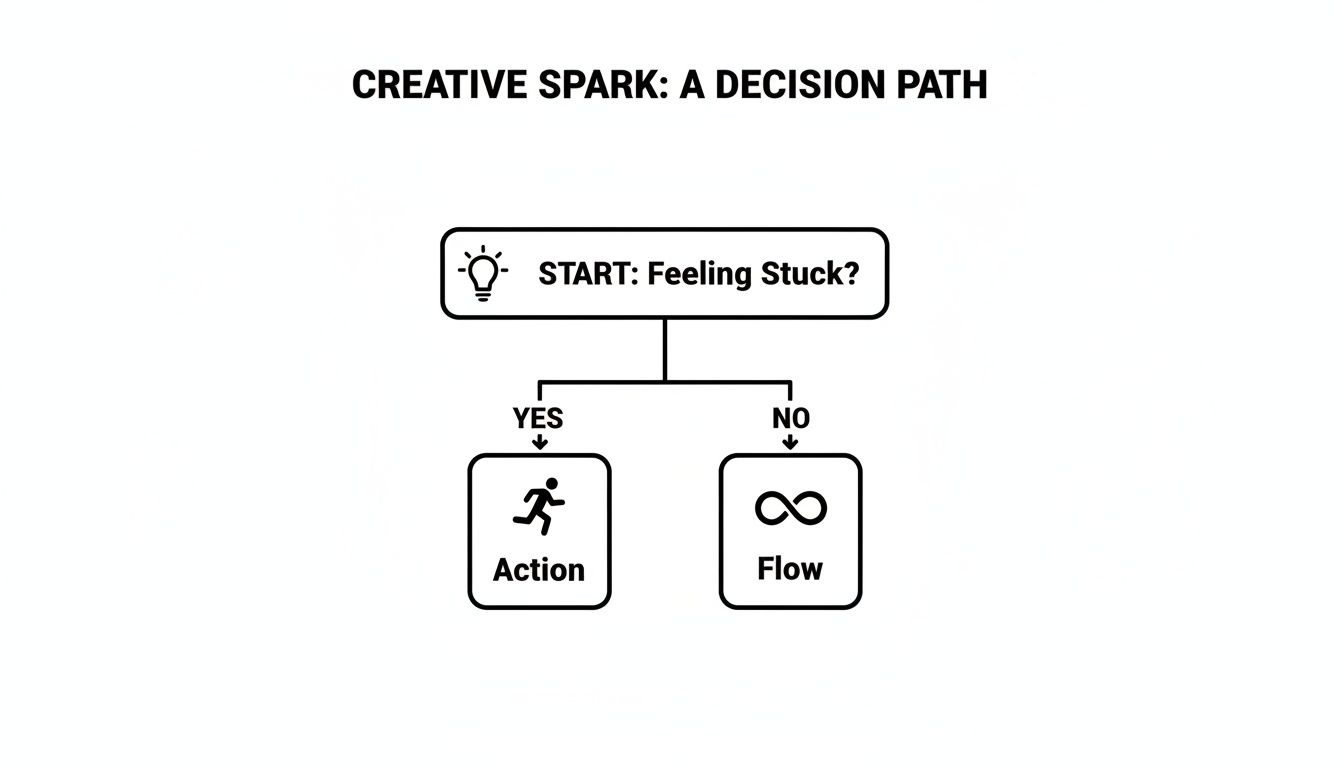
The main idea here is simple: if you’re stuck, it’s a sign to do something different. If you’re in the flow, keep doing what you’re doing.
The Busy Professional: Your 15-Minute Daily Reset
When you're juggling a demanding job and a calendar packed with meetings, "making art" can feel like an impossible luxury. The goal here isn't to create a masterpiece. It's to carve out a tiny, fiercely protected window of time to keep your creative spark alive.
Your plan is beautifully simple: just 15 minutes a day. That's it. Consistency is far more important than duration. Schedule it like you would any other appointment and treat it as non-negotiable.
Here’s how to make it happen:
- When to do it: Find a natural transition point in your day. Maybe it's right after your morning coffee, before you dive into emails, or just as you're shutting down your laptop for the night.
- What to do: Pick something tactile and totally unrelated to your work. Doodling in a sketchbook, mixing watercolors, or even arranging a bouquet of flowers can pull your mind out of its usual ruts.
- The real goal: Forget about the outcome. The only objective is to engage a different part of your brain.
This daily micro-dose of creativity is a powerful antidote to burnout. It's a small but mighty reminder that you're more than your job title.
Parents with Kids: The Imagination Refuel
For parents, it often feels like your own creative pursuits get shoved to the very bottom of the priority list. The game-changing shift is to stop seeing your kids' playtime as something separate from your own creative time. Their wild, uninhibited imagination is a powerful resource—learn to tap into it.
Don't just supervise their creativity—jump in and participate. Building a wonky Lego tower, making up a ridiculous story, or just scribbling together can be incredibly refreshing for your own mind. It reconnects you with the pure joy of making things just for the fun of it.
Your plan of action:
- A new mindset: See creative time with your kids as a "two-for-one" deal. It's bonding time for them and a no-pressure creative outlet for you. Win-win.
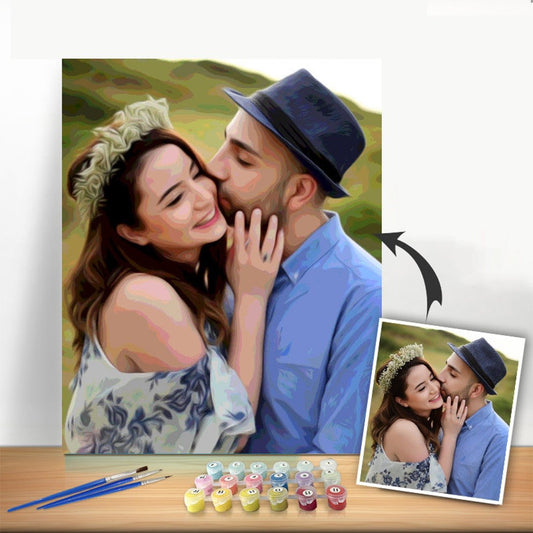
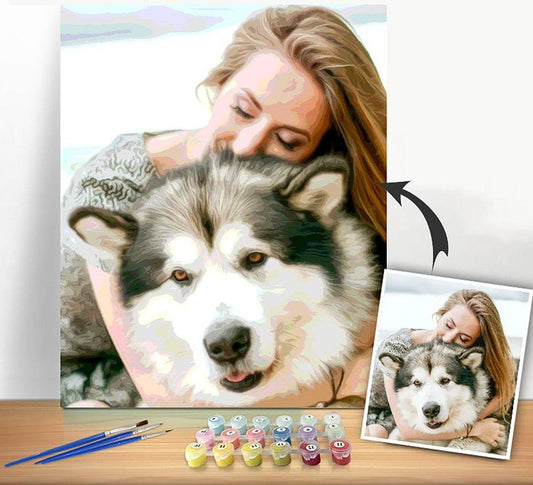
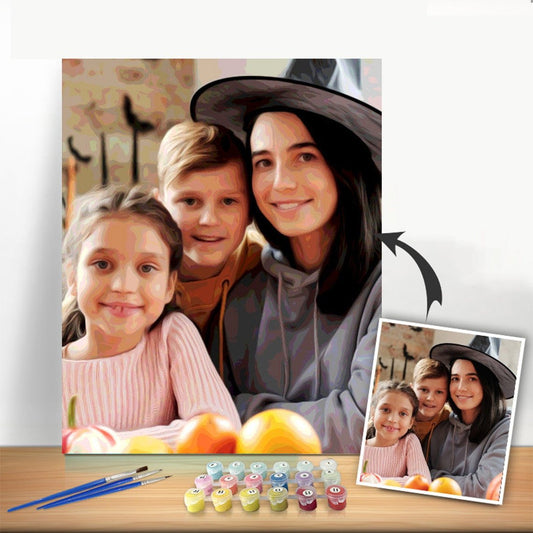
- Activities to try: Go for collaborative, messy, process-focused projects. A family paint-by-number kit, a big lump of modeling clay, or building an epic couch fort are all perfect.
- The real goal: Let go of any need for control and just embrace the chaos. The aim is to reconnect with that childlike sense of wonder, not to produce something "good."
The Artist Recovering from Burnout
When you're a professional artist or a serious hobbyist, creative block can feel crushing. Your passion has become a source of stress, and the path back needs to be gentle. The focus has to shift entirely away from the final product and back to the simple act of making.
The pressure to perform is what got you here; removing it is the only way out.
Your recovery plan:
- A gentle re-entry: Start with activities that have a clear, predetermined outcome. This lifts the heavy burden of decision-making off your shoulders.
- Your new strategy: The goal is self-expression, not perfection. You're just trying to remember what it feels like to create something in a way that feels good again.
- A tangible activity: Spend 30 minutes working on a simple, structured project. A paint-by-number kit is ideal for this. The framework is already there, so you can lose yourself in the meditative rhythm of brush on canvas without any of the usual pressure.
To make it even clearer, here's a look at how these strategies adapt to different needs.
Creative Block Recovery Plans
This table breaks down how different people can tackle creative block with a plan that fits their specific situation.
| Audience | Primary Goal | Key Strategy | Example Activity |
|---|---|---|---|
| The Busy Professional | Stress relief & mental reset | Integrate a short, daily, non-negotiable break | Spend 15 minutes sketching or journaling before starting the workday. |
| Parents with Kids | Reconnect with play & imagination | Participate in your children's creative fun | Complete a collaborative paint-by-number kit as a family on a weekend afternoon. |
| The Artist in Burnout | Rediscover joy in the process | Remove pressure with structured, low-stakes art | Work on a detailed coloring book or a simple craft project for 30 minutes. |
| The Gifter | Find unique, meaningful ideas | Shift focus from "what" to "who" | Brainstorm a list of a friend's favorite things, then find a PBN kit to match. |
| The Therapy-Seeker | Promote mindfulness & calm | Use art as a meditative, grounding tool | Focus on the sensory experience of painting, noticing the colors and brushstrokes. |
Ultimately, the best creative routine is the one you’ll actually stick with. Pick the plan that speaks to you, adjust it as needed, and give yourself permission to just start.
Got Questions About Creative Block? We've Got Answers
Feeling stuck can be confusing and, honestly, a little lonely. But trust me, you're not the first person to ask these questions. Let's clear up some of the most common worries that pop up when the creative well runs dry.
Is This a Creative Block or Am I Just Being Lazy?
This is the big one, isn't it? It’s a fear that haunts so many of us. But here’s how I’ve learned to tell the difference: look at the feeling behind the inaction.
Laziness is a choice. It’s when you have the energy and maybe even an idea, but you just don't feel like doing the work. It’s a state of apathy.
A creative block is completely different. It’s a frustrating state of inability. You desperately want to create, but the ideas won't come, or you feel paralyzed and anxious just thinking about it.
Here's the bottom line: If you're genuinely distressed about not creating, it’s a block. Laziness doesn’t care. A creative block cares way too much.
Should I Force Myself to Work or Just Take a Break?
Ah, the classic "push through or rest" debate. The answer really depends on why you're stuck. Trying to force creativity when you're burnt out is like trying to wring water from a dry sponge—you'll just end up with more frustration.
- You probably need a break if: You feel exhausted, mentally foggy, or just completely empty. Your brain is telling you it needs to recharge. Stepping away isn’t quitting; it’s refueling.
- A gentle push might work if: You suspect the block is really fear, perfectionism, or procrastination in disguise. In that case, a tiny, low-stakes action can be just the thing to break the inertia. Try a five-minute "bad ideas only" brainstorm or just organize your supplies.
Listen to your gut. If pushing feels like a monumental effort, rest is your answer. If it feels more like you're just scared to start, a tiny step forward is what you need.
How Long Is This Going to Last?
There’s no magic number here. A creative block can last a few hours, a few days, or, in more serious cases tied to burnout or life stress, a few weeks or even months. It's different for everyone and every situation.
The duration usually depends on how you respond to it. If you ignore the signs and try to power through burnout, you'll probably just make it last longer. But if you actively address the cause—by resting, finding new inspiration, or trying a simple creative exercise—you can shorten its visit considerably.
My advice? Don't fixate on the timeline. Focus on the solution.
Can I Stop Creative Blocks From Ever Happening Again?
Wouldn't that be nice? While you can't prevent them completely (they're a natural part of being a creative person), you can absolutely build habits that make them less frequent and way less intense when they do show up.
Think of it like getting sick. You can’t avoid germs forever, but eating well and getting enough sleep makes you far more resilient. The same goes for your creativity.
Building that resilience means creating sustainable routines:
- Schedule actual rest into your week to keep burnout at bay.
- "Cross-train" your brain by trying new hobbies totally unrelated to your main creative pursuit.
- Keep a "swipe file" or an inspiration journal to collect ideas when they are flowing.
These practices keep your creative energy topped up, so when a lull hits, you can handle it with confidence instead of panic.
Ready for a gentle, pressure-free way to get your hands moving again? The simple, meditative process of a paint-by-number kit from Custom Paint By Numbers is a perfect tool for quieting that inner critic and just enjoying the act of creating. Find a calming project to get you started at https://paint-by-number.com.