
Anxiety can often feel like an internal storm of racing thoughts and overwhelming emotions. While many strategies exist to manage it, one of the most gentle yet powerful tools is art therapy. Unlike traditional art, the goal here isn't to create a masterpiece; it's about the process of creation itself. Art therapy provides a non-verbal outlet to express feelings that are hard to put into words, grounding you in the present moment and offering a tangible way to externalize and process your anxiety.
This process-over-product approach is what makes these exercises so effective. It bypasses the analytical mind, which often fuels the anxiety cycle, and taps into a more intuitive, sensory-based part of your brain. The simple act of focusing on color, texture, and movement can be incredibly meditative, offering a welcome distraction from looping worries and physical tension. For many, combining these creative activities with other grounding tools can be highly beneficial. For instance, visual and tactile aids like sensory bottles designed to help navigate overwhelming feelings and find calm can provide a direct way to navigate intense emotions and cultivate peace, mirroring the journey in art therapy.
In this guide, we'll explore eight specific art therapy exercises for anxiety, each designed to be accessible, effective, and empowering. You don't need to be a skilled artist to benefit. You just need a willingness to explore, create, and find a moment of peace. Each activity includes step-by-step instructions, practical adaptations, and insights into its therapeutic benefits, helping you build a creative toolkit for managing anxiety and finding your inner calm.
1. Mandala Creation and Coloring
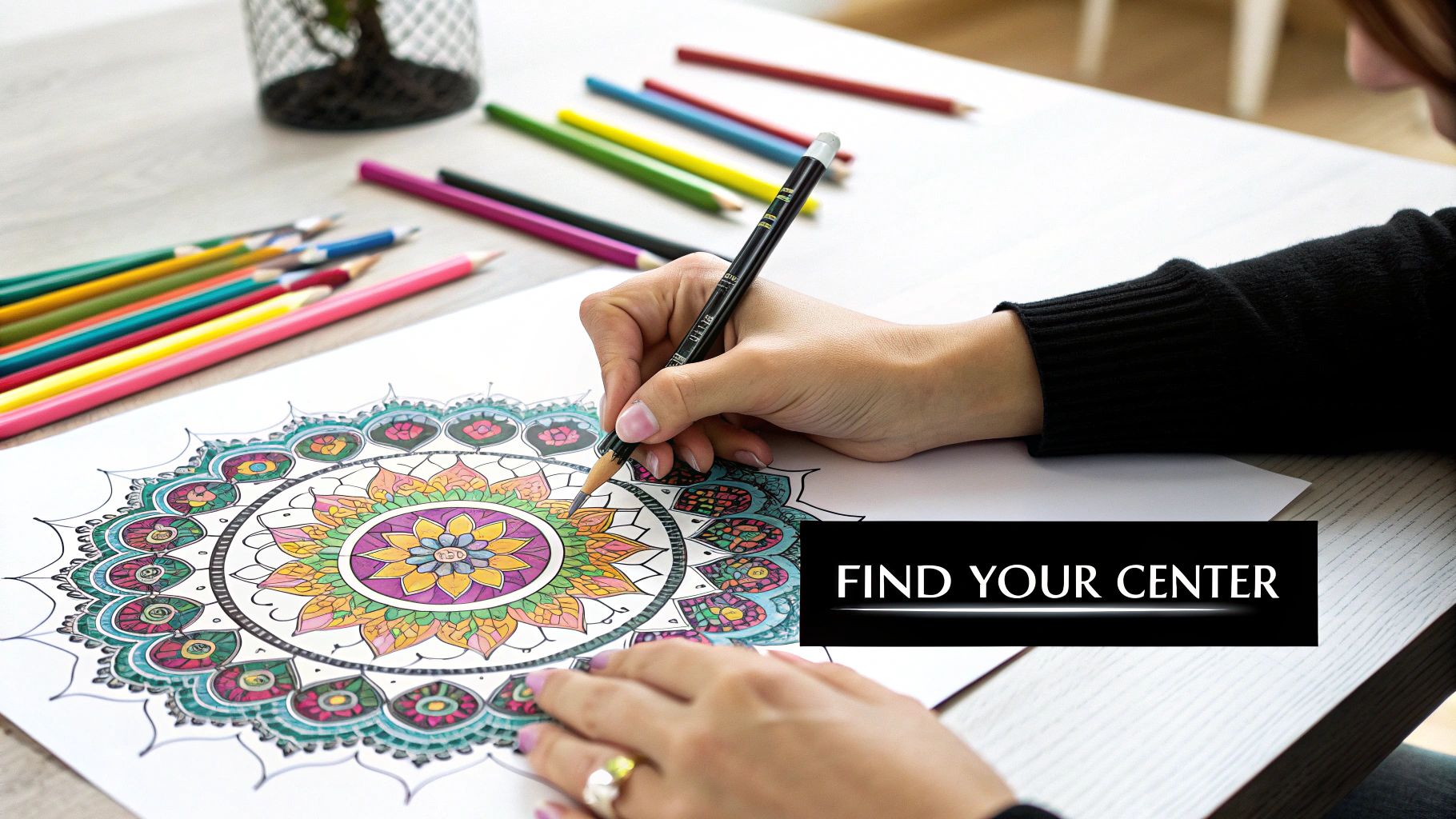
Mandala art, derived from the Sanskrit word for "circle," is a therapeutic exercise involving the creation or coloring of intricate, symmetrical geometric patterns. These designs radiate from a central point, symbolizing wholeness, unity, and the universe. This practice serves as one of the most effective art therapy exercises for anxiety because its repetitive nature quiets the mind and redirects focus away from stressful thoughts.
The structured yet creative process of filling in a mandala anchors you in the present moment, promoting a state of mindfulness. As you concentrate on choosing colors and staying within the lines, your breathing and heart rate tend to slow, providing immediate physiological relief from anxiety's grip.
Why It Works for Anxiety
The therapeutic power of mandalas was famously explored by psychiatrist Carl Jung, who saw them as a representation of the self. The act of engaging with these circular forms helps organize the psyche and restore a sense of inner balance when you feel scattered or overwhelmed.
By creating a contained, predictable space on the page, you can safely process emotions without feeling consumed by them. This externalizes internal chaos into a beautiful, ordered design, which can be incredibly validating and calming.
How to Get Started
- Choose Your Mandala: Find a pre-printed mandala coloring book or download a free template online. If you feel more adventurous, you can draw your own starting with a central point and radiating patterns outward.
- Select Your Medium: Use colored pencils, markers, or even watercolor paints. The choice of tool is part of the creative expression.
- Begin Coloring: Start from the center and work your way out, or begin from the outside and move in. There is no right or wrong way to do it.
- Focus on the Process: Pay attention to the sensation of the pencil on the paper and the act of choosing each color. Let go of any pressure to create a "perfect" piece of art.
Practical Tips for Success
- Set a Timer: Dedicate just 15-20 minutes to the activity. This makes it a manageable and accessible tool for anxiety relief.
- Use Color Intentionally: Associate colors with feelings. For example, use cool blues and greens for calm or vibrant yellows and oranges for joy.
- Adapt for Accessibility: For those who find detailed work challenging, paint-by-number kits offer a similarly structured and meditative experience. The guided nature of these kits can provide many of the same art therapy benefits for mental health, making creativity accessible to everyone.
2. Scribble and Abstract Expression
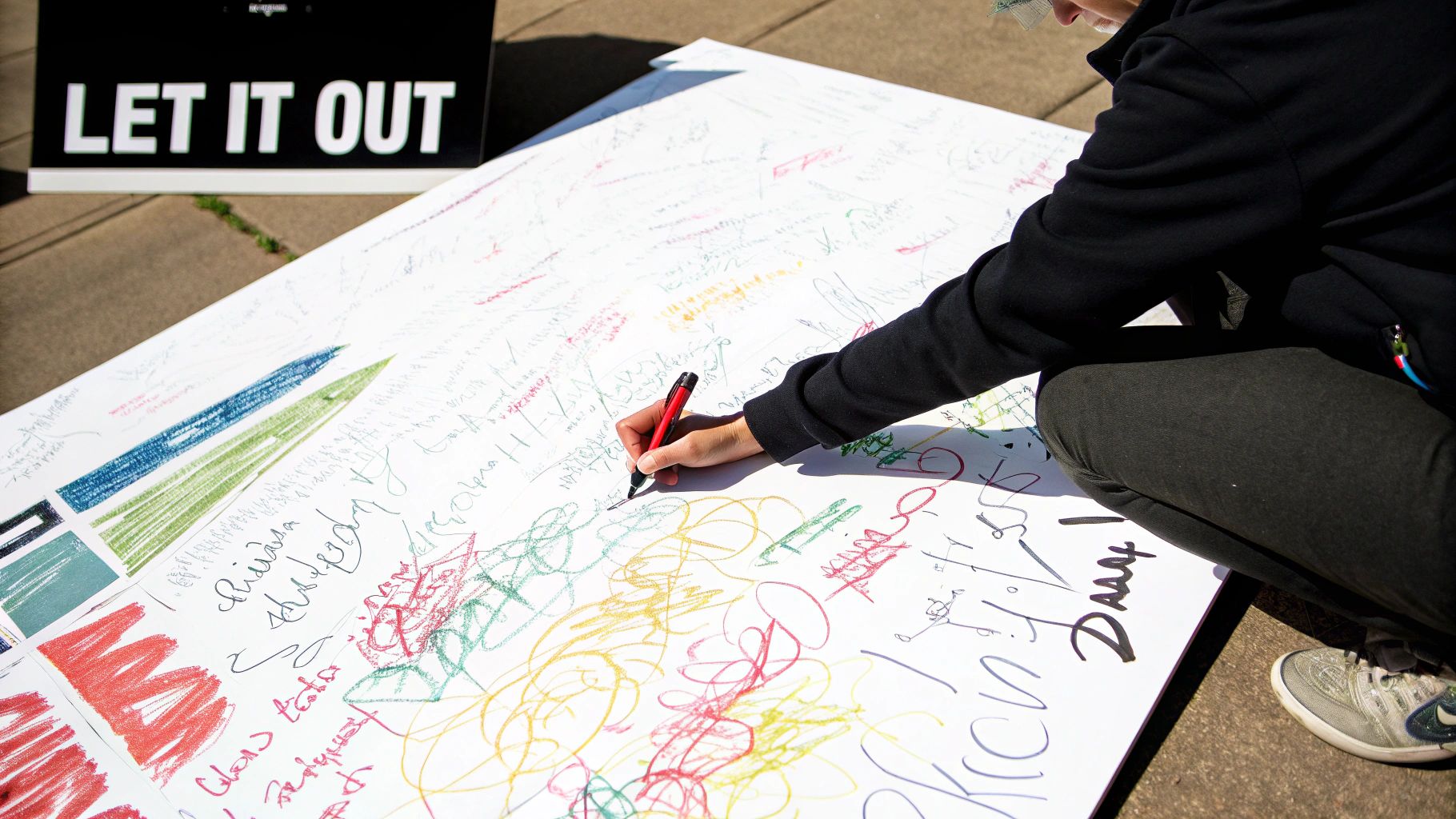
Scribble and Abstract Expression is an art therapy exercise focused on making spontaneous, unstructured marks on paper. It encourages you to create lines, shapes, and scribbles without worrying about the final product, allowing for a pure, physical release of pent-up energy and emotion. This practice is a powerful tool among art therapy exercises for anxiety because it bypasses the critical, overthinking part of the brain.
The freedom from perfectionism and the focus on movement helps discharge nervous energy directly onto the page. By engaging your body in large, uninhibited motions, you can release physical tension tied to anxiety, providing an immediate sense of relief and grounding.
Why It Works for Anxiety
Pioneered by expressive arts therapists like Natalie Rogers and Lucia Capacchione, this technique connects movement with emotion. Anxiety often gets trapped in the body, but scribbling gives it a non-verbal pathway out. This externalization allows you to see your feelings on the page rather than being consumed by them internally.
This exercise is particularly effective for anxiety linked to control or performance pressure, as there is no "right" way to do it. The goal is the process, not the outcome. This can be seen in settings like emergency rooms, where quick scribble exercises help patients reduce acute anxiety, or in classrooms to help students manage test-related stress.
How to Get Started
- Gather Your Materials: Take a large piece of paper and a drawing tool you feel comfortable with, such as a crayon, marker, or charcoal stick.
- Set an Intention: Close your eyes and take a few deep breaths. Think about the anxiety or stress you are feeling in your body.
- Begin to Scribble: Let your hand move freely across the page, translating your feelings into lines. Move fast, slow, hard, or soft. Don’t try to draw anything recognizable.
- Reflect (Optional): After a few minutes, stop and look at your drawing. Notice any patterns, shapes, or feelings that emerge without judging them. You can also choose to simply discard or destroy the paper as a symbolic act of letting go.
Practical Tips for Success
- Go Big: Use a large sheet of paper and bold, sweeping arm movements to maximize the physical release of tension.
- Add Music: Play instrumental music that matches the energy you want to release or cultivate to help you get into a state of flow.
- Combine with Breathwork: Inhale deeply and then exhale as you make a mark on the paper, syncing your breath to the movement for a deeper calming effect.
- Set a Timer: Scribble for just 3-5 minutes without stopping. This short timeframe prevents overthinking and encourages pure expression.
3. Nature-Based Collage and Mixed Media
This therapeutic exercise involves gathering natural materials like leaves, twigs, flowers, and stones and arranging them into a creative composition. Nature-based collage combines the grounding benefits of being outdoors with the organizational and expressive aspects of art-making, making it a powerful art therapy exercise for anxiety. The tactile engagement with different textures provides sensory regulation and fosters a deep connection to the present moment.
The process of mindfully collecting items on a walk and then arranging them into a cohesive piece helps externalize feelings of chaos into something tangible and beautiful. This act of creating order from natural, sometimes imperfect, elements can be deeply calming and helps to quiet anxious thought loops by focusing your attention on the sensory experience.
Why It Works for Anxiety
Pioneered by environmental artists like Andy Goldsworthy and embraced by eco-psychology practitioners, this practice taps into our innate connection with nature, often called biophilia. Interacting with the natural world has been shown to lower cortisol levels and reduce stress.
By focusing on the textures, smells, and colors of the materials you find, you engage your senses and anchor your mind. Arranging these elements into a collage provides a non-verbal outlet for processing emotions, allowing you to create a sense of control and harmony on the page that can mirror a desire for inner peace.
How to Get Started
- Go on a Mindful Walk: Take a short walk in a park, your backyard, or any natural space. Pay close attention to the small details around you.
- Collect Your Materials: Gather items that catch your eye: uniquely shaped leaves, interesting twigs, smooth stones, fallen petals, or seed pods. Only take what has already fallen to the ground.
- Arrange Your Composition: On a piece of paper, canvas, or even just a clear patch of ground, begin arranging your collected items. There is no goal other than creating something that feels right to you.
- Create and Reflect: You can glue the items down to create a permanent piece or simply arrange them temporarily. Take a moment to observe your creation and notice how you feel.
Practical Tips for Success
- Photograph Your Art: Since many natural materials will wilt or decay, take a picture of your ephemeral creation to preserve it.
- Press Flowers and Leaves: To create more permanent collages, press delicate items between the pages of a heavy book (with wax paper to protect the pages) for a few weeks.
- Create Seasonally: Make a collage for each season to mindfully track the changes in your environment and connect with the natural cycles of life.
- Use Accessible Alternatives: If getting outdoors is difficult, paint-by-number kits featuring botanical or landscape scenes can offer a similar connection to nature. Focusing on painting a detailed leaf or flower petal provides a structured, meditative experience that serves as an excellent art therapy tool.
4. Zentangle and Structured Pattern Drawing
The Zentangle Method is a form of meditative drawing that uses structured, repetitive patterns called "tangles." Developed by Rick Roberts and Maria Thomas, this practice encourages focusing on "one stroke at a time" within a defined boundary, typically a small square tile. As one of the most accessible art therapy exercises for anxiety, it minimizes the pressure of creating a specific image and instead guides you into a state of relaxed focus.
This structured approach provides a predictable framework, which is incredibly comforting when feeling overwhelmed by anxiety. The repetitive nature of drawing tangles is rhythmic and soothing, helping to calm the nervous system and promote a mindful state similar to meditation. You become absorbed in the process, allowing anxious thoughts to fade into the background.
Why It Works for Anxiety
The Zentangle Method is built on the principle of "no mistakes," which liberates you from the fear of imperfection that often accompanies anxiety. Unintended strokes are viewed as opportunities to create new patterns, fostering self-acceptance and resilience. This philosophy directly counters the perfectionistic and critical self-talk that can fuel anxiety.
By breaking down the drawing process into simple, deliberate strokes, Zentangle makes creativity feel manageable and non-intimidating. This builds confidence and provides a tangible sense of accomplishment in a short amount of time, offering an immediate boost to your mood and a feeling of control over your actions.
How to Get Started
- Gather Your Tools: All you need is a fine-tipped black pen, a pencil for shading, and a small square of paper (traditionally called a "tile").
- Define Your Space: Lightly draw a border and then a "string" (a simple, curving line) to divide the space into sections.
- Draw Your Tangles: Fill each section with a different repetitive pattern. Focus on each single stroke without worrying about the final outcome.
- Shade and Appreciate: Use the pencil to add shading for depth and dimension. Take a moment to appreciate your unique creation.
Practical Tips for Success
- Start Simple: Begin with basic, official Zentangle patterns before moving on to more complex designs. You can find many free tutorials online.
- Create a Calm Environment: Find a quiet, distraction-free space where you can focus fully on your drawing for 15-20 minutes.
- Focus on Your Breath: Pay attention to your breathing as you draw, allowing each stroke to sync with a calm, steady rhythm.
- Adapt with Accessible Tools: If fine motor skills are a challenge, a paint-by-number kit offers a similar structured experience. Following the numbered guide provides the same predictable, calming process of filling in sections, making it an excellent alternative for anxiety relief.
5. Clay Sculpting and Hand Manipulation
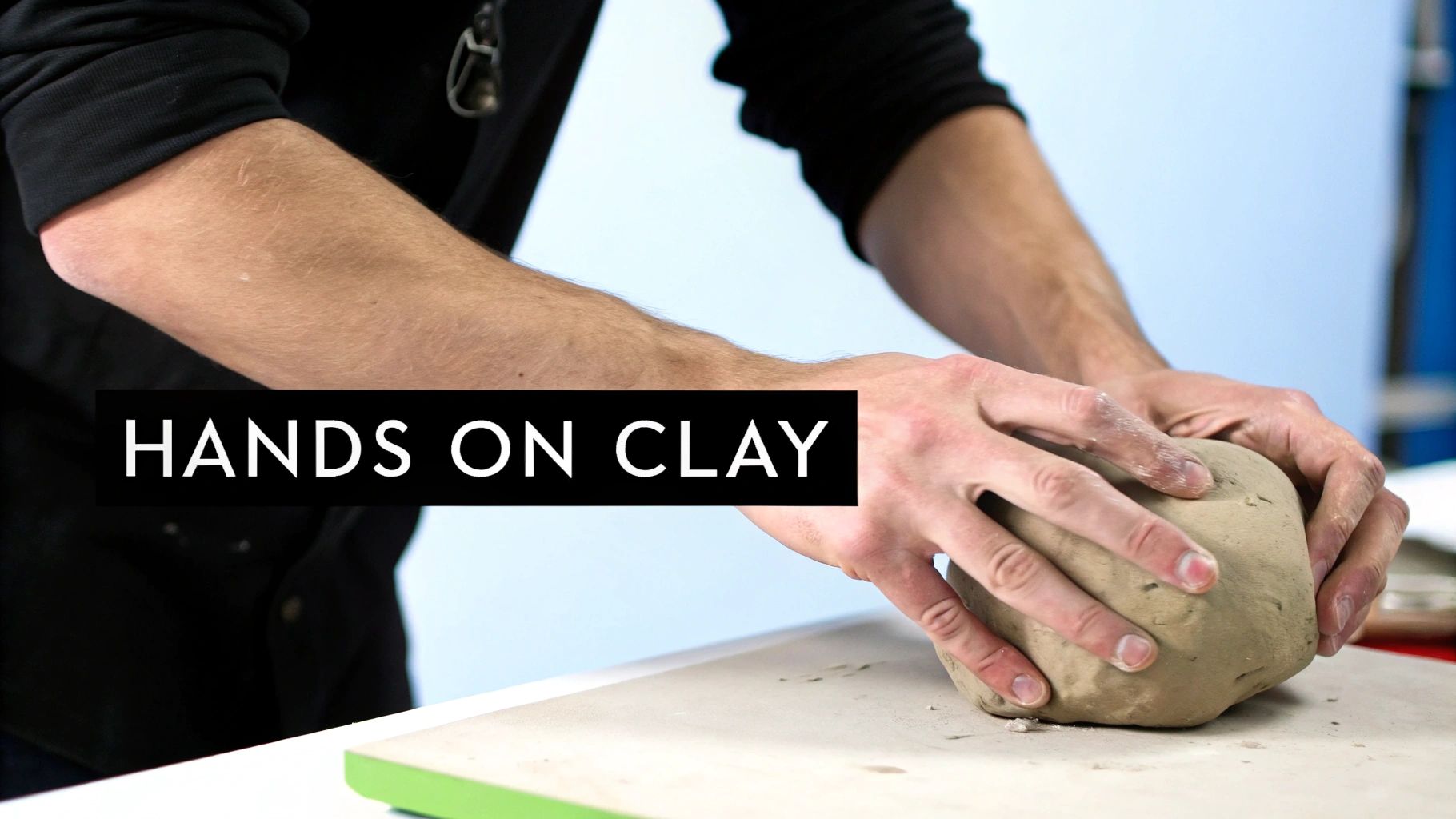
Working with clay is a powerful, three-dimensional art therapy exercise that engages your sense of touch in a uniquely grounding way. This practice involves squeezing, pinching, rolling, and shaping the material, offering a physical outlet for pent-up anxious energy. The tactile feedback and physical resistance from the clay provide sensory input that can interrupt anxious thought spirals and anchor your attention firmly in the present moment.
This kinesthetic process allows you to connect with your body and regulate your nervous system through direct physical action. The act of transforming a formless lump into a tangible object helps externalize complex feelings, making them feel more manageable and less overwhelming.
Why It Works for Anxiety
Pioneering art therapist Edith Kramer emphasized the therapeutic value of clay, noting its ability to absorb and transform aggressive or anxious energy. Squeezing, pounding, and molding the clay offers a safe and constructive way to release physical tension associated with anxiety. It doesn't require precise visual control, allowing for a more intuitive and emotional expression.
The activity is inherently grounding. As your hands work the cool, pliable material, your mind focuses on the physical sensations rather than on intrusive thoughts. This sensory focus calms the nervous system and fosters a state of mindfulness, similar to meditation but with a tangible, creative outcome. This process also helps improve fine motor skills and hand strength; for a deeper dive, you can learn about hand dexterity and its benefits.
How to Get Started
- Gather Your Materials: Start with air-dry clay, which is accessible and doesn't require a kiln. You will also need a smooth, non-porous surface to work on, like a plastic mat or a piece of canvas.
- Prepare the Clay: Begin by kneading the clay to warm it up and remove air bubbles. This initial step is a therapeutic activity in itself.
- Explore and Create: Let your hands guide you. Squeeze, roll, pinch, or flatten the clay. You can create a specific object that represents a feeling or simply focus on the texture and form.
- Reflect on the Object: Once you are done, take a moment to look at your creation. What does it represent? You can keep the piece, photograph it, or even smash it and start over, symbolizing the release of negative emotions.
Practical Tips for Success
- Use Air-Dry Clay: This is the most convenient option for home use. It’s affordable, easy to find, and simple to work with.
- Work with Eyes Closed: To heighten the sensory experience, try sculpting for a few minutes with your eyes closed. This enhances your tactile awareness and connection to the process.
- Express with Pressure: Intentionally vary the pressure you apply. Use gentle movements for feelings of calm and more forceful actions to release frustration or tension.
6. Color Psychology and Intentional Color Work
Intentional color work is an art therapy exercise focused on deliberately choosing and using colors based on their psychological associations to manage emotions. This practice involves selecting colors that align with your desired emotional state, such as calming blues for peace or energizing yellows for positivity, and incorporating them into your artwork. It’s an effective art therapy exercise for anxiety because it combines cognitive engagement with emotional response, providing a powerful tool for self-regulation.
By consciously selecting colors, you actively participate in shifting your mood. This process externalizes your internal feelings onto the canvas or paper, allowing you to observe and influence them from a distance. The simple act of choosing a color associated with calm can begin to evoke that very feeling, creating a direct feedback loop between your creative choices and your emotional state.
Why It Works for Anxiety
The therapeutic value of this exercise lies in its ability to give you a sense of control over your emotions. When anxiety feels overwhelming and chaotic, making a deliberate choice about color can be an empowering first step toward regaining inner balance. The practice encourages you to tune into your feelings and respond to them constructively.
Pioneers like Wassily Kandinsky explored the deep connection between color and emotion, suggesting that colors could directly influence the soul. This exercise builds on that principle, helping you create a visual language for your feelings. Assigning a soothing green to your anxiety allows you to process it in a tangible, less intimidating form, reducing its power over you.
How to Get Started
- Identify Your Feeling: Acknowledge the anxiety you are experiencing. What does it feel like? If it were a color, what would it be?
- Choose a Counter-Color: Select a color that represents the state you want to feel. This could be a cool blue for calm, a soft pink for comfort, or a grounding green for stability.
- Create Your Art: Use your chosen counter-color as the dominant theme in a simple drawing, painting, or abstract piece. You can paint a landscape, fill in a geometric pattern, or simply make expressive marks.
- Reflect on the Shift: As you work, notice any changes in your mood or physical sensations. Pay attention to how interacting with your chosen color affects your sense of anxiety.
Practical Tips for Success
- Create a Color Journal: Keep a small notebook to jot down how different colors make you feel. This will help you build a personal color-emotion key.
- Experiment with Palettes: Intentionally work with warm versus cool color palettes to see how they influence your energy levels and emotional state. You can learn more about the impact of warm and cool colors on paint-by-number.com to guide your experiments.
- Use Color Swatches: Keep paint chips or colored paper swatches on hand. When you feel anxious, you can simply look at or hold a color that you find calming.
- Adapt for Accessibility: Guided projects like paint-by-number kits are perfect for this exercise. You can intentionally choose a kit with a color palette that you find soothing, such as a serene landscape or a floral scene, allowing you to benefit from color psychology within a structured, easy-to-follow format.
7. Expressive Movement and Dance-Based Drawing
Expressive movement and dance-based drawing is a powerful exercise that combines physical motion with visual art creation. This approach allows you to translate the feelings stored in your body into marks, lines, and colors on a page. By engaging your whole body, this practice serves as an effective art therapy exercise for anxiety, addressing the physical tension that often accompanies emotional distress.
The process involves moving your body freely, perhaps in response to music, and then capturing the essence of that movement visually. This integration of somatic (body-based) and creative expression helps release pent-up energy and emotions, offering a non-verbal outlet for stress that words cannot always capture. It shifts focus from anxious thoughts to the physical sensations of the present moment.
Why It Works for Anxiety
Anxiety isn't just a mental state; it's a physical one that can manifest as muscle tension, a rapid heartbeat, and shallow breathing. Pioneers in somatic therapy like Bessel van der Kolk have highlighted how trauma and stress are held in the body. Expressive movement provides a direct pathway to access and release this stored tension.
By externalizing your internal state through both movement and art, you create a tangible record of your emotional experience. This process allows you to observe your feelings from a distance, reducing their overwhelming power. The dual-modality approach ensures that both the mind and body are engaged in the healing process, leading to a more integrated sense of relief.
How to Get Started
- Prepare Your Space: Find a private area where you can move freely. Lay a large sheet of paper or canvas on the floor or wall.
- Choose Your Medium: Select tools that allow for broad, expressive marks, such as charcoal, large crayons, or paint.
- Select Music (Optional): Put on music that reflects or helps shift your current emotional state. It can be calming, energetic, or intense.
- Move and Draw: Begin by moving your body. Let the music or your feelings guide you. When you feel ready, start making marks on the paper, letting your arm and body movements guide the drawing tool.
Practical Tips for Success
- Start with Movement Only: Before you add art materials, spend a few minutes just moving your body to get comfortable and connect with how you are feeling physically.
- Use a Large Format: Working on a large surface encourages bigger, more expansive movements, which can be more liberating and effective for releasing tension.
- Focus on the Process, Not the Product: The goal is emotional release and expression, not creating a masterpiece. Let go of judgment.
- Try Guided Kits for Structure: For a more contained experience, a large-format paint-by-number kit can be combined with mindful movement. You can stretch, sway, or dance between sections, translating gentle motions into the deliberate act of painting within the lines.
8. Vision Board and Guided Imagery Art
A vision board is a powerful tool that combines creative collage with intention-setting to help shift your focus from anxious thoughts to positive, calming aspirations. By gathering images, words, and materials that represent a desired future or peaceful state of mind, you create a tangible representation of your goals and values. This exercise is one of the most effective art therapy exercises for anxiety because it actively channels nervous energy into a hopeful, future-oriented activity.
The process of creating a vision board helps externalize your inner desires, making them feel more attainable and less abstract. This act of "envisioning" a calmer, more fulfilling reality can interrupt the cycle of worry and rumination, grounding you in a sense of purpose and possibility. It provides a visual anchor to return to when feelings of anxiety begin to surface.
Why It Works for Anxiety
Vision boards leverage principles of positive psychology, helping to retrain your brain to focus on what you want to cultivate in your life, such as peace, confidence, or connection. The act of searching for and selecting specific images engages your mind in a mindful hunt, which quiets the part of your brain responsible for generating anxious thoughts.
By creating a physical collage, you give your anxieties a rest and build a visual reminder of your strength, resilience, and dreams. This process fosters a sense of agency and control, empowering you to shape your mental landscape rather than being a passive victim of anxious feelings.
How to Get Started
- Set an Intention: Before you begin, take a few moments to reflect. What feelings do you want to experience more of? Peace? Joy? Stability? Let this be your guide.
- Gather Your Materials: Collect magazines, newspapers, photographs, fabric scraps, and any other materials that resonate with you. You’ll also need a poster board, corkboard, or canvas as your base, plus scissors and glue.
- Find Your Images and Words: Flip through your materials and cut out anything that evokes the feeling you want to cultivate. Don't overthink it; trust your intuition.
- Arrange and Create: Lay out your chosen elements on the board without gluing them down. Move them around until the composition feels right to you, then secure everything in place.
Practical Tips for Success
- Focus on Feelings: Choose images based on the emotions they evoke, not just specific material objects or outcomes.
- Create a Calm Space: Put on some calming music and light a candle to make the creation process a relaxing ritual in itself.
- Make it Visible: Place your finished vision board somewhere you will see it every day, like your bedroom or office, for regular reinforcement.
- Adapt for Accessibility: If gathering physical materials feels overwhelming, creating a digital vision board on a platform like Pinterest can be just as effective. This modern approach offers many of the same art therapy benefits and is easy to update.
Art Therapy for Anxiety — 8-Method Comparison
| Activity | 🔄 Implementation complexity | ⚡ Resources & convenience | ⭐ Expected effectiveness | 📊 Typical outcomes | 💡 Ideal use cases / Key advantages |
|---|---|---|---|---|---|
| Mandala Creation and Coloring | Low — simple templates; small learning curve | Low cost; pencils/markers or digital; portable | ⭐⭐⭐⭐ — reliable calming effect | Immediate focus, reduced physiological arousal, tangible keepsake | Short mindfulness breaks, hospital/school programs; low skill required |
| Scribble and Abstract Expression | Very low — no technique required | Minimal materials; highly portable; very quick | ⭐⭐⭐⭐ — rapid tension discharge | Fast nervous-energy release, emotional expression, brief sessions | Acute anxiety relief (ER/classroom); removes performance pressure |
| Nature-Based Collage and Mixed Media | Low–Medium — collecting + composing | Low cost if foraged; needs outdoor access/time | ⭐⭐⭐⭐ — grounding via nature contact | Sensory regulation, feeling of connectedness, seasonal reflection | Eco-therapy, outdoor programs, sensory-rich grounding activities |
| Zentangle and Structured Pattern Drawing | Medium — learn patterns and stepwise method | Low materials (pen/paper); quiet workspace helpful | ⭐⭐⭐⭐ — structured mindfulness, reduces decision load | Sustained focus, sense of accomplishment, transferable skills | Therapy groups, people who prefer structure; teachable technique |
| Clay Sculpting and Hand Manipulation | Medium–High — setup, technique, cleanup | Moderate resources; workspace, clay (kiln optional); messy | ⭐⭐⭐⭐⭐ — strong proprioceptive grounding | Deep tactile regulation, discharge of tension, tangible artifacts | Art therapy, somatic work, those needing intensive sensory input |
| Color Psychology and Intentional Color Work | Low–Medium — requires color knowledge | Low; any medium; swatches/journaling helpful | ⭐⭐⭐ — variable by individual; supports mood work | Enhanced emotional literacy, intentional mood modulation | Clients interested in cognitive approaches; design-informed therapy |
| Expressive Movement and Dance-Based Drawing | Medium–High — facilitation and safety considerations | Moderate; space, music, large-format materials; facilitator recommended | ⭐⭐⭐⭐ — strong somatic anxiety relief | Body regulation, catharsis, integrated movement-to-art insight | Somatic therapy, group workshops, kinesthetic learners |
| Vision Board and Guided Imagery Art | Low — assembly + guided reflection | Low–Moderate; images, adhesives, time for reflection | ⭐⭐⭐ — helps reorient attention and motivation | Future-focused outlook, increased motivation, visual cue for goals | Retreats, goal-setting workshops, positive-psychology interventions |
Integrating Creativity into Your Daily Wellness Routine
You've just explored a powerful toolkit of art therapy exercises for anxiety, from the focused symmetry of mandalas to the grounding sensation of sculpting clay. The journey through these creative practices reveals a profound truth: you hold the power to transform your emotional state. Art is not just about creating something beautiful for others to see; it’s about creating a safe, internal space for yourself.
The exercises we've covered, including expressive scribbling, nature collages, and structured Zentangle patterns, are designed to interrupt the cycle of anxious thoughts. They achieve this by anchoring you firmly in the present moment, engaging your senses, and providing a non-verbal outlet for feelings that can be difficult to articulate. The goal isn't to produce a masterpiece, but to participate in a process that calms the nervous system and fosters self-compassion.
Making Art Therapy a Sustainable Habit
Integrating these practices into your daily life is the key to unlocking their long-term benefits. The idea isn't to add another overwhelming task to your to-do list, but to find small, accessible pockets of time for creative self-care.
Here are some practical next steps to build a consistent routine:
- Start Small: Dedicate just five to ten minutes each day. Try a quick scribble drawing when you feel overwhelmed or spend a few minutes adding to a Zentangle tile before bed. Consistency is more impactful than intensity.
- Create an "Art First-Aid Kit": Assemble a small box with a few essential supplies like a sketchbook, colored pencils, and a piece of air-dry clay. Keep it somewhere visible and easily accessible, so you can turn to it whenever anxiety strikes.
- Lower the Barrier to Entry: If the thought of a blank page is daunting, lean into structured activities. This is where tools like paint-by-number kits shine. They remove the pressure of decision-making, allowing you to simply immerse yourself in the meditative rhythm of applying color.
The true value of mastering these approaches lies in building emotional resilience. Each time you engage in one of these art therapy exercises for anxiety, you are actively training your brain to find a new pathway away from worry and toward a state of mindful calm. You are learning to self-soothe, process emotions constructively, and reconnect with your innate creativity.
Your Path to Inner Peace Through Art
Remember, your creative journey is uniquely yours. There is no right or wrong way to express yourself. Some days, you might find solace in the structured patterns of a mandala, while on others, you might need the physical release of working with clay. Honor what you need in the moment and approach each session with curiosity rather than judgment.
This collection of exercises is more than just a list of activities; it’s an invitation to cultivate a deeper relationship with yourself. By embracing art as a wellness tool, you are not just managing anxiety, you are actively creating a more peaceful, centered, and expressive life. The canvas, the clay, and the colors are waiting. Your journey toward tranquility has already begun.
Ready to experience the calming benefits of a structured creative project? Transform your favorite photo into a therapeutic painting experience with a kit from Custom Paint By Numbers. Visit us at Custom Paint By Numbers to create your own personalized art therapy tool and begin your journey to mindfulness today.