
The blank canvas can feel intimidating, but the truth is, anyone can create beautiful art. The secret isn't innate talent; it's choosing the right subject. Finding easy things to paint for beginners is the most important first step in building creative confidence and mastering fundamental skills without frustration. This guide is designed to remove the guesswork, offering 10 simple yet stunning subjects that are perfect for your first few projects.
We'll dive into landscapes, abstract patterns, still life, and more, breaking down why each idea works for newcomers. For every subject, you'll find actionable tips to get you started, simple step-by-step suggestions, and recommended color palettes to ensure your creation is a success. If you need a spark of inspiration before you begin, you can explore AI painting applications that generate a variety of styles and subjects, making it easier to find reference images for easy things to paint for beginners.
Whether you're aiming for a relaxing hobby or taking your first step toward artistic mastery, your journey begins here. Forget the pressure to be perfect and focus on the joy of creating. Let's pick up a brush and turn that empty canvas into something you're proud of.
1. Landscapes and Nature Scenes
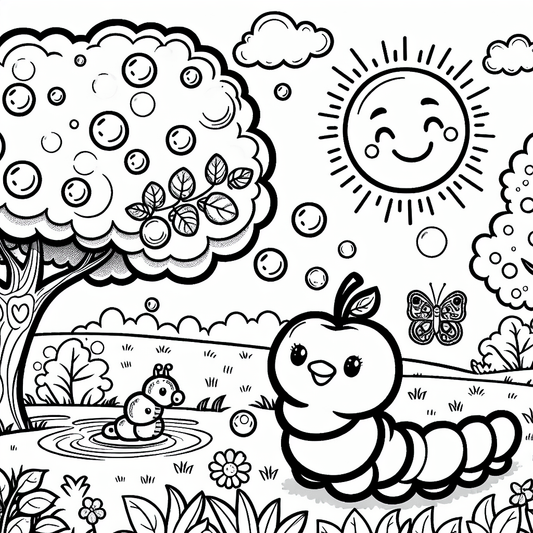
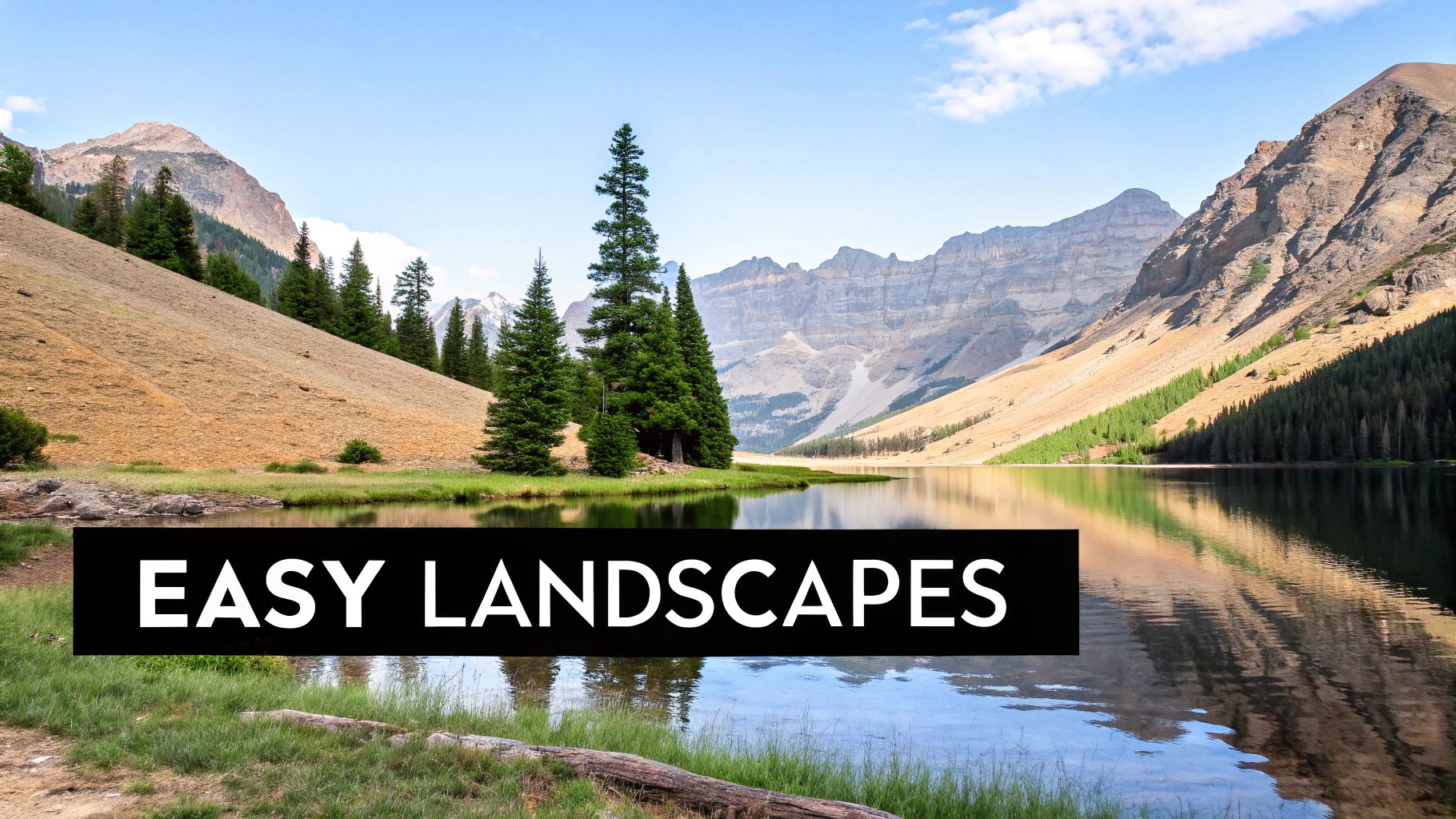
Painting landscapes is an ideal starting point for beginners because nature is forgiving. Unlike portraits, where a slightly misplaced feature can look odd, a “happy little tree,” as Bob Ross would say, can’t be in the wrong spot. This subject teaches fundamental skills like perspective, layering, and color blending without the pressure of perfect realism, making it one of the best easy things to paint for beginners.
Why It Works for Beginners
Landscapes are built from simple shapes: triangles for mountains, ovals for clouds, and vertical lines for trees. This simplicity allows you to focus on the bigger picture and develop your technique. Small imperfections often add to the painting's charm rather than detract from it.
Actionable Tips to Get Started
- Work from back to front: Always paint the sky first, then distant mountains, and finally the trees and objects in the foreground. This layering technique naturally creates a sense of depth.
- Create distance with color: Use lighter, less saturated colors for objects in the background (like pale blue for distant mountains). Use bolder, darker colors for elements closer to the viewer.
- Simplify your shapes: Don't try to paint every single leaf on a tree. Instead, focus on the overall shape and texture, using dabbing or stippling motions to suggest foliage.
To further guide your first project, explore this complete guide on landscape painting for beginners for more structured advice and techniques.
2. Simple Animals and Pets
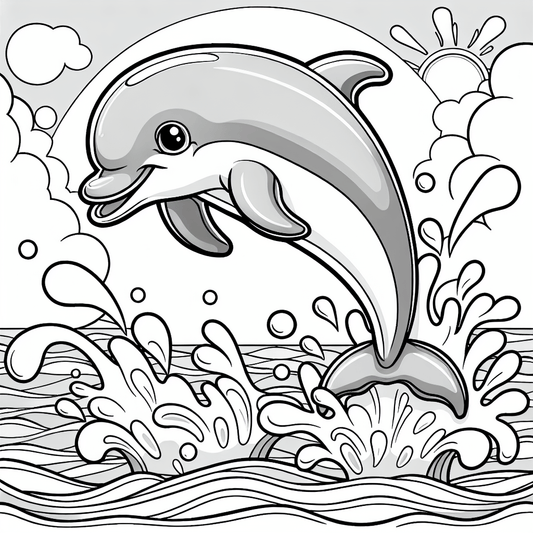
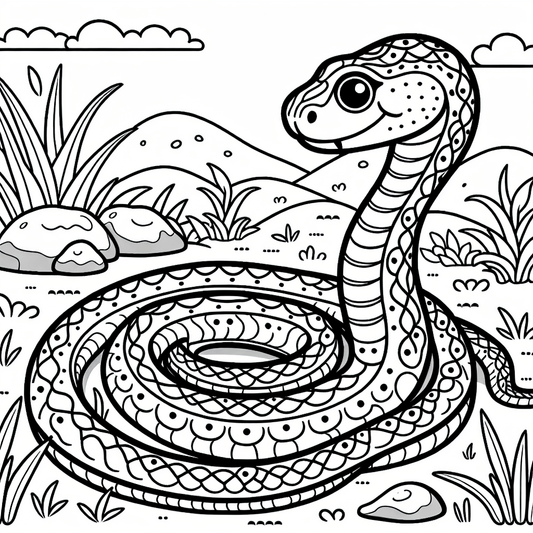
Painting animals is an engaging way for beginners to practice combining basic shapes into recognizable and beloved forms. Starting with simple creatures like cats, birds, or fish teaches fundamental skills in proportion and shading without the intimidating complexity of human anatomy. This makes it one of the most rewarding and easy things to paint for beginners, building confidence with every brushstroke.

Why It Works for Beginners
Animals are built from simple geometric shapes like ovals, circles, and triangles. This allows you to focus on capturing the essence and character of the subject rather than getting lost in intricate details. The forgiving nature of fur or feather textures also provides a great opportunity to experiment with different brush techniques.
Actionable Tips to Get Started
- Start with big shapes: Begin by lightly sketching the largest shapes of the animal’s body and head. This establishes the correct proportions before you add any details.
- Use a reference photo: Working from a photograph is essential for capturing accurate features and lighting. Keep the photo visible as you paint to guide your work.
- Create texture with a dry brush: For fur or feathers, use a mostly dry brush with a small amount of paint. Apply it with light, quick strokes or circular motions to build realistic texture.
- Paint the eyes last: The eyes bring your animal to life. Adding them at the end ensures they are perfectly placed and become the focal point of your painting.
If you want a more guided experience, you can explore a huge variety of animal painting kits that simplify the process even further.
3. Abstract and Geometric Patterns
Abstract art is the perfect creative playground for beginners because it removes the pressure to create something realistic. Instead of worrying about making a tree look like a tree, you can focus purely on colors, shapes, and textures. This freedom makes abstract and geometric designs some of the most enjoyable and easy things to paint for beginners, allowing you to build confidence while exploring your artistic voice.
Why It Works for Beginners
This style is liberating. There are no rules, and mistakes can often become the most interesting parts of your painting. Whether you're creating a bold geometric pattern inspired by Piet Mondrian or a free-flowing color field like Mark Rothko, the goal is expression, not perfection. This approach helps you learn about color theory and composition in a low-stakes environment.
Actionable Tips to Get Started
- Limit your color palette: Start with just 3-5 colors that work well together. This ensures your final piece looks cohesive rather than chaotic.
- Use painter's tape for clean lines: For geometric designs, painter's tape is your best friend. Apply it to your canvas to create sharp, crisp edges for your shapes.
- Don't overthink it: The beauty of abstract art lies in spontaneity. Let your intuition guide your brushstrokes, and have fun experimenting with different marks, splatters, and textures.
4. Fruit and Food Still Life
Painting a still life of fruit or food is a classic exercise for a reason. These subjects teach fundamental skills like shading, form, and color mixing in a controlled, low-pressure setting. Because your subjects won't move or change, you can take your time studying how light creates highlights and shadows on rounded forms, making this one of the most instructive easy things to paint for beginners.
Why It Works for Beginners
Fruit offers a vibrant, natural color palette perfect for practicing color theory. You can focus entirely on capturing shape and light without worrying about complex backgrounds or moving elements. The simple, familiar forms of apples, oranges, or bananas allow you to build confidence in rendering three-dimensional objects on a two-dimensional canvas.
Actionable Tips to Get Started
- Set a simple scene: Start with just two or three items against a plain backdrop. This helps you focus on the objects themselves without getting overwhelmed by a busy composition.
- Establish a light source: Place a lamp or use a window to create a single, clear source of light. Pay close attention to where the brightest highlights and darkest shadows fall, and keep them consistent.
- Use curved brushstrokes: Follow the natural contour of the fruit with your brushstrokes. This simple technique instantly helps create the illusion of a rounded, 3D form.
- Build color in layers: Instead of applying one thick, flat color, build richness by applying multiple thin layers of paint. Start with a base color and gradually add lighter tones for highlights and darker ones for shadows.
5. Sunsets and Skies
Painting sunsets and skies is a fantastic project for beginners because it focuses almost entirely on color blending rather than precise drawing. There are no complex shapes or fine details to worry about. The beauty of a sunset comes from the smooth transition of vibrant colors, making it a forgiving and emotionally resonant subject that ranks high among easy things to paint for beginners.
Why It Works for Beginners
The magic of a sunset painting lies in its soft, blended gradients. This subject allows you to practice fundamental techniques like wet-on-wet blending without the pressure of realism. Since the result is abstract and atmospheric, like the works of J.M.W. Turner, there is no "wrong" way for the colors to mix, giving you creative freedom.
Actionable Tips to Get Started
- Work wet-on-wet: Lightly dampen your canvas with water (for acrylics) or a blending medium (for oils). This keeps the paint workable for longer and helps the colors merge smoothly.
- Start with light colors: Apply your lightest colors first, like yellow and orange, near the horizon. Then, blend in darker colors like reds, purples, and blues toward the top of the canvas.
- Use horizontal strokes: Keep your brushstrokes horizontal to mimic the natural look of the sky. Avoid over-blending; let some of the colors mix naturally on the canvas to create beautiful, unexpected gradients.
For more step-by-step guidance, check out this detailed tutorial on how to paint a sunset and master beautiful sky gradients.
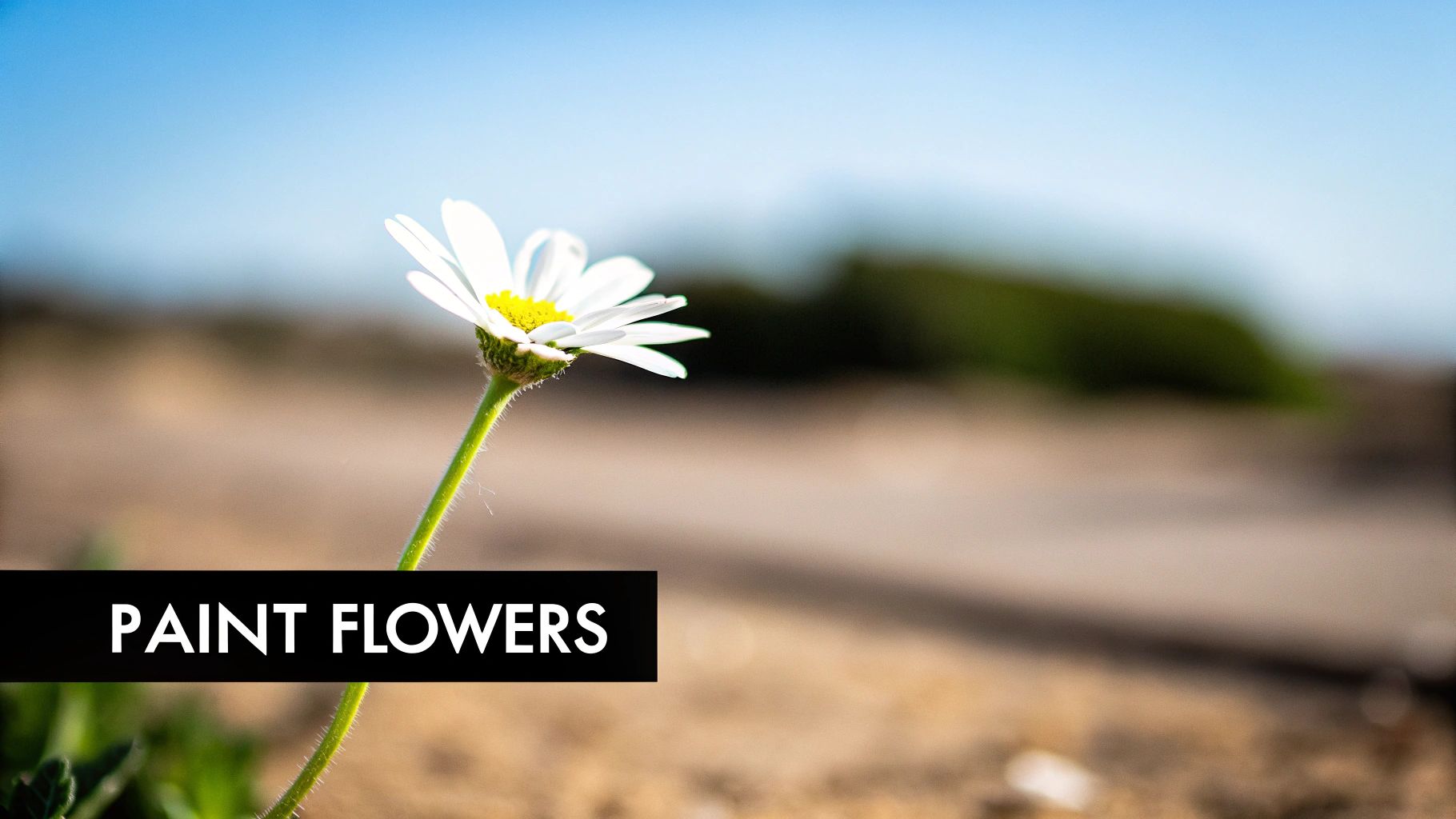
6. Flowers and Floral Compositions
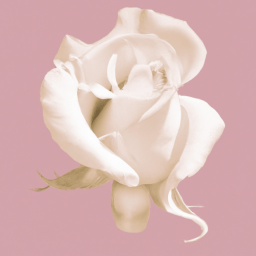
Flowers are a classic subject for a reason. They allow beginners to practice blending, layering, and creating delicate forms without needing perfect proportions. An extra petal or a slightly wobbly stem won't ruin the painting; it will simply add to its organic charm. From a single rose to a vibrant bouquet like Van Gogh’s Sunflowers, this subject is one of the most versatile and easy things to paint for beginners.
Why It Works for Beginners
Floral compositions are built from simple, repeating shapes. This allows you to focus on color and texture rather than complex anatomy. The natural variation in flowers means there's no single "right" way to paint one, giving you creative freedom and boosting your confidence.
Actionable Tips to Get Started
- Build from back to front: Start by painting the background and leaves, then layer the petals on top. For the flower itself, paint the petals furthest away first and work your way forward.
- Vary your petals: Avoid making every petal identical. Slightly change the shape, size, and angle of each one to create a more natural and dynamic look.
- Create depth with shadows and highlights: Use a darker shade of your main color for the flower's center and the base of the petals. Add small dabs of a much lighter color or white to the petal edges where light would hit.
Practicing the basic shapes is key before you start painting. If floral compositions spark your interest, you can find a fantastic resource on easy flower drawing for beginners to get started.
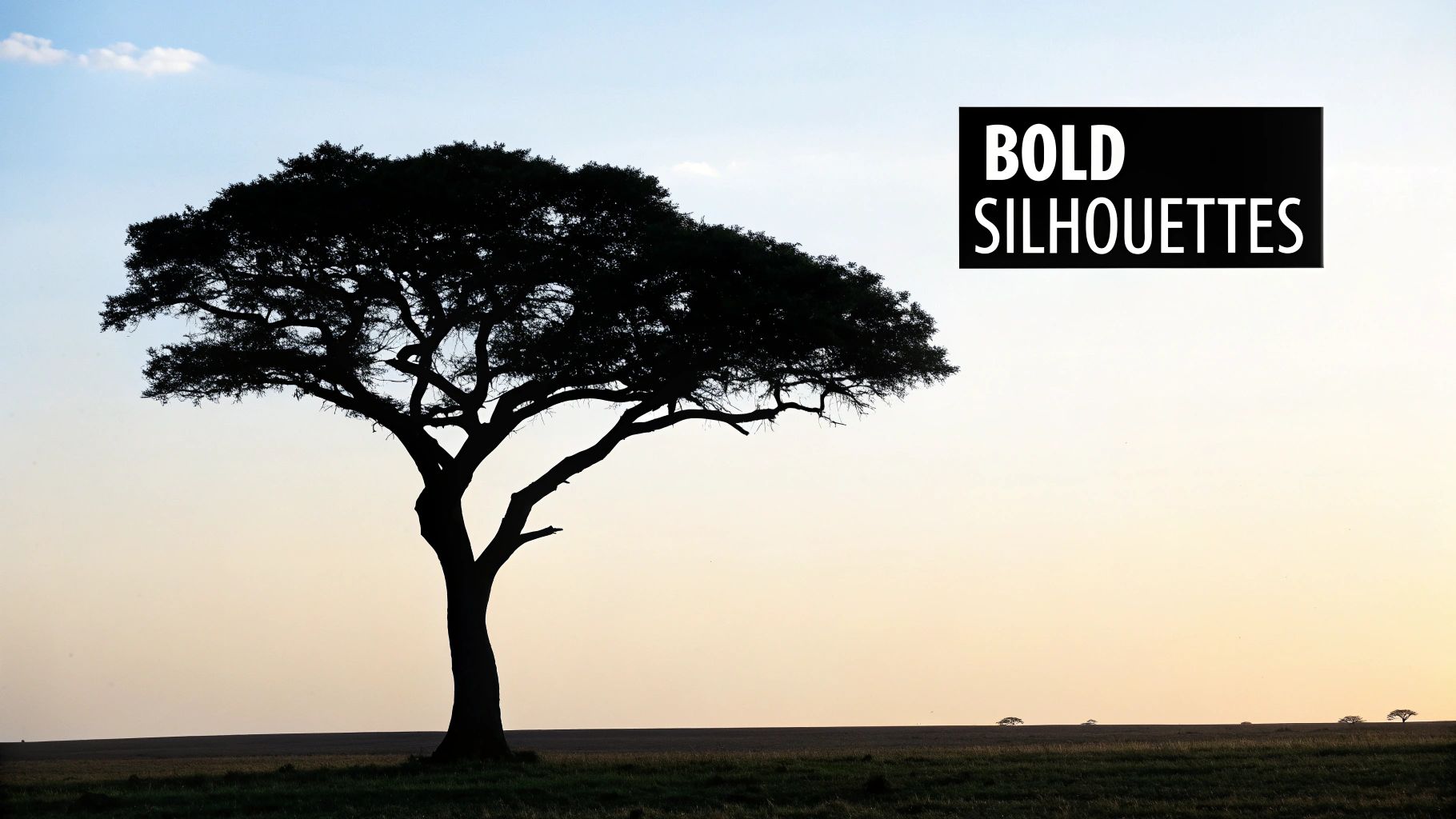
7. Silhouettes and Shadow Art
Silhouette painting is a fantastic choice for beginners because it eliminates the need for complex details, shading, and texture. By focusing on a solid shape against a contrasting background, you can create a powerful, professional-looking piece with minimal effort. This subject teaches the importance of strong composition and accurate outlines, making it one of the most rewarding easy things to paint for beginners.
Why It Works for Beginners
Silhouettes are defined by their outline, not their internal features. This allows you to practice brush control and creating clean shapes without worrying about perspective or light sources. You only need two contrasting colors, such as a dark black or blue for the silhouette and a vibrant gradient for a sunset or sunrise background.
Actionable Tips to Get Started
- Create a vibrant background first: Blend warm colors like red, orange, and yellow to create a sunset background. Let this layer dry completely before adding the silhouette.
- Sketch your outline: Lightly draw your chosen shape (like a tree, animal, or person's profile) with a pencil over the dry background to guide your painting.
- Block in the shape with a solid color: Use a dark, opaque color like black or deep indigo to fill in your sketched outline. Focus on creating a clean, crisp edge for a striking effect.
- Use painter's tape for sharp lines: If your composition includes a horizon or geometric shapes, use painter's tape to achieve perfectly straight edges.
8. Urban Landscapes and Buildings
Painting urban landscapes might seem complex, but they are surprisingly beginner-friendly because they are built from simple geometric shapes. Cityscapes teach perspective and composition through structured forms like rectangles for buildings and lines for streets. This subject allows beginners to practice precision while also exploring atmospheric effects like glowing lights and reflections, making it one of the most rewarding easy things to paint for beginners.
Why It Works for Beginners
Urban scenes break down into fundamental shapes, offering a structured approach to painting. Unlike the organic forms of nature, buildings provide clear lines and predictable patterns. This focus on geometry helps you master straight lines, perspective, and composition in a controlled way, building foundational skills quickly.
Actionable Tips to Get Started
- Use painter's tape for clean edges: For crisp, straight lines on buildings and windows, apply painter’s tape to your canvas. Paint alongside the edge, let it dry, and then peel the tape away for a perfect line.
- Establish perspective first: Lightly sketch one or two vanishing points and draw guide lines for your buildings and streets before you start painting. This simple step ensures your cityscape looks cohesive and three-dimensional.
- Create atmosphere with light: Add dabs of bright yellow, orange, or white paint for streetlights and window glows. Blend the edges slightly to create a soft, luminous effect that brings the city to life, especially in evening scenes.
9. Seascapes and Water Scenes
Painting water is an excellent way for beginners to learn about movement, light, and reflection. Seascapes are particularly forgiving because the fluid, organic nature of water means there are no hard lines or perfect shapes to replicate. This subject teaches fundamental skills like blending colors to create gradients in the sky and sea, and using brushwork to suggest motion, making it another one of the best easy things to paint for beginners.
Why It Works for Beginners
Water scenes, inspired by masters like Claude Monet and Winslow Homer, allow for expressive freedom. You can focus on capturing the feeling and energy of the scene rather than getting bogged down in precise details. The constant motion of water means that imperfect or "blurry" brushstrokes often enhance the painting by conveying a sense of movement.
Actionable Tips to Get Started
- Follow the flow: Use horizontal brushstrokes for calm water to create a sense of stillness and peace. For waves or ripples, use more varied, curved strokes.
- Master reflections: Reflections should mirror the colors of the objects above them (like the sky or clouds), but make them slightly darker and less detailed. Break up the reflection with small horizontal lines to simulate ripples.
- Create depth with color: Just like in landscapes, use lighter, paler blues and greens for water in the distance. As the water gets closer to the foreground, use richer, darker, and more vibrant colors.
- Let colors blend: To create the effect of glassy, still water, allow your paint colors to blend softly into one another on the canvas while they are still wet.
10. Simple Still Life with Household Objects
Painting everyday household objects like vases, cups, or bottles is a fantastic way to learn fundamentals. Unlike complex subjects, a simple mug or bottle allows you to focus purely on shape, light, and shadow. This subject builds confidence through small, satisfying wins and establishes a solid foundation for more intricate still life compositions, making it one of the most accessible and easy things to paint for beginners.
Why It Works for Beginners
Household objects provide a controlled environment to study form and light. You can arrange your subject, set up a single light source, and observe how shadows and highlights create a three-dimensional effect. This practice is crucial for understanding how to represent volume on a flat canvas, a skill that translates to all other painting subjects.
Actionable Tips to Get Started
- Start with one object: Before arranging a group, choose a single, simple item like a cup or a bottle. This allows you to master its contours and shading without distraction.
- Observe your light source: Place your object near a window or under a lamp. Pay close attention to where the light hits and where the darkest shadows fall. Paint these areas of light and shadow first to define the form.
- Use curved strokes: Follow the natural curves of your object with your brushstrokes. This simple technique helps enhance the illusion of roundness and volume.
- Paint the cast shadow: Before painting the object itself, paint the shadow it casts on the surface. This grounds the object in the scene and instantly adds realism.
To get started with a pre-designed composition, you can explore a wide variety of still life paint-by-number kits that simplify the process.
Comparison of 10 Easy Painting Subjects
| Item | Implementation Complexity 🔄 | Resource Requirements ⚡ | Expected Outcomes 📊⭐ | Ideal Use Cases 💡 | Key Advantages ⭐ |
|---|---|---|---|---|---|
| Landscapes and Nature Scenes | 🔄 Moderate — layering, perspective practice; forgiving errors | ⚡ Basic paints; 2–4 brush sizes; canvas; drying time | 📊 High visual impact; gallery-quality results possible ⭐⭐⭐ | 💡 Beginners learning color mixing, depth, and scenery | ⭐ Builds color theory & blending; scalable difficulty |
| Simple Animals and Pets | 🔄 Moderate — proportions & facial detail matter | ⚡ Reference photos; variety of brushes; fine-detail tools | 📊 Strong emotional results; satisfying portraits ⭐⭐⭐ | 💡 Pet portraits, family projects, children's art | ⭐ Motivating; teaches shading, form, texture |
| Abstract and Geometric Patterns | 🔄 Low — composition and color focus | ⚡ Limited palette; masking/tape optional; few brushes | 📊 Quick, modern results; flexible aesthetics ⭐⭐ | 💡 Stress relief, décor pieces, creative practice | ⭐ Encourages color harmony; low intimidation |
| Fruit and Food Still Life | 🔄 Moderate — shading, highlights, form work | ⚡ Simple props; consistent lighting; medium brushes | 📊 Solid skill-building in realism; decorative outcomes ⭐⭐⭐ | 💡 Kitchen décor, practice core painting techniques | ⭐ Teaches light interaction and layered glazing |
| Sunsets and Skies | 🔄 Low — horizontal blending; minimal detail | ⚡ Few colors; wide soft brushes; quick sessions ⚡ | 📊 Fast, pleasing results; strong emotional impact ⭐⭐⭐ | 💡 Quick practice sessions; backgrounds; memory scenes | ⭐ Immediate gratification; excellent for blending skills |
| Flowers and Floral Compositions | 🔄 Moderate — layering petals and depth | ⚡ Variety of colors; fine brushes; reference images | 📊 Decorative, customizable results; high appeal ⭐⭐⭐ | 💡 Gifts, celebrations, home décor, botanical studies | ⭐ Teaches layering, transparency, and composition |
| Silhouettes and Shadow Art | 🔄 Low — shape blocking and contrast | ⚡ Two-tone paints; masking tape or templates | 📊 Bold, graphic outcomes achieved quickly ⭐⭐ | 💡 Couple/family portraits; minimalist décor | ⭐ Extremely beginner-friendly; high visual clarity |
| Urban Landscapes and Buildings | 🔄 High — linear perspective and precise edges | ⚡ Rulers/masking tape; many brush sizes; references | 📊 Sophisticated, personalized mementos ⭐⭐⭐ | 💡 Cityscapes, architectural studies, travel keepsakes | ⭐ Teaches perspective, geometric composition |
| Seascapes and Water Scenes | 🔄 Moderate — reflections and motion techniques | ⚡ Wide brushes; layered mixes; reference photos | 📊 Calming, dynamic results; strong visual appeal ⭐⭐⭐ | 💡 Coastal memories, therapeutic painting, varied moods | ⭐ Teaches reflections, movement, and blending |
| Simple Still Life with Household Objects | 🔄 Low–Moderate — basic forms and reflections | ⚡ Everyday props; small brushes; observational setup | 📊 Polished studies; reliable practice pieces ⭐⭐ | 💡 Quick exercises, sentimental custom objects | ⭐ Highly accessible; builds core shading skills quickly |
Your Artistic Journey Starts Now
You've just explored ten fantastic and accessible ideas, proving that anyone can start painting. The journey from a blank canvas to a finished piece of art can seem intimidating, but as we've seen, the secret lies in choosing the right subject. Each project on this list, from serene landscapes to vibrant abstract patterns, is more than just an exercise; it's a stepping stone to building foundational skills and, most importantly, your creative confidence.
Remember, the goal isn't to create a flawless masterpiece on your first try. It's about enjoying the process. It's about the simple pleasure of mixing colors, the meditative focus of a brushstroke, and the satisfaction of bringing an idea to life. These easy things to paint for beginners are designed to be forgiving, allowing you to learn about composition, color theory, and technique without the pressure of perfection.
Key Takeaways for Your First Painting
To make your first steps as smooth as possible, keep these core principles in mind:
- Start Simple: Choose subjects with clear shapes and minimal detail, like a fruit still life or a dramatic sunset. Complexity can come later.
- Embrace the Process: Focus on the experience rather than the outcome. Painting is a powerful tool for mindfulness and stress relief.
- Don't Fear Mistakes: Every "mistake" is a learning opportunity. A smudge can become a cloud, and an uneven line can add character. Let go and experiment.
The most critical step in any creative endeavor is simply beginning. You don't need a professional studio or expensive materials to start. All you need is a spark of curiosity and the willingness to try. Pick the one idea from this list that excites you the most, whether it's capturing the silhouette of a tree against a twilight sky or the bold colors of a geometric design.
Gather a few basic supplies, find a comfortable spot, and put that first splash of color on your canvas. The barrier to entry is lower than you think, and the rewards, from personal satisfaction to a beautiful piece of decor, are immense. Your artistic journey is a personal one, and it starts with the very next brushstroke you make.
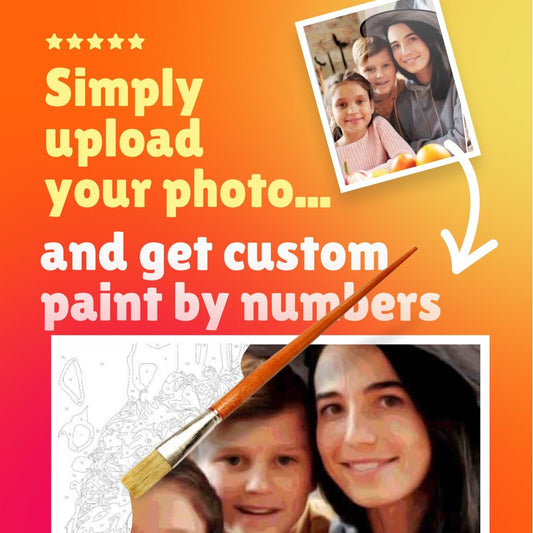
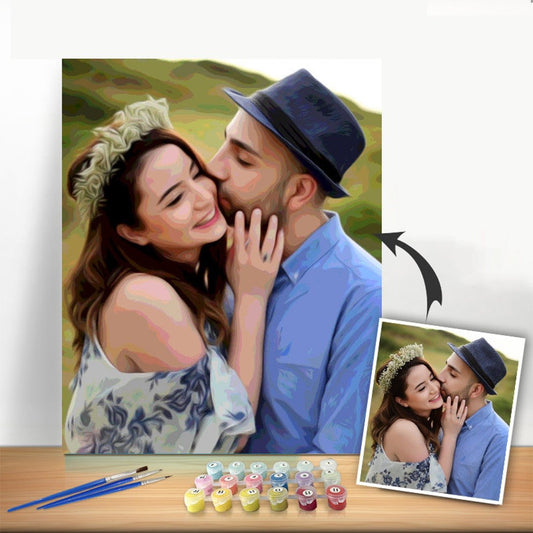
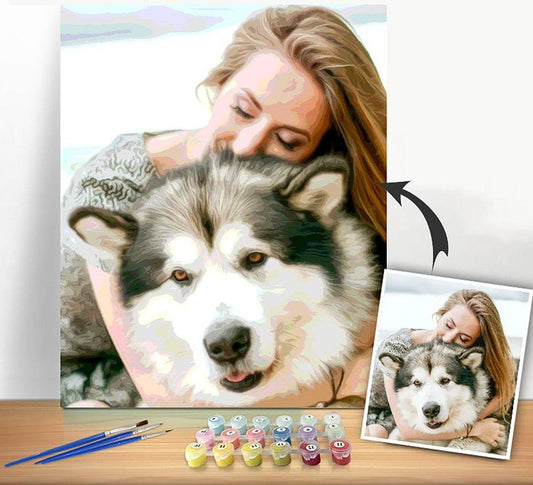
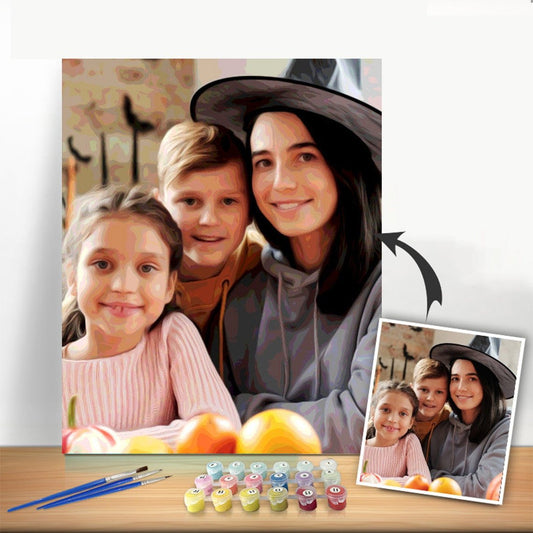
Ready to paint something truly personal without the stress of drawing it yourself? Transform your favorite photo into a masterpiece with a kit from Custom Paint By Numbers. We provide everything you need to create a stunning, personalized painting, making it one of the easiest and most rewarding ways for beginners to get started. Explore your custom options and begin your creative adventure today at Custom Paint By Numbers.