
Welcome to the vibrant world of preschool art! Painting is more than just a way to keep little hands busy; it's a powerful tool for learning and development. From strengthening fine motor skills to expressing big emotions, the simple act of putting paint on paper helps build a foundation for creativity, problem-solving, and self-confidence. This guide offers eight fun, easy, and engaging painting activities for preschoolers, designed to inspire your little artist while making setup and cleanup a breeze for you.
We've curated a selection of projects perfect for young children, ensuring each one is accessible and packed with developmental benefits. Whether you're a parent, caregiver, or educator, you'll find everything you need to get started right away. We'll explore a variety of techniques, from classic finger painting to exciting spin art and nature-inspired creations.
Each entry includes a simple materials list, clear step-by-step instructions, and a quick look at the specific skills your child is building. Forget generic ideas and complicated setups. This roundup focuses on actionable, low-prep activities that deliver maximum fun and learning. Let's get ready to make some colorful memories and unleash your child's inner artist.
1. Finger Painting
Finger painting is the ultimate sensory-rich experience and one of the most foundational painting activities for preschoolers. It invites young children to use their fingers, hands, and even palms to apply paint directly onto a surface. This method removes the barrier of a brush, allowing for a direct, tactile connection with the colors and textures.
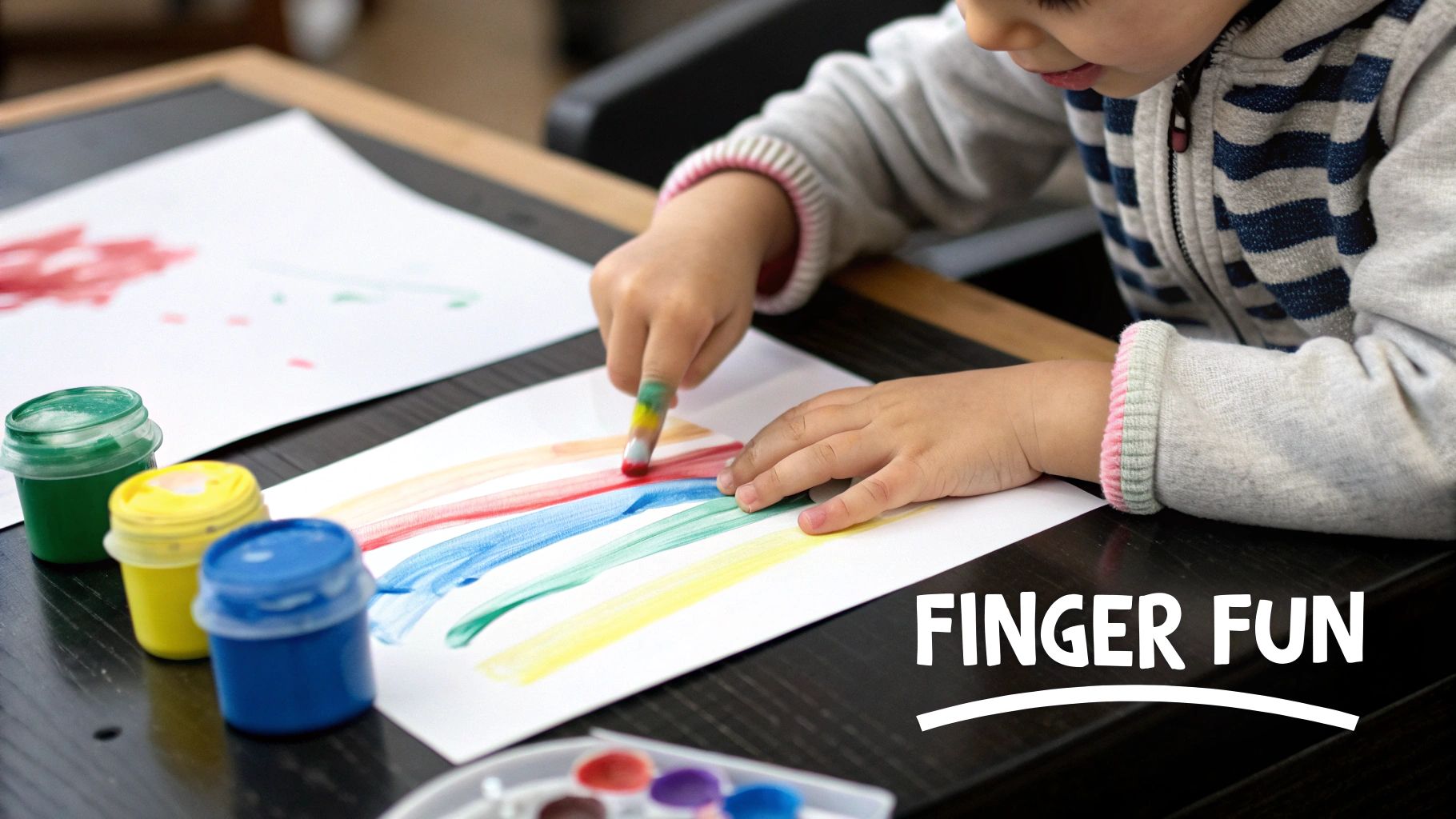
This activity is perfect for toddlers and preschoolers who are still developing their grip and dexterity. The focus isn't on creating a perfect picture but on the joy of exploration, mixing colors, and feeling the cool, smooth paint on their skin. It’s an accessible starting point for any child, regardless of their artistic skill level.
Why It’s a Great Activity
The direct contact with paint makes this activity incredibly engaging for young minds. It stimulates multiple senses at once: touch, sight, and even smell. This sensory input is crucial for brain development, helping to build nerve connections in the brain’s pathways. It’s also a fantastic way for children to express emotions without needing words. The large, sweeping arm movements used in finger painting help develop gross motor skills, while the smaller finger movements support the foundational skills needed for writing later on.
Pro Tip: Don't have store-bought finger paint? You can easily make your own! A simple, non-toxic recipe involves mixing flour, salt, warm water, and a few drops of food coloring for vibrant, safe-to-use paints.
How to Get Started
Setting up for a successful finger painting session is simple but important.
- Protect Surfaces: Lay down newspaper, a plastic tablecloth, or a craft mat to protect your table or floor.
- Prepare Your Artist: Use an apron or an old, oversized shirt to keep clothes clean.
- Use the Right Materials: Provide thick paper (like cardstock) that can handle wet paint without tearing.
- Easy Cleanup: Keep a bowl of soapy water and a towel or a package of wet wipes nearby for quick hand cleaning between colors or at the end of the session.
This activity is an excellent way to introduce color mixing and sensory play, strengthening the small muscles in the hands and fingers. For a deeper understanding of how activities like this help your child, you can explore how fine motor skills develop and why they are so important.
2. Sponge Painting
Sponge painting is a fantastic bridge between the directness of finger painting and the control of using a brush. This activity involves using sponges, either whole or cut into shapes, to dab, press, and smear paint onto a surface. It introduces preschoolers to using a simple tool while still offering a satisfying sensory experience.
This method is perfect for exploring textures, patterns, and cause-and-effect. Children quickly learn that pressing harder makes a bolder mark, while a light touch creates a softer texture. It's an excellent way to create backgrounds for other art projects or to make patterned "wrapping paper" for family gifts.
Why It’s a Great Activity
Sponge painting is an incredibly versatile activity that strengthens key developmental skills. Holding and squeezing the sponge builds hand and finger strength, which is essential for developing a proper pencil grip. The dabbing motion also helps refine hand-eye coordination. It encourages creativity and pattern recognition as children stamp shapes or blend colors to see what new shades they can create. Unlike a brush, a sponge offers a different kind of control, teaching kids about pressure and texture in a fun, low-stakes way.
Pro Tip: Use different types of sponges for varied effects. A natural sea sponge creates an organic, mottled texture, while a standard kitchen sponge cut into a square or triangle is perfect for creating geometric patterns and building scenes.
How to Get Started
Setting up for sponge painting is quick and requires minimal supplies.
- Prep Your Sponges: Cut household sponges into various simple shapes like circles, stars, or squares. Ensure they are slightly damp, but not dripping, for best paint absorption.
- Set Up Paint: Pour a thin layer of different colored, non-toxic paints into shallow trays or on paper plates. This makes it easy for kids to dip the sponge without it becoming oversaturated.
- Provide Paper: Use sturdy paper or cardstock that can hold up to the moisture of the paint.
- Demonstrate and Explore: Show your child how to dip the sponge into the paint, dab off any excess on the side of the tray, and then press it onto the paper. Encourage them to experiment with overlapping colors and shapes.
This is one of the most adaptable painting activities for preschoolers, perfect for creating everything from textured landscapes to fun, repetitive patterns.
3. Foam Brush Painting
Foam brush painting offers a gentle and effective transition from finger painting to using traditional tools. Instead of bristles, these brushes feature a soft, absorbent foam sponge at the tip, which is lightweight and easy for small hands to grip. This method provides more control than fingers but is less intimidating than a bristle brush, making it an ideal intermediate step.
This activity is perfect for preschoolers who are ready to practice holding a tool and making more intentional marks. The smooth, broad strokes that foam brushes create are incredibly satisfying and allow children to cover large areas with color quickly. It’s an excellent way to build confidence while exploring cause and effect with a new art supply.
Why It’s a Great Activity
Foam brushes are forgiving and help preschoolers develop the foundational motor skills needed for more advanced painting and eventually, writing. Holding the brush handle strengthens the pincer grasp and improves hand-eye coordination. Because the foam delivers paint smoothly, children can focus on their creative expression rather than struggling with scratchy or uneven bristle marks. This makes it one of the most encouraging painting activities for preschoolers who are just starting with brushes.
Pro Tip: Before the first use, lightly dampen the foam brush with water. This helps the foam absorb the paint more evenly and smoothly, preventing it from soaking up too much paint at once and leading to a better painting experience.
How to Get Started
Setting up for foam brush painting is straightforward and promotes good art habits.
- Offer Variety: Provide foam brushes in different sizes. Smaller brushes are great for little hands, while larger ones are fun for making big, bold strokes.
- Teach the Technique: Show your child how to dab the brush into the paint and then press or sweep it across the paper. Demonstrate how to load the foam with enough paint so it's saturated but not dripping.
- Provide Rinsing Stations: Set out a small container of water for rinsing brushes between colors. This introduces the concept of keeping colors clean and taking care of their tools.
- Easy Cleanup: Foam brushes are simple to clean with just soap and water. Squeeze out the excess water and let them air dry completely before storing them to maintain their shape.
This activity is a fantastic way to introduce brush handling, color management, and the satisfying feeling of creating smooth, solid blocks of color.
4. Nature Painting (Using Natural Objects)
Nature painting transforms a simple walk in the park into an artistic adventure. This eco-friendly activity encourages preschoolers to collect leaves, twigs, flowers, and pinecones to use as their paintbrushes, stamps, or even the canvas itself. Instead of traditional tools, children can dip a pinecone in paint to create unique textures or press a painted leaf onto paper to make a beautiful print.
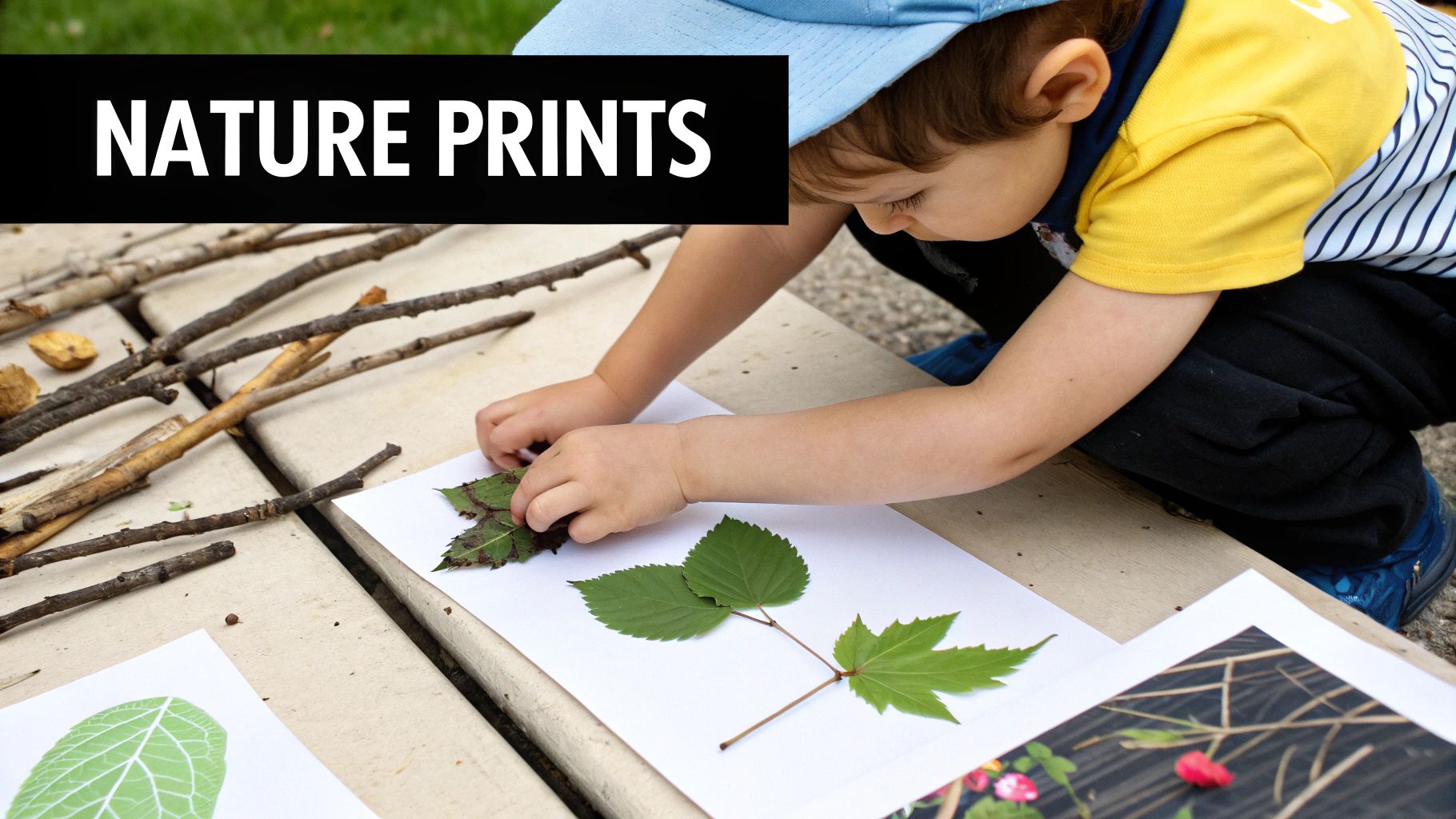
This method is ideal for connecting children with the environment and fostering an appreciation for the natural world. It moves beyond the craft table, integrating outdoor exploration with creative expression. The focus is on discovery, observation, and using the textures and shapes found in nature to create one-of-a-kind artwork.
Why It’s a Great Activity
Using natural objects as tools is a fantastic sensory experience that introduces varied textures, shapes, and sizes, which standard brushes cannot offer. This process encourages problem-solving as children figure out how to use a bumpy rock or a delicate feather to apply paint. It also builds environmental awareness and respect for nature. This type of hands-on learning, often seen in Forest school programs, helps develop fine motor skills, observation abilities, and a deeper understanding of the seasons and local ecosystem.
Pro Tip: When collecting materials, teach your child to only take items that have already fallen to the ground. This is a great opportunity to introduce the concept of "leave no trace" and respecting living plants.
How to Get Started
Setting up your nature painting station is part of the fun.
- Go on a Nature Walk: Start by exploring your backyard or a local park to gather your materials. Bring a small bag or basket for your child’s collection.
- Prepare Your Tools: Gently wash and dry any leaves, rocks, or other items to remove dirt.
- Set Up Your Paints: Pour washable paint into shallow trays or plates for easy dipping.
- Create Your Art: Show your child how to dip an object in paint and press, roll, or drag it across the paper to see what patterns emerge.
This is one of many creative activities for toddlers that combines play with important developmental skills. By bringing the outdoors in, you provide a rich, multi-sensory experience. For more ideas on how to foster your little one's imagination, you can explore other creative activities that support early development.
5. Watercolor Painting
Watercolor painting offers a magical and gentle introduction to the world of color mixing and brush control. Unlike thicker paints, watercolors are translucent, allowing preschoolers to explore layering and see how colors blend together in beautiful, often surprising ways. This method teaches children about the relationship between water, pigment, and paper.
This activity is ideal for children who are ready to move beyond finger painting and begin using tools like brushes. The focus is on the process of discovery: seeing how a wet brush lifts color from a solid block or how adding more water makes a color lighter. It’s a wonderful, low-mess way to introduce foundational art concepts.
Why It’s a Great Activity
Watercolor painting is a fantastic activity for developing fine motor skills as children learn to hold and maneuver a paintbrush. It also introduces basic principles of color theory in a hands-on way, as they mix primary colors to create new ones directly on their paper. This process enhances their understanding of cause and effect ("What happens if I add more water?") and encourages patience as they wait for layers to dry. It's a calm and often mesmerizing activity that can help improve focus and concentration.
Pro Tip: For an extra bit of fun, show your preschooler how to sprinkle a little salt onto their wet watercolor painting. As the paint dries, the salt will absorb the water and create beautiful, crystallized starburst patterns.
How to Get Started
Setting up for watercolors is clean and straightforward.
- Protect Surfaces: Although less messy, it's still wise to cover your work area with a mat or newspaper.
- Use Quality Paper: Opt for thick watercolor paper (90 lb/140 gsm or higher) that can absorb water without buckling or tearing easily.
- Provide the Right Tools: Use child-sized watercolor sets with larger color blocks and brushes that are easy for small hands to grip.
- Set Up Water Stations: Provide two small containers of water: one for rinsing brushes between colors and one for clean water to dip into, which keeps the colors vibrant.
This is one of the most classic painting activities for preschoolers because it builds a strong foundation in brushwork and color blending, paving the way for more complex artistic endeavors in the future.
6. Spin Art Painting (Centrifugal Art)
Spin art is a thrilling and almost magical activity that combines science with creativity. It involves placing paper inside a spinning device, like a salad spinner or a dedicated art spinner, and then dripping paint onto it. As the device spins, centrifugal force pulls the paint outward, creating incredible starbursts and symmetrical patterns with minimal effort.
This activity is perfect for preschoolers because the process is just as exciting as the final product. Children are fascinated by cause and effect as they watch their paint splatters transform into beautiful, complex designs. The results are always unique and impressive, which gives young artists a huge boost of confidence.
Why It’s a Great Activity
Spin art introduces basic physics concepts in a hands-on, playful way. Watching the paint spread and pattern itself provides a tangible demonstration of centrifugal force. This process-oriented art form is less about control and more about surprise and discovery, which frees children from the pressure of creating a "perfect" picture. It’s also fantastic for developing hand-eye coordination as they drop the paint onto the moving paper.
Pro Tip: For an extra layer of fun, start with a dark-colored paper like black or navy blue and use bright, metallic, or neon paints. The high contrast will make the vibrant, radiating patterns pop for a stunning final effect.
How to Get Started
You can easily set up this mesmerizing activity with a few common items.
- Choose Your Spinner: An old salad spinner works perfectly for this. Alternatively, you can find inexpensive art spinners designed specifically for this craft.
- Prepare Your Paper: Cut sturdy paper (cardstock or watercolor paper works best) into circles or squares that fit flat in the bottom of the spinner basket.
- Use Liquid Paints: Thin down washable tempera or acrylic paints slightly with water so they flow easily. Squeeze bottles or droppers are great tools for application.
- Contain the Mess: Although most of the paint stays inside, it's wise to do this activity outside or lay down a protective covering just in case of splatters.
This activity is an amazing way to explore motion and color, making it an ideal choice for an engaging afternoon. For more great ideas on what to do when you're stuck indoors, you can find other fun rainy day crafts for kids that will keep everyone entertained.
7. Marble Painting (Marbling)
Marble painting, also known as marbling, is a delightful and dynamic process where preschoolers create art through motion. This technique involves placing paper inside a shallow box or tray, adding drops of paint, and then rolling marbles through the paint to create unique, abstract patterns. The child guides the marbles by tilting the box, combining kinesthetic play with artistic creation.
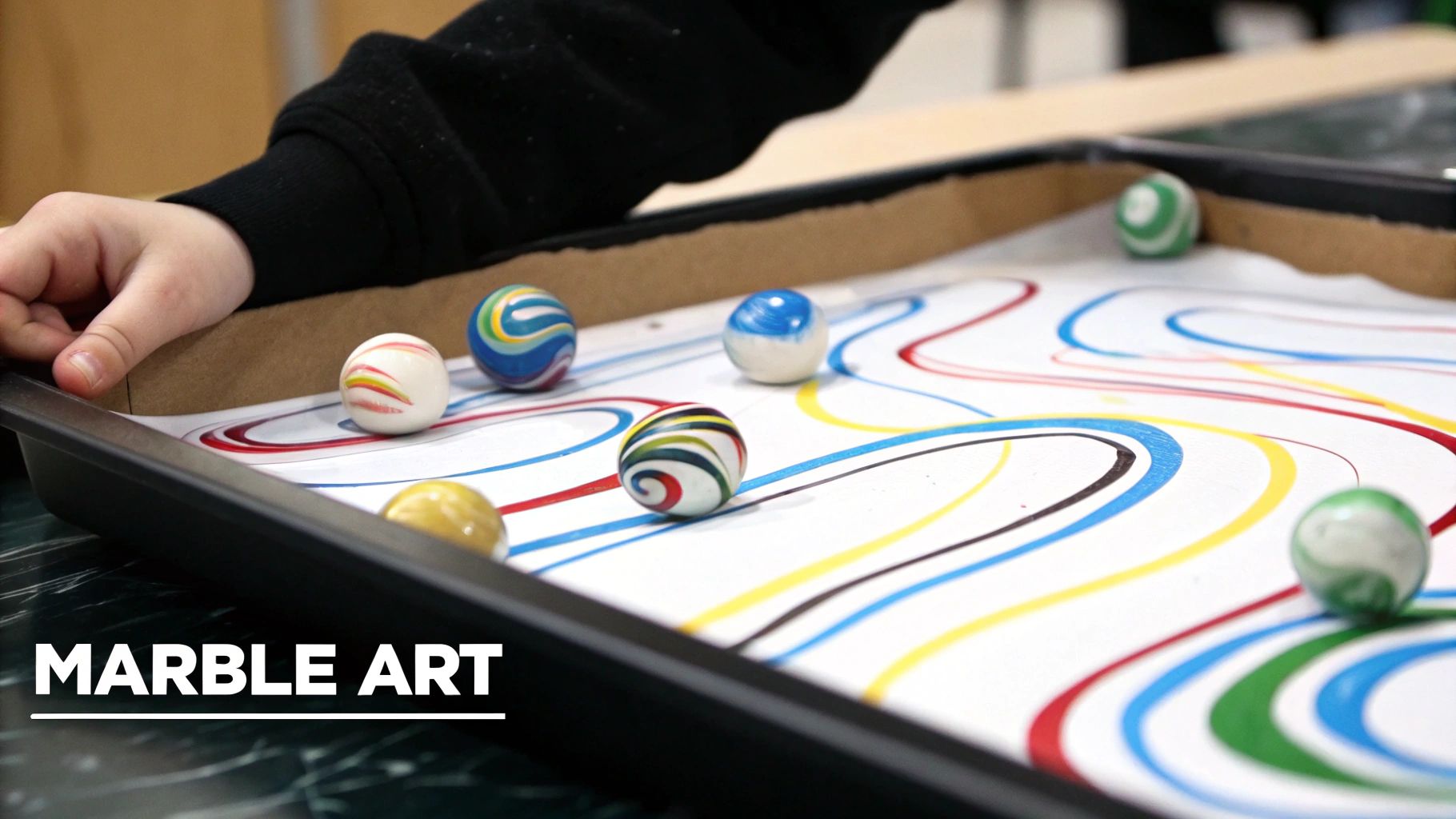
This activity is perfect for exploring cause and effect, as children quickly learn how their movements directly impact the final artwork. There is no right or wrong way to do it, making it an empowering and stress-free experience that builds creative confidence and introduces concepts of motion and physics in a fun, hands-on way.
Why It’s a Great Activity
The magic of marble painting lies in its unpredictability and physical engagement. It’s an excellent way to strengthen hand-eye coordination and fine motor control as children carefully tilt and maneuver the tray. The process of watching marbles leave colorful trails is mesmerizing and helps teach preschoolers about action and reaction. This activity is also less about precision and more about the experience, making it accessible and enjoyable for children of all abilities.
Pro Tip: Don't have marbles? Any small, round objects will work! Try using small bouncy balls, large beads, or even acorns for a nature-inspired twist. Different objects create different patterns.
How to Get Started
Setting up a marble painting station is quick and contains the mess beautifully.
- Contain the Action: Find a low-sided box (a shoebox lid or a baking tray works perfectly) and cut a piece of paper to fit inside.
- Prepare the Paint: Squeeze a few small drops of different colored, non-toxic washable paint onto the paper.
- Add the Marbles: Place one or more large marbles inside the box. Larger marbles are easier for little hands to handle and reduce any choking risk.
- Tilt and Roll: Encourage your child to gently tilt the box back and forth and side to side, watching the marbles roll through the paint and create fantastic designs. Always supervise closely.
8. Blow Painting (Straw Painting)
Blow painting, also known as straw painting, is an exciting activity where children use their breath to move and spread paint across paper. By blowing through a straw, they can guide drops of watery paint into intricate, web-like patterns and organic designs. This method turns a simple puff of air into a powerful and creative artistic tool.
This activity is fantastic for preschoolers as it introduces a completely different way to interact with paint, moving beyond brushes and fingers. The focus is on cause and effect as children watch their breath create beautiful, unpredictable art. It's an engaging process that feels like a playful science experiment and an art project all in one.
Why It’s a Great Activity
This unique painting technique is especially beneficial for developing oral motor skills and breath control, which are important for speech development. It strengthens the muscles in the mouth, cheeks, and jaw. Blow painting also enhances hand-eye coordination as children aim their straws and control their breathing to direct the paint. Watching the colors flow and merge provides a visually stimulating experience that encourages creativity and experimentation with abstract forms.
Pro Tip: For the paint to move easily, it needs to be the right consistency. Mix washable, non-toxic paint with an equal amount of water (a 50/50 ratio) until it has a thin, liquid texture that can be easily blown across the page.
How to Get Started
Setting up for blow painting requires a little preparation to ensure the best results.
- Protect Your Space: Cover your work surface with newspaper or a plastic mat, as the paint can splatter.
- Dress for Mess: Have your child wear an apron or old clothes to protect them from stray paint droplets.
- Choose the Right Tools: Use sturdy paper like cardstock. Wide straws, such as those used for bubble tea, are often easier for little ones to use.
- Apply the Paint: Use a dropper, spoon, or paintbrush to place small puddles of the thinned paint onto the paper.
- Demonstrate Clearly: Before starting, show your child how to blow air out of the straw, not suck in. Supervise closely to ensure they don't ingest any paint.
This is one of the most dynamic painting activities for preschoolers, perfect for creating abstract art, spooky monster hair, or delicate tree branches.
8 Preschool Painting Activities Comparison
| Activity | 🔄 Implementation complexity | ⚡ Resource requirements | 📊 Expected outcomes | 💡 Ideal use cases | ⭐ Key advantages |
|---|---|---|---|---|---|
| Finger Painting | Low 🔄 — simple setup, high supervision for safety | Minimal ⚡ — washable paint, paper, aprons, wipes | High 📊 — sensory engagement, gross motor, early color mixing | Early childhood sensory sessions, inclusive free-play | ⭐ Highly accessible; encourages tactile exploration |
| Sponge Painting | Low–Moderate 🔄 — minor prep (cutting, containers) | Low ⚡ — shaped/natural sponges, shallow trays, paint | Good 📊 — pattern recognition, tool use, controlled stamps | Group activities, pattern-learning, holiday projects | ⭐ Repeatable textures with better control than fingers |
| Foam Brush Painting | Low–Moderate 🔄 — brief instruction for grip & strokes | Low ⚡ — foam brushes, paint, water cups; inexpensive | Strong 📊 — brush control, fine motor foundation, smooth strokes | Structured lessons; transition to traditional brushes | ⭐ Forgiving tools that build brush technique quickly |
| Nature Painting | Moderate 🔄 — gathering, cleaning, and supervision needed | Low–Moderate ⚡ — mostly free natural materials, prep tools | High 📊 — environmental awareness, observation, sensory variety | Outdoor learning, seasonal projects, eco-focused curricula | ⭐ Connects art with nature; low cost and multi-sensory |
| Watercolor Painting | Moderate 🔄 — requires water management & layering guidance | Moderate ⚡ — watercolor set, brushes, heavier paper, water cups | High 📊 — color theory, transparency, refined brush control | Older preschoolers, color exploration, calm studio time | ⭐ Teaches color mixing; produces sophisticated results |
| Spin Art Painting | Moderate–High 🔄 — spinner setup, containment and cleanup | Moderate–High ⚡ — spinner device, generous paint, protective area | High 📊 — dramatic radial patterns, physics intro, high engagement | Workshops, camps, high-energy group demos | ⭐ "Wow" factor; fast gallery-quality outcomes |
| Marble Painting | Low–Moderate 🔄 — tray prep; requires close supervision (choking risk) | Low ⚡ — marbles, shallow tray/box, paint, protective coverings | Good 📊 — unique abstracts, kinesthetic and cooperative play | Cooperative stations, exploratory messy art sessions | ⭐ Produces intricate abstracts with minimal technique |
| Blow Painting | Moderate 🔄 — technique training to prevent ingestion; strict supervision | Low ⚡ — straws, thinned paint, paper, smocks | Good 📊 — oral motor development, flowing organic patterns | Speech therapy, expressive art, exploratory workshops | ⭐ Builds breath control; low-cost and highly expressive |
From Messy Fun to Masterpieces: Your Next Steps
We’ve explored a vibrant world of creative expression, from the tactile joy of finger painting to the mesmerizing patterns of spin art. Each of the painting activities for preschoolers detailed in this guide offers more than just a way to pass an afternoon. They are powerful tools for development, designed to build fine motor skills, encourage sensory exploration, and ignite a lifelong passion for creativity.
Remember, the goal isn't a flawless piece of art; it's the rich, immersive experience of creation itself. The true masterpiece is the look of concentration on your child's face as they stamp a leaf onto paper, the giggle that escapes when they blow paint across the page with a straw, or the pride they feel when their sponge-painted creation is hung on the refrigerator.
Embracing the Process and the Mess
One of the most important takeaways is to let go of expectations and embrace the messy, beautiful process. Your role is that of a facilitator, providing the materials and a safe space for your little artist to explore.
- Focus on the "How," Not the "What": Celebrate the way your child mixes colors or the unique texture they create with a foam brush. The learning happens during the doing.
- Encourage Self-Expression: Ask open-ended questions like, "Tell me about your painting!" This values their interpretation and builds their confidence and vocabulary.
- Let Them Lead: If they want to paint with their feet or use a toy car to make tracks, let them! This kind of experimentation is where true creativity blossoms.
Of course, embracing the mess is easier when you're prepared. Covering surfaces and using washable smocks is key. But for those inevitable splatters on their favorite shirt, don't panic. If colorful accidents are a concern, you'll find a detailed guide on how to get paint stains out of kids' clothes to be an invaluable resource.
Actionable Next Steps for Your Little Artist
Keeping the creative momentum going is easy. The next time you're looking for an engaging activity, simply revisit this list and choose one you haven't tried yet. Let your child have a say in the choice to give them a sense of ownership over the project.
Displaying their finished artwork is a crucial final step. It tells them their work is valued and gives them a tangible sense of accomplishment. Create a dedicated "art gallery" on a wall or use a special corkboard. This simple act of validation is incredibly powerful for a young child's self-esteem. As you continue to explore these fun painting activities for preschoolers, you are not just making art; you are building memories, strengthening bonds, and nurturing a creative, confident, and curious mind. Keep the paint flowing and watch your little one's imagination soar.
Ready to take the next step in your child's artistic journey? Introduce them to a more structured yet equally fun project with a kit from Custom Paint By Numbers. A Custom Paint By Numbers kit is a fantastic way to build focus and color recognition skills, guaranteeing a beautiful result they will be proud to display.