
When we talk about fine motor skills, we're really talking about the amazing ability to make small, precise movements with our hands and fingers. Think about buttoning a shirt or carefully placing a tiny bead on a string—that’s fine motor control in action.
Understanding Fine Motor Skills
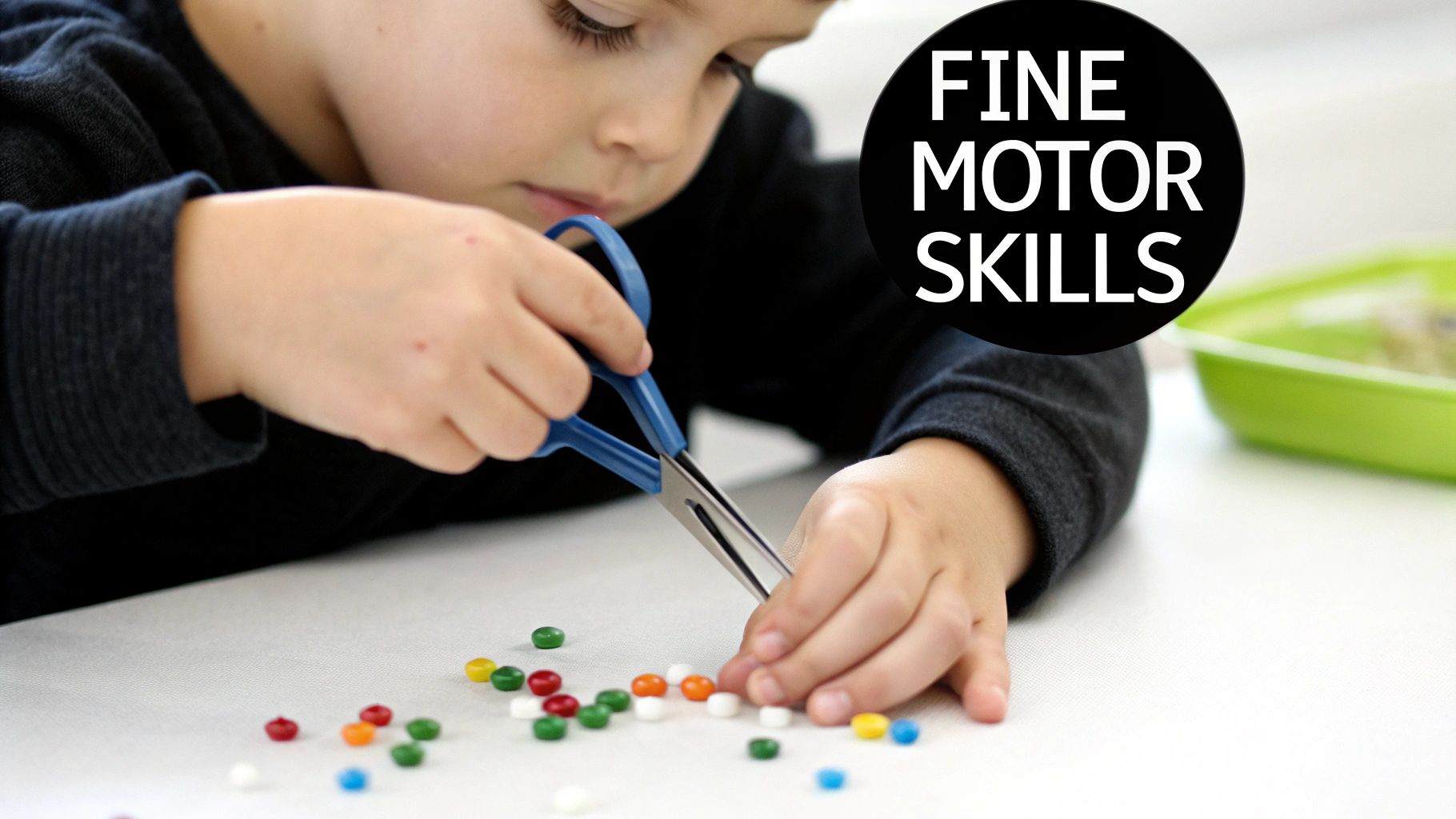
If you picture gross motor skills as the big, powerful movements like running and jumping, then fine motor skills are the delicate, detailed work. They’re the result of a beautiful partnership between the brain, nervous system, and all those tiny muscles in the hands, wrists, and fingers.
This coordination is what allows a child to become more independent. It’s what powers a baby's first fumbling grasp of a toy and, later, a toddler’s determined grip on a crayon. These skills don't just appear overnight; they grow and refine with every single interaction.
The Building Blocks of Independence
Developing fine motor control is all about turning a thought into a physical reality. It's the bridge that connects what a child wants to do with their ability to actually do it, whether that’s stacking a wobbly tower of blocks or learning to zip up their own jacket.
These skills are far more than just child's play. They are the essential stepping stones for everything from self-care to school readiness. Without them, simple tasks like writing their name, tying shoes, or using a fork can feel like climbing a mountain.
Breaking Down the Skills
So, what are we really looking at when we talk about fine motor development? It’s a combination of several key abilities working together:
- Grasping: This is all about how we hold things. It starts with the simple pincer grasp—using the thumb and index finger to pick up something small—and develops into holding a pencil correctly.
- Hand-Eye Coordination: This is the brain’s incredible talent for using what the eyes see to guide the hands. It’s essential for everything from catching a ball to painting within the lines.
- Bilateral Integration: This just means using both hands together in a coordinated way. Think about holding a piece of paper steady with one hand while cutting with the other.
Finding fun and creative activities for toddlers is one of the best ways to nurture these abilities without it feeling like work.
You can see these skills at play in so many everyday moments. Here's a quick look at how they show up as kids grow.
Fine Motor Skills in Everyday Life
| Age Group | Example Activities |
|---|---|
| Infants | Grasping a rattle, picking up small pieces of food |
| Toddlers | Stacking blocks, turning pages in a book, scribbling with crayons |
| Preschoolers | Using scissors, buttoning clothes, building with LEGOs |
| School-Age | Writing letters and numbers, tying shoelaces, using a computer mouse |
From the earliest days, these small movements are building a foundation for bigger, more complex tasks down the road.
Why Strong Fine Motor Skills Matter
When we talk about fine motor skills, we're talking about the small, precise movements that let a child truly interact with their world. These skills are so much more than just a box to check on a developmental chart—they’re the bedrock for independence and future learning.
Think about a toddler trying to stack blocks. It looks like simple fun, but it's a serious workout for their developing brain and body. They need hand-eye coordination to aim, just the right amount of finger strength to grip, and spatial awareness to keep the tower from toppling. Each block they place is a tiny victory, building not just a structure, but their own self-confidence.
The Bridge to Independence and Learning
Mastering these little movements is what opens the door to big-kid tasks. From buttoning a coat all by themselves to using a spoon without spilling, fine motor control is what autonomy is built on. This growing independence is incredibly empowering for a child; it shows them they're capable of managing their own needs.
That sense of capability carries right over into the classroom. So much of academic success hinges on having well-developed hand muscles and coordination. And it's not just about writing. Surprisingly, research points to a strong connection between how well kids can use their hands and how well they learn in other areas.
For example, one UK study discovered that a young child's fine motor skills were a better predictor of their early math abilities than even their reading skills were. You can dig into the research linking motor skills and math on pmc.ncbi.nlm.nih.gov.
This really drives home how interconnected development is. When a child can confidently handle and manipulate objects, they're actually better prepared to grasp abstract ideas like counting and shapes.
From Creative Expression to Problem Solving
Fine motor skills are also the language of creativity. Whether a child is scribbling with a crayon, squishing modeling clay, or dabbing paint onto paper, they are using their hands to make their ideas real. This physical act of creating is a powerful outlet for self-expression and imagination.
Ultimately, these skills give kids the tools they need to explore, experiment, and figure things out. Every time they manage to fit a puzzle piece into place or work a tricky toy, they aren't just playing. They're learning how to tackle a challenge and reach a goal, one tiny, deliberate movement at a time.
Tracking Your Child's Fine Motor Milestones
Watching your child grow is a journey filled with countless small victories, and tracking their fine motor milestones is a big part of that. Of course, every child develops at their own unique pace, but having a general roadmap can help you spot their incredible progress and offer the right encouragement when they need it.
These skills develop in a fascinating and predictable sequence. It all starts with a baby's clumsy, full-fisted grasp on a rattle. Before you know it, that refines into a toddler’s focused effort to stack a few blocks. From there, a preschooler learns to snip with scissors, and eventually, a school-aged child can write their name with a steady hand. It's a natural unfolding of their growing capabilities.
To see how these skills fit into the bigger picture, it's helpful to explore the major baby milestones for a more complete view.
A General Timeline of Development
Think of this as a friendly guide to celebrate progress, not a strict checklist for comparison. Here are some of the typical fine motor achievements you might see as your child gets older.
- By 6 Months: A baby will usually start reaching for toys with both hands and might even begin to pass an object from one hand to the other.
- By 12 Months: The famous pincer grasp—using the thumb and forefinger—often emerges around this time, letting them pick up small things like pieces of cereal.
- By 2 Years: A toddler can often build a tower of four or more blocks, enjoy scribbling with a crayon, and turn the pages of a board book.
- By 4 Years: A preschooler may be able to use child-safe scissors, draw simple shapes like circles and squares, and start buttoning up larger buttons on their coat.
This clear developmental progression is backed by research. A 2016 study, for example, noted significant improvements in tasks needing precision and coordinated hand movements as children grew from second to sixth grade. You can read the full research about developmental progression on pubmed.ncbi.nlm.nih.gov.
“Each milestone, from scribbling to stacking, is a sign that the brain and hand muscles are building a stronger, more efficient connection. This is the foundation for everything from self-feeding to writing.”
The timeline below really shows how these skills build on each other, paving the way for everything from playtime fun to school readiness.
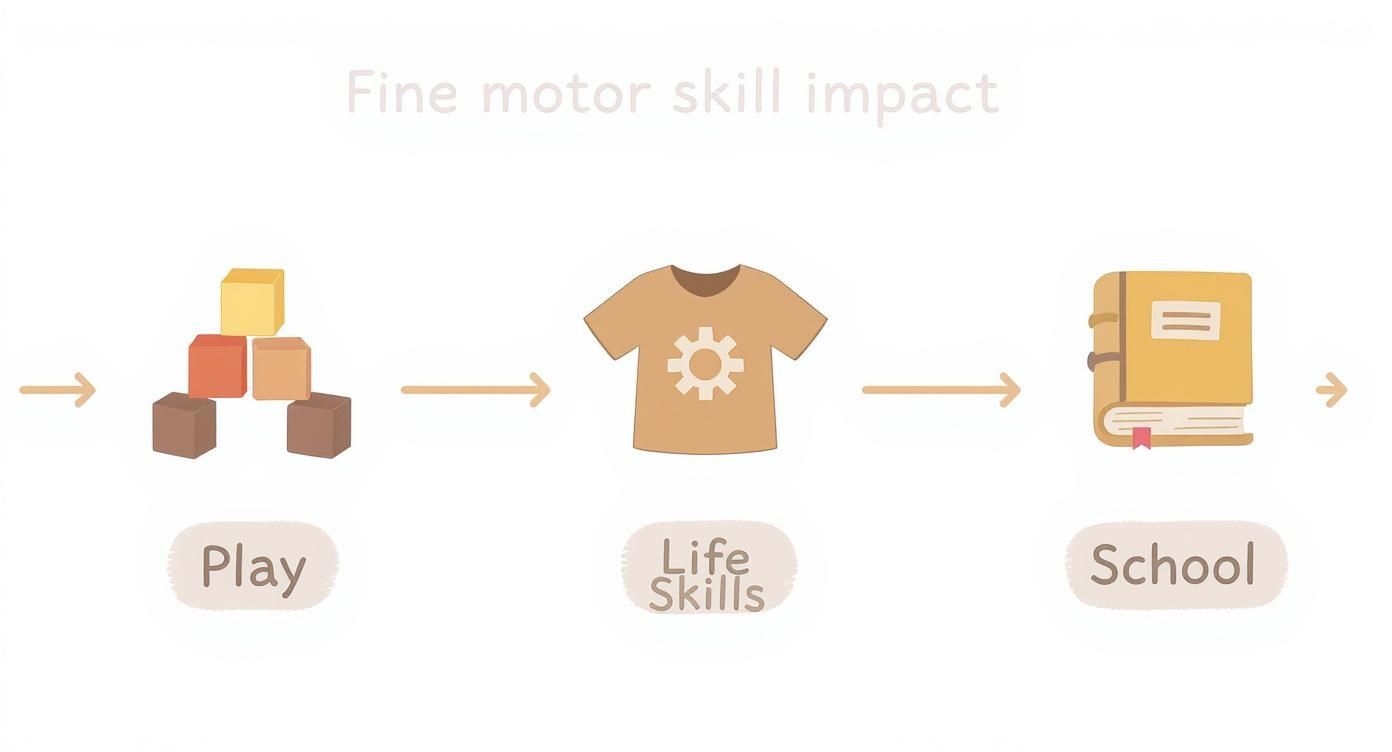
As you can see, the skills they master during play directly prepare them for more complex daily tasks and academic challenges down the road. As these abilities get stronger, so does their hand-eye coordination. For more fun and supportive activities, check out our guide on how to improve hand-eye coordination.
2. Navigating Modern Challenges to Motor Skills
In a world full of tablets and smartphones, the way kids play looks a lot different than it used to. While technology certainly has its place, it also brings some new hurdles for developing fine motor skills.
After all, passively swiping a screen just doesn't give the small muscles in the hands and fingers the same workout as good old-fashioned, hands-on play.
Think about it. When a child builds with blocks, they have to grasp, stack, and balance each piece, strengthening those tiny muscles with every move. Squeezing and rolling play-doh does something similar, providing rich sensory feedback while building the hand strength they’ll eventually need to hold a pencil correctly.
These are the kinds of tangible, real-world experiences that build a solid foundation for fine motor control.
A Growing Concern
This shift in how children play hasn't gone unnoticed. Many parents and teachers are seeing a real difference in how prepared kids are for school, particularly with tasks that require hand dexterity. A recent survey brought this issue into sharp focus.
A 2023 survey revealed that 77% of respondents believe young children are struggling more with basic skills like holding pencils and using scissors. You can read more about the decline in children's fine motor skills on mother.ly.
This isn't about causing alarm; it's about recognizing why active, creative playtime is more critical than ever. The trick is finding a healthy balance. We need to intentionally bring in activities that give those small hand and finger muscles the rich, varied exercise they need to grow strong.
Fun, engaging projects are the perfect solution, turning essential skill development into a joyful part of childhood.
Using Paint By Numbers to Build Skills
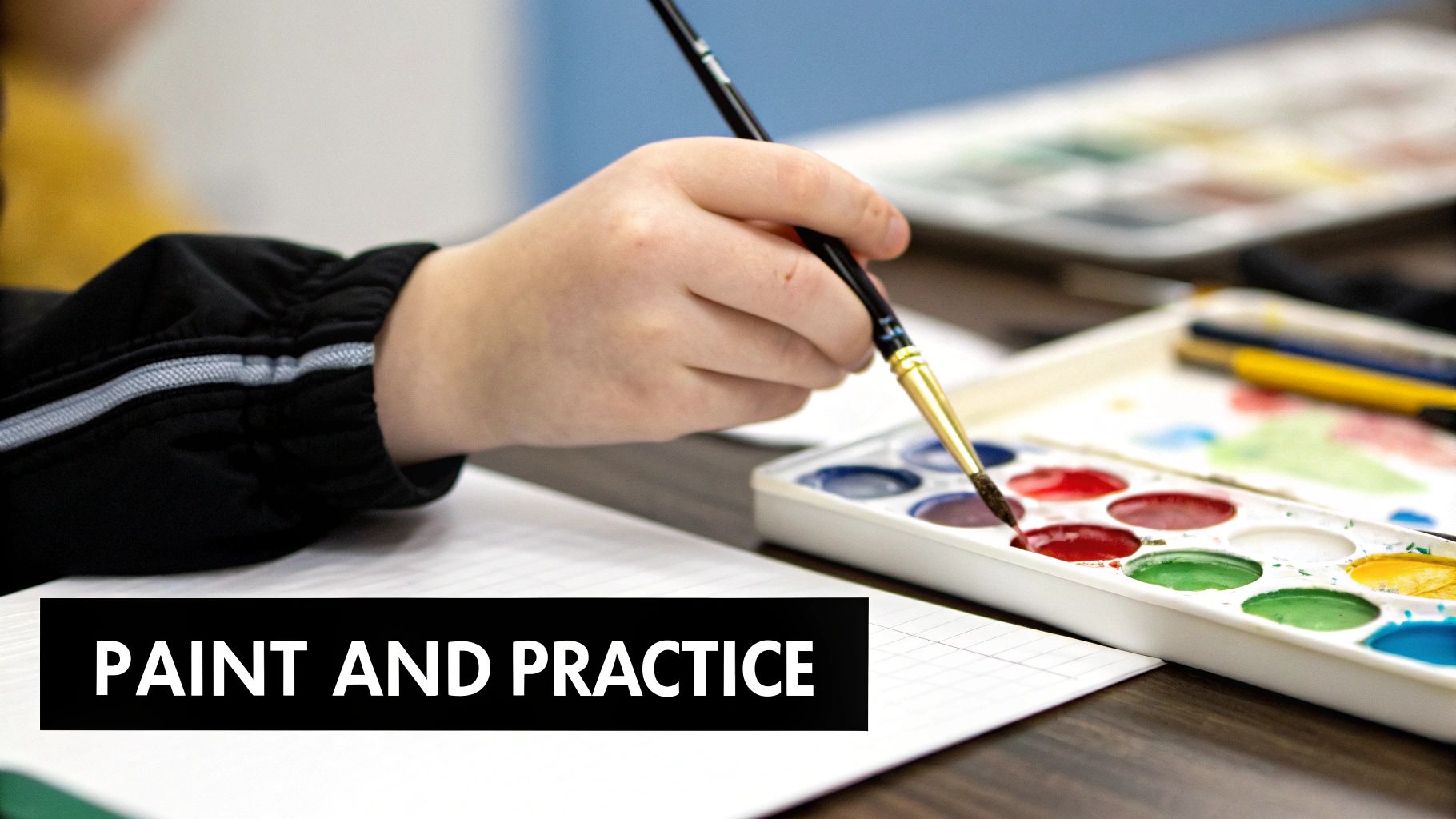
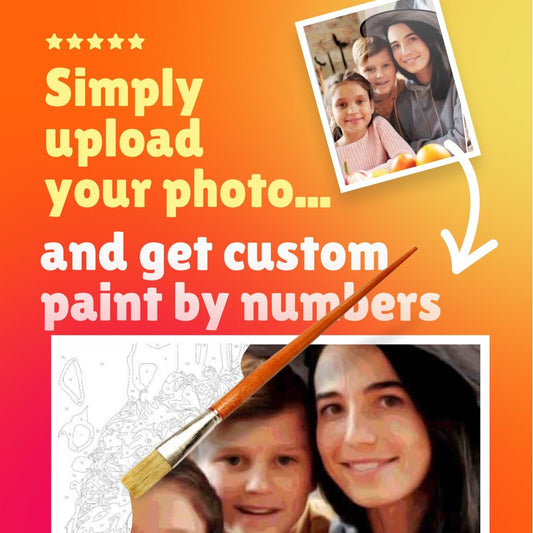
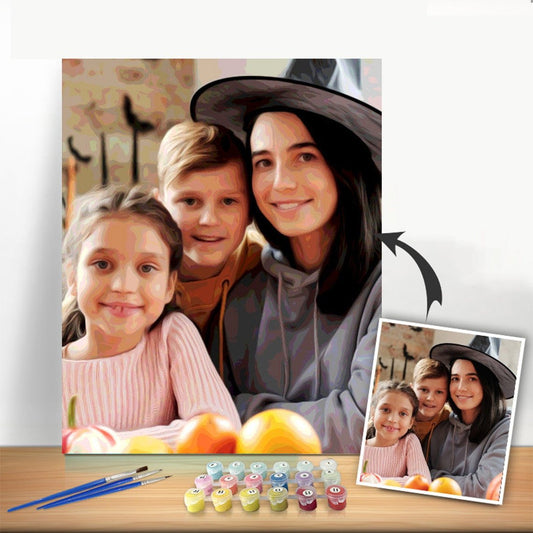
It’s a relief to know that there are fun, engaging solutions to help kids develop that don't involve a screen. A paint-by-number kit is a perfect example, turning what could be a chore—skill-building—into a truly creative adventure.
This classic artistic activity is a powerhouse for developing fine motor skills. It forces kids to use those small, intricate muscles in their hands to make precise, coordinated movements. Each step is a mini-workout, strengthening the exact abilities they need for writing, buttoning a shirt, and tying their shoes.
Just think about the process. It all starts with holding a small paintbrush, which requires a controlled grip. This is often a version of the pincer grasp, where they use their thumb and forefinger. That simple action is the foundation for learning how to hold a pencil correctly later on.
A Workout in Every Brushstroke
But the benefits go way beyond just holding the brush. The entire activity is a sequence of motor skill exercises, each one building on the last.
- Dipping the Brush: This simple step takes real hand-eye coordination. A child has to guide the bristles into a tiny pot of paint and pick up just the right amount—not too much, not too little.
- Targeting the Section: Next, they have to find the correct number on the canvas and move the brush to that exact spot. This sharpens their visual tracking and spatial awareness.
- Painting Within the Lines: Here's the real test of control. It demands a steady hand and precise, deliberate movements to fill in a shape without going over the edges.
This constant loop—see a number, find the color, and carefully paint—is what makes it so effective. It’s a purposeful task that feels like pure play. If you're just getting started, a guide on painting by numbers for beginners can help make that first project a fantastic experience.
Every time a child finishes a section, they get a small but powerful sense of accomplishment. This builds their confidence and encourages them to keep practicing, turning skill development from a task into a masterpiece in the making.
To keep building on this progress, you can also explore other essential eye-hand coordination exercises that work perfectly alongside creative activities like painting.
Your Fine Motor Skill Questions, Answered
As a parent, you're constantly navigating the ins and outs of your child's development, and fine motor skills are a big part of that journey. It's natural to have questions! Let's get into some of the most common concerns parents have.
At What Age Should I Start to Worry?
First, remember that every child hits milestones at their own pace. It's less about a strict deadline and more about seeing steady progress.
That said, there are some general guideposts. If by age 4 or 5, your child is consistently having a tough time with things like holding a crayon with a proper grip, using kid-safe scissors, or managing buttons and zippers, it might be a good idea to bring it up with your pediatrician or an occupational therapist. The idea isn't to pressure them, but to find supportive and fun ways to help them practice.
Do Tablet Games Actually Help With Fine Motor Skills?
This is the big question for modern parents, and it’s not a simple yes or no. Sure, some tablet games involve tapping and dragging, which can help with very basic hand-eye coordination. But they just can't replace the real deal.
Think about it: activities like stacking blocks, molding clay, or stringing beads build real hand strength and teach kids how to apply just the right amount of pressure. Screens don't offer that kind of tactile, three-dimensional feedback. The best bet is a healthy balance—a little bit of quality screen time mixed with plenty of hands-on, creative play.
The best way to build strong fine motor skills is through tangible, hands-on play. Nothing beats the rich developmental experience a child gets from actually manipulating objects, using both hands together, and feeling different textures.
What if My Kid Hates Drawing?
It’s a common challenge! You’ve got the crayons and paper ready, but your child just isn't interested. Don't worry. Fine motor development is so much more than just drawing.
If drawing is a no-go, just lean into what they do enjoy. There are tons of other ways to strengthen those little hand muscles without it feeling like a chore.
Here are a few great alternatives that build the same skills:
- Building with LEGOs: Clicking those little bricks together is a powerhouse workout for finger precision and strength.
- Playing with play-doh: All that squeezing, rolling, and pinching is fantastic for building up hand and finger muscles.
- Helping in the kitchen: Simple jobs like stirring batter, sprinkling cheese, or even using a spray bottle to water plants are great, practical exercises.
- Stringing pasta: Threading big noodles like rigatoni onto a piece of yarn is a super fun way to practice hand-eye coordination.
When you weave these kinds of activities into your daily life, you’re building skills in a way that just feels like play.
Ready to turn skill-building into a creative masterpiece? At Custom Paint By Numbers, we make it easy to find the perfect project for your little artist. Explore our collection of fun and engaging kits designed to boost fine motor skills, one brushstroke at a time. Start your artistic adventure today!