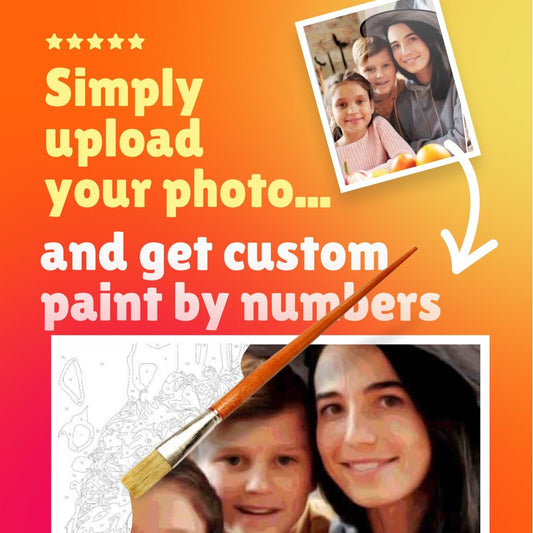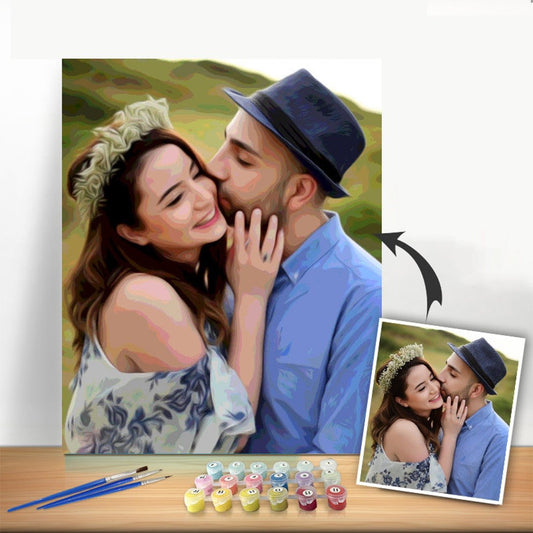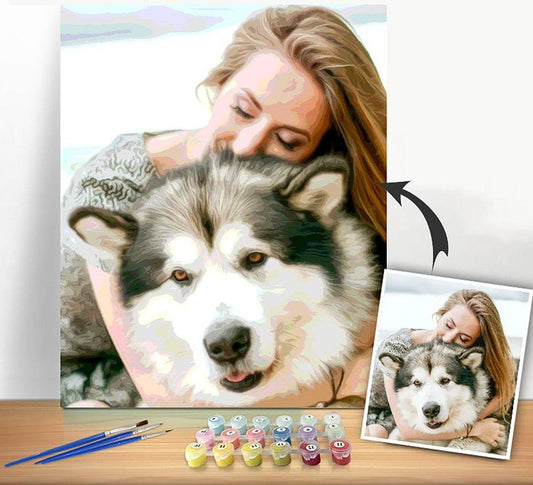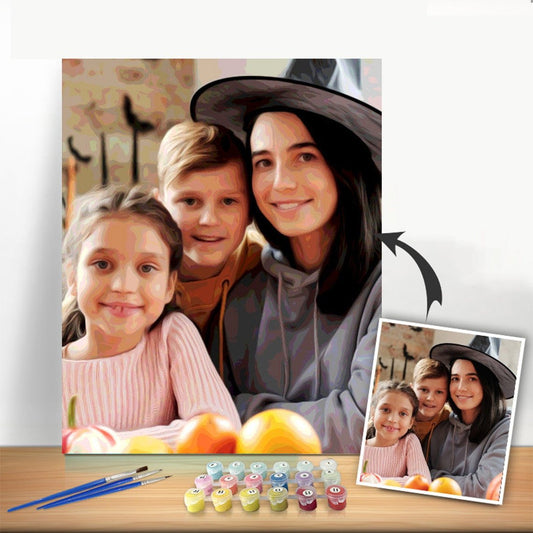

Think of hand-eye coordination as a constant, quiet conversation between what you see and what you do. It’s all about practice—training your eyes to guide your hands with purpose. This skill is built through repetition, whether you're playing catch in the backyard or carefully filling in a paint-by-number canvas.
Over time, your brain gets better at syncing what it sees with how your hands move, leading to those precise, controlled actions we often take for granted.
What Is Hand Eye Coordination and Why It Matters?
At its heart, hand-eye coordination is the partnership between your vision and your hands. It’s your brain’s knack for taking in visual information and using it to tell your hands exactly what to do, when to do it, and how to do it well.
This isn't just a skill for pro athletes or surgeons. It’s a foundational part of our everyday lives.
Ever pour a cup of coffee without a second thought? Your eyes are judging the distance and the flow of the liquid, while your hand makes tiny, instant adjustments to keep it from spilling. That's hand-eye coordination in action. The same goes for typing an email—your eyes spot typos on the screen as your fingers dance across the keyboard, all guided by a mental map.
The Everyday Impact of Strong Coordination
When your hand-eye coordination is sharp, you move through the world with more confidence and skill. It makes countless daily tasks—from buttoning a shirt to parallel parking—feel smoother and more automatic. A strong connection between your eyes and hands simply makes life easier, faster, and safer.
This skill is especially critical for childhood development. It's the bedrock for everything from learning to write neatly to joining in on a game of tag at recess. A UK study of over 300 children actually found a direct link between good hand-eye coordination and academic achievement. Kids who were better at coordination tasks were, on average, nine months ahead of their peers in subjects like reading and math. You can find more details in the study linking coordination to academic performance.
This really drives home an important point: improving hand-eye coordination isn't just about getting better at sports. It’s about strengthening the mental wiring that supports how we learn and function every single day.
Working on this skill also does wonders for your mind. Activities that challenge your coordination, like painting or drawing, are fantastic for boosting focus and melting away stress. If you're looking for creative ways to practice, our guide on mindfulness activities for adults has some great ideas.
Ultimately, putting a little effort into this skill pays huge dividends, making you more capable and self-assured in just about everything you do.
Simple Exercises to Build a Strong Coordination Foundation
You don't need a gym membership or a bunch of fancy equipment to get started. Honestly, some of the most powerful ways to boost your hand-eye coordination begin with simple, repeatable movements. Think of these as laying the groundwork, building a solid connection between what your eyes see and how your hands react.
The trick is to start in a controlled environment where you can really focus. My go-to recommendation? A tennis ball and a solid wall. It’s a classic for a reason. Taking a partner out of the equation lets you concentrate completely on your own timing and movement.
The Foundational Wall Ball Drill
Find a wall and stand a few feet away. Start by tossing the ball underhand, aiming for a spot right in front of you. As it comes back, catch it with both hands. Don't worry about speed right now; the name of the game is consistency.
Break down the movement and really tune in to each part:
- Track the ball: Keep your eyes locked on it, from the second it leaves your hand to the moment it comes back.
- Anticipate its path: Get your hands to where the ball is going, not where it is right now. This is key.
- Make a soft catch: Let your hands give a little as you catch, absorbing the impact instead of fighting it.
Once you can snag it 10 times in a row without a drop, take a step back. A little more distance adds a new challenge. As you get more comfortable, try throwing with one hand and catching with the other, then switching. This gets both sides of your brain firing and really strengthens those neural pathways.
A few gentle wrist rotations before you start is always a good idea to warm up.
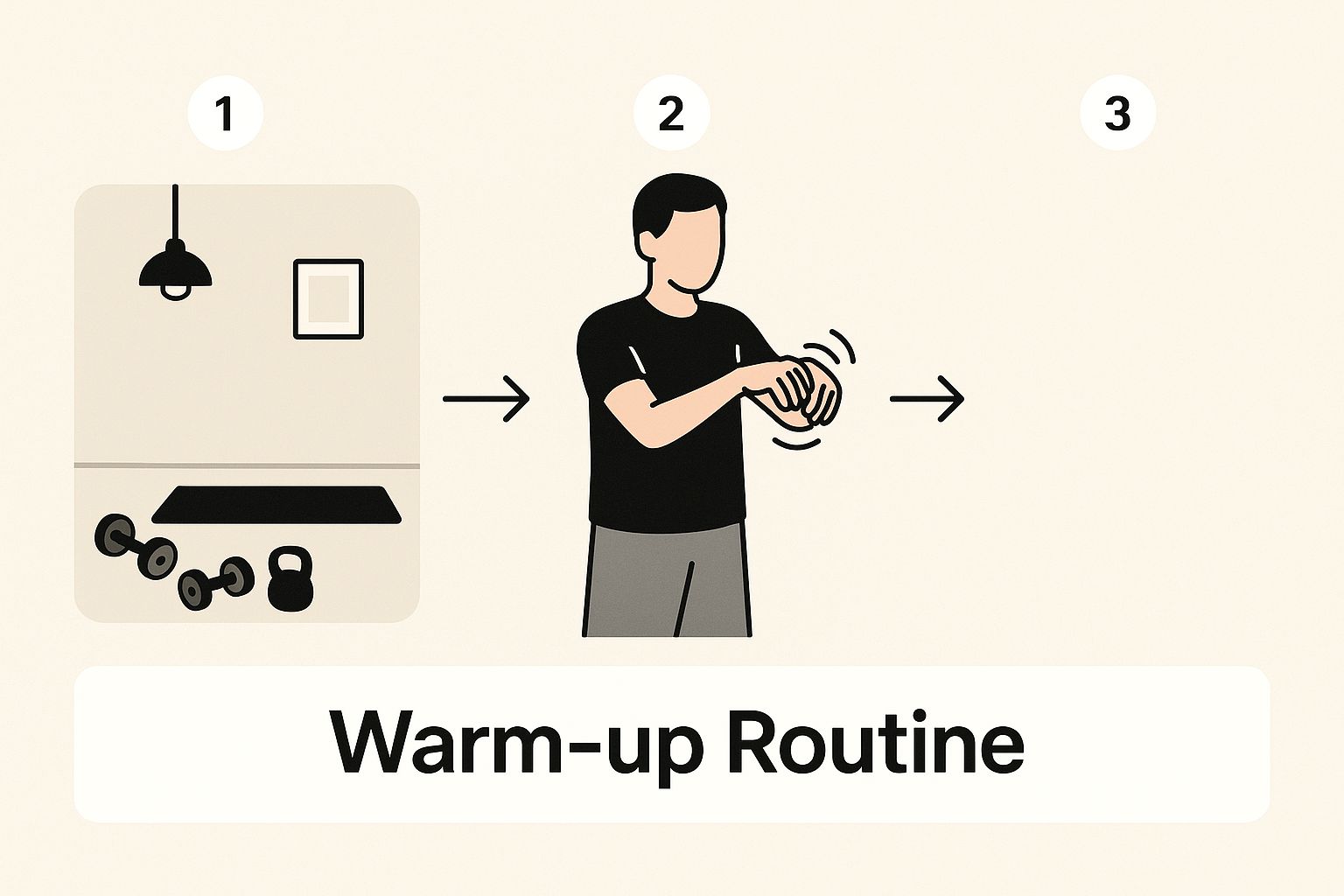
As you can see, a little prep work goes a long way in getting your muscles ready for these kinds of precise movements.
To help you build a habit, here's a simple routine you can follow. Consistency is far more important than intensity when you're just starting out.
Beginner Coordination Exercise Routine
| Day | Exercise | Duration | Focus |
|---|---|---|---|
| Monday | Two-handed wall ball catch | 10 minutes | Consistency and tracking |
| Tuesday | Alternating hand wall ball toss & catch | 10 minutes | Brain-hemisphere connection |
| Wednesday | Rest or light stretching | N/A | Recovery |
| Thursday | Scarf juggling (one & two scarves) | 15 minutes | Rhythm and timing |
| Friday | Two-handed wall ball catch | 10 minutes | Reinforce foundational skills |
| Saturday | Scarf juggling (all three scarves) | 15 minutes | Pattern recognition |
| Sunday | Rest | N/A | Recovery |
This schedule is just a starting point. Feel free to adjust it based on how you feel, but the goal is to practice regularly and build that muscle memory.
Mastering the Art of Juggling
I know, juggling sounds intimidating. But it's an incredible tool for developing peripheral vision and timing. The secret isn't to start with balls—it's to start with something that moves slowly, giving your brain a fighting chance to keep up.
That's why I always recommend starting with three lightweight scarves. They float down, which makes them way easier to track and catch.
First, just toss one scarf back and forth. Get a feel for the gentle arc, aiming for it to peak just above eye level. Do this until it feels completely natural.
Next, add a second scarf, one in each hand. Toss the first one. When it hits the top of its arc, toss the second one from your other hand. The rhythm is "toss, toss, catch, catch." Just keep at it until the motion is smooth.
Finally, bring in the third scarf. The pattern is exactly the same—you're just adding one more toss into the sequence before the first catch.
Juggling isn’t really about having fast hands. It's about finding a steady, repeatable rhythm. Practicing with scarves in slow motion builds the core muscle memory you’ll need before ever picking up a juggling ball.
These drills are a fantastic starting point. If you get hooked and want to dive deeper, there are plenty of other great tips and exercises to improve hand-eye coordination out there. You’ll also find that these same foundational skills carry over into all sorts of hobbies, which is something we explore in our other articles about fine motor skills development activities.
Take It to the Next Level: Drills for Peak Performance
Once you’ve built a solid foundation, it's time to crank up the intensity. The real magic happens when you start practicing drills that simulate the dynamic, high-pressure situations you’d face in sports or competitive gaming. These advanced exercises are all about pushing your reaction time to its absolute limit, building stronger neural connections that won’t fail you when it counts.
Think of it as moving from a quiet, controlled gym to a chaotic, unpredictable game day. This is where you'll see massive gains in your performance.
Sharpen Your Skills in the Digital Arena
Video games sometimes get a bad rap, but don’t underestimate them. Certain types of games are scientifically proven to be powerhouses for developing elite hand-eye coordination. They force you to process what you see and react with precise movements in a split second, making them an incredible training tool.
- First-Person Shooters (FPS): These games are a masterclass in coordination. You’re constantly scanning the environment, tracking fast-moving targets, and making tiny, split-second aiming adjustments. This directly sharpens your visual acuity and reactive motor control.
- Rhythm Games: It’s all about timing and pattern recognition here. You have to make precise hand movements that sync perfectly with visual and audio cues, which is fantastic for improving your reaction speed and accuracy under pressure.
What makes gaming such a powerful trainer is the instant feedback. You know immediately if your action worked or not, which helps your brain learn and adapt incredibly quickly.
Advanced Sport-Specific Training
For any athlete, the real test is applying that coordination to the movements of their specific sport. The trick is to add speed, complexity, and a dash of unpredictability to your training routine.
Take the speed bag in boxing. It’s not just about punching hard; it’s about finding a rhythm and reacting to the bag's chaotic, unpredictable rebound. This drill forces your eyes and hands to work in a continuous, high-speed loop.
Advanced basketball dribbling drills are another great example. Don't just stand there dribbling. Start practicing complex patterns while on the move. Try dribbling two balls at once or using a smaller hoop, which demands much greater precision. These kinds of exercises overload your brain's processing, forcing it to get more efficient at coordinating movements without you even having to think about it.
This kind of high-level training has a huge impact. Research on professional baseball players found that those with the fastest reaction times drew walks 22% more often and swung at bad pitches 10-12% less. When a batter has less than half a second to react, tiny improvements in coordination translate into game-changing advantages.
Key Takeaway: Peak performance comes from training your coordination in environments that are just as demanding and unpredictable as the real thing. Whether you're on a virtual battlefield or a physical court, the goal is to make your reactions fast, accurate, and automatic.
If you’re looking to sharpen your skills in a controlled but challenging way, modern tech offers some amazing opportunities. For example, you can practice flight skills with a drone simulator to improve your coordination without any risk. These advanced tools build the same core skills—precision, timing, and spatial awareness—that are crucial for any high-performance activity.
Fun and Creative Ways to Sharpen Your Skills
Improving your hand-eye coordination doesn't have to be a grind. Forget boring drills and intense exercises for a minute. Some of the best progress comes when you're just having fun and doing something you love.
Creative hobbies are a fantastic, low-pressure way to sharpen these skills while you relax. When you’re lost in an activity you actually enjoy, you'll do it more often. It’s that consistent practice, disguised as fun, that really builds and strengthens the connection between what you see and what you do.
Unleash Your Inner Artist
Getting creative is a brilliant way to fine-tune your motor control and precision. Any activity that asks you to make careful, deliberate hand movements based on what you’re looking at is basically a training session for your brain.
You're teaching your mind to translate visual information into steady, accurate handiwork.
- Knitting or Crocheting: This is a classic. You're constantly using your eyes to track stitches while your hands work together to manipulate the needles and yarn.
- Building Models: Whether you’re into model airplanes or intricate Lego sets, you’re handling tiny pieces and placing them with precision. It’s a masterclass in careful assembly.
- Calligraphy or Drawing: Simply putting pen to paper to create specific lines and shapes is a direct workout for your visual-motor control.
Remember, it's not just about the finished product. The process itself is almost meditative and quietly refines your coordination.
The Power of Paint By Numbers
One of the most accessible and surprisingly effective hobbies for this is paint by numbers. It takes the often-intimidating art of painting and breaks it into simple, guided steps. This makes it perfect for anyone wanting to improve their hand-eye coordination without feeling overwhelmed.
Each numbered section on the canvas is a clear target. Your job is to guide your brush, loaded with the right color, to fill that exact spot. This simple loop—see the number, find the paint, apply it carefully within the lines—is a direct and repetitive precision exercise.
Every stroke reinforces the neural pathways responsible for fine motor control. You’re actively training your eyes to guide your hands with more and more accuracy, and you get a beautiful piece of art out of it.
The small, detailed areas in most kits really challenge you to make tiny, controlled movements. You’ll probably notice your hand getting steadier and your strokes becoming more confident over time. If you’ve never tried it, learning how to paint by numbers is easy and gives you a clear path to both creating art and sharpening your skills.
Make Music for a Better Connection
Learning a musical instrument is another top-tier way to boost your coordination. Think about playing the guitar or piano—your hands are often doing completely different, complex things at the same time. All of this happens while your eyes are reading sheet music or watching the fretboard.
This kind of multitasking is a serious workout for your brain's visual and motor centers. It forces your hands to work both independently and together, a skill that's incredibly useful in almost every other aspect of life.
Weave Coordination Practice into Your Daily Life
The secret to dramatically better hand-eye coordination isn't always about setting aside an hour for intense drills. The real magic happens when you make practice an invisible, effortless part of your day. By turning everyday tasks into mini-challenges, you build skill consistently without even realizing you're "training."
This is all about being more mindful in moments you'd normally put on autopilot. You don't need more time in your day; you just need to use the time you have a little differently. It’s about finding small, simple ways to challenge that connection between what you see and what your hands do.
Make Your Chores a Training Ground
Believe it or not, your daily routine is packed with opportunities to sharpen your coordination. The trick is to find small ways to make ordinary tasks just a little bit harder, forcing your brain to pay closer attention.
Here are a few simple ideas you can try today:
- The off-hand pour: Next time you fill a glass with water or milk, use your non-dominant hand. You’ll be surprised how much focus it takes to do it smoothly without spilling.
- The key toss: Instead of just dropping your keys on the counter, place a small bowl nearby and toss them in from a few feet away. It's a fun, two-second accuracy drill.
- Mindful cooking: As you chop vegetables, focus on making each cut precise and uniform. When you stir a sauce, try making perfect, controlled circles.
These little tweaks pull you out of your comfort zone. They force your brain and hands to communicate more actively, which is exactly what builds stronger neural pathways for better coordination.
The goal here is progress through frequency, not intensity. A few focused seconds of practice, repeated dozens of times throughout the day, often yields better results than one long, infrequent session.
Small Adjustments, Big Results
Once you start looking, you'll find these opportunities everywhere. Typing without looking at the keyboard is a classic for a reason—it directly trains your brain to trust where your fingers are in space.
Even unloading the dishwasher can become an exercise. As you put away a glass, do it with a smooth, precise motion. Try to place it in the cabinet without a single clink. Each dish is another rep.
This is the kind of consistent, low-stakes practice that builds a solid foundation. In fact, when researchers studied coordination, they found that experienced people have measurably smoother and more efficient hand movements. Novices, on the other hand, tend to be more erratic. It's a clear, quantitative difference that shows how practice literally smooths out the rough edges in your coordination. You can dig into the full study on eye-hand coordination metrics to see the data for yourself.
By sprinkling these micro-challenges into your day, you turn your entire life into a training ground. This makes improving your hand-eye coordination feel less like a chore and more like a natural part of who you are.
Common Questions About Hand-Eye Coordination
So, you're ready to start working on your hand-eye coordination. That's great! It's completely normal to have a few questions before you dive in. Knowing what to expect can make the whole process feel more manageable and keep you motivated.
Let's tackle some of the things people often wonder about.
How Long Does It Take to See a Difference?
This is probably the number one question on everyone's mind. While there's no magic number that applies to everyone, you might be surprised at how quickly you notice changes. Your starting point, how often you practice, and the activities you choose all play a role.
Generally speaking, many people start to feel a real, tangible improvement within two to four weeks of consistent daily practice. This doesn't mean you'll be a pro overnight, but you'll probably find that certain movements feel less clumsy and more natural. True mastery is a longer journey, but those initial wins are incredibly encouraging.
Can I Still Improve My Coordination as an Adult?
It's a common myth that only kids can make big gains in coordination. The truth? Adults absolutely can improve, and sometimes even more efficiently.
While it's true that children's brains are like sponges, the adult brain is far from fixed. Thanks to something called neuroplasticity, our brains can forge new connections and learn new skills throughout our entire lives.
The big advantage adults have is focus. We can intentionally choose challenging activities and dedicate time to them. Kids often build these skills through play, but adults can be more strategic.
- For Kids: The best approach is always fun and games. Think stacking blocks, playing catch, or lacing beads. These activities build a strong foundation without ever feeling like a chore.
- For Adults: You can jump into more complex hobbies. This is where things like learning a musical instrument, playing tennis, or diving into a detailed craft like paint-by-numbers really shine. They demand a high level of precision and focus.
The bottom line is that it’s never too late. Your brain’s ability to adapt doesn't just switch off when you grow up. The way you approach it might be different, but the potential for improvement is always there.
Is There One “Best” Exercise for This?
I get this question a lot. Everyone wants to find that single silver-bullet exercise. But the most effective approach is actually a varied one. Different activities train your coordination in different ways—from the broad movements of gross motor skills to the delicate precision of fine motor skills.
If I had to pick one highly accessible activity, it would be simple ball-tossing drills. Bouncing a tennis ball against a wall and catching it is a classic for a reason. It directly trains your brain to track an object and time your reaction.
For fine motor control, though, nothing beats activities that demand precision. Painting, drawing, or even handwriting force your eyes and hands to sync up on a much smaller, more detailed scale. The best strategy is always to mix it up with things you actually enjoy. That’s how you’ll stick with it long enough to see real results.
Ready to put your coordination to the test with a fun, creative, and rewarding activity? Custom Paint By Numbers offers the perfect way to sharpen your precision and focus. Transform your favorite photos into beautiful art pieces and watch your skills improve with every brushstroke.