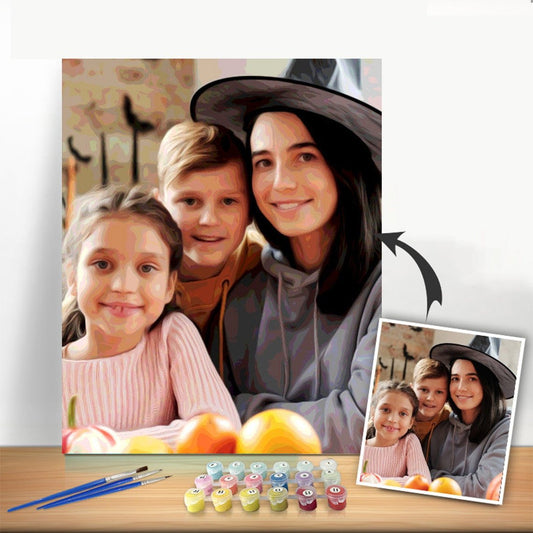

Fine motor skills are all about those small, precise movements our kids make with their hands, fingers, and wrists. It’s what lets them do everything from buttoning a coat and tying their shoes to, eventually, holding a pencil correctly when they get to school.
Why Fine Motor Skills Matter for Your Child
Think about all the little things your child does every single day. Picking up a tiny Cheerio, carefully stacking blocks, or turning the page of a favorite book—all of these actions hinge on their fine motor skills.
These aren't just random movements; they're the bedrock of independence and self-confidence. When a child finally masters these small-muscle tasks, they unlock a whole new way of interacting with the world around them.
It's the journey from needing your help with everything to proudly doing it themselves. That shift from "Mom, can you zip my jacket?" to "I did it!" is a huge confidence booster for any kid.
The Foundation for Lifelong Abilities
You might be surprised how directly strong fine motor skills are tied to a child's ability to learn and succeed in school. Before a child can even think about writing their name, they first have to build the hand strength and coordination just to hold a crayon.
It's a step-by-step process.
- Greater Independence: Mastering everyday tasks like dressing themselves, using a fork, or opening their own snack container gives kids a powerful sense of "I can do it."
- Enhanced Hand-Eye Coordination: Activities like drawing, painting, or threading beads are fantastic for training their eyes and hands to work as a team. This is a skill they'll use for just about everything, from sports to writing.
- Improved Academic Readiness: The ability to use scissors, manage a glue stick, and hold a pencil are non-negotiable skills for preschool and kindergarten success.
More Than Just Hand Movements
It's tempting to think of fine motor development as just a physical thing, but it’s so much more. It's deeply woven into their cognitive growth.
When a child is intensely focused on fitting a puzzle piece into its spot or carefully building a block tower, they're also learning patience, how to solve problems, and how to concentrate. These are the building blocks of focus and learning for years to come.
A child’s ability to confidently interact with their environment is directly tied to their fine motor competence. Every small object they manipulate is a step toward greater self-reliance and creative expression.
Recent research has explored the connection between motor skills and physical activity. As you'd expect, when motor skills get better, kids often feel more encouraged to be active.
Interestingly, though, studies show the link between fine motor skills and total physical activity in preschoolers is usually pretty low to moderate. This suggests that the biggest win from fine motor practice is in a child’s ability to master specific tasks, rather than just burning off energy. You can read the full study about motor competence in preschoolers for more details.
Ultimately, by nurturing these small movements, we’re setting our kids up to be confident and capable learners.
Paint-By-Numbers: The Perfect Fine Motor Workout
Paint-by-number kits are far more than just a fun way to create a pretty picture. Think of them as a focused, structured exercise that strengthens all those tiny, crucial muscles in the hands and fingers.
The simple act of gripping a small paintbrush is a powerful workout in itself. It encourages the tripod or pincer grasp—the very same grip your child needs to hold a pencil correctly. Each time they dip the brush into a paint pot and then guide it carefully within the lines, they’re building hand strength, steadiness, and immense concentration.
This entire process is a direct lesson in hand-eye coordination. Your child's brain is constantly calculating where the brush is and guiding it to a specific, numbered spot on the canvas. This is a fundamental skill that shows up in countless other daily tasks, from buttoning a shirt to learning to use scissors.
Choosing The Right Kit For Skill Building
Not all paint-by-number kits are created equal, especially when you're thinking about skill development. The trick is to match the kit's complexity to your child’s current abilities. This ensures the activity is a positive and effective experience. If a kit is too difficult, it just leads to frustration, but one that’s too simple won't provide a meaningful challenge.
To help you find the perfect fit, consider the child's age and developmental stage.
| Choosing the Right Paint-By-Number Kit by Age | ||
|---|---|---|
| Age Group | Key Features to Look For | Fine Motor Skill Focus |
| Ages 3-5 | Large, simple shapes; few colors (under 10); chunky brushes. | Basic brush grip; broad, controlled strokes; color recognition. |
| Ages 6-8 | More detailed sections; wider color palette; smaller brushes. | Refining precision; staying within smaller lines; patience and focus. |
| Ages 9+ | Intricate designs; many shades of paint; tiny sections. | Fine motor endurance; advanced control; attention to detail. |
By selecting an age-appropriate kit, you transform a simple afternoon project into a targeted skill-building session. And honestly, the sense of accomplishment they feel after finishing their own masterpiece is a massive confidence booster.
The real beauty of paint-by-numbers is its structured freedom. It gives kids a clear roadmap, allowing them to focus entirely on the physical act of painting—and that’s where the fine motor magic truly happens.
Of course, you don't always need a special kit. Many opportunities for fine motor practice are already hiding in plain sight right in your home.
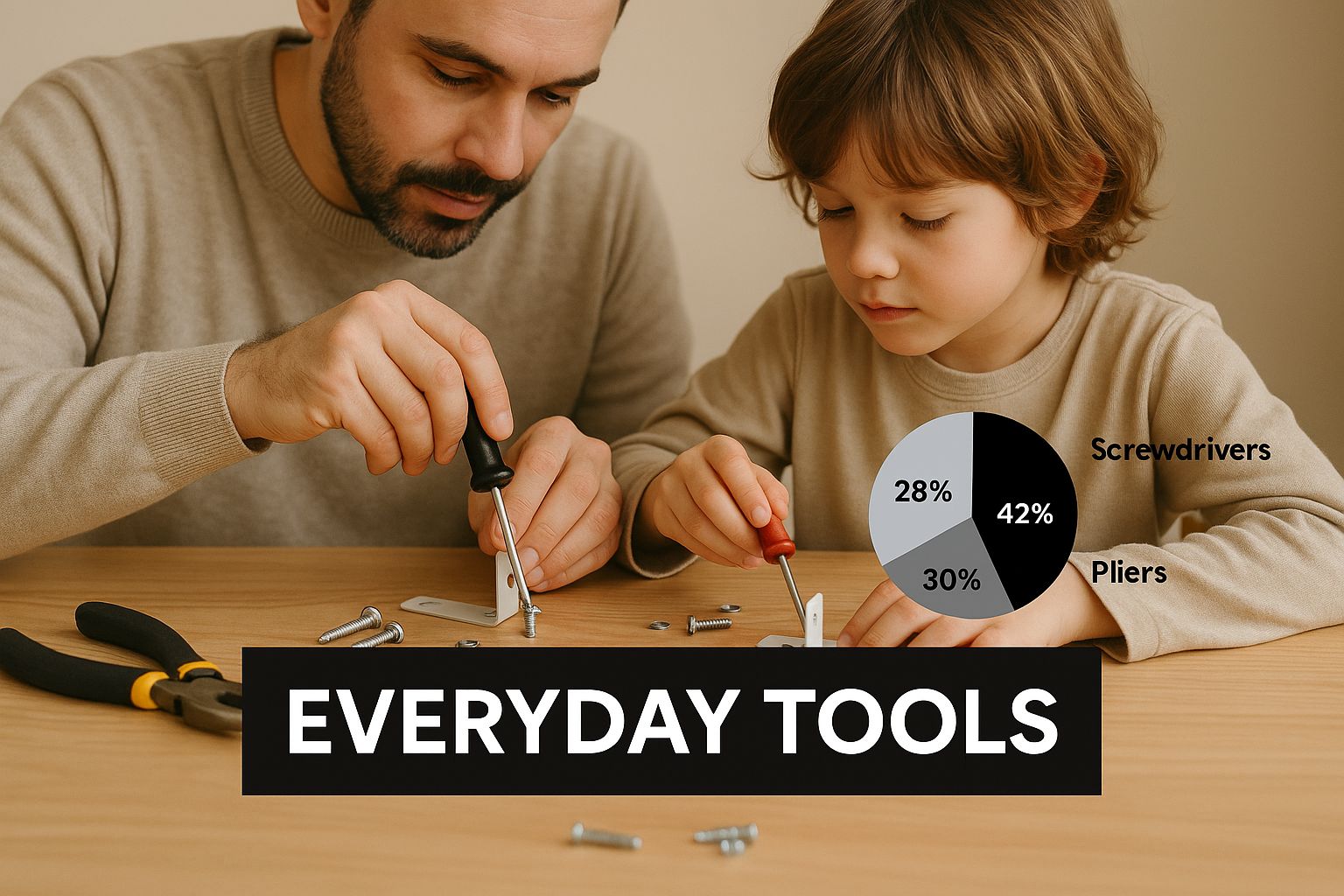
As the image shows, everyday items can be fantastic tools for strengthening those little hands.
Getting The Most Out Of Your Painting Session
To really maximize the benefits, try to focus on the process, not just the final product. Gently encourage your child to hold the brush correctly and to take their time. If this is your first go-around, our complete guide on how to paint by numbers has some fantastic step-by-step tips for a great experience.
Here are a few practical pointers to get you started:
- Set up a comfy workspace. Make sure your child has a well-lit spot where they can sit properly with the canvas at a good height. This prevents them from slouching and gives them much better arm and hand control.
- Start with the bigger areas. Have them tackle the larger numbered sections first. This is a great way to build confidence and let them get a feel for the paint and brush before moving on to the trickier, smaller spots.
- Celebrate the effort, not just the art. Praise their focus and steady hand. Acknowledging the work they're putting in reinforces the value of the skills they’re building along the way.
Creative Crafts That Build Dexterity
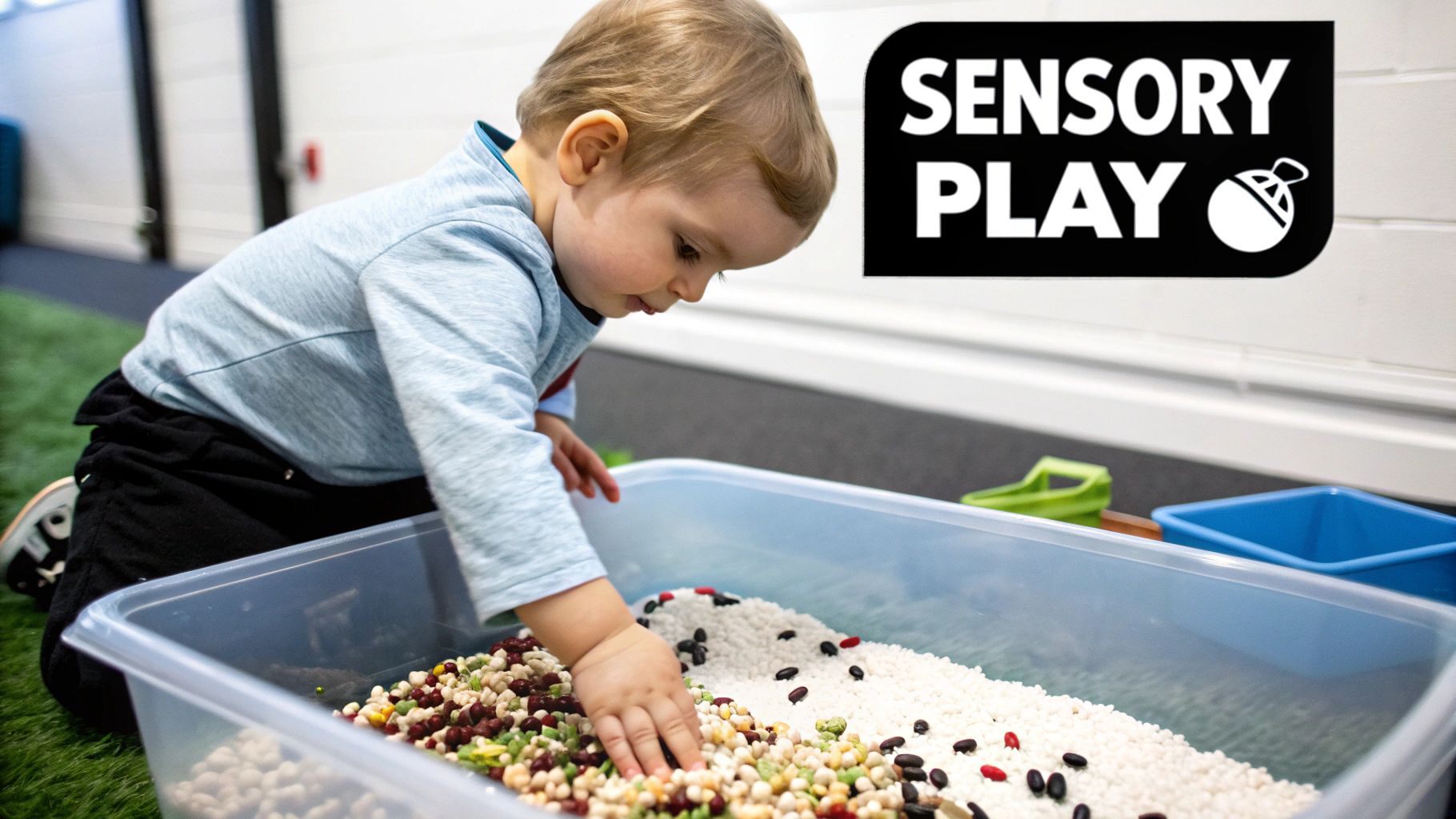
While painting is a phenomenal way to develop fine motor skills, it’s just the beginning. The world of crafting is packed with other activities that feel like pure fun but are secretly building dexterity, hand strength, and coordination.
You can turn everyday materials like yarn, paper, and beads into powerful learning tools. Each project becomes a low-pressure, inspiring way to support your child’s growth while they just think they're playing.
Bead Threading for Two-Handed Teamwork
Threading colorful beads onto a string is more than a way to make a cute bracelet—it’s a masterclass in bilateral coordination. That’s the fancy term for getting both hands to work together on different jobs at the same time. One hand has to hold the string steady while the other carefully guides the bead.
This simple back-and-forth action strengthens the tiny muscles in their fingers and refines hand-eye coordination as they line up that little hole with the tip of the string.
- Start big. For little hands just starting out, use chunky beads and a stiff lace. A pipe cleaner or even a piece of uncooked spaghetti works wonders and reduces frustration.
- Shrink the challenge. Once they get the hang of it, you can introduce smaller beads and a more flexible string or yarn to up the difficulty.
- Give it a purpose. The goal can be to make friendship bracelets or a necklace for a favorite stuffed animal. Having a fun, tangible outcome makes the practice much more engaging.
This one activity lays the groundwork for bigger life skills like zipping a coat or tying shoes. If you're looking for more ideas specifically for the little ones, check out our guide on creative activities for toddlers.
Snip, Tear, and Glue: The Magic of Collages
Getting the hang of safety scissors is a huge milestone for any kid. That constant open-and-close motion is a serious workout for their hand muscles, and trying to cut along a line is amazing practice for hand-eye coordination.
But you don't even need scissors to start. Just tearing paper is a fantastic skill-builder! Ripping paper into small bits forces them to use the pincer grasp—that precise grip between the thumb and index finger. It also provides some really satisfying sensory feedback.
We know this stuff works. A major review of 31 different studies on fine motor skills found that structured crafting activities made a real difference. In fact, 25 of those studies showed clear improvements in dexterity and coordination, and it turns out that 78% of the most effective programs happened right in school settings.
This really drives home the point that guided, hands-on projects aren't just a way to pass the time; they're proven methods for developing essential skills.
Bringing It All Together
To get started on a collage, just give your child some colored construction paper and let them go to town cutting or tearing it into different shapes and sizes. The next step is gluing, which is its own skill! Squeezing the glue bottle and carefully placing the pieces onto a background sheet brings it all together.
A single collage project packs a punch, combining several skills at once:
- Strengthening Hands: From the repetitive snipping of scissors and the squeezing of a glue bottle.
- Practicing the Pincer Grasp: Every time they tear paper or pick up a tiny piece to glue it down.
- Boosting Coordination: Needed for both following lines with scissors and placing the paper exactly where they want it.
Each of these crafts cleverly disguises skill-building as playtime, preparing little hands for writing, getting dressed, and all the other big jobs ahead.
Playful Games for Hand Strength and Coordination
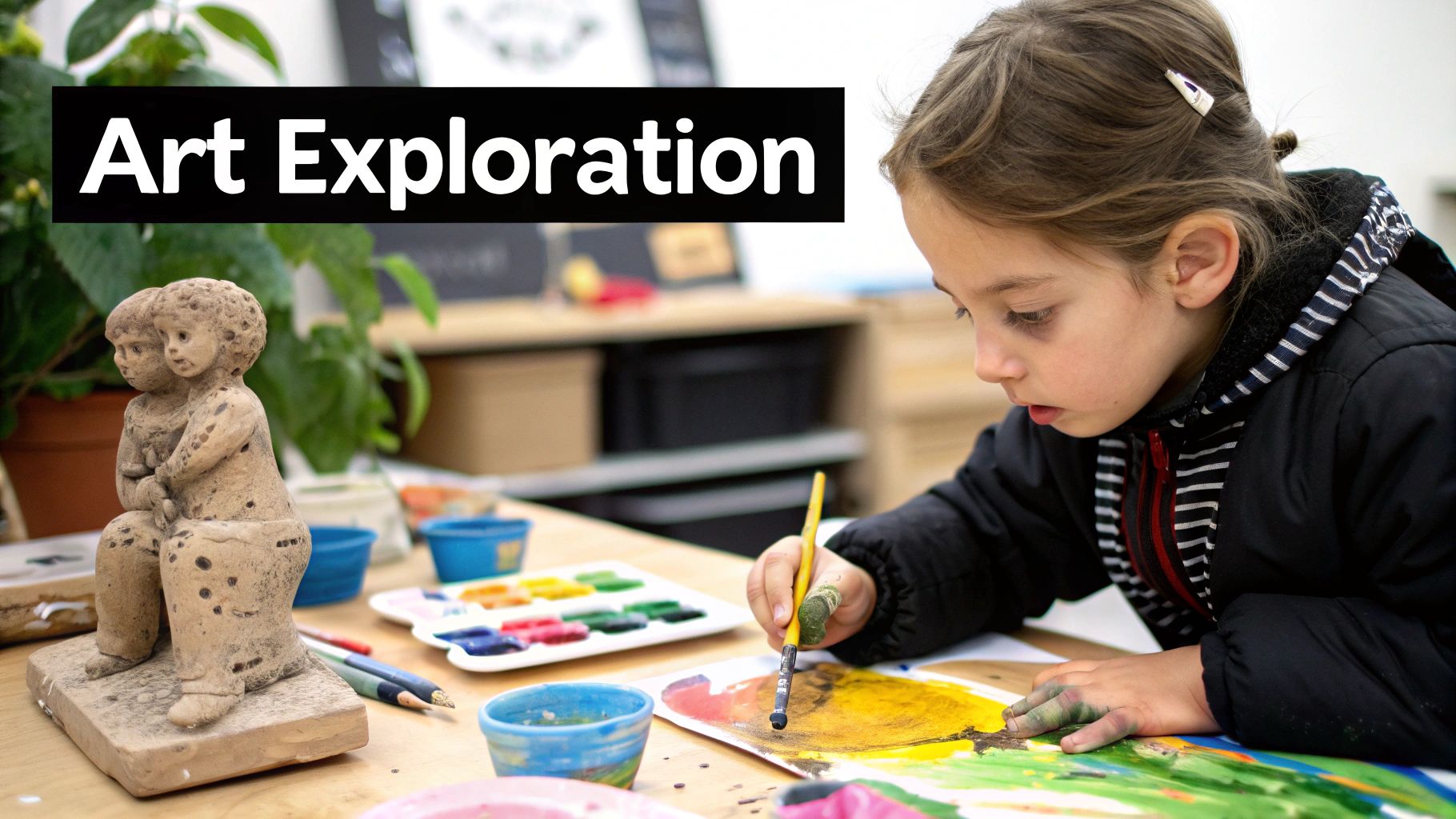
Sometimes the best learning happens when it doesn't feel like learning at all. That’s the magic of using play to build fine motor skills. These activities are brilliant because they strengthen little hands and sharpen coordination without any pressure—it’s just pure, simple fun.
When a child is lost in a game, they naturally repeat small movements over and over. They’re strengthening tiny hand muscles and refining their control without even realizing they’re "practicing." It’s a wonderfully positive way to build essential skills.
Building Blocks and Puzzles
You can’t go wrong with the classics. Building with blocks like LEGOs is a fantastic workout for fine motor skills. Every time a child lines up two bricks and snaps them together, they’re working on precise placement, pressure control, and spatial awareness.
Puzzles offer a similar challenge, just from a different angle. Picking up a small puzzle piece, rotating it to find the right fit, and nudging it into place demands serious finger dexterity and problem-solving. It's best to start with chunky wooden puzzles for toddlers and work your way up to more intricate jigsaws as their coordination improves.
The secret to these games is the clear, satisfying goal. Clicking that last LEGO into place or fitting the final puzzle piece delivers a real sense of accomplishment that makes them want to do it all over again.
If you're looking for more inspiration, you can find a whole list of ideas for how to keep kids busy that are both fun and developmental.
The Power of Play-Doh
Never underestimate what a simple tub of Play-Doh or modeling clay can do. It's easily one of the best tools out there for building up hand and finger strength.
Every squish, roll, and pinch works a different set of muscles, giving their hands a complete workout.
- Rolling: Using their palms to roll dough into snakes or balls is great for developing the arches of their hands.
- Squishing: Flattening a lump of dough with their palm or fingers builds overall hand strength.
- Pinching: Pulling off tiny bits of dough uses the pincer grasp—the exact same one they'll need to hold a pencil correctly.
This hands-on, sensory activity is also wonderfully calming. For an extra challenge, try hiding a few small beads or coins inside the dough for your child to dig out. It's a great little trick for encouraging finger isolation and strength.
Fun with Cards and Board Games
A family game night can be more than just a good time—it’s packed with fine motor practice. Shuffling a deck of cards, moving a tiny token around a board, or picking up game pieces are all excellent ways to refine dexterity.
Diving into some easy-to-learn card games is a great starting point for the whole family. Even something as simple as holding a hand of cards requires a surprising amount of control.
Think about games like Connect 4, where kids have to pick up a disc and drop it precisely into a narrow slot. That single action is a masterclass in hand-eye coordination. All the while, they’re also learning about turn-taking and strategy, making it a win-win.
How Fine Motor Skills Get Kids Ready for School
That big jump from the playroom to the classroom is a major milestone for any kid. What really helps make that transition a smooth one? Strong fine motor skills. They're like the invisible bridge connecting playtime fun to school-day success. Every time your child gets into a hands-on activity, they're actually training for the classroom.
Just picture a typical day at school. Your child will need to hold a pencil to write their name, use scissors to cut out shapes for an art project, and maybe even learn to use a computer mouse. These abilities don't just show up on the first day of kindergarten—they’re built up, bit by bit, through play. A kid who’s already spent hours painting, drawing, or threading beads has been getting those small hand muscles ready for these exact tasks.
From Playtime to Pencils
There's a surprisingly direct line between carefully painting within the lines of a paint-by-number kit and learning to hold a pencil correctly. Both activities demand control, precision, and that all-important hand-eye coordination. When kids get to practice these skills in a fun, no-pressure way, they're building the muscle memory and confidence they'll need for more academic work down the road.
This foundation is a game-changer for early academic success. When a child's fine motor skills are well-developed, they can focus on what they're learning—like how to form letters or understand numbers—instead of wrestling with the physical act of writing or using a tool. It frees up so much mental energy to actually absorb new information.
The ability to manage classroom tools confidently allows a child to participate fully in learning activities from day one. It's about giving them the physical readiness to match their intellectual curiosity.
What's really interesting is that the impact can even differ between boys and girls. A big Canadian study of 832 children discovered that for girls, strong fine motor skills were more closely tied to academic outcomes like vocabulary, numeracy, and attention than for boys. This really underscores how important it is to encourage structured fine motor practice to boost school readiness for every child. You can read more about this early academic performance research to see the full picture.
Beyond Writing and Cutting
The benefits don't stop with just holding a pencil or using scissors. Think about science class, where a student might need to use an eyedropper or handle delicate materials for an experiment. Even navigating the lunchroom—opening a milk carton or using a fork—takes real dexterity.
When kids have strong fine motor skills, they gain the independence to manage their own needs and jump into every part of school life. By making time for playful, creative activities, you're giving them a real, tangible advantage for their entire educational journey.
Got Questions About Fine Motor Skills? You're Not Alone.
It's only natural to wonder if your child is hitting all their milestones. When it comes to fine motor skills, the journey isn't always a straight line, and it’s easy to get caught up in what other kids are doing. Let's tackle some of the most common questions that pop up for parents and caregivers.
One of the biggest concerns I hear is, "Is my child on track?" Remember, every child moves at their own unique pace. A toddler scribbling with their whole fist wrapped around a crayon is right on schedule. Later, you'll see that grip naturally evolve into a more refined, fingertip hold as they enter their preschool years.
If you start to notice that your child consistently has trouble with things their friends are managing, like picking up little pieces of cereal or using a fork, it's a gentle nudge. It's not a reason to panic, but it is a great signal to weave more hands-on activities into their daily play.
When Should I Actually Worry?
It’s one thing for a child to take their time mastering a skill; it’s another to see signs of a genuine developmental delay. The key is knowing what to look for.
A real red flag might be a child who actively avoids anything that requires hand-eye coordination. If they consistently refuse to draw, won't touch building blocks, or show extreme frustration with simple tasks like buttoning a coat, it might be because they find it genuinely overwhelming.
Here's the most important piece of advice: Trust your gut. You know your child better than anyone. If something feels off, bringing it up with your pediatrician or an occupational therapist is a positive, proactive step. It's all about getting clarity and support.
Is It Possible to Push Them Too Hard?
Oh, absolutely. The whole point of these activities is to build skills through fun and discovery, not to create a high-pressure situation. If a child feels stressed or frustrated, they’ll just shut down.
The secret is finding that sweet spot—the "just right" challenge. A three-year-old struggling to thread a tiny, pin-sized bead isn't delayed; they've just been given a task that's way too advanced for their current abilities.
- Adapt on the fly. Can't manage tiny beads? Swap them for chunky wooden ones or even some rigatoni pasta they can thread onto a fuzzy pipe cleaner.
- Keep it fun. If they despise using scissors, let them tear paper to make a collage. They're still building hand strength and coordination, just in a way that feels like play, not work.
- Praise the process, not just the product. Celebrate how hard they tried and how creative they were. This fosters a can-do attitude that will stick with them long after the activity is over.
At the end of the day, developing fine motor skills should feel like an adventure, not a chore.
Ready to turn a simple afternoon into a powerful skill-building session? Custom Paint By Numbers has kits designed for every age and ability.
Check out our collection to find the perfect project that will spark your child’s creativity and strengthen their hands at the same time. Find your kit at Paint By Number.