
Welcome to a world of giggles, messy hands, and boundless imagination. In the whirlwind years of toddlerhood, every squish, splash, and scribble is a crucial step in your child's development. Finding engaging and age-appropriate creative activities for toddlers can feel like a challenge, but it is one of the most rewarding investments you can make in their growth.
These activities are far more than just ways to pass the time. They are foundational experiences that build essential motor skills, foster problem-solving abilities, and nurture emotional expression. This guide moves beyond the obvious, offering a curated collection of specific, easy-to-set-up activities designed to captivate your little one's attention while secretly boosting their brainpower.
We will explore everything from sensory play and finger painting to simple cooking and nature crafts. Each idea is presented with clear instructions, a list of materials, and the specific developmental benefits it offers. Get ready to transform everyday moments into powerful, fun-filled learning opportunities that you and your toddler will cherish. This list provides practical, actionable inspiration to unlock your child's innate creativity and make playtime a truly enriching experience for everyone involved. Let's dive into the fun.
1. Sensory Play with Playdough
Sensory play with playdough is a classic for a reason. This simple, hands-on activity involves toddlers squishing, rolling, and shaping soft dough, making it one of the most effective creative activities for toddlers. It provides crucial tactile input that stimulates sensory awareness and encourages open-ended, imaginative exploration.
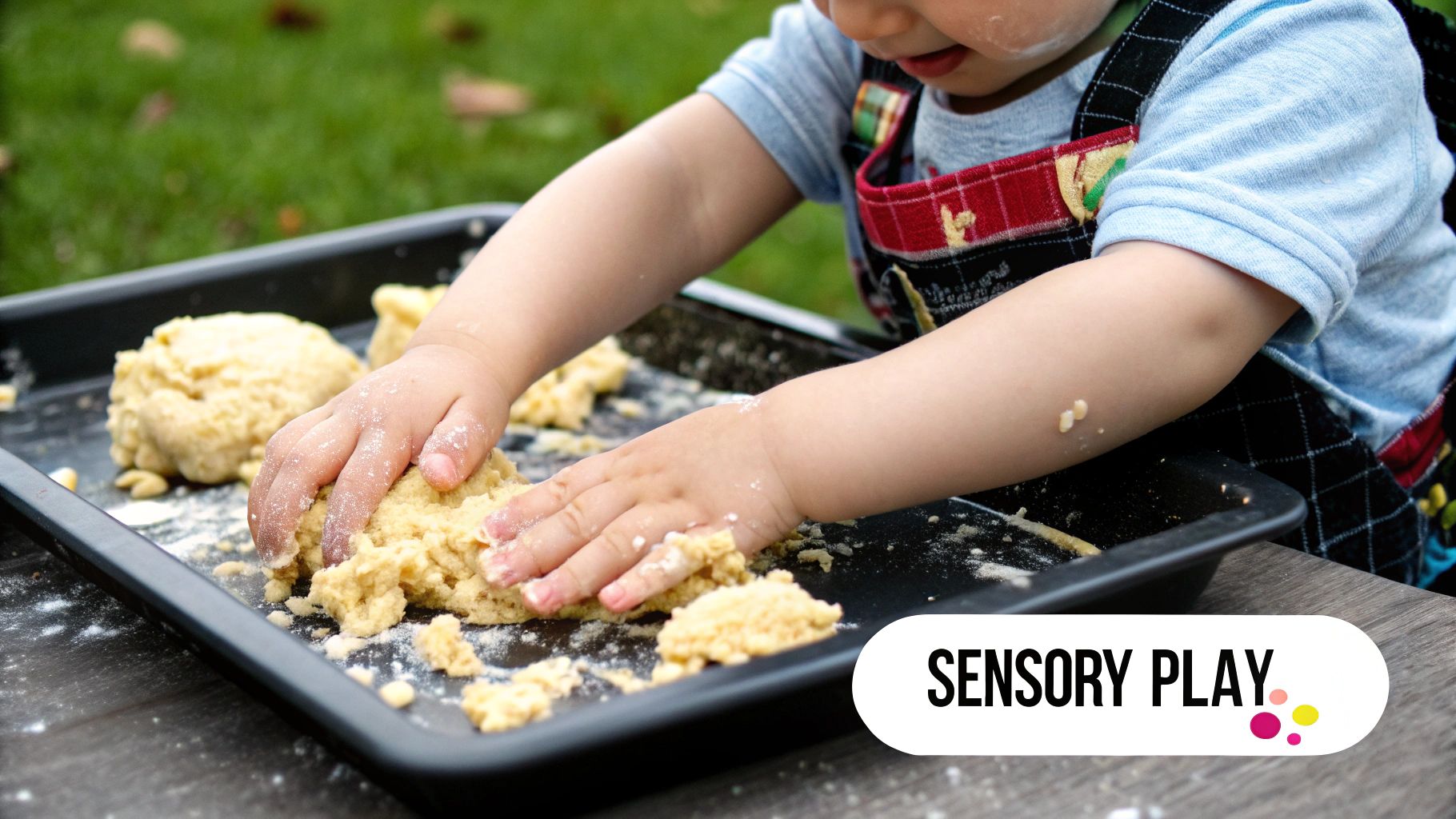
This foundational activity, popularized by brands like Play-Doh and integrated into Montessori methods, is more than just fun; it's a developmental powerhouse. It builds hand strength and fine motor skills necessary for future writing while also providing a calming outlet for big emotions.
How to Get Started
Getting started is simple. You can use store-bought playdough or easily make your own non-toxic version with flour, salt, water, and oil. The key is to create an inviting setup.
- Materials Needed: Playdough (various colors), a wipeable mat or tray, child-safe tools like plastic cookie cutters, small rolling pins, or blunt plastic knives.
- Best For: Developing fine motor skills, sensory exploration, and imaginative play. It's a perfect indoor activity for a quiet afternoon.
Actionable Tips for Parents
To elevate the experience, try these practical ideas:
- Create a Theme: Set up an "ocean" theme with blue dough and seashell pasta, or a "bakery" with brown dough and small cupcake liners.
- Incorporate Scents: Add a few drops of lavender oil for a calming effect or peppermint for an invigorating session.
- Mix in Textures: Add uncooked rice, glitter, or small beads to the dough for a new sensory dimension (with close supervision).
- Focus on Learning: Use the activity to practice colors, shapes, or counting by asking your toddler to make "three small red balls."
By providing simple tools and a bit of structure, you can transform a basic lump of dough into an engaging learning adventure that supports your child's creative and physical development.
2. Finger Painting Adventures
Finger painting is an exhilarating and messy creative activity for toddlers that allows them to explore art in the most direct way possible: with their own hands. This activity involves using fingers to spread vibrant, non-toxic paint across a surface, providing an unmatched sensory experience that stimulates touch, sight, and creativity all at once. It’s a primal form of expression that helps children connect cause and effect as they see their movements create colorful results.
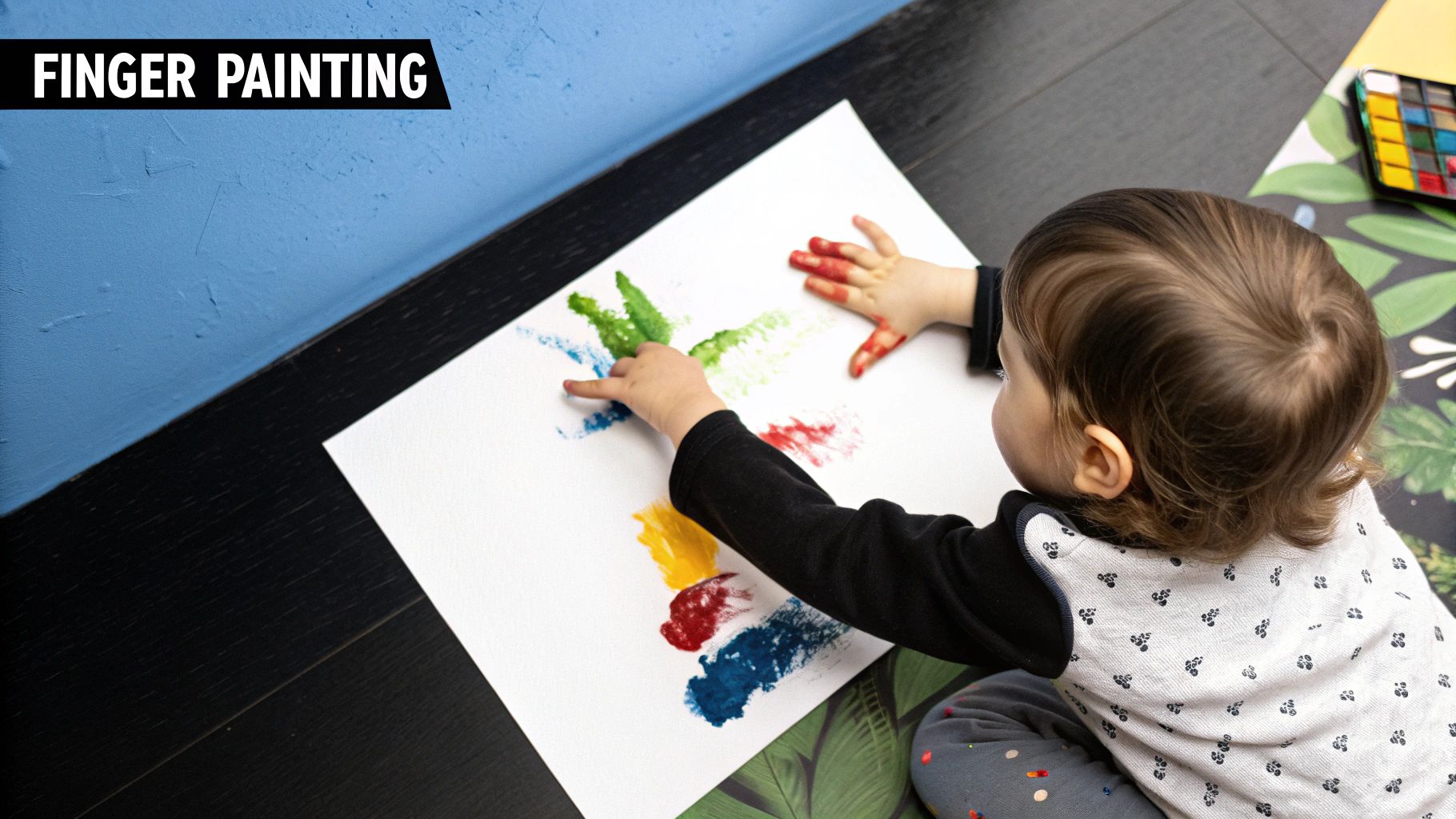
This classic activity, pioneered in education by Ruth Faison Shaw and embraced by philosophies like Reggio Emilia, emphasizes the artistic process over the final product. It's not just about making a picture; it's about the joy of feeling the paint, mixing colors, and expressing emotions without the barrier of a tool. This freedom builds confidence and develops hand-eye coordination and fine motor control.
How to Get Started
Setting up for a finger painting session is all about embracing the mess. A little preparation ensures the focus stays on creativity, not cleanup.
- Materials Needed: Washable, non-toxic finger paints, large sheets of paper or a roll of craft paper, a smock or old clothes, and a wipeable surface or outdoor space.
- Best For: Sensory exploration, color recognition, and emotional expression. It's an ideal activity for a high-energy day when you can get a little messy.
Actionable Tips for Parents
Make your toddler’s finger painting experience even more engaging with these simple tips:
- Limit the Colors: Start with just two primary colors (like blue and yellow) to let your child discover how to mix them to create a new one (green).
- Vary the "Canvas": Move beyond paper. Try painting on cardboard, a plastic tray, or even a large, smooth rock for a different tactile feel.
- Paint to Music: Put on some upbeat or calming music and encourage your toddler to paint along to the rhythm.
- Focus on the Process: Talk about how the paint feels (cool, squishy) and what their hands are doing, rather than asking "What are you making?"
This hands-on art form is a fantastic way for toddlers to learn and create. For more inspiration on simple creative projects, explore these art projects for beginners on paint-by-number.com.
3. Musical Instrument Exploration
Musical instrument exploration is an engaging sensory experience where toddlers discover sound, rhythm, and self-expression. This hands-on activity involves providing simple instruments like shakers, drums, and xylophones, making it a fantastic and dynamic creative activity for toddlers. It helps develop crucial auditory processing skills, introduces basic musical concepts, and encourages joyful movement.
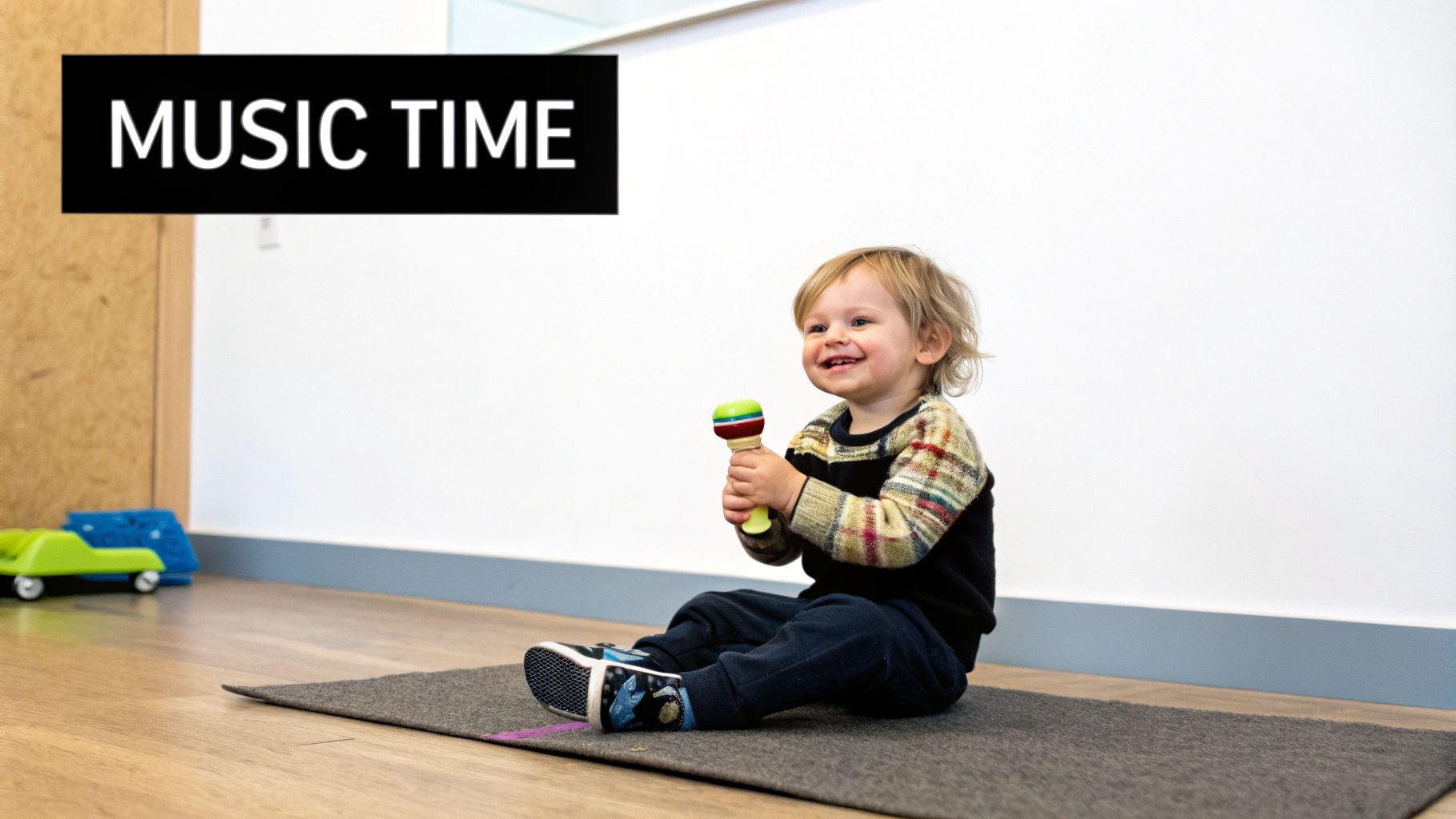
This method, popularized by early education programs like Music Together and toy brands like Melissa & Doug, goes beyond just making noise. It boosts coordination, refines listening skills, and provides a powerful outlet for emotional expression. Tapping a drum or shaking a tambourine helps toddlers understand cause and effect while building confidence.
How to Get Started
Setting up a music session is easy and doesn't require expensive equipment. The goal is to create a playful and judgment-free space where your toddler can experiment freely with different sounds and rhythms.
- Materials Needed: Age-appropriate instruments such as maracas, a small drum, a xylophone, or even homemade shakers (rice in a sealed plastic bottle). A clear space for movement is also helpful.
- Best For: Developing auditory skills, rhythm, gross motor coordination, and emotional expression. It's a perfect activity to burn off energy indoors or outdoors.
Actionable Tips for Parents
To make your music sessions even more enriching, consider these simple tips:
- Create a Designated Music Time: Set aside a specific time for musical play. This helps manage noise levels and builds a fun routine.
- Combine with Movement: Encourage your toddler to dance, march, or clap along to the rhythms they create. This connects music with whole-body movement.
- Make Your Own Instruments: Use household items to create simple instruments. Fill a container with beans for a shaker or use pots and a wooden spoon as a drum set.
- Sing Along: Pair the instrument play with familiar songs and nursery rhymes to enhance language development and memory.
4. Nature Collage Making
Nature collage making turns a simple walk outdoors into an artistic adventure. This hands-on activity involves collecting natural treasures like leaves, twigs, flowers, and pebbles, then arranging and gluing them onto a surface. As one of the most engaging creative activities for toddlers, it connects them directly with the environment and nurtures their appreciation for the natural world.
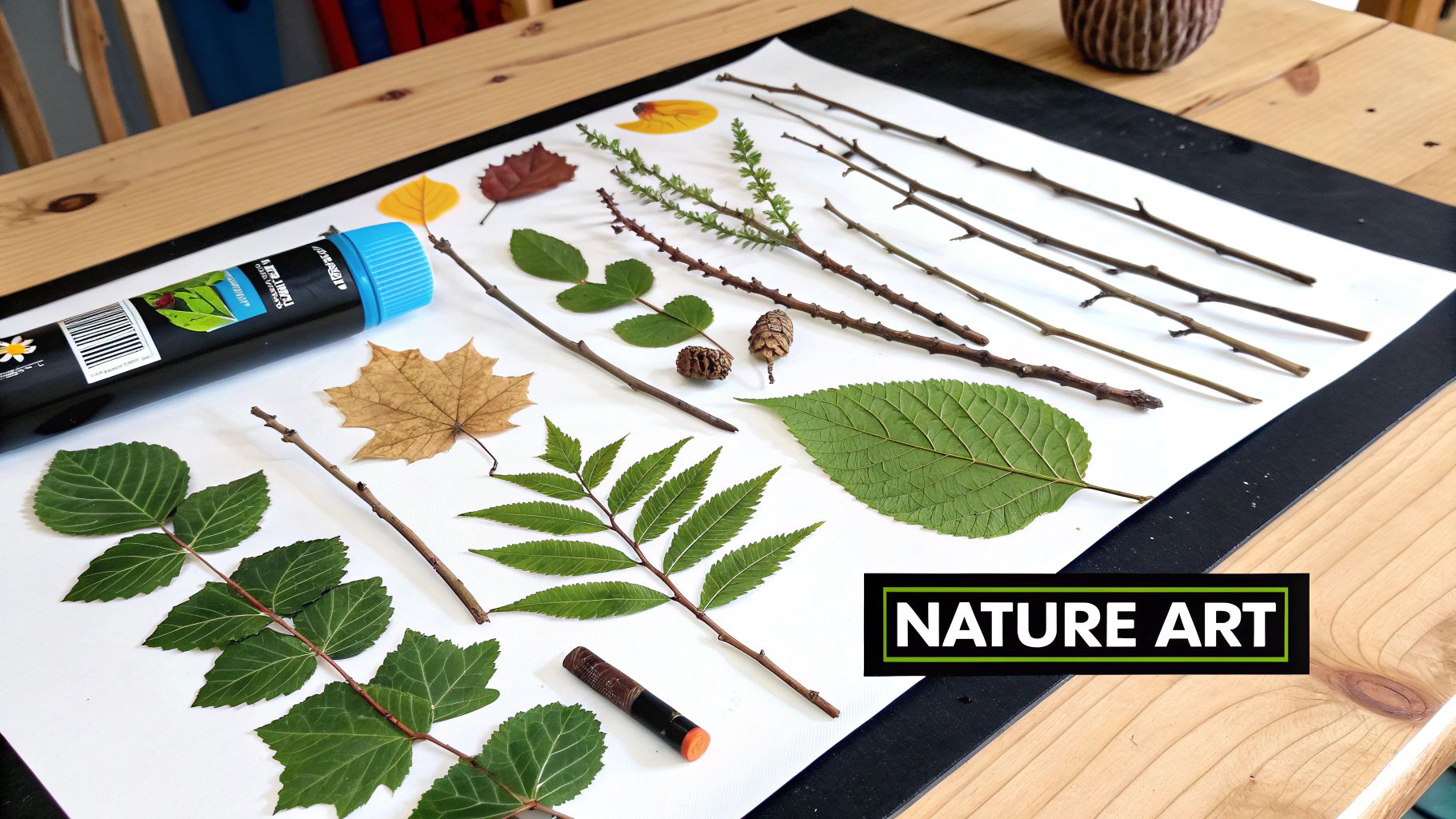
Inspired by the Forest School movement and the work of environmental artists like Andy Goldsworthy, this activity is a cornerstone of nature-based learning. It encourages toddlers to observe textures, shapes, and colors found outdoors. This process not only stimulates their senses but also enhances their fine motor skills as they carefully pick up and place each unique item.
How to Get Started
Begin with a nature walk around your backyard, a local park, or a trail. The goal is to gather interesting items that catch your toddler’s eye. Let them lead the way in choosing their materials for the collage.
- Materials Needed: A collection of natural items (leaves, petals, small sticks, seeds), sturdy paper or cardboard, and child-safe glue or a glue stick.
- Best For: Fostering a connection to nature, developing fine motor skills, and encouraging sensory exploration through sight and touch.
Actionable Tips for Parents
To make this activity even more enriching, try these simple strategies:
- Press and Preserve: Press leaves and flowers between the pages of a heavy book for a few days. This flattens them, making them easier to glue and preserving their color.
- Discuss Your Finds: Talk about the items as your toddler collects and uses them. Ask questions like, "Is this leaf smooth or bumpy?" or "What color is this flower?"
- Create a Seasonal Collage: Make a collage that represents the current season. Use colorful autumn leaves, spring blossoms, or green summer foliage to mark the time of year.
- Use Contact Paper: For a less messy alternative to glue, stick a piece of clear contact paper to a window, sticky-side out. Your toddler can press their nature finds directly onto it.
5. Water Play Activities
Water play activities are a fantastic way to engage a toddler’s senses and curiosity. This hands-on experience involves pouring, splashing, and experimenting with objects that float or sink, making it one of the most versatile creative activities for toddlers. It provides rich sensory input, introduces basic scientific concepts like volume and buoyancy, and offers a wonderfully calming yet stimulating outlet for exploration.
This classic activity, championed by the Montessori Method and popularized by brands like Little Tikes and Step2, is far more than just splashing around. It supports cognitive development by encouraging problem-solving and also enhances fine and gross motor skills as children scoop, pour, and lift water-filled containers.
How to Get Started
Setting up a water play station is simple and can be adapted for indoors or outdoors. A shallow bin or a dedicated water table works perfectly. The goal is to provide tools that encourage interaction and discovery.
- Materials Needed: A basin or water table, lukewarm water, various containers (cups, jugs, funnels), and floating toys. Have towels ready for easy cleanup.
- Best For: Sensory exploration, understanding cause and effect, and developing motor skills. It's an ideal outdoor activity on a warm day or a contained indoor adventure.
Actionable Tips for Parents
To make water play even more engaging and educational, try these simple enhancements:
- Add a Task: Create a "washing station" with sponges and plastic dishes or toys for a practical life skill lesson.
- Introduce Color and Bubbles: Add a few drops of non-toxic food coloring to teach color mixing or a squirt of dish soap for a bubbly sensory experience.
- Explore Physics: Provide items that sink (a rock) and float (a rubber duck) to spark curiosity about why things behave differently in water.
- Vary the Tools: Include scoops, ladles, and turkey basters to challenge and develop different hand muscles and coordination skills. For more ideas on how to keep your little ones engaged, find inspiration for toddler-friendly projects to keep kids busy on paint-by-number.com.
With a few simple materials, you can turn a tub of water into a dynamic learning environment that nurtures your toddler's innate curiosity and creative spirit.
6. Building Block Construction
Building block construction is a quintessential creative activity for toddlers that involves stacking, arranging, and connecting blocks to create endless structures. This hands-on play with materials like wooden, foam, or magnetic blocks encourages toddlers to explore balance, gravity, and design in a tangible way. It serves as a foundational STEAM activity that nurtures spatial awareness and problem-solving.
Pioneered by educators like Friedrich Froebel and popularized by iconic brands like LEGO DUPLO and Magna-Tiles, block play is a cornerstone of early childhood education. More than just building towers, it’s about testing ideas, learning from failure when a structure tumbles, and experiencing the pride of creation. It develops hand-eye coordination, logical thinking, and the ability to turn a mental image into a physical form.
How to Get Started
Setting up a block-building station is straightforward. The goal is to provide a clear space and a variety of blocks that invite open-ended construction without overwhelming your toddler.
- Materials Needed: A set of age-appropriate blocks (wooden, large plastic, foam, or magnetic), a flat, stable surface like a rug or low table, and optional props like small toy cars or animal figures.
- Best For: Developing spatial reasoning, problem-solving skills, and fine and gross motor control. It's excellent for both independent play and collaborative projects with peers or parents.
Actionable Tips for Parents
To make block play even more engaging and educational, consider these simple strategies:
- Start with Large Blocks: For younger toddlers, begin with large, soft foam or lightweight wooden blocks that are easy for small hands to grip and manipulate safely.
- Create Building Challenges: Introduce simple prompts like, "Can we build the tallest tower?" or "Let's make a long road for your car." This adds a goal-oriented element to their play.
- Incorporate Storytelling: Add small figures or toy animals to the mix. Encourage your toddler to build a house for a bear or a garage for a truck to foster narrative skills.
- Photograph Their Creations: Before cleanup time, take a picture of their masterpiece. This validates their effort and creates a nice memory, making tidying up less difficult.
7. Dramatic Play and Dress-up
Dramatic play and dress-up is an imaginative journey where toddlers use costumes and props to explore different roles and scenarios. This creative activity for toddlers is fundamental for building empathy, as they step into someone else's shoes, whether it's a doctor, a parent, or a storybook character. It provides a safe space for them to process emotions and understand social interactions.
This type of play, championed by pioneers like Mister Rogers and central to the Waldorf education philosophy, is far more than just a game. It is a critical tool for developing complex language skills, problem-solving abilities, and emotional intelligence. Through pretend play, children build a narrative, negotiate roles, and experiment with real-world situations in a controlled way.
How to Get Started
Setting up a space for dramatic play is about sparking imagination, not having perfect costumes. You can create an inviting "pretend corner" with just a few simple, open-ended items that encourage creativity.
- Materials Needed: A box of old clothes (hats, scarves, shoes), simple props like a toy phone or kitchen utensils, and a designated play area.
- Best For: Developing social-emotional skills, language and communication, and abstract thinking. It's one of the best indoor activities for kids on a rainy day.
Actionable Tips for Parents
To make dramatic play even more enriching, try these simple strategies:
- Create Themed Bins: Assemble a "Doctor's Office" bin with bandages and a toy stethoscope, or a "Restaurant" bin with notepads and plastic food.
- Use Simple, Versatile Props: A simple piece of blue silk can be a river, a cape, or a blanket. Cardboard boxes can become cars, houses, or spaceships.
- Join in but Don’t Direct: Follow your child’s lead. If they hand you a block and say it's a phone, answer it. Let them be the director of the story.
- Rotate Materials: Keep the play area fresh and exciting by swapping out props and costumes every few weeks to inspire new scenarios.
By providing a few well-chosen props and the freedom to explore, you empower your toddler to build entire worlds, developing crucial cognitive and social skills along the way.
8. Simple Cooking Activities
Simple cooking activities invite toddlers into the kitchen to participate in age-appropriate food preparation tasks. This hands-on experience involves mixing, pouring, and assembling ingredients under close supervision, transforming meal prep into one of the most enriching creative activities for toddlers. It introduces them to new textures, tastes, and smells, fostering a positive relationship with food.
Inspired by Maria Montessori's practical life philosophy, these activities are about more than just making a snack; they are about building confidence and life skills. Measuring ingredients introduces basic math concepts, while following simple steps strengthens listening skills and sequencing abilities. It’s a wonderful way to connect and create something delicious together.
How to Get Started
Begin with no-cook recipes that are forgiving and focus on the process, not a perfect outcome. Setting up a safe, designated workspace for your toddler is key to a successful and stress-free experience.
- Materials Needed: Child-safe utensils (plastic knives, small bowls, measuring cups), ingredients for a simple recipe, an apron, and a step stool.
- Best For: Developing practical life skills, sensory exploration (taste, smell, touch), and introducing basic math and science concepts. It’s a great bonding activity for any time of day.
Actionable Tips for Parents
To make cooking with your toddler enjoyable and educational, try these tips:
- Start with Assembly Tasks: Begin with no-cook recipes like assembling fruit salads, decorating cookies, or making simple sandwiches.
- Use Child-Sized Tools: Provide small whisks, bowls, and measuring spoons that are easy for little hands to manage.
- Focus on the Process: Embrace the mess and celebrate your child’s effort. Let them pour, mix, and stir, even if it’s not perfect.
- Incorporate Learning: Use the opportunity to count ingredients, identify colors, and introduce new vocabulary like "mix," "pour," and "sprinkle."
9. Puzzle and Shape Sorting
Puzzle and shape sorting activities involve toddlers manipulating pieces to fit into specific slots, completing pictures or geometric arrangements. These structured yet creative activities for toddlers are fantastic for building cognitive skills. They challenge a child's visual perception and hand-eye coordination while fostering persistence and problem-solving abilities in a satisfying, hands-on way.
This classic activity, championed by educational pioneers like Maria Montessori and popularized by brands like Melissa & Doug, goes beyond simple play. It introduces foundational concepts of spatial reasoning and logical thinking. As toddlers figure out how pieces connect, they develop critical thinking skills and experience the confidence boost that comes from completing a task independently.
How to Get Started
Beginning with puzzles is all about choosing the right level of challenge to engage, not frustrate. Start simple and create a comfortable, focused environment for your toddler to work in.
- Materials Needed: Age-appropriate puzzles (4-12 large pieces with knobs are ideal for beginners), shape sorter toys (like a cube with corresponding block shapes), and a quiet, flat surface like a floor mat or small table.
- Best For: Developing problem-solving skills, hand-eye coordination, and fine motor control. It is an excellent choice for quiet time or one-on-one parent-child engagement.
Actionable Tips for Parents
To make puzzle time more effective and enjoyable, consider these tips:
- Start with Familiar Images: Choose puzzles that feature recognizable objects like animals, vehicles, or favorite characters to capture your toddler’s interest.
- Use Guided Puzzles: Begin with puzzles that have a picture guide underneath each piece, making it easier for your child to match shapes and images.
- Celebrate the Process: Praise their effort and persistence, not just the final completion. Say things like, "I see you are working so hard to find where that piece goes!"
- Rotate and Refresh: Keep the activity engaging by regularly swapping out puzzles. A puzzle that was too hard a month ago might be the perfect challenge today.
By selecting the right puzzles and encouraging the process, you can turn this simple activity into a powerful tool for building your toddler's confidence and cognitive abilities.
Creative Activities for Toddlers: 9-Item Comparison
| Activity | Implementation Complexity 🔄 | Resource Requirements ⚡ | Expected Outcomes 📊 | Ideal Use Cases 💡 | Key Advantages ⭐ |
|---|---|---|---|---|---|
| Sensory Play with Playdough | Low to moderate | Low (homemade or store-bought dough) | Fine motor skills, creativity, sensory processing | Fine motor development, sensory exploration | Inexpensive, reusable, calming, adaptable |
| Finger Painting Adventures | Low | Low to moderate (paints, paper) | Sensory awareness, color recognition, motor skills | Artistic expression, sensory exploration | Immediate feedback, promotes creativity |
| Musical Instrument Exploration | Moderate | Moderate to high (instruments) | Auditory processing, rhythm, motor coordination | Group music sessions, auditory learning | Builds rhythm skills, social interaction |
| Nature Collage Making | Moderate | Low (natural materials and glue) | Observation, fine motor, environmental awareness | Outdoor exploration, seasonal art projects | Free materials, promotes environmental connection |
| Water Play Activities | Low to moderate | Low (water, containers) | Sensory stimulation, science concepts, coordination | Indoor/outdoor sensory play, scientific exploration | Engaging, scalable, calming |
| Building Block Construction | Moderate to high | Moderate to high (blocks sets) | Spatial reasoning, problem-solving, creativity | STEM foundations, creative construction | Durable, open-ended, STEM building foundation |
| Dramatic Play and Dress-up | Moderate | Low to moderate (costumes, props) | Social-emotional skills, language, creativity | Social skills, imaginative scenarios | Supports emotional growth, encourages social play |
| Simple Cooking Activities | Moderate to high | Moderate (food materials, tools) | Practical life skills, math concepts, sensory | Life skills, family bonding, math integration | Usable outcomes, cultural connection, skill-building |
| Puzzle and Shape Sorting | Low to moderate | Low (puzzle sets) | Problem-solving, visual perception, fine motor | Quiet time, independent play, cognitive skill-building | Clear success criteria, portable, academic readiness |
Continuing the Creative Journey with Your Toddler
As we’ve explored, the world of creative activities for toddlers is vibrant, messy, and wonderfully diverse. From the squish of homemade playdough between their fingers to the rhythmic clang of a makeshift drum, each activity offers a unique pathway for development. You've seen how simple materials can transform into powerful tools for learning, helping your child build fine motor skills, understand cause and effect, and express their burgeoning imagination.
The true takeaway from these nine activities is not about creating a gallery-worthy masterpiece. Instead, it's about embracing the process over the product. The real magic happens in the exploration, the sensory discoveries, and the shared joy of making something new together. When your toddler mixes finger paints into a muddy brown or builds a block tower only to knock it down, they are learning, experimenting, and understanding their world in a profound way.
Building on the Foundation of Creativity
Think of these activities as the building blocks of a lifelong creative habit. Each session of sensory play or nature collage making lays a foundation for more complex skills and a deeper appreciation for self-expression. The most valuable thing you can offer is not a perfectly curated craft but your presence, encouragement, and willingness to get a little messy alongside them.
Remember to keep these core principles in mind as you move forward:
- Adapt and Personalize: Notice what captures your toddler’s interest. If they love water play, introduce bubbles or floating toys. If they are fascinated by nature, make your walks a treasure hunt for collage materials.
- Celebrate the Effort: Praise their focus, their color choices, and their enthusiasm. This positive reinforcement builds confidence and encourages them to keep trying new things without fear of failure.
- Rotate and Refresh: Toddlers thrive on novelty. Keep your creative toolkit fresh by rotating activities, introducing new textures, or taking familiar activities into a different environment, like bringing finger paints outside.
The Lasting Impact of Early Creativity
By consistently engaging in these creative activities for toddlers, you are doing more than just filling an afternoon. You are nurturing a curious mind, a confident problem-solver, and an emotionally intelligent individual. The skills they practice now, from the pincer grasp used in puzzle-solving to the imaginative storytelling in dramatic play, will support their academic and social development for years to come.
Your role as their creative guide is monumental. You are showing them that their ideas have value, that exploration is exciting, and that there is no single "right" way to create. This mindset is a priceless gift that will empower them to face future challenges with innovation and resilience. Keep exploring, stay patient, and cherish these fleeting moments of messy, colorful, and joyful discovery.
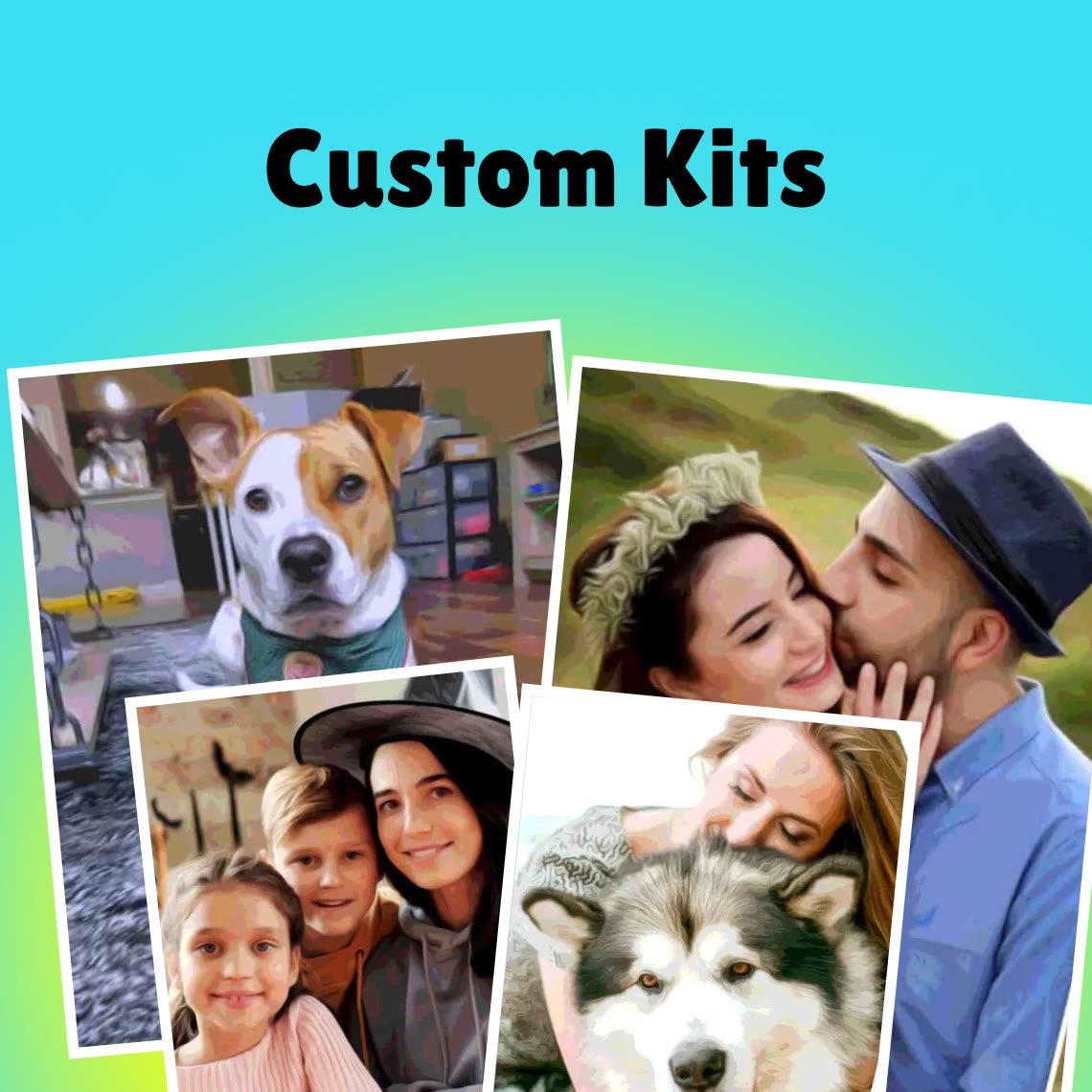
Ready to take your creative journey to the next level as your child grows? Transform a favorite family photo into a collaborative masterpiece with a kit from Custom Paint By Numbers. It’s a perfect next step for developing focus and creating a beautiful keepsake you can cherish forever. Discover your custom kit at Custom Paint By Numbers.