
When you hear "art therapy," what comes to mind? For many, it's the simple, calming act of painting or drawing. But there's a bit more to it than that. Art therapy is a specific form of psychotherapy where you work with a professional art therapist, using creative expression to explore your emotions and build self-awareness.
It's not about being the next Picasso. The goal isn't to create a masterpiece; it's to use the artistic process itself as a way to communicate feelings that are just too difficult to put into words.
Defining Art Therapy Beyond The Canvas
It's easy to mix up art therapy with just making art to feel good, but a key difference sets them apart. True art therapy always involves a licensed professional. This person is trained to help you unpack the thoughts and feelings that surface while you create.
Think of it like a conversation, but instead of only using words, you have a whole new vocabulary: paint, clay, collage, or whatever materials you're using. The focus is on the journey of creation and the insights you discover, not the finished piece. It’s a safe space to explore and heal, no artistic talent required.
The Core Components of Art Therapy
At its core, art therapy is a unique blend of psychology and the creative process. It really stands on three main pillars:
- Guidance: A trained art therapist is there to facilitate the session, offering structure and helping you make sense of your creations.
- Process: The physical act of making something—the feel of the clay, the way the colors mix, the motion of drawing—is just as meaningful as the final image.
- Healing: Ultimately, the aim is to work through emotional, psychological, or behavioral challenges by channeling them into a creative outlet.
This infographic does a great job of showing how these elements work together.
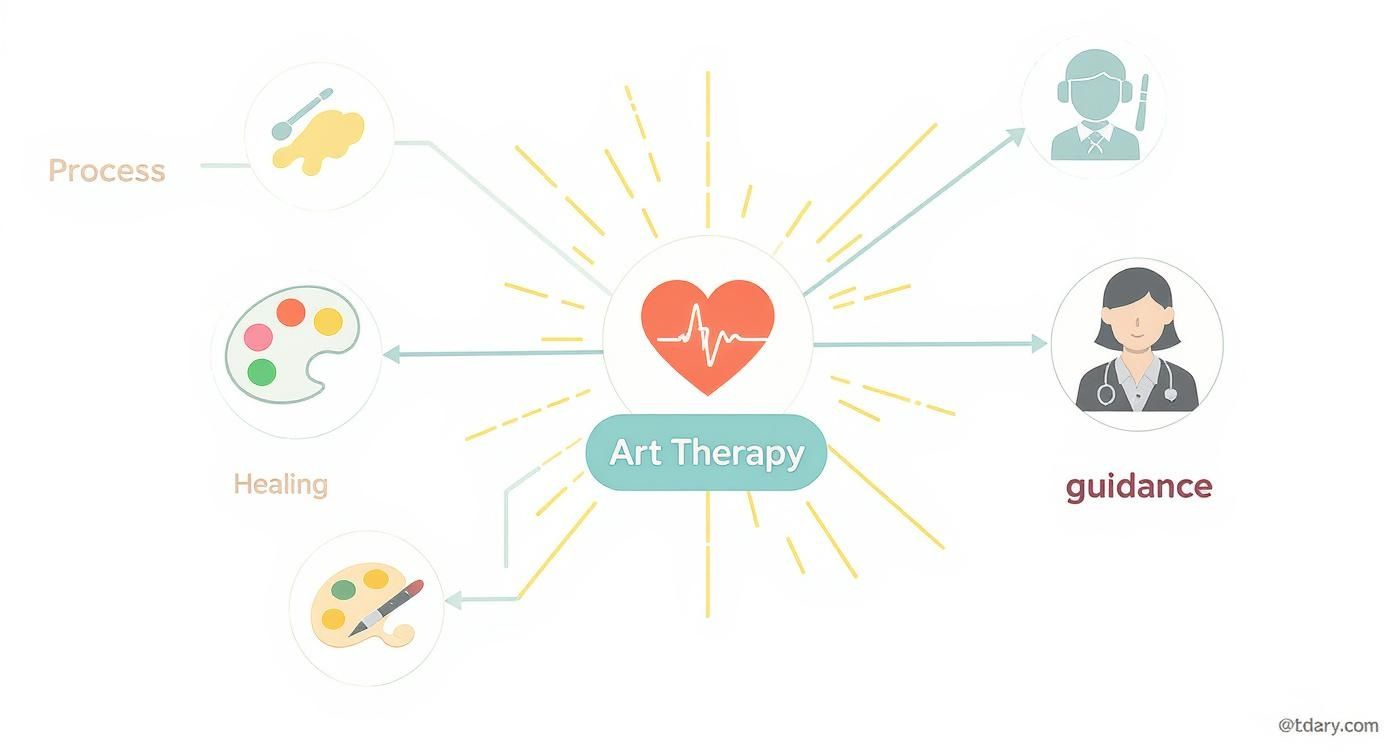
You can see how the therapist’s guidance and your creative process combine to promote healing. Since it was formally recognized back in the 1940s, art therapy has grown into a respected field in mental healthcare. The results speak for themselves; studies have shown it can reduce symptoms of anxiety and depression by as much as 50% in certain groups. In fact, around 75% of veterans who participated in art therapy programs reported a significant improvement in their well-being.
Art therapy provides a unique bridge between our inner world and the outer world, allowing us to see, touch, and reshape feelings that often remain hidden.
To get a clearer picture, let's look at how formal, guided therapy differs from using art on your own for its therapeutic benefits.
Formal Art Therapy vs Therapeutic Art Making
| Aspect | Formal Art Therapy | Therapeutic Art Making |
|---|---|---|
| Guidance | Led by a licensed, credentialed art therapist with training in psychology and art. | Self-guided or done in an informal group; no professional therapist required. |
| Setting | Clinical or private practice setting (hospital, clinic, studio). | Any setting—at home, in a workshop, or with friends. |
| Goals | Addresses specific mental health goals, trauma, or emotional challenges. | General well-being, relaxation, stress reduction, and self-expression. |
| Process | The therapist helps you interpret the meaning behind your art and emotions. | The focus is on the enjoyment and calming effect of the creative process itself. |
| Outcome | Therapeutic progress and insight, documented as part of a treatment plan. | A finished piece of art and a sense of personal satisfaction and calm. |
While formal art therapy is a distinct discipline, you can absolutely gain personal benefits from all kinds of creative expression. Exploring creative writing prompts is another fantastic way to tap into this. If you’re looking for more self-guided ideas, check out our guide on other therapeutic activities for mental health.
Tracing The Roots Of Creative Healing
Art has been a companion to human emotion for millennia. Yet, naming it as a therapy took shape only in the 20th century when practitioners saw something remarkable.
Instead of a bright clinic, art therapy often emerged in makeshift spaces—military wards, prisons, and community centers—where traditional talk therapy couldn’t reach the heart of people’s struggles.

The real breakthrough arrived in the 1940s, a decade defined by war and personal hardship. Practitioners across Europe and North America noticed how drawing, painting, and sculpting helped people process raw feelings. Those early experiments laid the foundation for a more structured practice that would spread in the decades to come.
The Pioneers Of A New Field
A handful of visionaries turned these informal sessions into a coherent approach:
-
Adrian Hill (1942): While recovering from tuberculosis in England, this artist found relief through sketching and painting. He coined the term “art therapy” and shared his methods with fellow patients. You can discover more about this foundational story and the historical timeline of art therapy.
-
Margaret Naumburg: An American educator-turned-therapist influenced by psychoanalysis, Naumburg treated art as symbolic speech. Her work demonstrated how colors and shapes could unlock hidden thoughts that words alone might miss.
Art therapy was born from the realization that when words fail, images can speak. The creative process gives a voice to experiences that are often too complex or painful to articulate.
From Battlefields To Healing Studios
After World War II, the true test of these ideas unfolded on a massive scale. Thousands of veterans returned home with wounds no bandage could touch, facing what we now call post-traumatic stress disorder (PTSD). Many found that talking through their trauma felt inadequate.
In response, doctors and therapists offered art as another route. Whether sketching a landscape or molding clay, veterans could externalize distressing memories without having to explain them in detail. Over time, this non-verbal outlet proved so powerful that art therapy became an important tool in mental healthcare.
By 1969, the formation of the American Art Therapy Association (AATA) marked a crucial milestone. That milestone brought clear training standards, ethical guidelines, and a supportive community of practitioners. Art therapy finally stepped from experimental sessions into the realm of formal, evidence-based treatment.
How Art Therapy Rewires Your Brain
Ever have a feeling so big or tangled that words just can't seem to touch it? We all have. That's precisely where art therapy shines, offering a way in when language falls short. It taps into parts of the brain that talk therapy might not reach, helping us get around the mental roadblocks we naturally build around our toughest feelings.
Here’s a simple way to think about it: imagine your memories and emotions are stored in different rooms in your mind. The key to unlocking a room holding something complex, like old trauma or a deep-seated fear, isn't always a word. Sometimes, it’s a color, a shape, or a texture. Art therapy hands you a whole new set of keys.
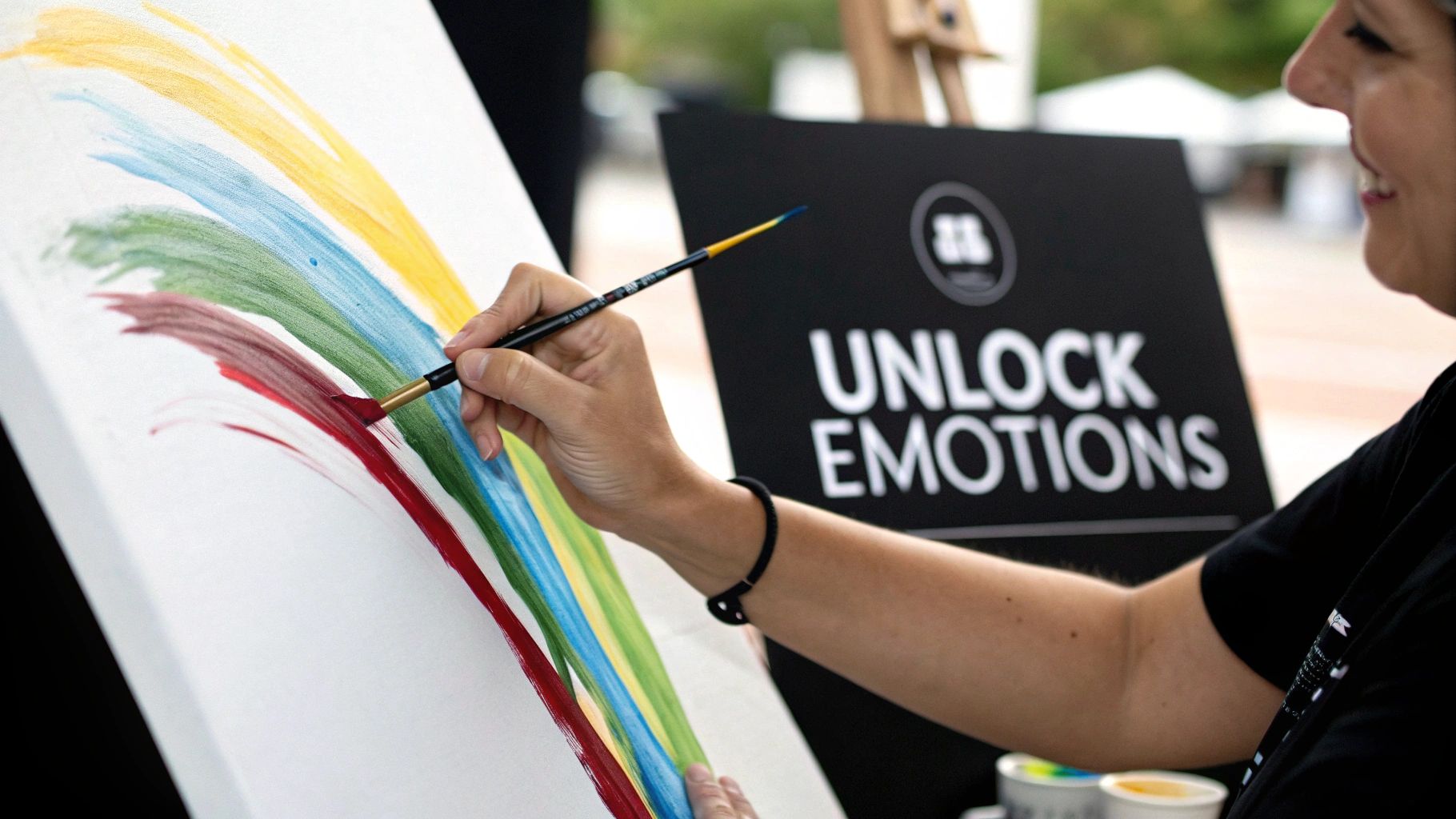
This creative process lights up different neural pathways, connecting you with experiences stored in the non-verbal, sensory parts of the brain. It quite literally gives a voice to the unspoken.
Activating Your Brain's Potential for Change
This all ties into a fascinating concept called neuroplasticity. At its core, this is just your brain's natural ability to reorganize itself by forming new connections between brain cells. It means your brain isn't fixed; it can change, adapt, and heal all throughout your life.
Art therapy actively jumpstarts this process. When you create something, you’re doing more than just making a picture—you’re physically building new pathways in your brain. This can help you:
- Reshape Thought Patterns: Getting a negative thought out of your head and onto a piece of paper lets you see it from a new angle. Over time, this helps you build healthier mental habits.
- Process Difficult Emotions: Making art gives you a safe container to explore feelings like grief or anger without letting them take over.
- Enhance Problem-Solving Skills: Every brushstroke is a decision. Every new color is a choice. This constant process of making small adjustments and solving creative problems strengthens your cognitive flexibility.
As art therapy has grown from an intuitive practice into a recognized discipline, neuroscience has begun to show us why it works. We now have evidence that creating art actually promotes neuroplasticity, solidifying its role as a powerful tool for recovery. If you're curious about the journey, you can learn more about how art therapy has evolved with scientific understanding on linkedframe.com.
By engaging our hands and our senses, we give our brains a new language to work with. Art becomes a tool not just for expression, but for actively rewiring our internal landscape toward healing and growth.
The Grounding Power of Creation
Beyond the deep neurological shifts, the simple act of making art is immediately calming. The physical sensations—the feeling of a brush moving across canvas, the coolness of clay in your hands, the rough texture of paper—can be incredibly grounding.
This sensory focus helps switch on your parasympathetic nervous system, the part of you responsible for the "rest and digest" response. It gently pulls you out of a spiral of anxious thoughts and anchors you right here, in the present moment. It's a simple, tangible way to calm your whole system and find a little peace on the spot.
The Real-World Benefits of Art Therapy
So, beyond the brain science and the history lessons, what does art therapy actually do for people? It’s all about the practical, real-world impact. It hands you a set of tools to work through life’s messiness, turning those tangled internal feelings into something you can literally see, touch, and finally start to understand.
These benefits aren't just ideas on a page; they show up in your day-to-day life. Think about someone who’s completely overwhelmed by stress. A session spent just painting can become a healthy release valve for all that frustration that would otherwise stay stuck inside. The simple, physical act of choosing colors and making marks can untie knots of tension that words could never reach.
Fostering Emotional Regulation and Self-Discovery
One of the most incredible things art therapy does is improve emotional regulation. When you feel a powerful emotion like anger or sadness starting to bubble up, creating something gives you a safe container to explore it without any judgment. This process helps you get to know your own triggers and build healthier ways to cope.
It’s also an amazing tool for self-discovery. Imagine someone going through a huge life transition, like switching careers or ending a long-term relationship. They could use collage, cutting out images and words that speak to them, to literally piece together a new vision for themselves. This creative process helps them see who they are becoming, separate from their old identity.
Art therapy gives you a way to externalize your inner world. By putting your feelings onto paper or into clay, you create a space between you and the emotion, allowing for reflection instead of reaction.
A Safe Space for Processing Trauma
For anyone who has experienced trauma, talking about it can feel impossible, or even make things worse. Art therapy provides a gentler, non-verbal path forward. It lets a person communicate their story using symbols and metaphors, processing painful memories at a pace that feels safe and completely in their control.
For instance, someone might draw a series of images that walk through their journey, giving them a sense of ownership over their own story. This creative processing is a vital part of healing. Many discover that the benefits of art therapy for mental health are especially powerful in these situations.
Sharpening Cognitive Skills
The good stuff doesn't stop with emotions. Diving into art therapy also sharpens key mental skills that you can use in every part of your life.
-
Improved Focus: The very act of creating demands concentration. It trains your attention and pulls you into the present moment, which is a powerful skill to have.
-
Enhanced Problem-Solving: Every artistic choice—which color to use, where to draw a line, how to shape the clay—is a small act of problem-solving. This strengthens your ability to think on your feet and find creative solutions to life’s bigger challenges.
-
Boosted Self-Esteem: Finishing a piece of art, no matter how "good" you think it is, delivers a real sense of accomplishment. That consistent act of starting and completing something builds confidence and reinforces a more positive self-image.
Exploring Common Art Therapy Techniques
There’s no single, universal approach to art therapy. Every session is unique, shaped around you and your specific needs. An art therapist has a whole toolbox of creative methods at their disposal, and each one is a different key to unlocking thoughts and feelings that might be hard to put into words.
Think of it like this: your inner world is a vast landscape. Some parts are best explored with a detailed map (like drawing), while others call for a more free-flowing journey down a river (like painting). Sometimes, you just need to get your hands in the dirt and build something tangible (like sculpting). Each technique offers a new path to understanding yourself.
Painting and Drawing for Expression
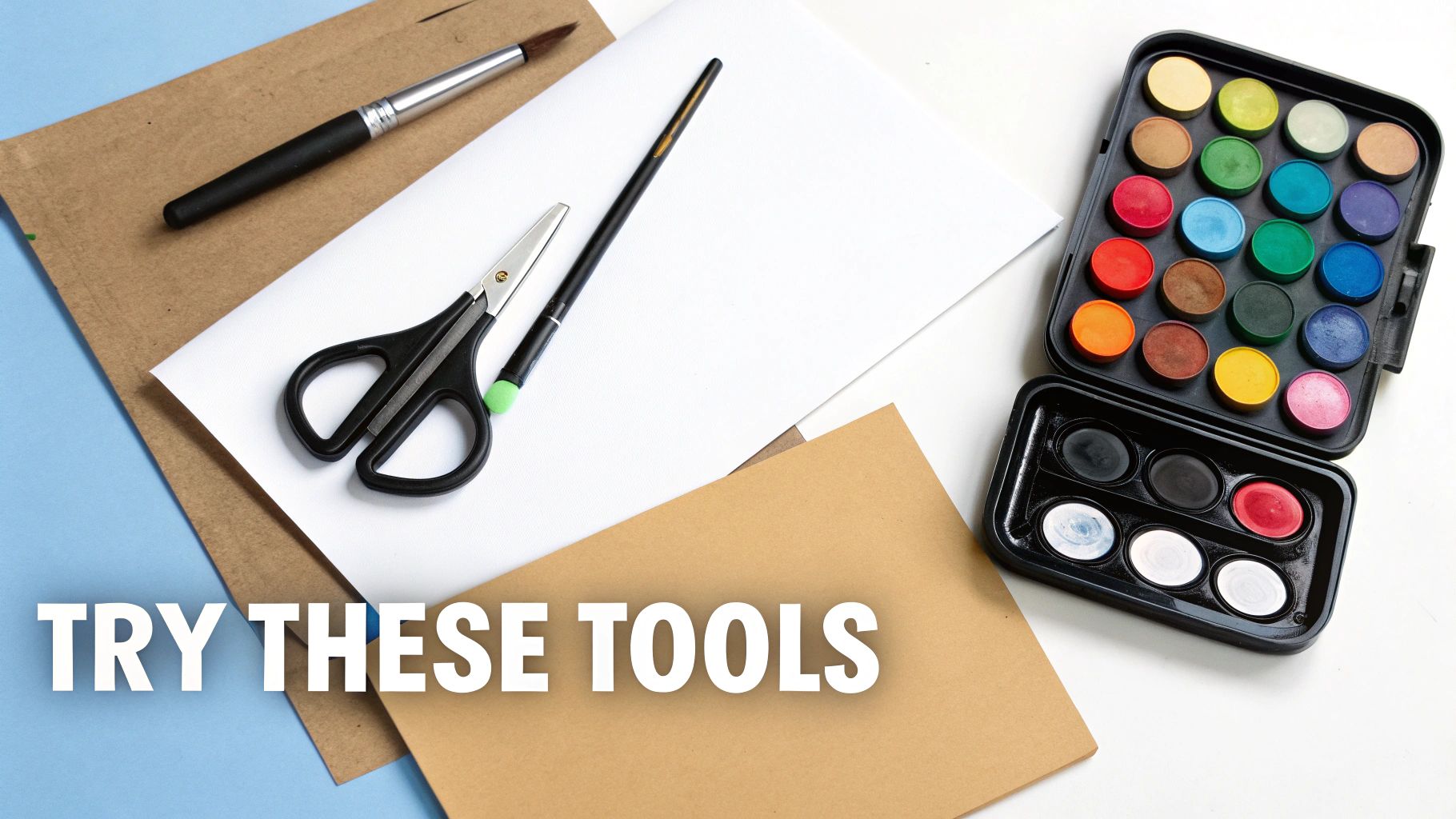
Painting can be an incredibly freeing way to let your emotions flow. A blank canvas and a few colors become a space to release feelings without filtering them through language. It’s a go-to technique for expressing overwhelming emotions—like grief, anger, or even intense joy—in a more abstract, visceral way.
Drawing, on the other hand, can bring more structure to the process. It’s fantastic for mapping out thoughts, creating visual stories, or sketching a specific memory. By giving a tangible form to an abstract fear or a complicated idea, you can start to examine and make sense of it. For those looking for accessible, structured relief, many people have found success by using coloring books to find calm.
Sculpting and Collage for Insight
There's something deeply grounding about working with clay or other sculpting materials. The physical sensation of molding, shaping, and pressing can be incredibly soothing for a frazzled nervous system. Therapists often use this technique to help people connect with physical sensations in their bodies or to build a tangible symbol of their own strength and resilience.
Collage is all about bringing different elements together—images, words, textures—to create something new. This makes it a perfect tool for exploring identity and piecing together the different parts of yourself. It's a powerful way to process complex feelings or navigate major life changes by creating a visual mosaic that tells your unique story.
An art therapist might select from a wide range of methods depending on what you're hoping to work through. Here’s a quick look at a few common techniques and what they’re often used for.
Art Therapy Techniques and Their Purpose
| Technique | Primary Materials | Common Therapeutic Goal |
|---|---|---|
| Painting | Watercolors, acrylics, finger paints | Emotional release, expressing subconscious feelings |
| Drawing | Pencils, charcoal, pastels, markers | Creating narratives, externalizing thoughts, gaining clarity |
| Sculpting | Clay, wire, found objects | Grounding, building resilience, processing trauma |
| Collage | Magazines, photos, fabric, paper | Exploring identity, integrating different parts of self |
| Mask Making | Plaster, paper, decorative elements | Examining social roles and hidden aspects of personality |
These are just a few examples, of course. The real magic happens when the therapist helps you find the medium that speaks to you.
Art therapy techniques are simply different languages for the soul. The goal is to find the one that allows you to speak your truth most clearly, without the limitations of spoken words.
The Unexpected Role of Structured Art
It’s a common misconception that art therapy is all about free-form, spontaneous creation. But sometimes, the most healing activity is one that provides structure and a predictable outcome. This is where tools like paint-by-number kits can be surprisingly powerful.
A therapist might introduce a paint-by-number kit to help someone explore themes of:
- Perfectionism: Can you let go of the pressure to stay perfectly inside the lines?
- Control: What does it feel like to surrender to a pre-planned design?
- Process Over Product: Can you find satisfaction in the simple, repetitive act of painting?
This really highlights that you don't have to be a trained "artist" to benefit from art therapy. Structured exercises like these offer a low-stakes entry point, creating a safe and predictable framework that can be incredibly comforting when life feels chaotic. If this sounds appealing, you can find more ideas in these art therapy activities for anxiety.
Your First Steps Into Art Therapy
So, you're curious about art therapy and maybe even ready to give it a try. Taking that first step can feel a little intimidating, but I promise it’s more straightforward than you might think. It’s really just about knowing where to look and what to expect.
The single most important thing is to find a properly qualified professional. You're looking for someone with deep training in both art and psychology, not just one or the other. Keep an eye out for credentials like ATR-BC, which means they are a Board Certified Registered Art Therapist. This is the gold standard, showing they’ve met the high requirements of the Art Therapy Credentials Board.
Finding the Right Therapist for You
A great starting point is the official directory from the American Art Therapy Association. Their locator tool is designed to help you find certified therapists in your area. Once you have a few names, don't be shy about reaching out and asking about their approach. Finding a personality and style that clicks with you is a huge part of the process.
Your first session isn’t an art exam. It's simply a space to get comfortable, meet the therapist, and talk about what’s on your mind. The art is just another way to have that conversation.
That initial appointment is all about building a connection. Your therapist will likely just invite you to get familiar with the art supplies in the room. They might suggest you create something based on your current mood, but there’s zero pressure. The only goal is to begin.
Simple Exercises to Try at Home
If you're not quite ready to book a session, you can absolutely start exploring on your own. Trying some therapeutic art activities at home is a fantastic, low-pressure way to get started.
- Start a Visual Journal. Instead of writing, use simple drawings, doodles, or even cut-and-paste collages to express what’s on your mind each day.
- Color Your Mood. Pick colors that represent different emotions and track how you're feeling throughout the week. It’s a powerful, non-judgmental way to notice your own patterns.
- Do a Mindful Scribble. Grab a pen and a piece of paper. Let your hand move freely across the page in one continuous, looping line without lifting the pen. Focus on the feeling of the movement.
No matter what you do, just remember the golden rule of art therapy: the process is always more important than the final product. Whether you’re in a therapist’s office or at your own kitchen table, the real magic happens in the act of making something.
Common Questions About Art Therapy
It's completely normal to have questions when you're exploring a new kind of therapy. Let's clear up some of the most common ones people ask about art therapy.
Do I Have to Be an Artist to Do This?
Not at all. This is probably the biggest misconception out there. Art therapy is all about the process of creating, not the final product hanging on the wall.
Your therapist isn't looking for the next Picasso. They're there to help you use art as a tool to explore what’s going on inside. There's no "good" or "bad" art here—just your own unique expression.
Think of it this way: In art therapy, your feelings are the focus, and the art materials are just the language you use to express them.
How Is This Different From a Regular Art Class?
This is a great question because the two can look similar on the surface, but their goals are worlds apart. An art class is all about learning technique. The instructor's job is to teach you how to draw a better portrait or mix colors effectively.
Art therapy, on the other hand, is a form of psychotherapy. It's led by a trained mental health professional who uses the creative process to help you work toward therapeutic goals, like coping with anxiety, understanding your emotions, or building confidence.
Can Art Therapy Actually Help With Specific Problems?
Yes, absolutely. It's proven to be a powerful tool for a whole range of issues. People find it incredibly helpful for navigating things like:
- Anxiety and depression
- Trauma and PTSD
- Grief and loss
- Everyday stress management
It’s effective for kids, teens, and adults, especially when words alone don't feel like enough to capture what you're going through.
Will My Insurance Cover It?
There's a good chance it might. Since art therapy is a legitimate form of psychotherapy conducted by licensed professionals, many insurance plans do provide coverage.
However, coverage really varies depending on your specific plan and where you live. The best first step is to call your insurance provider directly and ask them about your mental health benefits for this type of therapy.