
Abstract art paint by numbers is an incredible way to create your own stunning, modern artwork, even if you’ve never picked up a brush before. It takes the relaxing, guided nature of a classic hobby and infuses it with the expressive freedom of abstract design. The result? A perfect creative outlet.
Why Abstract Paint By Numbers Is Your Next Creative Escape
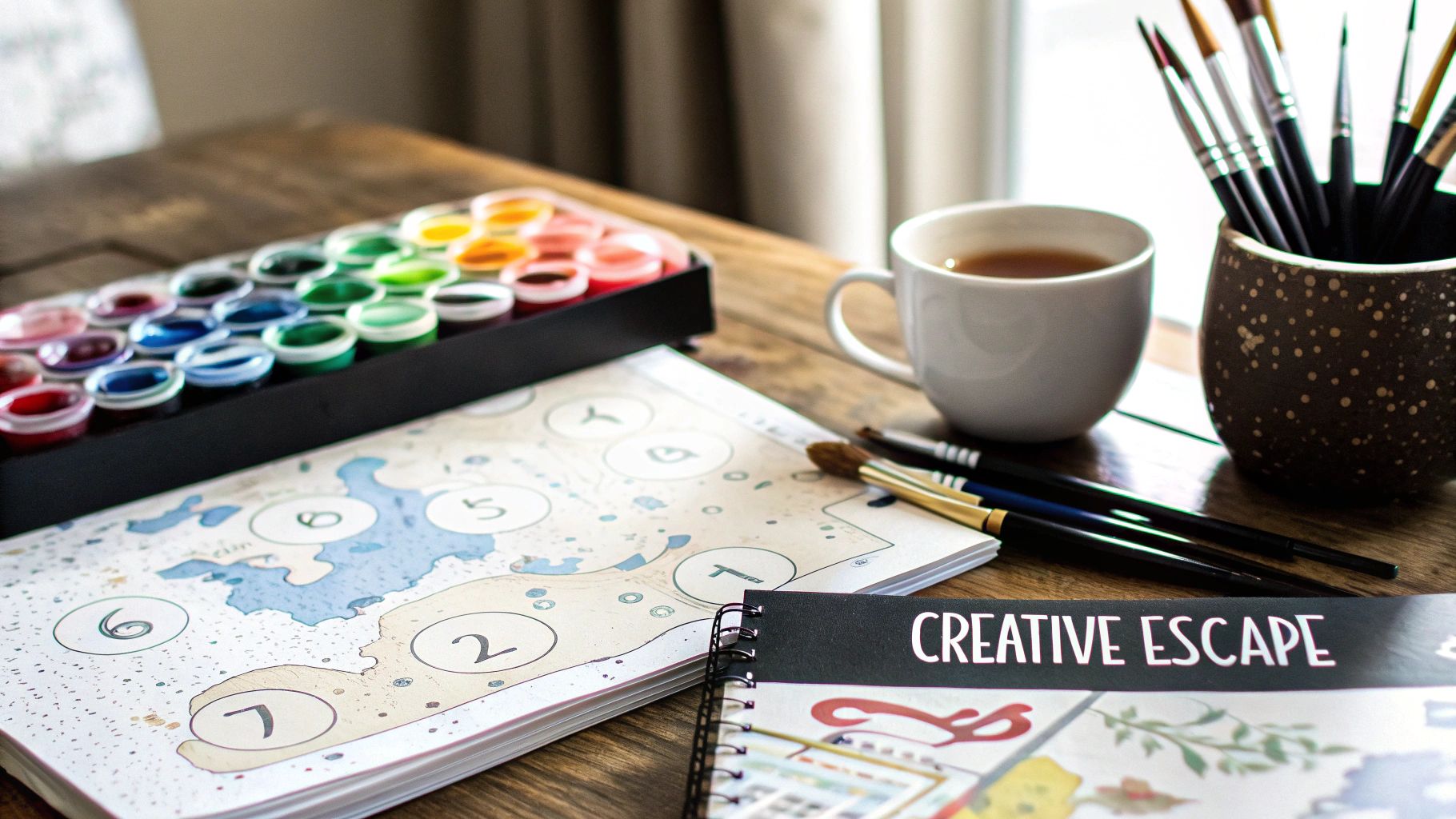
Have you ever looked at a bold piece of abstract art and thought, "I could never do that"? The best part about an abstract paint by numbers kit is that it completely removes the fear of a blank canvas. Forget worrying about composition or color theory—you get to just dive into the mindful, satisfying act of painting.
This isn’t just another craft project; it's a whole experience. It’s your chance to disconnect from the daily grind, play with vibrant colors, and create something that’s both personal and visually striking. The numbered sections guide your hand, but the final piece will always have your unique touch.
A Modern Twist on a Classic Hobby
Paint by numbers has been a beloved pastime since the 1950s, but its modern comeback—especially with abstract designs—has turned it into a genuinely chic and therapeutic activity. It's not just about recreating a pastoral landscape anymore. Now, it's about exploring color and form in a fresh, contemporary way.
This hobby is part of a much bigger trend. The global art paint market is expected to grow from USD 3.09 billion in 2026 to a massive USD 5.31 billion by 2035. With over 50 million kits sold every year around the world, it’s clear people are craving creative activities that feel both nostalgic and new. You can learn more about the thriving art paint market and its future.
The real magic happens when you realize the numbered guide is just a starting point. It’s a collaboration between the artist who designed the piece and you, the one bringing it to life with every brushstroke.
The Benefits of an Abstract Approach
Opting for an abstract kit has some pretty cool advantages. Unlike a traditional portrait where a nose has to look like a nose, abstract art is all about interpretation. This gives you so much more creative freedom. There’s no “wrong” way for a color field to look or a geometric shape to feel.
This makes the whole process incredibly rewarding, whether you’re a complete beginner or a seasoned painter.
- It’s pure mindfulness. The simple, repetitive motion of filling in shapes is incredibly meditative. It helps quiet the mind, reduce anxiety, and get you into a state of flow.
- It builds your confidence. Finishing a piece of art that looks amazing gives you a powerful sense of accomplishment. It’s a great feeling to step back and say, "I made that!"
- You create modern home decor. The finished product isn't just a painting; it's a stylish piece of decor that fits perfectly with contemporary interior design.
How to Choose Your Perfect Abstract Kit
Finding the right abstract art paint-by-numbers kit is the first—and most exciting—step. The perfect design is out there waiting for you, whether your style is all about bold, energetic movement or you're drawn to calm, minimalist pieces that bring a sense of peace.
Think about the vibe you're going for. Are you looking for a vibrant, high-energy project to brighten up your evenings? Or do you need a soothing, meditative escape with gentle colors? The design you pick is more than just a picture; it’s the mood you’ll be creating.
Decoding the Paint Count
One of the first real decisions you'll make is about the paint count. Our kits typically come with 24, 36, or 48 colors, and this number really changes the complexity and final look of your artwork. It’s not just about having more colors—it’s about the level of detail and blending you can achieve.
Choosing the right paint count really depends on what you're hoping to get out of the experience. Are you looking for a quick, satisfying project or a deep, detailed dive into color?
Choosing Your Paint Count
This table breaks down what each paint count offers, helping you match the kit to your goals.
| Paint Count | Best For | Detail Level | Artistic Effect |
|---|---|---|---|
| 24 Paints | Beginners, quick projects, or a relaxing weekend. | Lower | Bold, graphic, and modern with distinct color blocks. |
| 36 Paints | The perfect middle ground for most painters. | Medium | More depth and subtle shade transitions. |
| 48 Paints | Experienced painters or anyone wanting a challenge. | High | Smooth gradients and rich, almost photorealistic depth. |
A higher paint count gives you more nuance, but a lower count can produce a really striking, modern piece. There's no wrong answer—it's all about the final effect you want.
This trend is part of something bigger. The global art market is projected to hit an incredible USD 944.59 billion by 2033, and accessible art is a huge driver of that growth. During the 2020 pandemic, some platforms saw paint-by-numbers sales jump by 400%, with abstract designs making up 28% of the top sellers. It just goes to show how much people love them. You can dive deeper into the booming art market on Straits Research.
Choosing your paint count is like deciding between a sketch and a detailed oil painting. A 24-paint kit gives you the strong, clean lines of a sketch, while a 48-paint kit offers the rich, blended tones of a more complex work.
Turning Your Photos into Custom Abstract Art
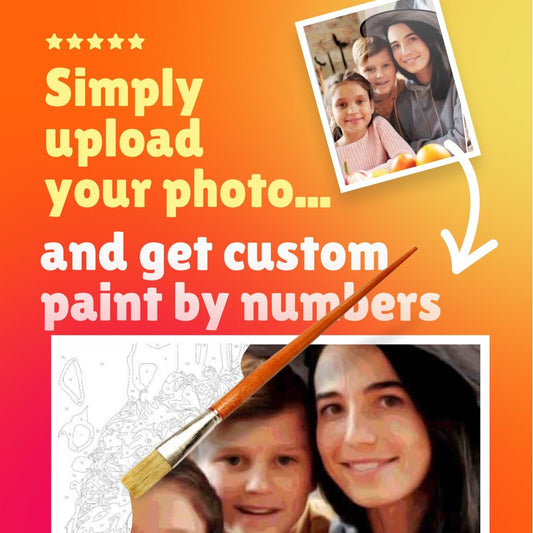
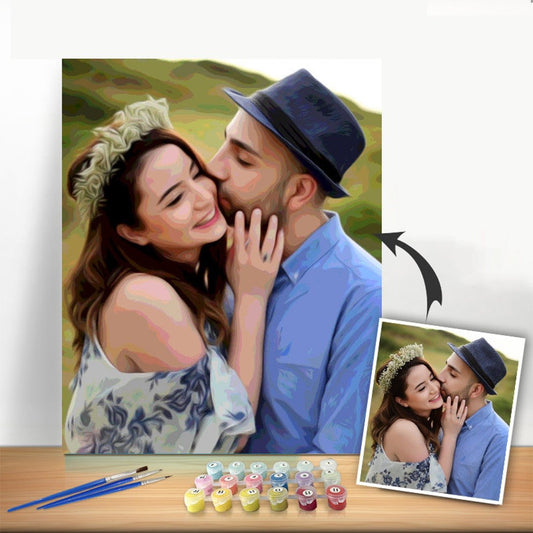
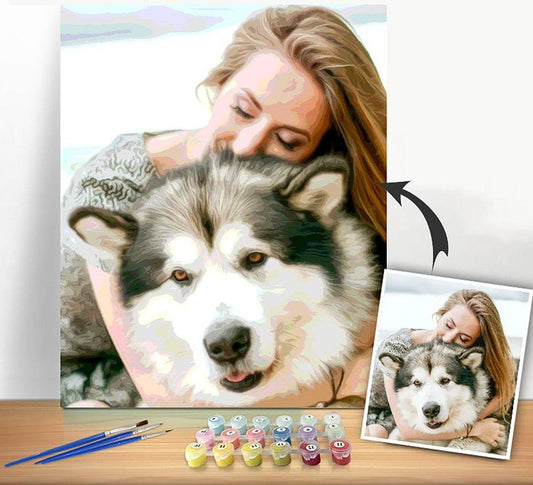
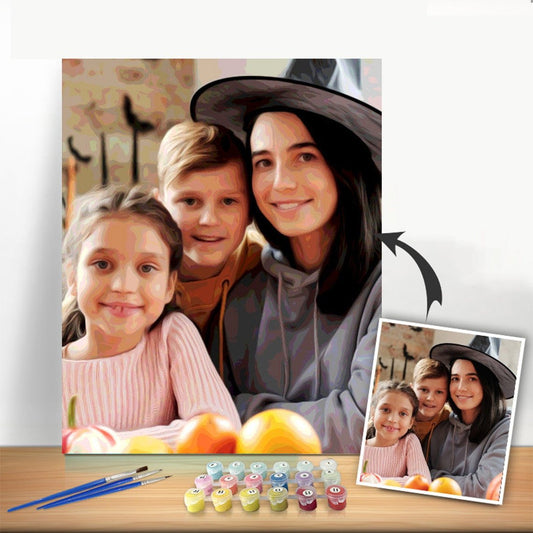
Nothing beats the personal touch of a custom abstract kit. You can turn a favorite photo—a stunning sunset, a cool cityscape, or even a macro shot of a flower—into a piece of art that’s completely you.
The secret is picking the right source image.
To get a gorgeous abstract result, look for photos with strong contrast and a clear subject. Pictures with distinct light and dark areas translate beautifully into the numbered sections on the canvas. A blurry or overly busy photo, on the other hand, can end up looking muddled.
For example, a sharp photo of a single red autumn leaf on a gray sidewalk will create a much more striking abstract design than a photo of a crowded forest floor. These personalized kits are some of the most popular painting kits for adults for a reason—they turn your memories into masterpieces.
Getting Your Painting Space Ready to Go
Let's be honest, a little bit of prep work makes the entire painting process so much more enjoyable. Before you even think about cracking open those little paint pots, taking a few minutes to set up your space will let you dive right into the creative zone without any distractions.
First, find a spot with good light. Natural daylight near a window is perfect, but a good, bright desk lamp is your best friend for those late-night art sessions. You’ll also want to protect your table or floor—throw down some old newspaper, a cheap plastic tablecloth, or even an old bedsheet. The goal is to create a calm, worry-free environment where you can get lost in your abstract art paint by numbers project.
Think of this as setting the stage for your creativity. It’s not just about function; it’s about feeling inspired. If you want some great ideas, check out this guide on designing a workspace that serenades your senses to turn your little corner into a true creative escape.
If you're still deciding on the perfect kit, this little decision tree might help you find one that matches your vibe.
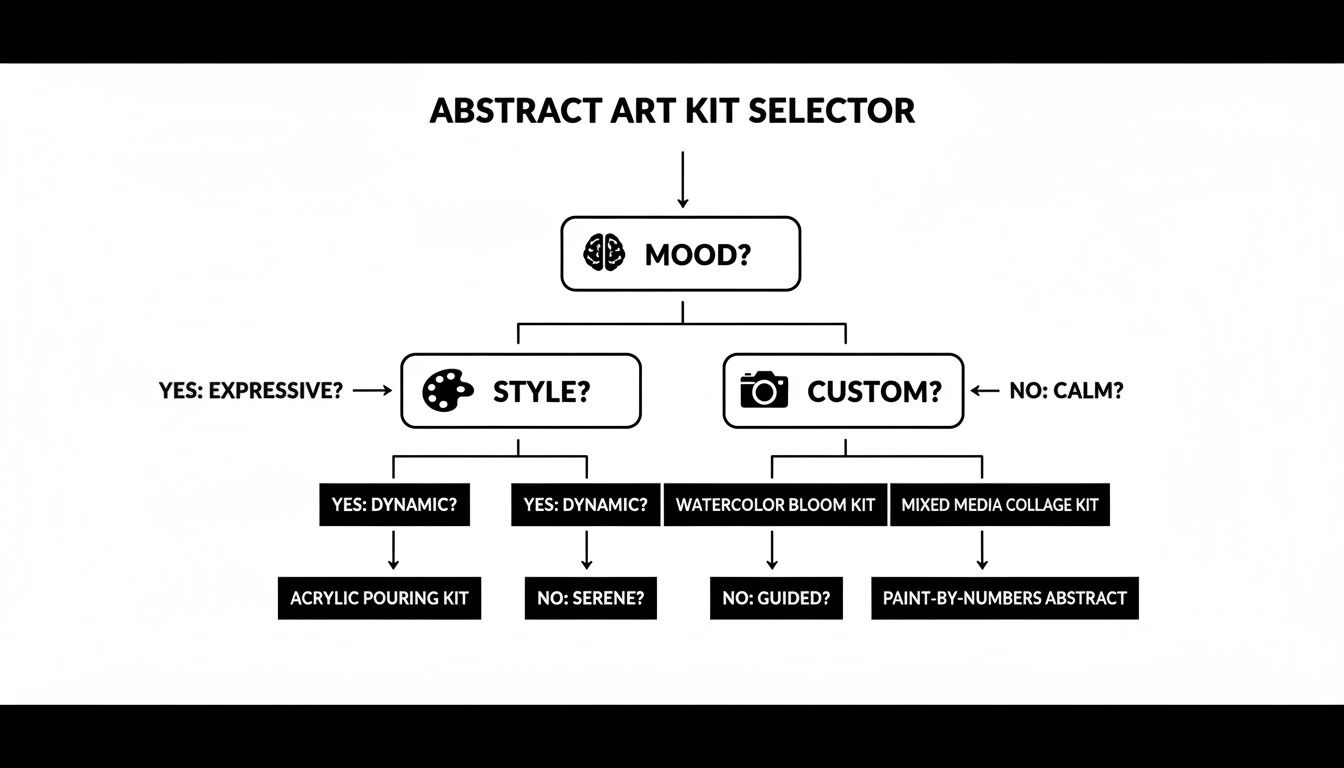
As you can see, whether you're guided by a mood, a specific style, or a totally custom idea, there’s a path to the right project for you.
Getting the Canvas and Tools in Order
Your canvas probably showed up rolled up like a treasure map. To get it perfectly flat, you have two easy options. You can either lay it face down on a clean towel and gently press it with a warm iron (use a low setting with no steam!), or just place it under a stack of heavy books for a day or so. Done.
A little bit of organization here will save you a ton of hassle later.
- Line Up Your Paints: Lay out your numbered paint pots in order. Trust me, you'll thank yourself later when you aren't scrambling to find color #14.
- Get Your Brushes Ready: Have your brushes handy, along with a cup of water for rinsing. Keep a paper towel nearby, too—it's essential for dabbing your brush dry to get the right paint consistency.
Pro Tip: If your kit came with an optional stretcher frame, put it together now! Stretching the canvas before you start keeps it nice and taut, which makes painting so much easier. Plus, it gives you that professional, gallery-wrapped look right from the get-go.
Taking these few simple steps can really transform the experience. It turns a simple craft project into a smooth, mindful session, letting you focus completely on the fun part: bringing that abstract design to life.
Mastering Simple Abstract Painting Techniques
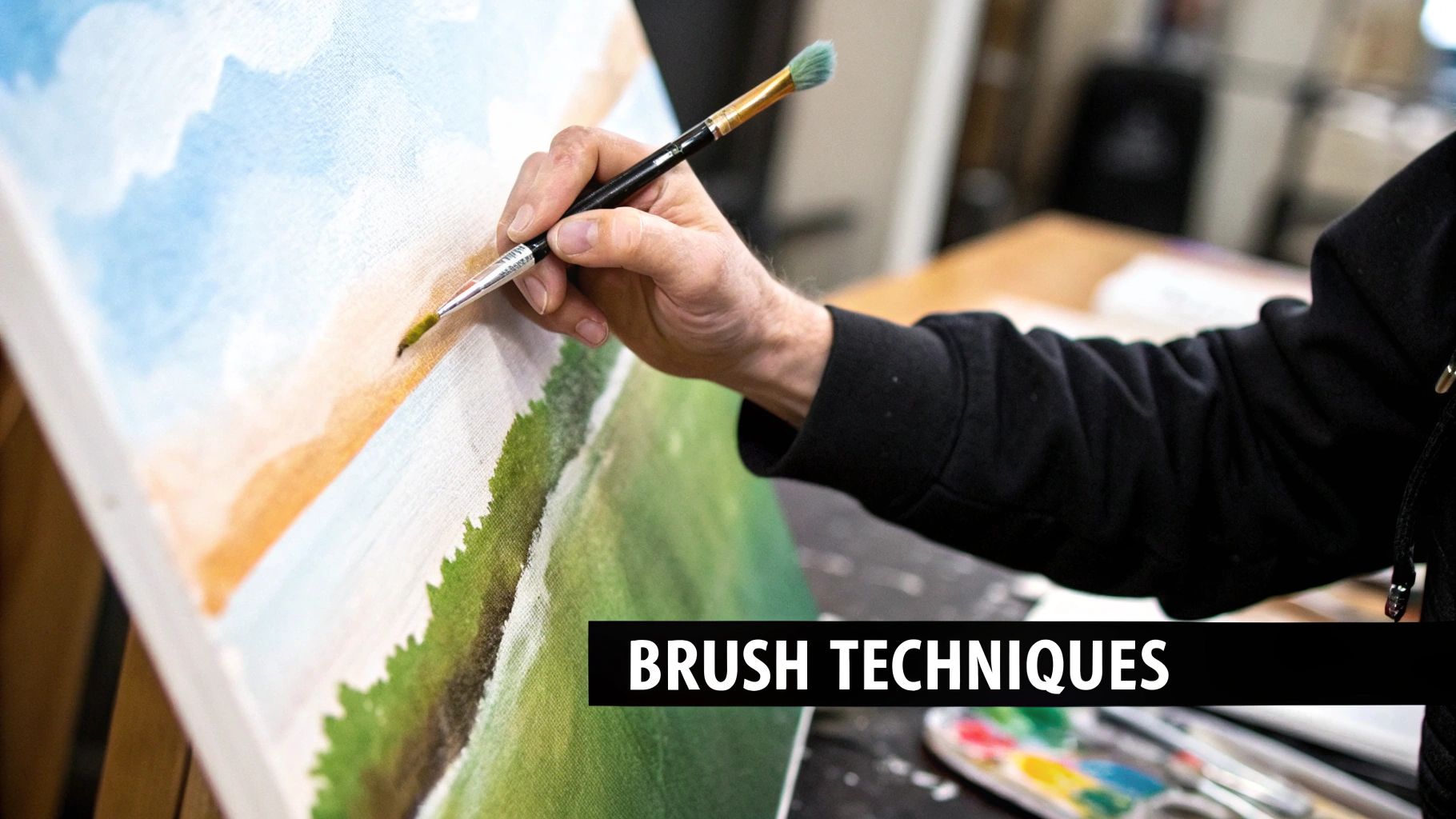
This is where the real fun begins. Think of the numbered lines on your canvas less as strict rules and more as gentle suggestions. It’s the moment you stop just filling in shapes and start putting your own creative spin on the piece, transforming it into something uniquely yours. You don't need formal training for this part—just a few simple techniques can elevate your project from a finished kit to a genuine work of art.
Let's explore how to go beyond the basics to add depth, texture, and a sense of movement. With a little practice, these brushwork methods will help you make the painting entirely your own.
The Art of Blending and Softening Edges
One of the fastest ways to give your abstract painting a more polished, professional feel is to soften the hard edges between colors. Instead of a sharp line where two shades meet, a gentle transition creates a beautiful sense of flow and sophistication. A fantastic technique for this is called scumbling.
To give it a try, paint one section and let it get almost completely dry. Then, take a mostly dry brush with just a tiny amount of the neighboring color on it and lightly scrub or swirl the paint over the border. You'll create a hazy, soft-focus effect that adds incredible depth.
This is especially powerful in abstract art, where you're often working with mood and emotion. For a deeper dive into creating those perfect, seamless transitions, you can explore our complete guide on how to blend paint effectively, which breaks down several beginner-friendly methods. You can find that here: https://paint-by-number.com/blogs/learn-about-paint-by-numbers/how-to-blend-paint
Abstract art is all about emotion and interpretation. By blending the lines between colors, you’re not just mixing paint; you're merging feelings and ideas, creating a visual story that flows across the canvas.
Adding Texture With Dry Brushing
Dry brushing is another brilliant technique, perfect for adding a weathered, textured look or subtle highlights that catch the eye. It introduces a tangible quality, making certain areas feel rougher or more dynamic than others.
Here's how it works:
- First, load your brush with a small dab of paint.
- Next, wipe most of it off on a paper towel until the brush is nearly dry.
- Finally, lightly drag the brush over a dried section of the canvas. The bristles will leave behind just a whisper of pigment, creating a streaky, textured effect.
Imagine using this to give a geometric shape a rustic feel or to suggest a sense of windy movement in a flowing design. It’s a simple trick that delivers a huge impact. The real key is to use very little paint and a feather-light touch.
Choosing the Right Brush for the Job
Your kit comes with a few different brushes for a reason, and learning what each one does best can make a world of difference. Think of them as specialized tools, each designed for a specific task.
- Fine-Point Brush: This is your detail hero. It's perfect for the tiniest numbered areas and for creating crisp, clean lines where you want sharp definition.
- Flat, Broad Brushes: These are your workhorses for filling in larger blocks of color. They cover more ground quickly and help you lay down a smooth, even base coat.
- Round Brush: A great all-rounder, this brush is good for both lines and fills. Its shape allows for varied strokes—from thin to thick—depending on how much pressure you apply.
The growing interest in creative outlets like this is no surprise. The art and craft tools market, especially paints, is on track to become a $7.66 billion industry by 2034, driven largely by eco-friendly acrylics. With 78% of people reporting less stress after finishing a kit and 55% preferring abstract styles for their meditative qualities, it's clear this hobby is more than just a trend. You can read the full market analysis on Fortune Business Insights to see the data for yourself.
Finishing and Displaying Your Abstract Artwork
You’ve laid down the final brushstroke, and the canvas is buzzing with color and energy. So, what’s next? This is the victory lap—the part where a few final touches can take your painting from a finished project to a stunning piece of art ready for its debut.
First up, let’s talk about protecting your masterpiece. Once the acrylic paint is bone dry—I always give it a good 24-48 hours just to be safe—it’s a great idea to apply a clear sealant. This simple step is a game-changer. It shields your painting from dust and pesky UV rays that can fade the colors over time, and it also gives the colors a noticeable pop, making them look richer and more vibrant.
You can find spray-on or brush-on acrylic varnishes in matte, satin, or gloss finishes. For most abstract pieces, I find a satin finish hits that sweet spot; it deepens the colors without creating a distracting glare. Just apply a thin, even coat in a well-ventilated space and let it dry completely.
Framing Your Abstract Masterpiece
Choosing a frame is like picking the right jewelry for an outfit. It should enhance the art, not overpower it. For the clean lines and bold shapes of modern abstract art, simpler is almost always better.
Here are a few go-to options that never fail:
- The Classic Black Frame: You can't go wrong with a thin, simple black frame. It creates a crisp, clean border that really makes the colors jump off the canvas. It's a timeless look that fits into just about any room.
- The Floating Canvas Frame: This is my personal favorite for canvases. It leaves a small gap between the artwork and the frame, creating a cool illusion that your painting is "floating." It gives your abstract art paint by numbers a sophisticated, gallery-ready feel.
- Natural Wood Frames: If your abstract piece has a lot of earthy tones or warm colors, a light wood frame can bring a wonderful organic texture and warmth to the overall look.
A frame’s job is to pull the viewer's eye inward, right to the heart of the art. It should be a quiet, elegant boundary, not something that competes for attention.
If you want a detailed walkthrough on getting your canvas perfectly mounted, our guide on how to frame canvas paintings has easy, step-by-step instructions.
Creative Ideas for Display
With your art sealed and framed, the fun part begins: finding its perfect home. The beauty of abstract art is its versatility—it can bring life to a living room, a bedroom, or even a home office.
Try making it the focal point above your sofa or bed. Another great idea is to build a gallery wall around it, mixing your painting with photographs and other prints for a curated, eclectic vibe. Don't be shy about moving it around until it feels just right! There’s a unique pride that comes with hanging something you made yourself.
For more inspiration on using art to personalize your home, check out these ideas for creating and displaying your own artwork for decor. And remember, your finished painting makes an incredible gift. It's a heartfelt, one-of-a-kind present for a birthday, holiday, or housewarming that truly shows you care.
Common Questions About Abstract Paint By Numbers
Jumping into an abstract art paint by numbers kit is an amazing creative outlet, but it's totally normal to have a few questions as you get started. Maybe you've had a little slip-up with the brush, or you're wondering if you can really make the colors your own. Don't worry, we’ve got you covered.
Think of this less like a strict rulebook and more like a friendly chat to give you the confidence to experiment, play, and truly enjoy the process from that first brushstroke to the last.
What if I Make a Mistake and Paint in the Wrong Section?
First off, take a deep breath. This is probably the number one worry for beginners, and luckily, it's one of the easiest things to fix. Because these kits use high-quality acrylics, correcting a little "oops" is no big deal.
The key is to let the wrong paint dry completely. If you try to wipe it while it's still wet, you'll likely just get a smeary mess that’s harder to cover. Once it's fully dry, just paint right over it with the correct color. The acrylics are nice and opaque, so a coat or two will hide the mistake completely. It'll be our little secret.
Can I Mix My Own Colors?
Of course! That's where the real fun begins. The numbered pots give you a solid starting point, but mixing them to create custom shades is a fantastic way to put your own spin on the artwork. It’s perfect for creating those soft, in-between tones for a gradient or a specific hue you're envisioning.
Grab a spare palette, a paper plate, or even a piece of cardboard to use as your mixing surface. Start small by combining just a little bit of two colors. See what you get! A quick tip: always wash your brush thoroughly before dipping it back into the original paint pots to keep your colors pure.
Abstract art is all about your own interpretation. There’s really no such thing as a 'wrong' color. If you mix a shade you love and feel it belongs in a certain spot, go for it! This is your chance to collaborate with the design.
What Should I Do if My Paint Seems Too Thick?
Every now and then, you might open a pot of paint and find it's a little on the thick side, making it tough to spread evenly. This is another super simple fix.
Just add a tiny drop of water to the pot. I mean tiny—dip just the very tip of your brush in some water and stir it into the paint. You want to be careful not to add too much at once, since you can always add more but can't take it out. You're aiming for a smooth, creamy texture, kind of like melted ice cream.
Do I Have to Follow the Lines Exactly?
Not at all! The lines are your guide, not your boss. In fact, one of the best ways to make your abstract art paint by numbers look less like a kit and more like a unique piece of art is to deliberately blur the lines between colors.
Here are a couple of my favorite ways to do this:
- Wet-on-Wet Blending: While the paint in one section is still wet, start painting the area next to it. Then, use your brush to gently feather the two colors together right at the line.
- Scumbling: Use an almost-dry brush with just a tiny bit of a neighboring color on it. Lightly scrub this over the dividing line to create a soft, hazy transition.
Playing with the edges like this can transform your painting from a set of individual shapes into a single, flowing work of art.
Ready to turn a cherished memory into a modern masterpiece? At Custom Paint By Numbers, you can upload your own photo and we’ll create a personalized abstract art kit just for you. Start your creative journey today at https://paint-by-number.com.