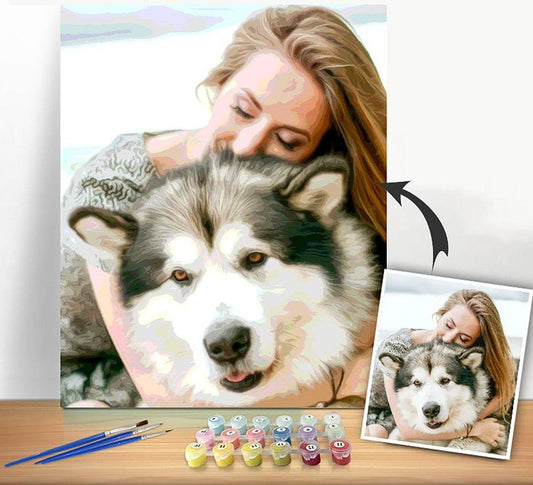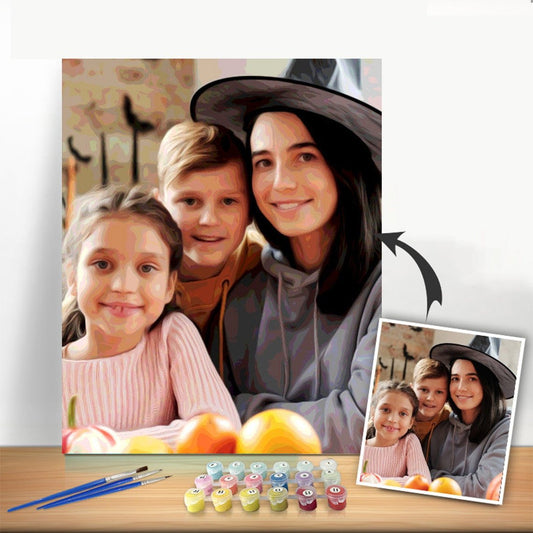

Fine motor activities for adults can be anything from creative hobbies like painting, drawing, and model building to specific therapeutic exercises using putty, stress balls, and finger stretchers. The whole point is to improve your dexterity, hand strength, and coordination—skills you rely on for countless daily tasks.
Why Fine Motor Skills Matter for Adults

Ever find yourself fumbling with the buttons on a shirt or struggling to type a quick message on your phone? Those little frustrations are often the first hint that our fine motor skills might be slipping.
We tend to think of these skills as something kids develop, but they are absolutely essential for adult independence.
From zipping a jacket to signing your name, fine motor control is the quiet hero of our daily lives. But here's the thing: these abilities aren't guaranteed forever. They can decline naturally as we age, take a hit from an injury, or face challenges from conditions like arthritis or stroke. When dexterity falters, simple tasks can suddenly feel like major hurdles, chipping away at confidence and autonomy.
To get a clearer picture, let's look at the specific skills we're talking about and where they show up in your day-to-day life.
Table: Core Fine Motor Skills and Their Daily Impact
| Fine Motor Skill | Description | Everyday Example |
|---|---|---|
| Pincer Grasp | The ability to pick up small objects using the thumb and forefinger. | Picking up a coin, buttoning a shirt, or pulling a single thread. |
| Hand-Eye Coordination | The brain's ability to process visual information and guide hand movements. | Typing on a keyboard, threading a needle, or catching a ball. |
| In-Hand Manipulation | Adjusting an object's position within one hand without using the other. | Twirling a pen, unscrewing a bottle cap, or repositioning keys. |
| Finger Isolation | Moving one finger at a time, independent of the others. | Using a touchscreen, playing the piano, or pressing a single button. |
| Bilateral Coordination | Using both hands together in a controlled and organized way. | Tying shoelaces, cutting with scissors, or opening a jar. |
As you can see, we rely on these intricate movements constantly, often without even thinking about them—until they become difficult.
The Power of Proactive Practice
The good news is that you can actively work to preserve and even sharpen these crucial skills. Think of it like exercise for your hands.
Engaging in targeted fine motor activities is a powerful way to maintain hand strength, boost coordination, and keep your fingers nimble. This isn't just about damage control; it's about building resilience for whatever comes next.
This proactive approach is much more than just doing repetitive exercises. It’s about weaving enjoyable, stimulating tasks into your routine that challenge the small muscles in your hands and fingers. This is where creative hobbies really shine, turning skill maintenance into a relaxing and rewarding part of your day.
Painting, for instance, requires precise brush control and a steady hand—a perfect, low-impact workout for your fingers.
By focusing on activities that are both enjoyable and beneficial, you create a sustainable practice. The consistency you build through a creative habit is often more effective than sporadic, clinical exercises.
A Growing Trend in Dexterity-Boosting Hobbies
It seems more and more people are catching on to the benefits of hobbies that support hand health. Take paint-by-number kits—a fantastic example of a structured fine motor activity. The global market for these kits has already reached USD 1.56 billion.
This is part of a much larger trend of adults seeking hands-on, creative outlets. A recent survey even found that 63% of American adults engage in creative hobbies, which naturally fuels the demand for tools and activities that require these meticulous skills.
To dive deeper into this topic, you can explore our detailed article on what is hand dexterity and how it truly impacts your daily functions. This movement highlights a collective desire not only to create beautiful things but also to maintain the physical ability to do so for years to come.
Weave Dexterity into Your Favorite Hobbies
Let's be honest—doing repetitive exercises can feel like a chore. The secret to sticking with any routine is to make it enjoyable, and that's where hobbies come in. Turning your fine motor practice into a creative outlet is one of the most powerful ways to stay consistent. When you're absorbed in a project you love, you're not just passing the time; you're actively sharpening the very hand and finger skills that support your independence.
Artistic hobbies are especially brilliant for this. Every brushstroke, pencil line, or stitch is a subtle, low-impact workout for the tiny muscles in your hands.
The Artistic Edge of Paint-By-Numbers
Of all the options out there, paint-by-numbers is a real standout for adults looking to improve dexterity. It strikes a perfect balance between structured guidance and creative satisfaction. Because the outlines and numbers are already there, you can skip the pressure of composing a masterpiece from scratch and simply focus on the physical act of painting.
This simple, guided process is a goldmine for building dexterity:
- Pincer Grasp: Just holding the paintbrush correctly engages the thumb and forefinger. This is the same grip you use every day to button a shirt or pick up a pill.
- Hand-Eye Coordination: Your brain constantly works to guide your hand, making sure the paint goes exactly where you want it to. This back-and-forth sharpens the vital link between what your eyes see and what your hands can do.
- Precision Control: Dipping the brush into those little paint pots and applying just the right amount of pressure on the canvas requires a delicate touch and careful control over your fingers.
Kits from Custom Paint By Numbers are a fantastic way to get started. They come with everything you need right out of the box—a pre-numbered linen canvas, all the acrylic paints, and three different brushes. Having multiple brush sizes means you can pick the one that feels most comfortable for your current ability, making the whole experience adaptable.
Beyond the Brush: Other Creative Workouts
While painting is an excellent choice, plenty of other hobbies offer the same benefits. The real trick is to find something you genuinely love doing. After all, personal interest is the best motivator.
Think about the explosion in popularity of adult coloring books. There's a reason for it. The global market for these books hit USD 150 million in 2023 and is expected to soar to USD 350 million by 2031. This trend, much like paint-by-numbers, shows a huge demand for detailed, therapeutic art. In fact, the entire U.S. art supplies market, valued at USD 3.7 billion, shows just how many people are turning to creative projects that require focus and precision.
Here are a few other fantastic hobbies that double as fine motor workouts:
- Model Building: Assembling model cars, planes, or ships is an incredible exercise in precision. You’re constantly handling tiny, delicate pieces, often with tweezers and fine-tipped glue applicators. It’s an intense workout for that pincer grasp.
- Needlework: Things like embroidery, cross-stitch, or knitting are amazing for bilateral coordination—getting both hands to work together smoothly on different tasks. Threading a needle, looping yarn, and making exact stitches all build finger agility.
A Little Expert Advice: The best activity is one that challenges you just enough without causing frustration. Start with simpler patterns or larger pieces. As your control and confidence grow, you can gradually move on to more intricate designs.
Making Crafts Work for You
To really get the most out of your chosen hobby, think about how you can adapt it to your own needs. If you’re just starting out or managing a condition like arthritis, find ways to make the activity more comfortable.
For anyone curious about handicrafts, looking into jewelry making supplies is a great place to start. The acts of stringing beads, bending wire, and fastening tiny clasps are all superb exercises for your fingers.
Here are a few final tips to keep your practice effective and fun:
- Mix It Up: Don't get stuck on one difficulty level. Switch between easy, relaxing designs and more complex projects that push your skills. This keeps both your mind and muscles engaged.
- Mind Your Grip: Pay attention to how you're holding your tools. A more ergonomic grip can reduce strain on your joints, letting you enjoy your hobby for longer without discomfort.
- Create a Comfy Workspace: Good lighting is a must to avoid eye strain, and a comfortable chair will support your posture. When your body is relaxed, your hands will be much steadier.
By picking a creative hobby that you truly connect with, you're doing more than just skill-building—you're investing in an activity that boosts your well-being and lets you create something beautiful. If you need a little inspiration, our guide on easy art projects for adults is packed with ideas to get you going.
Therapeutic Exercises for Stronger Hands
While creative hobbies are a fantastic way to make dexterity practice feel like play, sometimes a more direct approach is needed to build real strength and precision. That’s where therapeutic exercises come in. These are targeted movements designed to wake up and strengthen the small, often-neglected muscles in your hands and fingers.
Think of them less as a strenuous workout and more as a supportive routine you can do almost anywhere—while watching TV, sitting at your desk, or even during a phone call. The goal is to build a simple, sustainable habit that supports your hand health without feeling like a chore.
Essential Tools for Hand Strengthening
You don't need a home gym to get started. A few simple, affordable tools can open up a world of strengthening possibilities.
- Therapeutic Putty: This stuff is a classic for a reason. It comes in different resistance levels, from extra soft to extra firm, so you can gradually challenge yourself as you get stronger. It’s perfect for all kinds of pinching, squeezing, and stretching.
- Stress Balls or Gel Balls: These are your go-to for improving overall grip strength. A good squeeze engages all the muscles in your hand and forearm.
- Finger Stretchers: These are usually simple silicone bands that slide over your fingers. Spreading your fingers against the resistance is key for strengthening the extensor muscles—the ones responsible for letting go of objects.
These tools are the foundation for an effective hand-strengthening plan, targeting the exact movements we need for everyday tasks, like turning a key or holding a pen steady.
Foundational Hand and Finger Exercises
Here are a few core exercises to weave into your daily routine. Remember, consistency beats intensity every time. A few minutes each day will do far more good than one long, grueling session once a week.
A clear path to better dexterity is about choosing the right activities, practicing them consistently, and building foundational strength.
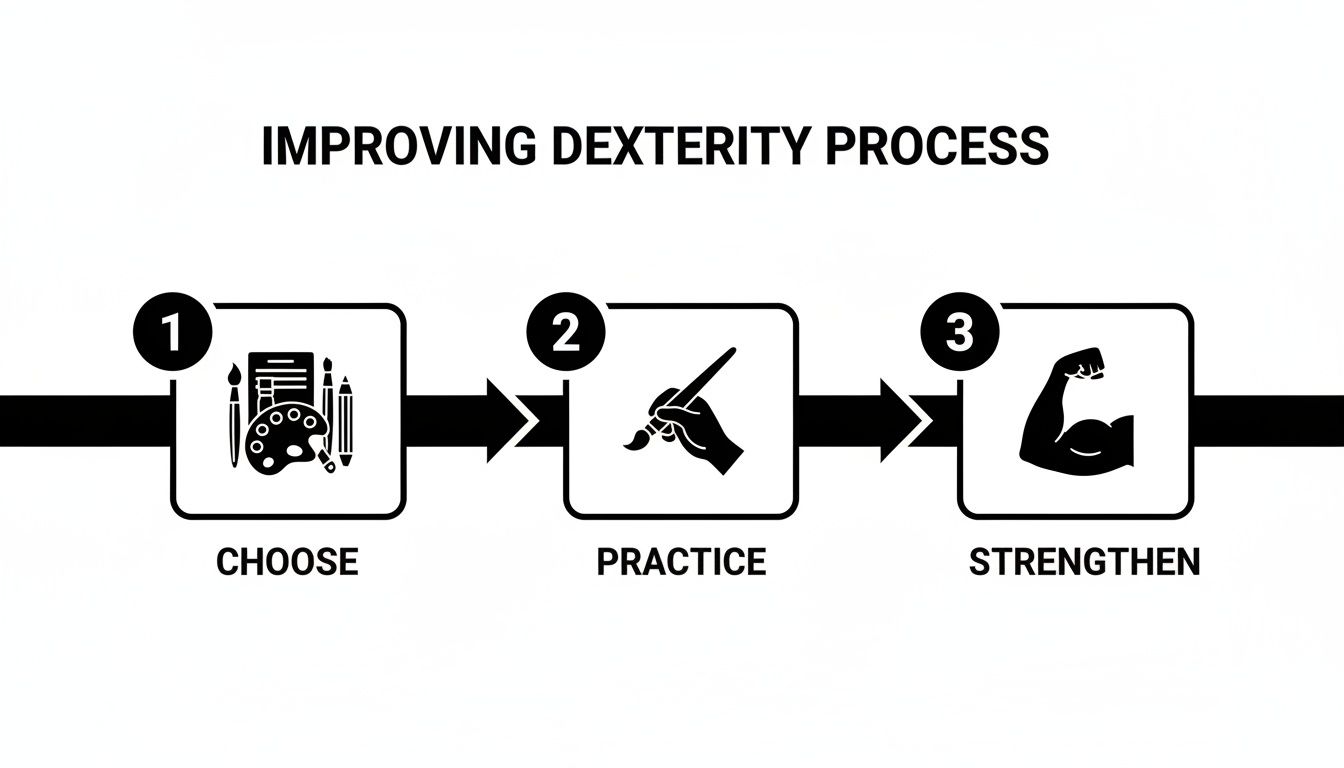
This simple flow—Choose, Practice, Strengthen—shows how creative hobbies and dedicated exercises work together to produce real results.
The Putty Pinch
Start by rolling a small piece of therapeutic putty into a ball. Using just your thumb and the very tip of your index finger, pinch the putty flat. Repeat this 10-15 times, then do the same with your middle, ring, and pinky fingers, one by one. This exercise is fantastic for honing that precise pincer grasp.
The Thumb Press
Hold a small ball of putty in your palm. Now, press your thumb straight down into the center of it, pushing toward your pinky. This move is excellent for strengthening the muscles at the base of your thumb, which are critical for a powerful grip. To see how these small movements contribute to the bigger picture, check out our guide on https://paint-by-number.com/blogs/learn-about-paint-by-numbers/how-to-improve-hand-eye-coordination for more insights.
The Full Grip Squeeze
Grab a stress ball or a larger piece of putty and squeeze it with your whole hand. Hold that squeeze for three to five seconds before slowly releasing. This is your power move for building overall grip strength. Aim for 10 reps with each hand.
Pro Tip: Quality over quantity, always. Perform these exercises slowly and with control. If you feel any sharp pain, stop immediately and give your hands a rest.
Adapting Exercises for Specific Conditions
Fine motor exercises are definitely not one-size-fits-all, especially when you're managing a health condition. The whole point is to modify movements so they help, not hurt.
- For Arthritis: If you live with arthritis, start with the softest putty you can find to minimize stress on your joints. A great trick is to do your exercises in a bowl of warm water—it’s incredibly soothing. Steer clear of any high-resistance tools that cause a flare-up.
- For Stroke Recovery: The focus here is on repetition and retraining the brain. A therapist might suggest starting with larger objects, like picking up and releasing a foam block, before moving to smaller items. Consistency is what rebuilds those neural pathways.
For anyone serious about tracking their progress, learning how to use a dynamometer can be a game-changer. This simple device measures your grip strength, giving you concrete data on your improvement over time. Seeing those numbers go up is a huge motivator!
Here’s a look at how you might structure a week of exercises to keep things balanced and effective.
At-Home Fine Motor Exercise Routine
| Day | Focus Area | Recommended Exercises | Duration |
|---|---|---|---|
| Monday | Grip Strength | Full Grip Squeeze (stress ball), Putty Squeeze | 10-15 mins |
| Tuesday | Pinch Precision | Putty Pinch (all fingers), Bead Sorting, Coin Flips | 10-15 mins |
| Wednesday | Rest & Gentle Stretch | Wrist Rotations, Finger Tents | 5-10 mins |
| Thursday | Extensor Muscles | Finger Stretcher Bands, Rubber Band Extensions | 10-15 mins |
| Friday | Coordination | Thumb Press, Finger Tapping Sequences | 10-15 mins |
| Weekend | Active Recovery | Engage in a creative hobby like painting or knitting | As desired |
This schedule provides a great mix of strengthening and skill-building, with crucial time built in for rest. Remember to listen to your body and adjust as needed.
By adding these targeted exercises into your life, you build a powerful foundation of strength and coordination that makes everything—from your favorite hobbies to daily tasks—that much easier.
Adapting Activities for Your Unique Needs
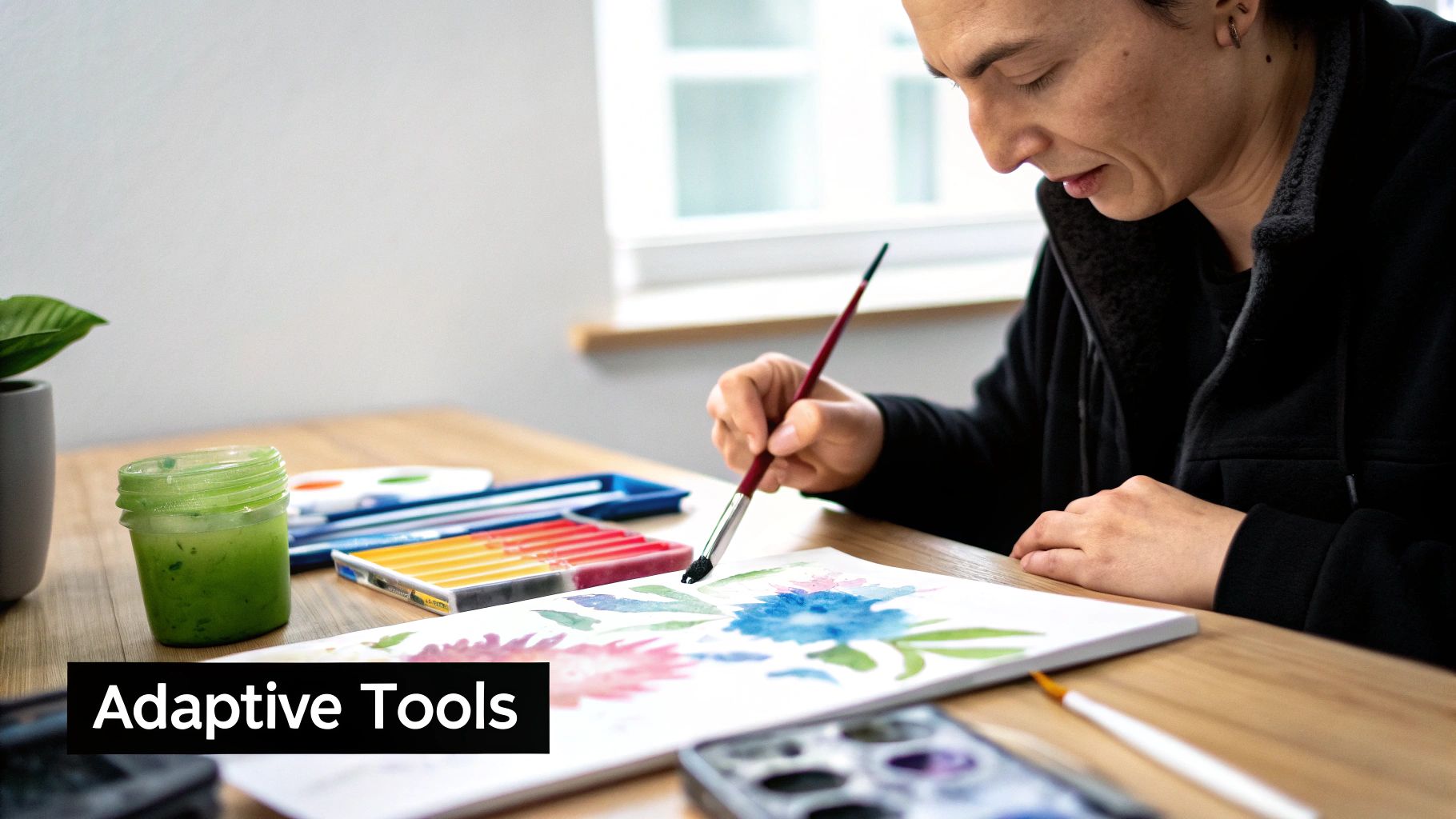
When it comes to fine motor activities, a "one-size-fits-all" approach just doesn't cut it. Every single one of us has a different story in our hands. You might be managing a chronic condition, recovering from an injury, or just noticing the natural changes that come with age.
That’s why adapting your chosen activity is everything. It’s the key to making it effective, sure, but also enjoyable. If you ignore what your body is telling you, you're just setting yourself up for frustration, pain, or even a setback. The goal here is to gently challenge your muscles, not strain them. With a few smart modifications, you can turn a task that seems daunting into something truly supportive and even therapeutic.
Modifications for Common Conditions
Some health conditions really do demand a more thoughtful approach to what you do with your hands. Making the right adjustments can be the difference between giving up and actually thriving.
-
For Arthritis: The main goal is to take stress off your joints. Look for tools with bigger, cushioned grips. If you’re painting, you can slide a simple foam pencil grip right onto your paintbrush. Using therapeutic putty? Always go for the softest grade you can find and try warming it up in your hands first to make it more pliable.
-
For Carpal Tunnel Syndrome: Here, it’s all about keeping your wrist in a neutral, happy position. Try propping your project up on an easel or using a cushion to keep your wrist straight instead of bent at a sharp angle. And I can't stress this enough: short, frequent breaks are non-negotiable. They're your best defense against inflammation.
-
For Post-Stroke Recovery: Rebuilding those neural pathways is all about repetition and consistency. Start with bigger, simpler movements. You could pick up a paint-by-number kit that has large, easy-to-fill sections and save the intricate designs for later. The real focus should be on the movement itself, not on getting a perfect result.
Don't ever think of modifications as a step back. They're a smart strategy to keep you doing the things you love—safely and for the long haul. The best fine motor activities are the ones you can stick with.
Choosing the Right Tools and Materials
The equipment you use can be your best friend or your worst enemy. Honestly, investing in a few good adaptive tools is one of the easiest ways to set yourself up for success and keep discomfort at bay.
Adaptive Equipment Checklist
- Ergonomic Crafting Tools: Look for things like spring-action scissors that pop open on their own, or knitting needles made from lightweight bamboo that are just plain easier to hold.
- Adaptive Grips: These are fantastic. They’re simple foam or silicone tubes that can slide over almost anything—pens, paintbrushes, crochet hooks—to instantly create a wider, more comfortable handle. It makes a world of difference for finger strain.
- Magnification and Lighting: Good light is a must, but a magnifying lamp is a total game-changer, especially if you’re working with tiny details. It lets your hands relax because you aren't tensing up just to see what you're doing.
Real-World Adaptation Scenarios
Let's look at how this plays out for real people. Imagine two different folks who both want to try paint-by-numbers.
Scenario 1: David, with Osteoarthritis
David often wakes up with stiff, sore finger joints. He smartly picks a paint-by-number kit for beginners, which he knows will have larger, more forgiving shapes. He slides a thick foam grip onto each of his brushes and sets a timer for every 20 minutes. When it goes off, he takes a five-minute break to gently stretch his hands.
Scenario 2: Maria, Recovering from a Wrist Injury
Maria’s grip is still weak, and her wrist feels a bit unstable. On her occupational therapist’s advice, she started with soft therapeutic putty to rebuild that foundational strength. After a couple of weeks, she tries a simple coloring book, but she uses chunky, easy-to-hold markers and focuses on making broad, gentle strokes instead of worrying about tiny details.
In both of these cases, neither person gave up. They just tailored the activity to what they could handle right now.
Pacing yourself is just as crucial as the activity itself. Listen to your body. Tingling, sharp pain, or feeling wiped out—those are signals to take a break. When you respect those limits, you build strength without causing more harm, making sure your creative journey is a healing one, too.
Building a Routine and Seeing Real Progress
Knowing what to do is one thing, but real, lasting improvement in your hand dexterity comes from one simple secret: consistency. It’s not about marathon sessions that leave your hands exhausted. The real magic happens when you weave short, focused activities into your daily life, creating a sustainable practice that builds strength over time.
The best way to stick with it is to blend the therapeutic exercises with creative hobbies you genuinely enjoy. When it feels less like a chore and more like a fulfilling part of your day, you’ve found the perfect formula for long-term success.
Creating Your Fine Motor Fitness Plan
Think of this as a gentle workout plan for your hands. A little structure goes a long way in making sure you cover all your bases—from strength to precision—without feeling overwhelmed. The most important thing is to make it your own.
Here’s a simple framework to get you started:
- Your Daily Dose (5-10 minutes): Squeeze in a few minutes of a quick therapeutic exercise each day. This is easy to do while you’re already doing something else, like pinching therapy putty while watching TV or squeezing a stress ball during a phone call. This is all about building that foundational strength.
- Creative Sessions (3-4 times per week): Block out 20-30 minutes for a more engaging hobby, like a paint-by-numbers kit or knitting. This is where you put your coordination and precision to the test in a fun, relaxing way.
- Set a Weekly Goal: Give yourself one small, achievable target each week. Maybe it’s completing a specific color section of your painting or mastering a new hand-stretching exercise.
You're not alone in this. Creative hobbies that enhance fine motor skills are more popular than ever. Consider this: the paint marker market, a perfect tool for precision work, was valued at USD 2.30 billion in 2023 and is only growing. North America makes up a huge 41% of that market, which isn’t surprising when you learn that 63% of adults here are engaged in creative hobbies.
This trend feeds directly into the booming USD 1.56 billion paint-by-numbers industry. Brands like Custom Paint By Numbers are even innovating with options like mystery boxes and DIY stretcher frames, giving you more variety for your motor practice. You can dive deeper into this growing market on cognitivemarketresearch.com.
How to Track Your Progress and Stay Motivated
Seeing yourself get better is the best motivation there is. But progress with fine motor skills often happens in tiny increments, making it easy to overlook your own improvements. That’s why tracking your journey is so important—it gives you concrete proof of how far you’ve come.
Don't just focus on the final outcome. The real victory is in the process—the small, daily improvements in control, comfort, and confidence that add up over time.
Here are a few practical ways to see your progress in black and white:
- Time Yourself. Grab a handful of coins and a jar, or ten beads and a string. Time how long it takes you to complete the task. Do this once a week and write it down. You’ll be surprised how much faster and more efficient you become.
- Take Progress Photos. If you're painting, sculpting, or building a model, snap a quick photo of your work at the end of each session. When you compare the first photo to the latest one, the improvement in your steadiness and detail work will be undeniable.
- Keep a Simple Journal. Use a notebook to jot down observations about how your hands feel. Did you button your shirt without fumbling today? Did opening that stubborn jar feel a little easier? These non-scale victories are powerful reminders that your hard work is paying off.
Celebrating these small wins is what will keep you going. When you can look back and see the tangible results, you build the momentum you need to turn these activities into a lasting, life-enhancing habit.
Your Fine Motor Activity Questions, Answered
Starting something new always brings up a few questions. You want to make sure you’re spending your time well and doing things that will actually help, without causing any new problems. So, let’s go through some of the most common questions people have when they start working on their dexterity.
Think of this as a quick chat to clear up any uncertainties. My goal is to give you straightforward, practical answers so you can get started with confidence.
How Often Should I Do These Activities to See a Difference?
This is the big one, and the answer is simpler than you might think: consistency is far more important than intensity. You don't need to carve out a huge chunk of your day.
Aim for about 15-20 minutes of focused practice, maybe three to five times a week. You can even split that into a few shorter sessions if that fits your schedule better. For a hobby like painting, you might get lost in it for longer, and that's great! But for the specific therapeutic exercises, short and regular is the way to go.
Here's the most important thing to remember: listen to your body. Never, ever push through sharp pain. Progress happens gradually, but if you stick with a consistent routine, you'll start noticing small but meaningful improvements in just a few weeks.
Can Fine Motor Activities Actually Help My Arthritis Pain?
Yes, absolutely. Gentle fine motor exercises can be a game-changer for managing arthritis symptoms. When you do them the right way, they help keep your joints flexible, boost blood flow to your hands, and strengthen those tiny supporting muscles. This can take a lot of pressure off the sore spots.
The trick is to stick with low-impact activities that won't cause a flare-up.
- Try squeezing a soft therapy putty instead of a tough grip trainer.
- If you're painting, use larger, ergonomic brushes that feel comfortable to hold.
- Consider doing your hand exercises in a bowl of warm water—it’s wonderfully soothing for stiff joints.
These kinds of activities help you maintain your range of motion without adding extra strain. Of course, it’s always smart to have a quick chat with your doctor or an occupational therapist before starting any new routine, just to be on the safe side.
Where Should I Start If My Hands Feel Very Weak or Shaky?
If your hands are feeling particularly weak or you're dealing with tremors, the best strategy is to start simple. Go for bigger movements before you try to tackle anything too detailed. The idea is to build up your strength and confidence slowly, not to get frustrated right away.
Begin with activities that don't demand pinpoint accuracy. For instance, grab some chunky markers and a big sheet of paper instead of a fine-tipped pen. If you're drawn to paint-by-numbers, look for a beginner's kit with large, easy-to-see numbered sections.
For the therapeutic side of things, start with the softest putty you can find. Even just practicing opening and closing your hand slowly in warm water is a fantastic starting point. Start small, celebrate the little wins, and you’ll build a solid foundation for more complex activities down the line.
Is Paint-By-Numbers Just a Fun Hobby, or Is It Truly Therapeutic?
Here's the beautiful thing about paint-by-numbers: it’s both! It's an incredibly relaxing hobby that can melt stress away, but it’s also packed with therapeutic benefits—and it never feels like a chore.
The whole process is a fantastic fine motor workout. Every time you hold the brush, dip it in paint, and guide it to a specific spot, you're training key skills.
- It refines your pincer grasp (that delicate grip between your thumb and index finger).
- It sharpens your hand-eye coordination as you guide the brush tip exactly where you want it.
- It requires sustained focus and precision, which builds better control over time.
This structured, almost meditative activity also has a calming effect on the mind, which can help reduce anxiety. For many people, it's a genuinely engaging way to practice the very skills they need to improve, making therapy feel less like a task and more like a creative escape.
Ready to turn a favorite photo into a masterpiece that also boosts your dexterity? At Custom Paint By Numbers, we make it simple to create your own personalized kit, with everything you need to get started right out of the box. It’s a fun, therapeutic way to sharpen your fine motor skills while making art that is uniquely yours.