
It's the small mistakes that often cause the biggest headaches. A simple typo in an important email, a miscalculation in a report, or a missed step in a project—these little oversights can quickly undermine your hard work and even tarnish your professional reputation. Getting better at this isn't magic; it's about building the right habits, doing a few targeted exercises, and learning to work with more focus and intention.
Why Strong Attention to Detail Is Your Secret Weapon
So many people think attention to detail is just a personality trait—you're either born with it or you're not. I've found that's just not true. It's a cognitive skill, and just like a muscle, you can train it and make it stronger with consistent effort. This isn't just about catching typos; it's a deeper commitment to being thorough and excellent in everything you do.
When you really start to cultivate this skill, you become the person everyone can count on. Your work needs fewer do-overs, your insights are sharper, and you earn a reputation for delivering quality, time and time again. This guide is built on the idea that attention to detail is a critical, trainable skill that anyone can master.
The Real-World Impact of Small Oversights
The fallout from poor attention to detail isn't just a theoretical problem; it has a real, measurable impact. A 2020 survey brought this to light, showing that 30% of managers pointed to lost productivity and 26% noted a drop in product quality, all stemming from employee oversights. These numbers really drive home how tiny errors can cascade into significant business issues.
In a competitive world, your ability to produce error-free work is what truly makes you stand out. It’s a quiet superpower that builds trust and signals a genuine dedication to quality.
This shift in mindset is everything. Instead of just blazing through a to-do list, someone with a detail-oriented approach sees every task as a chance to deliver something great.
From Vague Idea to Concrete Skill
Let's move past the useless advice like "just be more careful." We're going to dig into practical, actionable strategies you can put into practice today. The goal here is to help you build a more focused, reliable, and deliberate way of working.
Here’s what that looks like in the real world:
- Catching problems early: You spot potential issues long before they blow up into major setbacks.
- Getting it right the first time: You ensure all your data, communications, and final products are accurate and polished.
- Working smarter, not harder: You cut down on the time wasted on revisions and corrections.
- Staying calm and focused: The mental clarity gained from exercises like art therapy can sharpen your concentration in surprising ways. Learn more about the art therapy benefits for mental health.
Ultimately, learning how to improve attention to detail is a direct investment in your own success. It gives you a clear and powerful advantage, no matter what field you're in.
Build a Detail-Oriented Mindset with Daily Habits
Nobody is born with a perfect eye for detail. It's a skill, and like any other skill, you build it through consistent, deliberate practice. The small habits you weave into your daily routine have a surprisingly powerful effect on your focus and ability to catch mistakes before they snowball.
It all starts with your environment. Take a look at your workspace, both the physical and the digital. A cluttered desk or a desktop wallpaper buried under random files is just mental noise. It actively works against your ability to concentrate. Spending just five minutes each day to tidy up can clear the mental runway you need to do focused work.
Master Your Tasks with Simple Systems
One of the best habits you can adopt for better accuracy is using checklists, especially for repetitive tasks. Think of a checklist as a way to outsource your memory. It frees up your brainpower from recalling every single step, so you can focus on the quality of the work instead. This simple system ensures the critical stuff doesn't slip through the cracks.
Imagine a social media manager about to schedule a week's worth of posts. A pre-publish checklist is their best friend.
- Proofread the copy: Are there any typos or grammar mistakes?
- Verify all links: Do they work? Do they go to the right place?
- Check image quality: Is the resolution high enough? Is it cropped correctly?
- Confirm tags: Are all the right accounts tagged?
Suddenly, a task riddled with potential for error becomes systematic and reliable.
The Power of the Deliberate Pause
We live in a world that rewards speed, which often means we rush from one thing to the next without a breath. One of the most powerful habits you can build is the deliberate pause—taking a moment before you start or submit important work. A simple two-minute mindfulness break can completely reset your focus and prime your brain for detailed analysis.
The cumulative cost of small errors can be staggering. Research has found that a shocking 95% of data breaches were linked to human error. This really highlights how a detail-oriented approach isn't just a "nice-to-have"; it's a critical defense against costly mistakes.
Think about an accountant about to review a complex spreadsheet. Before diving in, they could close their eyes and take a few deep breaths. This small reset helps them approach the data with a fresh perspective, making it far more likely they'll spot an inconsistency or a calculation error they might have otherwise missed. Combining this with other mindfulness activities for adults can really sharpen your focus over time.
To truly cultivate this mindset, start paying more attention to the world around you. Actively work to develop your observation skills in your daily life. By making these small but intentional habits part of your routine, you are quite literally rewiring your brain to be more thorough, accurate, and reliable.
Practical Exercises to Train Your Brain for Focus
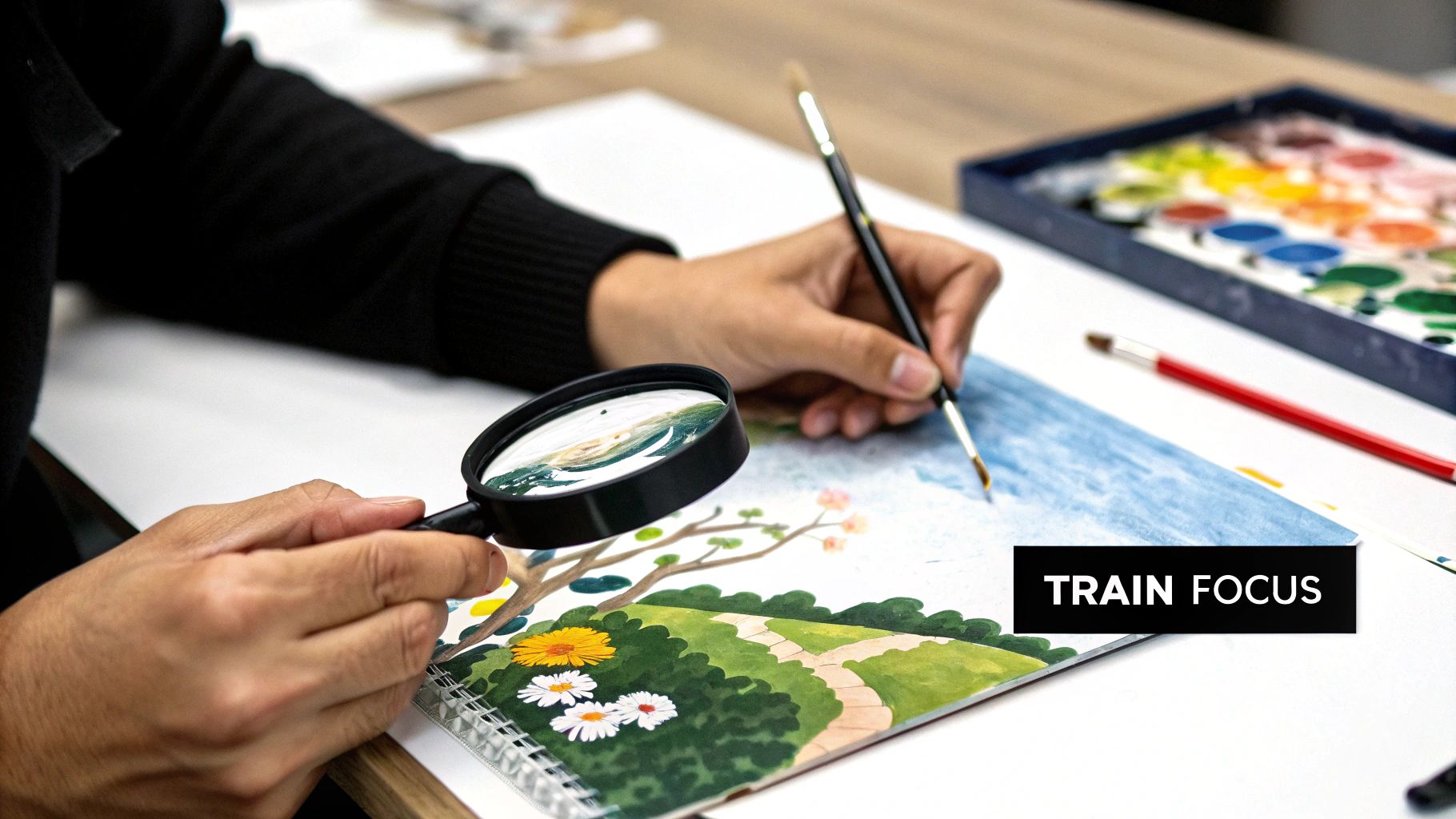
Think of your attention span like a muscle. If you want it to get stronger, you have to work it out. Daily habits lay the groundwork, but targeted brain exercises are what really build your cognitive strength and sharpen your focus. These aren't just ways to pass the time; they are specific drills designed to train your brain to catch what others miss.
You'd be surprised how effective simple games can be. Things like "spot the difference" puzzles or even detailed coloring books force your eyes to scan systematically and notice tiny inconsistencies. It's a direct workout for the parts of your brain responsible for detailed observation.
From Proofreading to Painting
Here’s another fantastic exercise: a proofreading challenge with a twist. Grab a block of text from an article online and print it out. Now, instead of reading it normally, read it backward, from the last word to the first. This little trick short-circuits your brain's auto-correct function, which usually glazes over mistakes. It forces you to look at each word as a separate entity, making it much easier to catch spelling or grammar errors.
If you’re looking for something a bit more meditative, I highly recommend picking up a paint-by-numbers kit. This activity is a masterclass in sustained concentration. You have one job: match the paint to the number and stay within the lines. Each tiny section demands your full attention, training you to be precise and patient.
The real magic of these exercises is their structure. They give you a clear, goal-oriented task that minimizes mental chatter and trains your brain to stay locked onto a single, detailed activity for a good stretch of time.
This kind of deep engagement isn't just calming; it's a powerful way to build mental endurance. The precise hand movements also sharpen your fine motor skills. For more on that, check out our guide on https://paint-by-number.com/blogs/learn-about-paint-by-numbers/how-to-improve-hand-eye-coordination.
Combining Cognitive and Nutritional Support
The key to making real progress is consistency. All you need is 10-15 minutes a day dedicated to one of these exercises. Treat it like a mental warm-up before you tackle your most important tasks for the day.
You could even set up a simple weekly routine:
- Monday & Friday: Find a "spot the difference" puzzle online.
- Tuesday & Thursday: Proofread a short news article backward.
- Wednesday & Weekends: Unwind with your paint-by-numbers project.
And don't forget that what you put into your body matters, too. To give your brain an extra edge, it might be worth exploring nutritional support. When your mind has the right fuel, sustaining the kind of concentration these detailed tasks require becomes that much easier. You can find some great information on the best supplements for focus and concentration to complement your new training habits.
Ultimately, the goal is to make these exercises a non-negotiable part of your daily life. Before you know it, you'll see a real difference in your day-to-day work. You'll start catching errors faster, absorbing information more completely, and feeling a much greater sense of control over your focus.
How to Stay Sharp When the Pressure Is On
When a deadline is breathing down your neck, the instinct is to just go faster. We’ve all been there. But that’s exactly when the most costly mistakes tend to happen. The real trick to handling these high-stakes moments isn't about speed; it's about being deliberate.
Think about professionals in fields where mistakes are catastrophic, like aviation or software engineering. They don't just wing it. They have systems to manage the details, especially when one tiny slip-up could cause huge problems.
One of the best things you can do is break down that one massive, intimidating project into smaller, bite-sized pieces. This simple move stops you from feeling overwhelmed and lets you give each individual part the focus it actually needs.
The Surprising Power of Slowing Down
It feels completely wrong, I know, but one of the most effective ways to nail the details under pressure is to intentionally slow down. When you rush, your brain develops a kind of tunnel vision, glossing over errors that would otherwise be glaring. Taking a deep breath and forcing a more measured pace gives you the mental runway to see what's really there.
Imagine a developer about to launch a new app. They don't just write the code and hit "go." They meticulously check every line, run a battery of tests, and verify all the dependencies. This isn’t about being slow; it’s about being a professional.
You can apply this same mindset by building in a final, unhurried review before you send anything off. This one habit can be the firewall between a polished project and one riddled with preventable errors.
And those small errors add up. A CareerBuilder study revealed that a whopping 58% of employers blame poor attention to detail for common workplace mistakes. Those little slip-ups often mean more micromanagement and tons of rework, which kills productivity.
Why You Need a Second Pair of Eyes
Let’s be honest: you’re usually the worst person to proofread your own work. After staring at something for hours, your brain gets lazy. It knows what the document is supposed to say, so it automatically corrects typos and fills in missing words in your head.
This is where getting "fresh eyes" on your work is a game-changer.
If you can, step away from the task for at least 15 minutes before you do that final check. Grab a coffee, take a quick walk, or switch to a completely different task. When you come back, your perspective will be clearer, and you'll be amazed at what you suddenly notice.
Creating a Simple, Effective Review Process
For mission-critical tasks, you can’t beat a good peer review. I'm not talking about just slacking a coworker and asking them to "glance at this." A structured process, even a simple one, makes all the difference.
- Set the Stage: Give your reviewer the context they need. What’s the goal? Who is the audience? What should they pay attention to?
- Be Direct: Ask them to check for specific things. "Can you double-check the Q3 figures?" is much more helpful than "Does this look okay?"
- Use a Checklist: For tasks you do all the time, a simple checklist is your best friend. It ensures nothing gets missed and keeps the review process consistent.
To help you decide which review method to use, here’s a quick breakdown of a few common approaches.
Comparing Methods for Task Verification
Choosing the right verification method depends on how much time you have and how critical the task is. A quick self-review might be fine for a routine email, but a major client proposal probably needs a formal peer review. This table breaks down a few options.
| Verification Method | When to Use It | Potential Pitfall |
|---|---|---|
| Self-Review (The "Fresh Eyes" Trick) | For routine tasks, drafts, and everyday documents. | Your brain can still overlook familiar errors. Most effective after a break. |
| Informal Peer Check | When you need a quick gut check on tone, clarity, or a specific data point. | Can be inconsistent; the reviewer might not have the full context. |
| Formal Peer Review | For critical, high-stakes projects like reports, proposals, or code releases. | It requires more time and coordination between team members. |
| Using a Checklist | For repetitive processes where accuracy is essential (e.g., onboarding, invoicing). | The checklist can become outdated if the process changes. It needs regular updates. |
No single method is perfect for everything. The key is to match the review's intensity to the task's importance. By combining these strategies—breaking down tasks, slowing down, and building in solid reviews—you'll significantly boost your accuracy, even when you feel like you're running out of time.
Your 7-Day Plan to Sharpen Your Attention to Detail

Alright, let's turn all this theory into real-world practice. Improving your attention to detail isn't about some massive overnight transformation; it’s about building small, consistent habits that stick. This simple 7-day plan is designed to do just that—help you start small, gain some momentum, and weave powerful focus exercises into your everyday life.
Think of it as a week-long bootcamp for your brain. Each day, you'll tackle one small, manageable challenge that takes 15 minutes or less. The goal here is progress, not perfection. By the end of this week, you’ll have a solid foundation of practices to build on.
The First Three Days: Laying the Groundwork
To start, we'll focus on creating an environment that actually helps you concentrate. When your space—both physical and digital—is calm and organized, it’s far easier to quiet the mental noise and notice the details that truly matter.
-
Day 1: Tidy Up Your Digital Workspace. Take 15 minutes to organize your computer's desktop. I mean really organize it. Create logical folders, ditch old shortcuts you never use, and give important files clear, descriptive names. A clean digital space cuts down on distractions from the moment you open your laptop.
-
Day 2: The Five-Minute Observation. Find a quiet spot and pick a single, everyday object. It could be a plant, a picture frame, or even your coffee mug. For five uninterrupted minutes, just study it. I want you to notice its colors, textures, the way light hits it, and the tiny imperfections you've glossed over a thousand times. This simple exercise trains your brain to look deeper.
-
Day 3: Proofread in Reverse. Grab a short email you wrote today and read it backward. Start with the last word and go one by one to the beginning. This little trick breaks your brain's auto-pilot mode, forcing it to see each word individually. You’ll be surprised at the spelling and grammar mistakes you catch.
This plan is your launchpad. The key isn't just to check off the tasks, but to actually notice how each one makes you feel more present and aware. True improvement comes from turning these small actions into lasting habits.
Mid-Week and Beyond: Building Momentum
Now that you've set the stage, let's layer in some more active challenges. These next few tasks will push your focus and train you to handle more complex information with greater accuracy.
-
Day 4: Make a Mini-Checklist. Think of one repetitive task you do every day, like prepping for a meeting or publishing a social media post. Write down a simple 3-5 step checklist for it. Using a checklist outsources the "remembering" part of your brain, freeing up mental energy to focus on the quality of your work.
-
Day 5: Use the "Fresh Eyes" Technique. Before you hit send on an important report or email, step away from it for a full 15 minutes. Go do something completely different—make a coffee, walk around the office, whatever. When you come back, you'll see your own work with a fresh perspective, making it much easier to spot errors you missed earlier.
-
Day 6: Try the Paint-by-Number Challenge. Spend 15 minutes working on a detailed section of a paint-by-number kit or even a complex coloring page. The structured nature of this activity is incredible for building focus. It demands precise, sustained attention on tiny areas, which builds your mental endurance for other detailed work.
-
Day 7: Plan Your Next Move. Look back at the week. Which exercises felt the most helpful? Which ones did you actually enjoy? Choose two or three to carry forward into next week, turning them from a one-time challenge into a consistent part of your routine.
Got Questions? Let's Get Them Answered.
When you start consciously working on your attention to detail, a few questions always seem to pop up. It's totally normal to wonder how long this will take, what tools might help, or where you should even start. Let's tackle some of the most common ones I hear.
Getting clear on these points from the get-go will make your journey toward becoming sharper and more accurate feel a lot less overwhelming.
How Long Until I Actually See a Difference?
This is the big one, right? While everyone's brain is wired a bit differently, most people start to feel a real shift in their focus and accuracy within 2-3 weeks of consistent effort.
The trick is to stop thinking about it as a massive overhaul and start seeing it as a series of small, daily upgrades. It's just like going to the gym; you don't expect to be a bodybuilder after one session. Real strength comes from showing up consistently.
For instance, simply getting into the habit of using a checklist for your morning routine or doing a quick 10-minute focus exercise each day starts to build stronger neural pathways. Our 7-day plan is a great way to jumpstart this, but the real magic happens when those tiny actions become second nature. Lasting change comes from the habits you can stick with.
Look, the goal isn't to achieve instant perfection. It's about building a sustainable system that helps you work more deliberately. When it comes to a skill like this, consistency will always win out over short bursts of intensity.
Are There Any Apps or Tools That Can Help?
Yes, but with a big caveat: use them strategically. The right tool can be a game-changer, but the wrong one just adds another layer of digital clutter to your life.
Technology is at its best when it provides structure and frees up your mental bandwidth. Think of it this way:
- Project Organizers: I'm a big fan of tools like Asana or Trello for a reason. They force you to break down big, intimidating projects into small, concrete steps. When you can see every piece of the puzzle, it's much harder to let a detail slip.
- Writing Assistants: A tool like Grammarly acts as a fantastic safety net. It won't make your writing brilliant, but it's great at catching those pesky typos and grammatical slips before anyone else does.
- Brain Trainers: Some apps are designed as little mental workouts, full of games and puzzles that specifically target your observation and concentration skills. They can be a fun way to practice.
Just remember, technology is often the source of our distraction problem. So, be intentional. Pick tools that solve a specific problem for you—like organizing your thoughts or double-checking your work—not ones that just ping you with more notifications.
If I Do Just One Thing, What's the Most Powerful Habit?
Easy. If I could only give you one piece of advice, it would be this: build a final review step into everything you do. Before you click "send," submit that report, or call a project "done," force yourself to pause.
And I don't mean a quick, half-hearted glance. The most effective way to review your own work is to step away from it, even for just a few minutes. Get up, grab a coffee, walk around the office—anything to clear your head.
When you come back to the task with "fresh eyes," you've broken the mental autopilot that made you miss the mistake in the first place. That little buffer between finishing the work and delivering it is an incredibly simple but powerful way to catch the small errors that always seem to slip through.
Ready to turn focused creativity into a beautiful piece of art? With Custom Paint By Numbers, you can transform your favorite photos into a relaxing, detail-oriented project. Create your own masterpiece today.