
Art provides a powerful, non-verbal language for individuals living with dementia, offering a way to express emotions, connect with memories, and maintain a sense of self. It shifts the focus from what is lost to what can still be created, fostering moments of joy, purpose, and engagement. For caregivers and family members, facilitating these experiences can be incredibly rewarding, but knowing where to start is often the biggest challenge.
This guide is designed to be your practical resource, offering a curated collection of art activities for seniors with dementia that are both accessible and stimulating. We move beyond generic ideas to provide detailed, actionable instructions for each project. You will find everything you need to confidently lead these sessions, from simple material lists and step-by-step guidance to specific tips for adapting activities to different ability levels.
Our goal is to help you create successful, frustration-free artistic encounters. We will cover seven distinct projects, including sensory painting, reminiscence collage, and nature-based art. Whether you are a professional caregiver looking for new programming or a family member seeking meaningful ways to connect with a loved one, these proven activities will help you unlock creativity and foster enriching moments of connection and self-expression.
1. Sensory Painting with Large Brushes and Finger Paints
Sensory painting is a wonderful tactile art activity for seniors with dementia that emphasizes the physical experience of creating art over the final result. Participants use oversized brushes, soft sponges, or even their hands to apply vibrant, non-toxic paints to large surfaces like paper or canvas. This approach engages large motor skills and provides direct sensory stimulation through touch and sight.
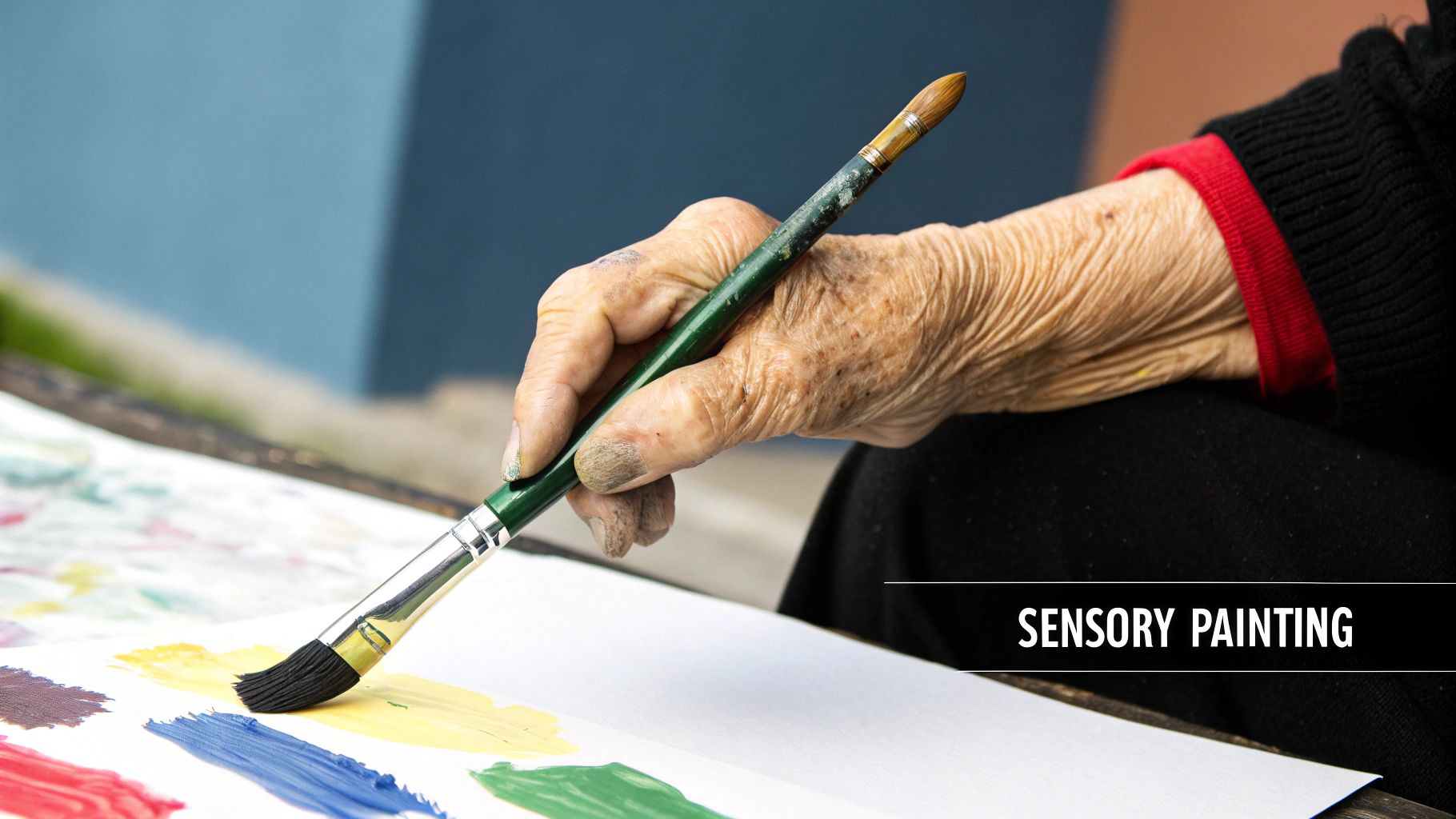
The primary goal is free expression, removing the pressure to paint something recognizable. This freedom can reduce anxiety and frustration, making it a highly accessible and enjoyable activity for individuals at various stages of dementia.
Why This Activity Works
This method is highly effective because it connects with individuals on a primal, sensory level. The feeling of the cool, smooth paint and the broad, sweeping arm movements can be both calming and invigorating. It doesn't rely on memory or complex cognitive skills, which makes it an ideal choice for a successful and failure-free creative session. This focus on process-oriented art is a cornerstone of many successful art activities for dementia patients.
How to Get Started
Setting up for sensory painting is straightforward. The key is to create a comfortable and judgment-free environment.
Materials Needed:
- Large sheets of paper or canvas
- Washable, non-toxic finger paints or tempera paints in bright colors
- Large, soft-bristled brushes, sponges, or rollers
- Protective coverings like aprons, smocks, or old shirts
- A table covering (a plastic tablecloth works well)
- A shallow tray or plate for the paint
- A bowl of water and towels for easy cleanup
Tips for a Successful Session
- Simplify Choices: Start with just two or three primary colors (red, yellow, blue) to prevent participants from feeling overwhelmed.
- Encourage Touch: Demonstrate how to use hands to paint, if the senior is comfortable with it. The direct tactile input is a powerful part of the experience.
- Set the Mood: Play familiar, calming music from their youth to create a relaxing and positive atmosphere.
- Focus on Engagement: Praise the effort and joy, not the artistic outcome. Use encouraging phrases like, "I love the way you are spreading that blue paint!" or "That looks like so much fun."
2. Simple Collage Making with Pre-Cut Materials
Collage making with pre-cut materials is a structured art activity that empowers seniors with dementia to create something beautiful without the need for complex skills like drawing or cutting. Participants arrange and glue various pre-cut shapes, textures, and images onto paper or canvas. This process promotes decision-making and self-expression while minimizing potential frustration.
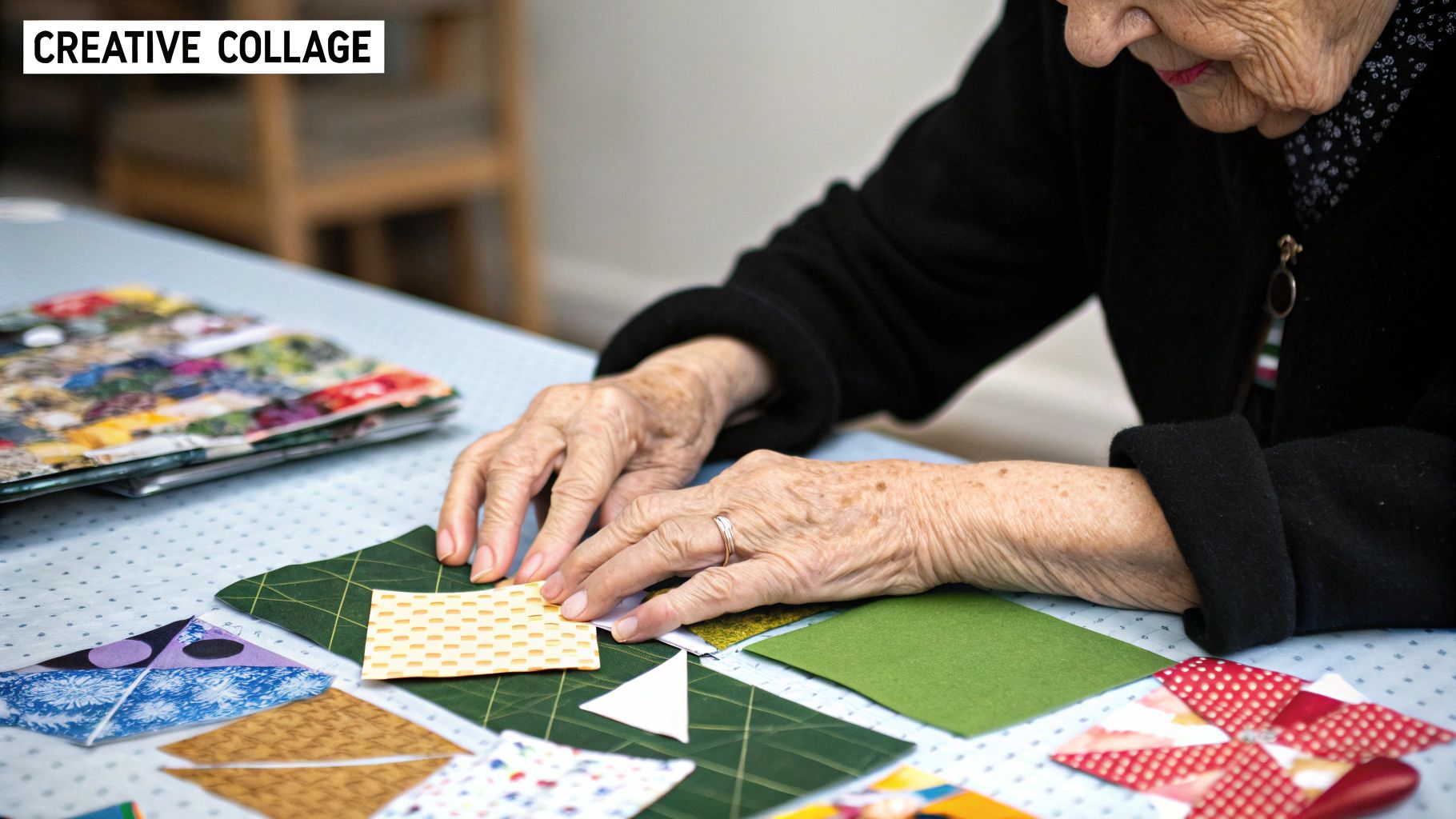
The activity can be easily adapted to specific themes, such as seasonal collages using autumn leaves or family collages using copies of old photographs. By providing a curated selection of materials, caregivers can guide the creative experience, making it a fulfilling and failure-free art activity.
Why This Activity Works
This activity is effective because it taps into organizational and decision-making skills in a low-stress environment. Sorting through materials and choosing where to place them provides a sense of control and accomplishment. Using familiar images, like those from magazines of their era or family photos, can also trigger positive memories and conversations, turning the art session into a powerful reminiscence therapy tool. For those looking to deepen their understanding of collage techniques and design principles, this comprehensive guide on how to create a collage offers valuable insights.
How to Get Started
Preparation is key to a successful collage session. Having all materials organized and ready to go ensures a smooth and enjoyable process for everyone involved.
Materials Needed:
- A sturdy background like cardstock, cardboard, or a canvas panel (11x17 inches or larger)
- A variety of pre-cut materials: magazine images, textured wallpaper samples, fabric scraps, colored paper shapes
- Washable glue sticks (easier and less messy than liquid glue)
- Optional items: dried leaves, flat buttons, ribbon, or copies of personal photos
- Shallow bins or trays to sort and display the materials
Tips for a Successful Session
- Organize Materials: Sort collage elements into separate containers by color, theme, or texture. This makes it easier for participants to see their options and make choices. Learning how to organize art supplies can make setup and cleanup much more efficient.
- Offer a Theme: Suggest a theme like "My Favorite Colors," "A Day in the Garden," or "Happy Memories" to provide a starting point, but allow for personal interpretation.
- Provide Gentle Guidance: If a participant seems stuck, offer a suggestion like, "This blue piece might look nice next to the yellow one, what do you think?"
- Celebrate the Process: Focus on the act of creating. Admire their choices and the textures they are exploring, rather than asking "What are you making?" This validates their effort and builds confidence.
3. Clay Work and Simple Pottery
Clay work and simple pottery are deeply therapeutic art activities for seniors with dementia, offering a rich tactile experience that can be both calming and empowering. Participants use soft, pliable, air-dry clay to engage in hand-building techniques like making pinch pots, rolling coils, or creating free-form sculptures. The focus is on the physical sensation of molding the clay, which stimulates the sense of touch and promotes hand strength and fine motor coordination.
This process-oriented activity does not require a kiln or complex pottery skills, removing any pressure to create a "perfect" piece. Instead, it allows for self-expression and provides a tangible, three-dimensional outlet for creativity, which can be immensely gratifying.
Why This Activity Works
The physical nature of working with clay is grounding and can help reduce anxiety and agitation. The repetitive motions of kneading, rolling, and shaping the clay can be meditative, helping to focus attention and provide a non-verbal means of communication. Success is built into the process, as there is no right or wrong way to sculpt, making it a failure-free activity that boosts self-esteem.
How to Get Started
Creating a dedicated space for clay work is simple and ensures the focus remains on the creative experience rather than the mess. A supportive and encouraging atmosphere is key. For a more hands-on approach, introducing a mini pottery wheel and sculpting kits can offer a deeply satisfying tactile experience for seniors with dementia.
Materials Needed:
- Soft, non-toxic, air-dry modeling clay
- Protective table covering (plastic or vinyl tablecloth)
- Small bowls of water for moistening hands and clay
- Simple sculpting tools (optional, e.g., plastic knives, popsicle sticks)
- Aprons or smocks to protect clothing
- A board or mat for each participant to work on
Tips for a Successful Session
- Start Simple: Introduce a basic technique, like rolling the clay into a ball and then pressing a thumb into the center to form a simple pinch pot.
- Keep Clay Workable: Have a spray bottle with water or damp paper towels handy to keep the clay from drying out during the session.
- Encourage Texture: Offer items like leaves, stamps, or textured rollers to press into the clay for added sensory input.
- Celebrate the Process: Focus on the feeling of the clay and the joy of creation. Comment on the process with phrases like, "That looks so smooth," or "I see you're rolling a long coil!"
- Plan for Drying: Allow pieces to air dry for 24-48 hours. Once dry, they can be painted in a separate session, extending the creative engagement much like other multi-step projects such as paint by numbers for seniors.
4. Music-Inspired Art Creation
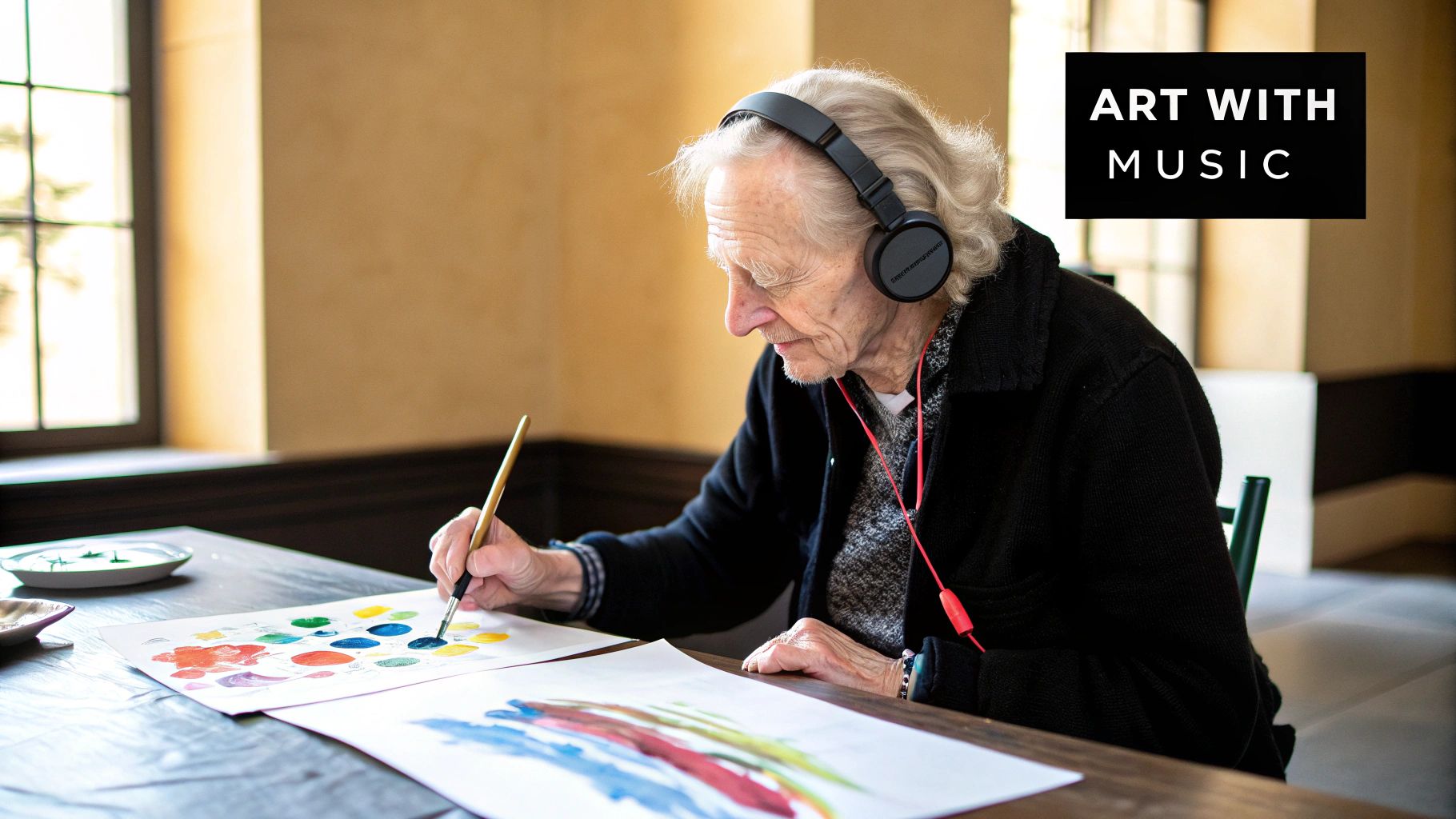
Music-inspired art creation is an engaging, multi-sensory activity that pairs the evocative power of music with the expressive freedom of visual art. Participants listen to familiar songs, often from their youth, and are encouraged to paint, draw, or sculpt in response to the music's rhythm, mood, and the memories it may trigger. This approach taps into deeply ingrained musical memories, which often remain intact even when other cognitive functions decline.
The goal is not to create a literal representation of the song but to translate feelings and energy onto the page. This interdisciplinary method can unlock creativity, reduce agitation, and provide a powerful non-verbal outlet for communication and emotional expression.
Why This Activity Works
Music has a unique ability to access long-term memory and emotions. As noted by neurologist Dr. Oliver Sacks in his book Musicophilia, musical memory is often preserved in people with dementia. When combined with art, it provides a structured yet liberating experience that stimulates multiple parts of the brain simultaneously. This dual stimulation can improve mood, encourage social interaction, and foster a sense of accomplishment, making it one of the most effective art activities for seniors with dementia.
How to Get Started
Creating a music-and-art session requires a thoughtful selection of both music and materials to ensure a positive and stimulating environment.
Materials Needed:
- A portable music player and speakers
- A curated playlist of familiar music (instrumental or vocal)
- Art supplies like watercolor paints, colored pencils, or pastels
- Good quality paper or small canvases
- Smocks or aprons to protect clothing
- A comfortable, well-lit space with minimal distractions
Tips for a Successful Session
- Personalize the Playlist: Research music that was popular when participants were between the ages of 15 and 25 for the strongest emotional connection.
- Match Art to Tempo: Offer dynamic materials like paint and large brushes for fast-paced, upbeat music. For slower, calmer songs, provide colored pencils or pastels for more detailed work.
- Keep It Short and Sweet: Limit the session to three or four songs (around 15-20 minutes) to maintain engagement and prevent overstimulation.
- Create a Quiet Zone: Have a separate, quiet space available for anyone who might find the sensory input overwhelming and needs a moment to rest.
- Prompt with Open Questions: Encourage expression by asking, "How does this music make you feel?" or "What colors does this song bring to mind?"
5. Reminiscence Art Projects
Reminiscence art projects are designed to connect with an individual's long-term memory, using creative expression to revisit significant life events, cherished relationships, and personal histories. Participants create artwork based on past experiences, such as drawing a childhood home, painting a landscape from a favorite vacation, or crafting a collage with copies of old family photos. This process transforms art-making into a powerful tool for storytelling and emotional connection.
The focus is not on artistic accuracy but on the emotions and stories that surface during the creative process. These art activities for seniors with dementia can validate a person's life experiences, reinforce their sense of identity, and foster meaningful conversations with caregivers and family members.
Why This Activity Works
This approach is highly effective because long-term memory often remains more accessible than short-term memory for individuals with dementia. Tapping into these well-established memories can bring comfort, joy, and a sense of competence. Programs like The Alzheimer’s Poetry Project and Artz Philadelphia have demonstrated how engaging with personal history through art can reduce isolation and improve mood by allowing seniors to share their unique stories and feel heard.
How to Get Started
Preparation is key to a successful reminiscence session. It involves gathering personalized materials that can serve as gentle prompts for memory and conversation.
Materials Needed:
- Copies of old family photographs (never use originals)
- Scrapbooking paper, colored construction paper
- Glue sticks, scissors (safety scissors if needed)
- Markers, colored pencils, or simple watercolor paints
- A blank journal or scrapbook to create a "memory book"
- Optional: magazines from their era, fabric scraps, or postcards
Tips for a Successful Session
- Gather Meaningful Prompts: Work with family to collect copies of photos, song lyrics, or small objects that relate to positive life events like weddings, holidays, or career achievements.
- Focus on the Story: Encourage conversation by asking open-ended questions like, "Tell me about this day," or "Who is this in the picture with you?"
- Create a Timeline: Help organize memories by creating a visual timeline or a memory book, which can be revisited in future sessions.
- Document Their Words: Write down the stories and phrases that emerge during the art session, either on the artwork itself or in a separate notebook. This honors their narrative and preserves precious memories.
6. Nature-Based Art Activities
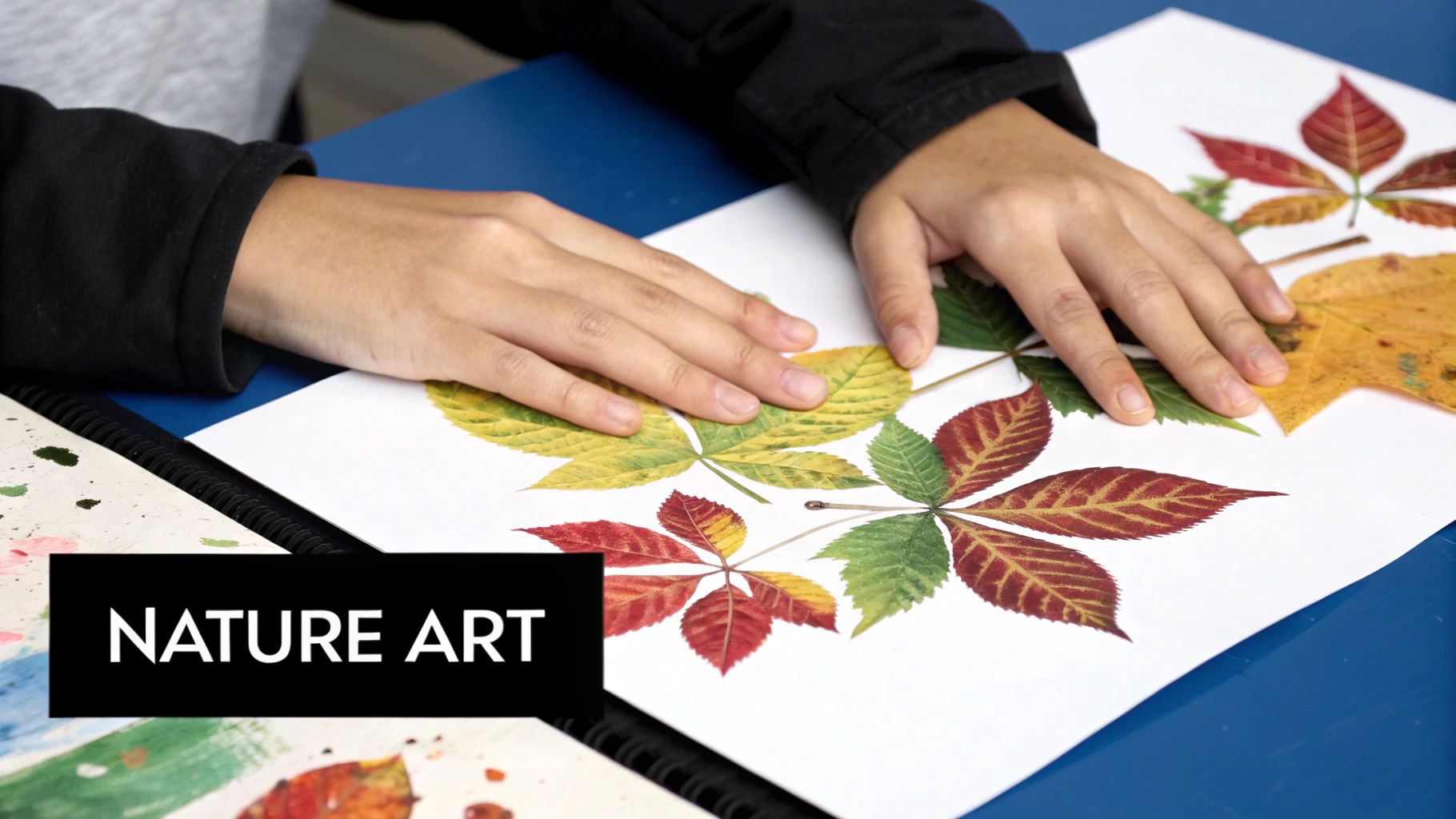
Nature-based art activities connect seniors with dementia to the natural world, using organic materials and outdoor elements to inspire creativity. These projects can include leaf printing, flower pressing, rock painting, or creating collages from twigs, petals, and seeds. The focus is on tactile engagement with nature's textures, colors, and shapes, which can evoke memories and provide a calming sensory experience.
This approach brings the outdoors in, making it accessible regardless of mobility or weather. It taps into a deep, universal connection to nature, stimulating the senses and providing gentle cognitive engagement by prompting discussions about seasons, plants, and outdoor memories.
Why This Activity Works
This method is effective because it grounds participants in the present moment through tangible, sensory-rich materials. The feel of a smooth stone, the sight of a colorful leaf, and the scent of a pressed flower can be powerful non-verbal cues that spark joy and reminiscence. Many care models, like The Eden Alternative, integrate nature into daily life to combat loneliness and boredom, and art is a perfect vehicle for this. These nature-based art activities for seniors with dementia promote relaxation and a sense of wonder.
How to Get Started
Creating a nature-inspired art session is simple and can be adapted to any setting. The preparation itself can be part of the activity, such as a supervised walk to collect materials.
Materials Needed:
- A collection of natural items: leaves, flowers, smooth rocks, twigs, seed pods, pinecones
- Sturdy paper, cardstock, or small canvases
- Non-toxic craft glue or a glue stick
- Washable paints (for leaf printing or rock painting)
- Magnifying glasses to inspect items
- Protective aprons and table coverings
- Optional: A flower press or heavy books for pressing flowers
Tips for a Successful Session
- Prepare Materials in Advance: Collect and clean natural items beforehand. For example, press flowers for a few days or wash and dry rocks completely before the session.
- Encourage Exploration: Provide magnifying glasses to help participants examine the intricate details of a leaf's veins or a flower's petals, sparking curiosity.
- Incorporate Seasonal Themes: Use materials relevant to the current season to help orient participants to the time of year. Discussing the weather or seasonal changes provides excellent cognitive stimulation.
- Prioritize Safety: Be mindful of potential allergies to certain plants or pollens. Ensure all collected items are non-toxic and have no sharp edges.
7. Intergenerational Art Projects
Intergenerational art projects bring seniors with dementia and younger people together to create shared artwork. These collaborative activities bridge generational gaps, creating meaningful connections that reduce social isolation and foster a strong sense of community. The focus is on mutual learning and shared creative expression, making it a powerful tool for engagement.
Projects are designed to be simple and accessible, allowing participants of all ages and abilities to contribute equally. This shared purpose builds relationships and creates joyful, lasting memories for everyone involved, proving that art activities for seniors with dementia can have a wide-reaching social impact.
Why This Activity Works
This approach is effective because it taps into the innate human need for connection and purpose. For seniors, interacting with youth can spark memories, increase self-esteem, and reduce feelings of loneliness. For the younger participants, it builds empathy and a positive view of aging.
Programs like Opening Minds through Art (OMA) have demonstrated that these partnerships provide a failure-free environment where the creative process and relationship-building are valued far more than the final product. The shared laughter and teamwork make the experience deeply rewarding.
How to Get Started
Organizing an intergenerational session involves thoughtful planning to ensure both groups feel comfortable and engaged. Partnering with local schools, scout troops, or youth groups is a great way to start.
Materials Needed:
- Age-appropriate art supplies (e.g., collage materials, clay, watercolors)
- Large work tables to encourage collaboration
- Name tags for all participants
- Simple instructions or visual guides for the project
- Protective aprons or smocks for all ages
- Snacks and drinks to create a social atmosphere
Tips for a Successful Session
- Set Clear Expectations: Before the session, briefly train younger volunteers on dementia communication, such as speaking clearly, making eye contact, and offering simple choices.
- Plan Simple, Collaborative Projects: Choose activities like creating a group mural, decorating a community planter, or making holiday cards together.
- Focus on the Process: Emphasize the fun of creating together. Encourage conversation with icebreaker questions like, "What was your favorite song when you were a teenager?"
- Have a Backup Plan: Keep a few simpler activities, like coloring sheets or sensory dough, on hand for individuals who may have shorter attention spans or lower energy levels.
Art Activities for Seniors with Dementia: 7-Item Comparison
| Activity | Implementation Complexity 🔄 | Resource Requirements ⚡ | Expected Outcomes 📊 | Ideal Use Cases 💡 | Key Advantages ⭐ |
|---|---|---|---|---|---|
| Sensory Painting with Large Brushes and Finger Paints | Low to moderate; simple setup, supervision needed | Large brushes, washable paints, large paper | Sensory stimulation, emotional engagement, visual feedback | Suitable for varied mobility and cognitive levels; process-focused | Stimulates multiple senses simultaneously; minimal cognitive load |
| Simple Collage Making with Pre-Cut Materials | Moderate; requires advance prep of materials | Pre-cut shapes, glue sticks, thematic kits | Encourages personal expression, memory triggering, tactile engagement | Ideal for reminiscing, moderate dexterity; structured creativity | Builds on preserved abilities; minimal cleanup |
| Clay Work and Simple Pottery | Moderate; supervision needed, cleanup required | Soft clay/putty, basic sculpting tools | Hand strength, sensory calming, spatial reasoning | Good for hand exercise, calming agitation, sensory stimulation | Excellent for hand dexterity; reusable material |
| Music-Inspired Art Creation | Moderate to high; involves music selection and timing | Art supplies, music player, varied materials | Emotional expression, memory activation, social interaction | Best for participants responsive to music; multi-sensory engagement | Combines music and art therapy benefits; enhances emotional recall |
| Reminiscence Art Projects | High; requires research and personalized materials | Personal photos, memorabilia, varied art supplies | Memory stimulation, identity validation, social engagement | Tailored for memory triggering and storytelling; requires support | Validates personal history; promotes social interaction |
| Nature-Based Art Activities | Moderate; dependent on season and environment | Natural materials, indoor/outdoor spaces | Calming effect, sensory and seasonal stimulation | Suitable for nature lovers; adaptable indoor/outdoor | Low cost; connects to nature and seasonal memory |
| Intergenerational Art Projects | High; coordination between age groups and facilitators | Art supplies, trained volunteers, organizational support | Social engagement, reduced isolation, cognitive stimulation | Best for socialization and community building; multi-age participation | Reduces isolation; promotes meaningful community connections |
Creating with Compassion: Your Next Steps in Artful Care
As we've explored through these various activities, from Sensory Painting to Intergenerational Art Projects, the true power of art for seniors with dementia lies not in technical skill or a perfect finished piece. The real value is found in the moments of connection, the flicker of a memory, the simple joy of creating, and the enhanced sense of self-worth that these experiences provide. The journey of facilitating art activities for seniors with dementia is one of patience, flexibility, and profound reward.
The key takeaway is to prioritize the individual's experience above all else. Success isn't measured by a museum-worthy sculpture or a flawless painting; it's measured in smiles, in moments of engagement, and in the quiet satisfaction of self-expression. By focusing on sensory engagement, tapping into long-term memories, and adapting every project to the person's current abilities, you create a safe and empowering space for creativity to flourish.
Your Actionable Next Steps
To move forward, don't feel overwhelmed by the options. Instead, choose a path that feels both manageable and meaningful for the person you are caring for.
- Start Small and Simple: Pick just one activity from this list to try this week. Perhaps it's setting out some pre-cut collage materials on the kitchen table or playing a favorite old song and offering some colorful markers and paper. Observe the reaction without pressure or expectation.
- Prepare for Success: Gather all materials in advance and set up a calm, well-lit, and clutter-free workspace. This simple preparation minimizes potential frustration and helps the creative process flow more smoothly from the start.
- Focus on Strengths: Consider the individual's past interests and current physical capabilities. If they loved gardening, a nature-based art project is a wonderful starting point. If they have limited hand dexterity, large-handled brushes or finger painting are excellent choices.
- Celebrate Every Effort: The most important step is to provide gentle encouragement and praise every attempt. Display the finished artwork proudly, no matter the outcome. This validation is crucial for building confidence and making the experience a positive one.
By embracing these principles, you transform a simple craft session into a powerful therapeutic tool. You are not just filling time; you are building bridges of communication, validating identity, and creating new, joyful memories. These shared creative moments are a testament to the enduring human spirit and a beautiful way to enrich the lives of seniors navigating the challenges of dementia. The ripple effect of these positive interactions can improve mood, reduce agitation, and strengthen your bond.
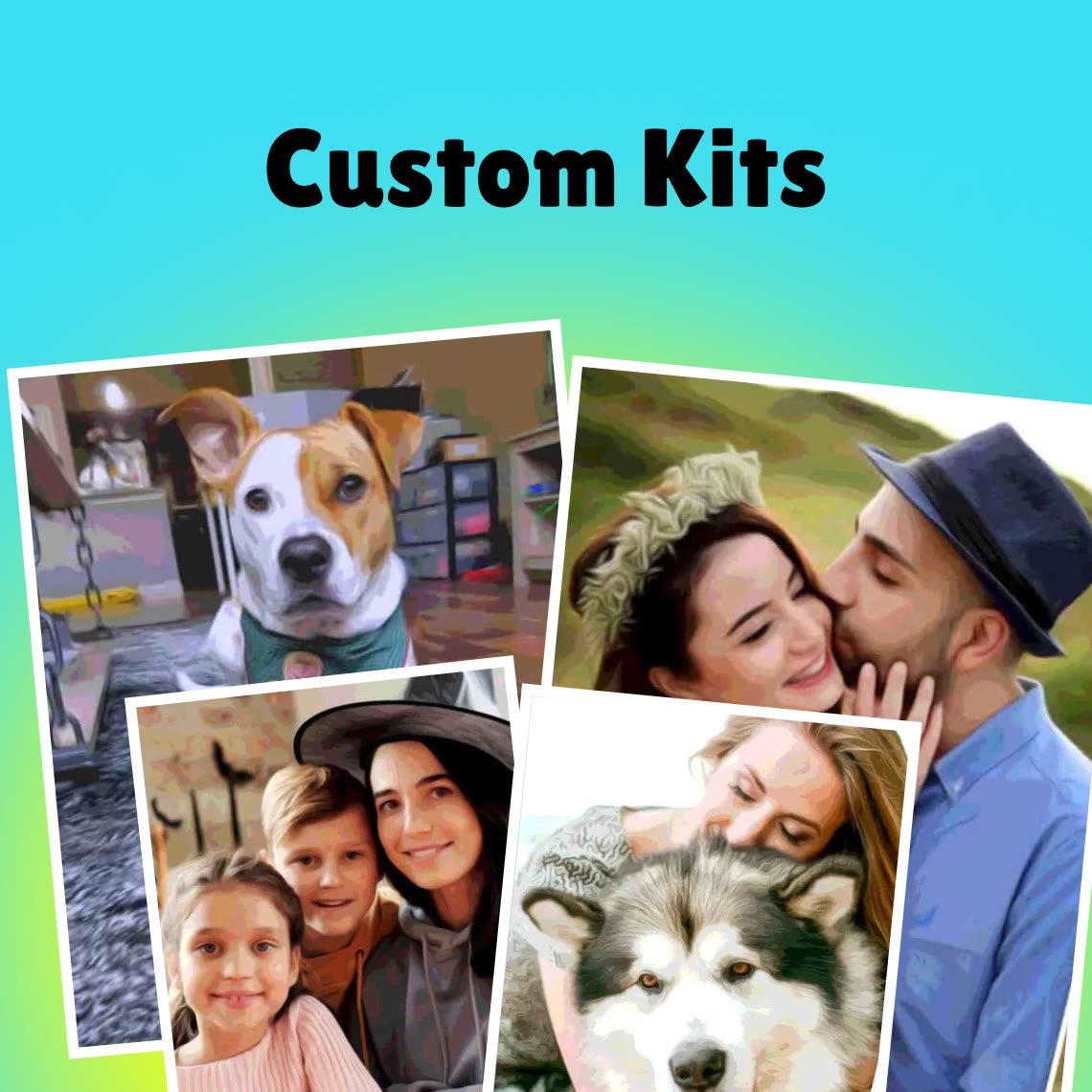
Ready to create a deeply personal and guided art experience? A Custom Paint By Numbers kit from Custom Paint By Numbers turns a cherished family photograph into an accessible painting project. It’s a perfect reminiscence activity that provides structure and a sense of accomplishment, resulting in a beautiful keepsake you can treasure together.