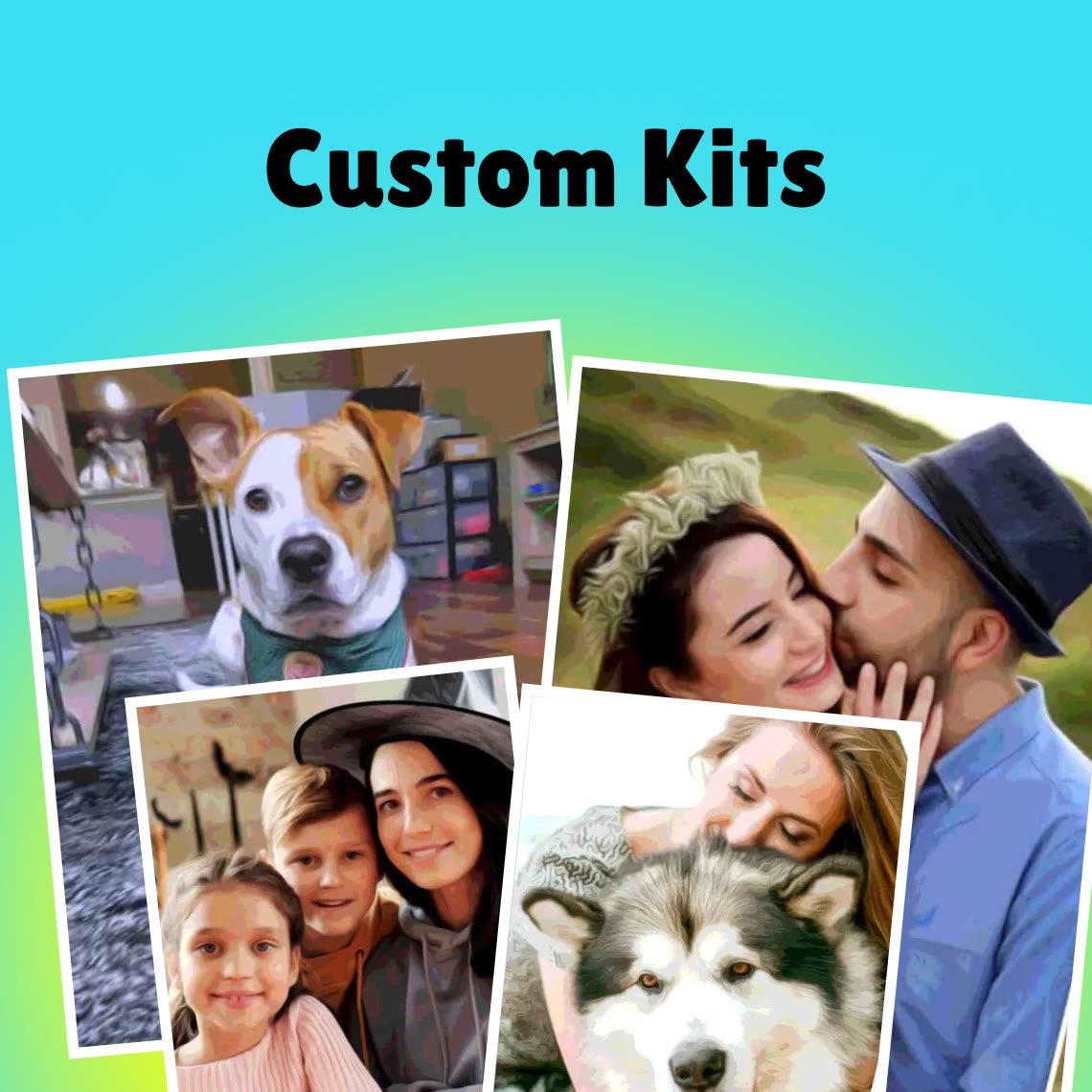

So, after all that, are these canvas-by-numbers kits actually worth it?
My take is a definite yes. If you're looking for a creative outlet that's relaxing, structured, and incredibly satisfying, you can't go wrong. These kits brilliantly solve the "blank canvas" problem, giving you a clear roadmap to create something beautiful, no matter your skill level. For a small price, you get a full art setup that provides hours of calm, focused fun and a real sense of pride when you're done.
The Verdict on Canvas by Numbers
You might have heard it called "paint by numbers," but the idea is the same. The system takes a detailed picture and breaks it down into a map of small, numbered shapes. Each number on the canvas matches a little pot of paint, turning the whole process into a simple, step-by-step guide.
It’s a bit like putting together a mosaic, where you fill in one piece at a time until the final image comes to life. It’s the perfect entry point for anyone who’s ever wanted to paint but felt too intimidated to start.
The real draw is just how simple and rewarding it is. You don't have to worry about mixing colors, perspective, or fancy brushwork. Everything you need to create a finished piece comes right in the box, making it one of the easiest ways to dive into an artistic hobby. You build your confidence one brushstroke at a time.
Why Is It So Popular?
Lately, it seems like everyone is getting into paint by numbers, and it's not just about making a pretty picture—it's about the feeling you get while doing it. So many people have told me it's their go-to way to unwind and get away from screens. Focusing on filling in those tiny sections is almost meditative; it has a way of calming a racing mind.
And the best part? Watching the image slowly take shape from a bunch of lines and numbers is just so satisfying.
The explosion in popularity comes down to a few key benefits:
- Stress Relief: The focused, repetitive motion of painting is well-known for easing anxiety and helping you find a moment of calm.
- A Sense of Accomplishment: It gives anyone the chance to feel the pride of finishing a detailed painting they can hang on their wall or give as a gift.
- Skill Building: Even though it's a guided process, you're still sharpening your fine motor skills, improving hand-eye coordination, and practicing patience.
The real magic of Canvas by Numbers is how it makes creativity accessible to everyone. It proves you don’t need to be a trained artist to create something you’re truly proud of.
Now, it's good to go in with the right expectations. This isn't a five-minute craft project; a complex canvas can take a good chunk of time to complete. And while the kits give you all the supplies, the quality can really differ from one brand to another, which definitely affects the final look.
If you're someone who craves total artistic freedom, the structured nature might feel a little confining. But for most people, that guidance is exactly what makes it such a worthwhile and fulfilling hobby.
What’s Really Inside Your First Paint by Numbers Kit?
Unboxing your first paint by numbers kit feels a bit like Christmas morning for your creative side. Inside that box are all the tools you need to make something beautiful, and knowing what to look for is the key to a great experience.
The quality of these components can make or break your project. A good kit sets you up for a relaxing, rewarding session, while a bad one can just be plain frustrating. Let's dig into what comes in a kit and how to spot the good stuff.
The Canvas: Your Creative Foundation
This is where it all begins. The best kits I've seen use a linen canvas; it’s tough, has a wonderful texture, and really grabs the paint. Most kits, however, will come with a cotton canvas, which is still a fantastic and affordable option, especially when you're just starting out.
What really matters, though, is the print quality. The numbers and lines should be clear and easy to read. If they're faint or fuzzy, you’ll spend more time squinting than painting. Also, a huge plus is a canvas that arrives rolled, not folded. Trying to paint over hard creases is a battle you don't want to fight.
The Paints: Your Palette of Possibilities
Next up, the colors! Your kit will almost certainly include acrylic paints, and for good reason. They dry fast, clean up with water, and the colors are wonderfully bold and opaque.
The most important thing to check is how the paints are packaged. You want to see them in little vacuum-sealed pots. This is a non-negotiable for me because it keeps the paint from drying out before it even gets to you. Nothing is worse than opening a pot to find a hard, rubbery puck of color. A good kit will also give you plenty of paint for each color, so you aren't left high and dry mid-masterpiece.
The Brushes: Your Tools of the Trade
Finally, you can't paint without brushes. A standard kit usually comes with at least three different sizes, which is exactly what you need to get the job done.
- A large brush is your workhorse for covering those big, open areas quickly.
- A medium brush is perfect for most of the general painting work.
- A fine-detail brush is your secret weapon for all those tiny, tricky spots that demand precision.
The brushes in most kits are pretty basic, but they should be good enough to start. The bristles should feel secure and hold a nice point without splaying out everywhere. If you're brand new to this, our guide on paint by number kits for beginners has even more detail on getting started.
Think of it this way: a well-made kit is your treasure map. The clear numbers, fresh paint, and decent brushes are what guide you to the finished piece. Without them, you're just lost at sea.
To help you judge a kit at a glance, I've put together this quick checklist. It's a simple way to separate the gems from the duds.
Your Kit Quality Checklist
| Component | High-Quality Sign | Low-Quality Sign |
|---|---|---|
| Canvas | Linen or high-grade cotton; clear, crisp printing. | Thin material; blurry or faint numbers; folded with creases. |
| Paints | Vacuum-sealed pots; vibrant, creamy consistency. | Dried out or clumpy paint; insufficient quantity for the design. |
| Brushes | Multiple sizes provided; bristles hold their shape. | Single brush included; frayed or low-quality bristles. |
Keep these points in mind, and you'll be well on your way to choosing a kit that delivers a fantastic painting experience right out of the box.
Your Step-by-Step Guide to Painting
Alright, you’ve got your kit and you're ready to go. This is the fun part—watching your canvas come alive with color! Let's walk through the process step-by-step so you can jump right in and have a great time from the very first brushstroke.
First things first, let's get your painting station set up. Find a comfy, well-lit spot where you can focus without interruptions. I always recommend laying down some old newspaper or a drop cloth to protect your table. Then, just fill a small cup with water for rinsing brushes and keep a paper towel nearby for dabbing them dry. A few minutes of prep makes all the difference.
Did your canvas arrive folded? No problem. A quick, gentle pass with an iron on a low setting (on the back of the canvas!) will smooth it out. You can also just lay it flat under a few heavy books for a day. A smooth surface is much easier to work on.
Preparing to Paint
Before you even dip your brush, it helps to have a game plan. There’s no single "right" way to tackle a paint-by-number, but a couple of methods are fan favorites, especially for beginners. They're great for keeping things neat and preventing smudges.
-
Work from Dark to Light: I often suggest starting with the darkest colors. This little trick helps establish the shadows and depth of your painting right away and, more importantly, keeps your lighter, brighter colors from getting accidentally muddied.
-
Paint One Number at a Time: Another popular strategy is to pick one color and fill in every single section with that number. This helps you get into a relaxing, meditative flow and ensures you don't miss any tiny spots. It’s incredibly calming.
This visual lays it all out—from unboxing the canvas and paints to getting your brushes ready.
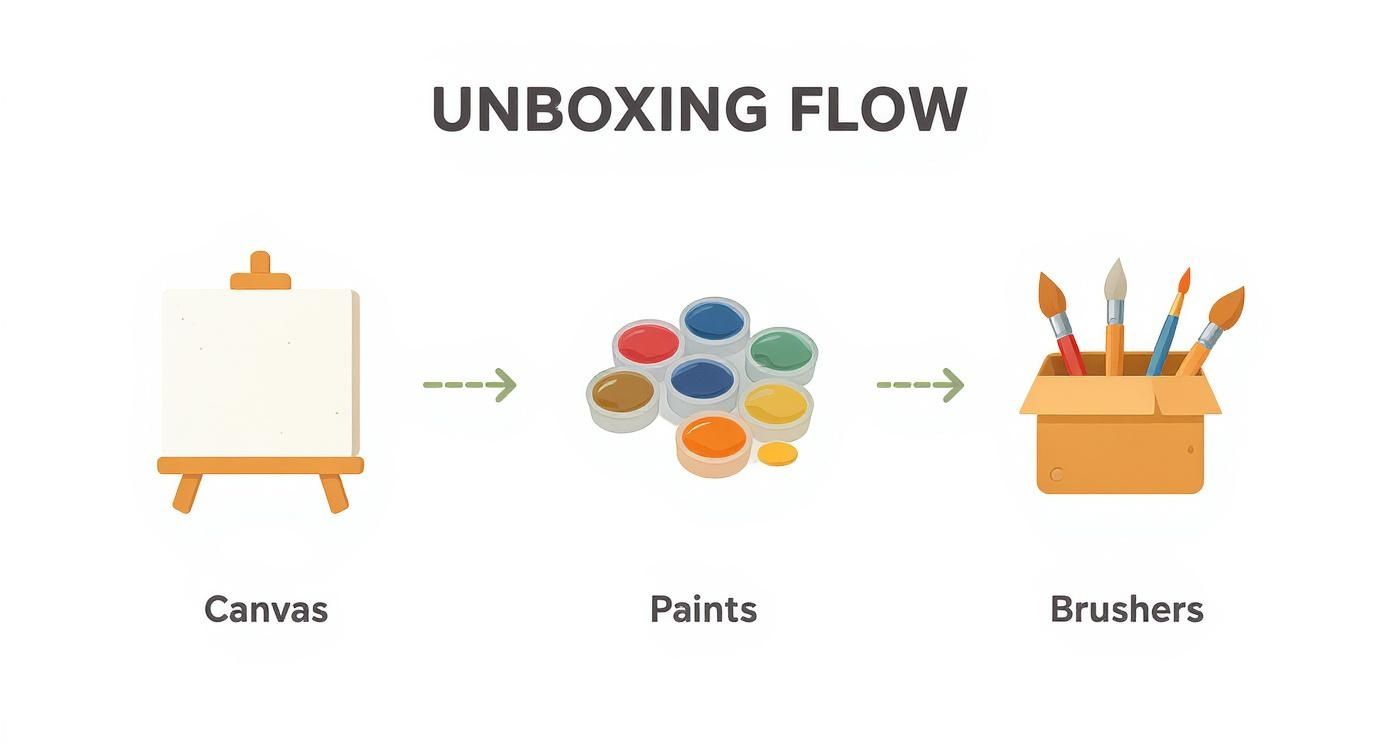
Seeing the components like this really shows how simple and accessible these kits are.
Mastering Your Technique
As you start painting, focus on getting those lines clean and crisp. Use the smallest brush for the tiniest areas. Here's a pro tip: steady your painting hand with your other arm. It's a simple move that gives you a surprising amount of control and precision.
You want to apply just enough paint to cover the number and the line without it getting thick or clumpy. Think smooth and even. If you can still see a number after the paint dries, don't worry—a quick second coat will cover it right up.
Quick heads-up: Always snap the paint pots shut right after you're done with a color. Acrylic paint dries out fast, and keeping the lids on tight is the #1 way to make sure your paints last for the whole project.
Keeping things simple is the name of the game, a key takeaway you'll see in any good canvas by numbers review. If you're hungry for more tips, you can dive deeper into our step-by-step painting tutorials.
Most importantly, just have fun with it. Put on some music, settle in, and enjoy the magic of watching your painting emerge, one number at a time.
Picking a Design That's Right for You
Let's be honest, this is the most important part. Choosing the right design is the difference between a project that you can't wait to work on and one that ends up collecting dust in the back of a closet. The trick is finding that sweet spot where your skill level meets a subject you actually find exciting.
Think of it like picking out a puzzle. A 100-piece puzzle with big, chunky pieces is a great way to unwind. But a 1,000-piece puzzle of a solid blue sky? That's a whole different level of commitment. Paint-by-numbers is exactly the same; the challenge isn't about raw artistic talent, but about how much detail you're ready to tackle.
Match the Art to Your Skill Level
The easiest way to figure out how tricky a kit will be is to look at two things: how tiny the numbered spots are and how many different colors you have to use.
If you're just starting out, look for a design with big, open areas and fewer than 24 colors. This lets you get the hang of things without feeling overwhelmed. Seeing your picture come together quickly is a huge motivator.
Now, if you see a kit with tons of tiny, intricate sections and 36 or more colors, you're looking at something for a more experienced painter. These create absolutely stunning, detailed pieces, but they demand a steady hand and a good bit more of your time. A simple landscape could be a perfect first go, while a detailed portrait of your pet might be a great project to work up to.
The goal here is to relax and feel a sense of accomplishment, not frustration. Start with something you know you can finish, build up your confidence, and then you can take on the more complex stuff.
Find a Subject You'll Actually Enjoy Painting
Beyond the technical stuff, the subject of the painting is what will keep you hooked for hours. The number of designs out there is staggering, so you can definitely find something that clicks with you.
Think about the kind of art you hang on your walls or the photos you save. Do you love the calm of a nature scene, or do the bright lights of a city get you excited?
Here are a few popular themes to get you thinking:
- Landscapes and Nature: You really can't go wrong with serene forests, peaceful beach sunsets, or dramatic mountains. They bring a great sense of calm into any room.
- Animals and Pets: Painting wildlife is always fun, but creating a portrait of your own furry companion is a truly special project.
- Abstract and Modern Art: If you're a fan of bold colors and interesting shapes, an abstract design is a fantastic way to play with a vibrant palette.
- Pop Culture and Famous Art: Why not recreate a classic movie poster or even try your hand at a masterpiece like Van Gogh's "Starry Night"?
At the end of the day, you want to pick a design you'll be genuinely excited to see come to life. When you're passionate about the subject, you'll stay motivated from the very first brushstroke to the last, and the whole process becomes that much more rewarding.
Creating Custom Kits from Your Own Photos
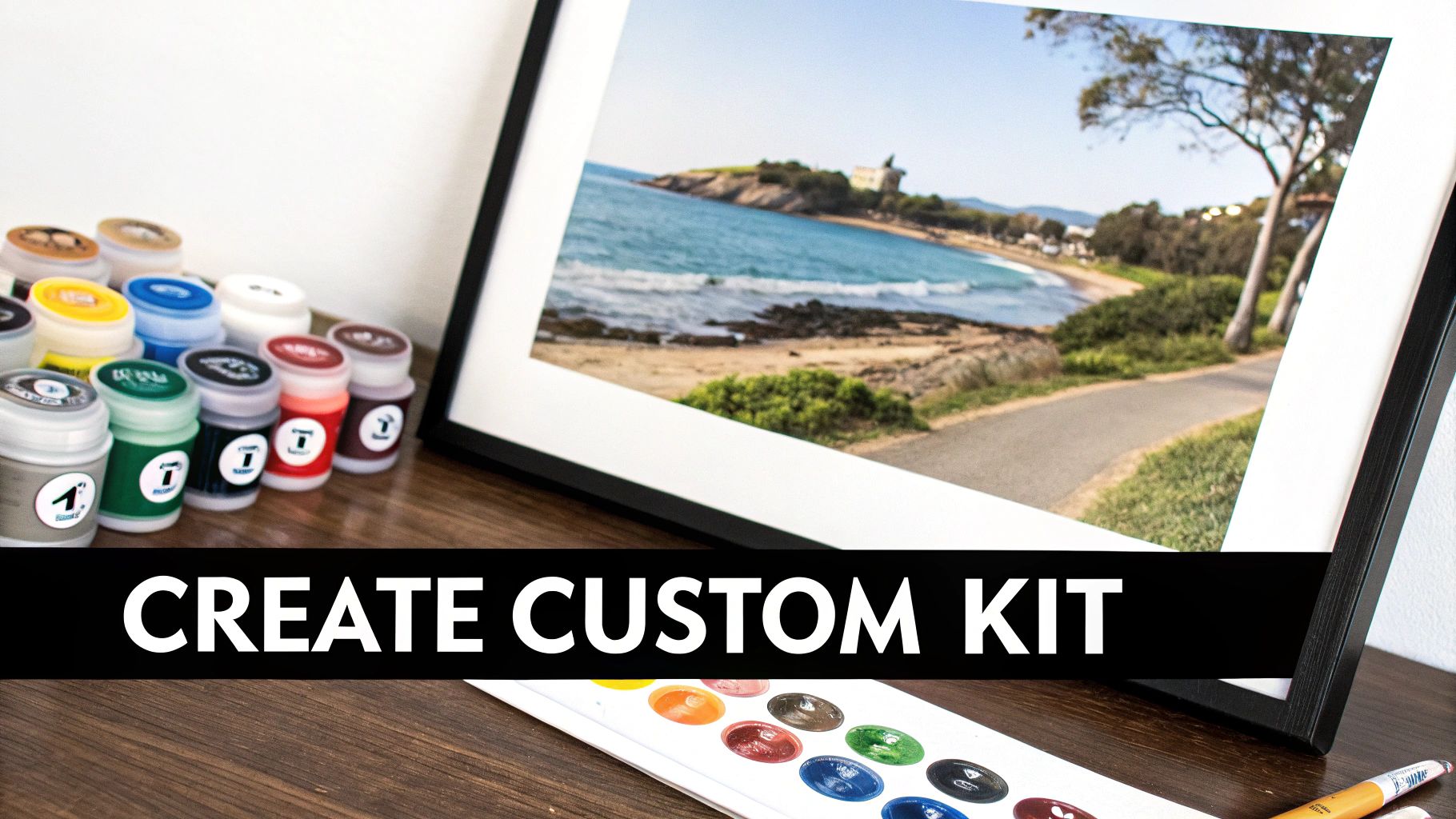
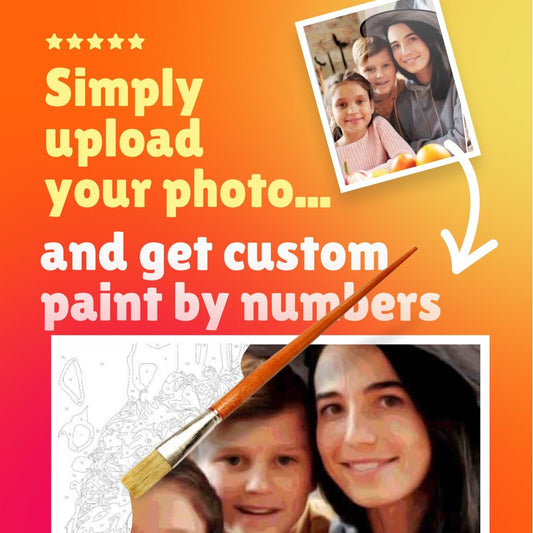
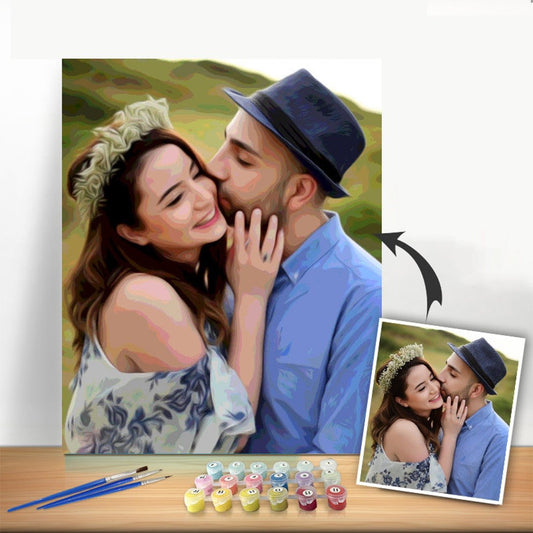
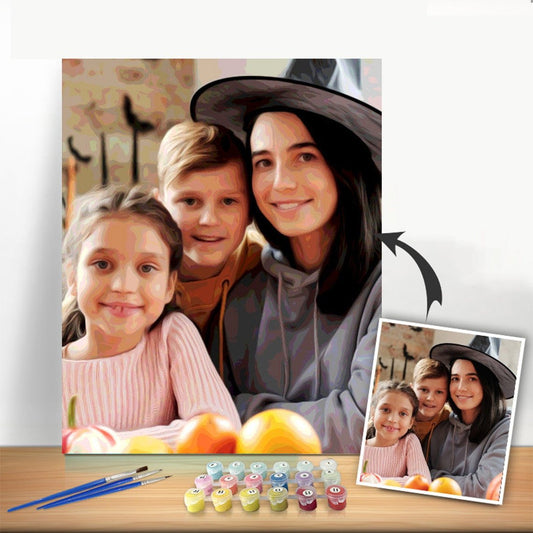
Ready for the ultimate personal touch? You can turn your own memories into a work of art. This is where the real magic of paint-by-numbers comes alive—transforming a treasured photo into a custom canvas kit. It’s a fantastic way to create a truly one-of-a-kind gift or capture a moment that means the world to you.
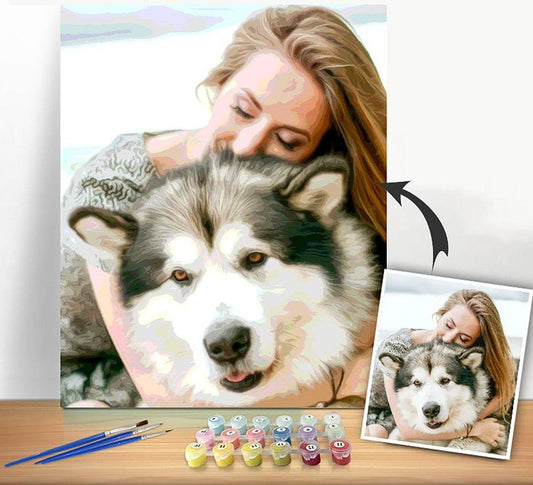
The whole process is surprisingly simple. You just upload your favorite photo to the company's website, pick your canvas size, and they do the heavy lifting. Specialized software scans the colors and details in your picture, creating a unique numbered guide and mixing a custom paint palette just for your project.
Think about it: that perfect wedding photo, a goofy shot of your dog, or a breathtaking vacation sunset can become a painting you made with your own hands. It takes the experience from a relaxing hobby to a deeply personal and meaningful project. But remember, the final painting will only be as good as the photo you start with.
How to Select the Perfect Photo
Picking the right picture is, without a doubt, the most important step. Your photo is the blueprint for your painting, and a clear, solid blueprint is the foundation of any great build. Not every photo is a good candidate, but following a few guidelines can make all the difference.
For the best possible result, your photo should be:
- High-Resolution: The image needs to be crisp and sharp, not fuzzy or pixelated when you zoom in. A good starting point is a resolution of at least 1000x1000 pixels.
- Well-Lit: Good, balanced lighting is your best friend. Try to avoid photos with deep, dark shadows or bright, washed-out spots, as these can throw off the colors and details.
- Focused on the Subject: Close-ups are almost always better. The main subject, whether it's a person, pet, or landmark, should take up most of the frame.
A great rule of thumb is to pick a photo where the main subject is clear and prominent. If you have to squint to see the details in the original photo, those details will be nearly impossible to capture with a paintbrush.
Following these tips sets you up for a finished piece that beautifully captures your original memory. For a deeper dive, you can learn more about creating custom paintings from photos in our guide, which walks you through everything you need to know.
Understanding the Pros and Cons
A custom kit is an incredible experience, but it’s good to know what you’re getting into—both the good and the not-so-good. This part of our canvas-by-numbers review will give you the full picture.
The biggest pro is a no-brainer: you get to paint something that is totally unique and personal to you. It makes for an unforgettable gift for an anniversary, birthday, or even as a memorial.
On the other hand, there are a few potential downsides to keep in mind. The color-matching process is pretty sophisticated, but it might not capture every single subtle hue perfectly. Also, really fine details, like the delicate pattern on a shirt or tiny objects in the background, can get simplified or lost when the photo is converted. The key is to have realistic expectations and just enjoy the process of bringing your memory to life on canvas.
Got Questions? We've Got Answers
Even with the best instructions, a few questions always come up once the paint hits the canvas. I get it. You're in the middle of a project, and you hit a small snag. This is the part where we tackle those common "what if" scenarios.
Let's clear up those lingering doubts so you can get back to your masterpiece with complete peace of mind.
What If I Paint in the Wrong Spot?
First off, don't sweat it. A slip of the brush happens to everyone, from total beginners to seasoned painters. The great thing about acrylic paint is that it's incredibly easy to fix.
If the paint is still wet, just grab a damp cotton swab or the corner of a paper towel and gently wipe it away. Easy. If it’s already dried, the fix is just as simple. Just paint right over the mistake with the correct color. For a really dark color on a light background, you might need a second coat, but 99% of minor mistakes will completely disappear.
Help! I'm Running Out of a Color!
Running out of paint is pretty rare—most decent kits give you more than you'll need. Before you panic, check to see if you're laying the paint on a bit too thick. A nice, smooth coat is all it takes; you don't need to slather it on.
But if you genuinely are out of a color, here are a few things you can do:
- Reach Out to the Company: Most sellers are more than happy to pop a new pot of paint in the mail for you, often for free. Good companies expect this to happen occasionally and have great customer service.
- Get a Little Creative: You can often mix the color you need from the other paints in your set. This is a great solution for basic colors like purple, green, or orange.
- Head to a Craft Store: A quick trip to a local art shop is an easy fix. Take the little paint pot with you to find the closest color match—a small tube of acrylic paint won't set you back much at all.
The key is to not let a little hiccup derail your project. There's always a simple, low-stress solution for any problem you might run into with a paint-by-numbers kit.
Is This a Good Activity for Kids?
You bet! Paint by numbers is a fantastic way for kids to build confidence and sharpen their fine motor skills. Plus, studies have shown that creative activities like this are great for helping kids improve their focus and patience.
The trick is to pick a kit designed for them. Look for simpler pictures with bigger areas to fill in and fewer colors. This keeps it fun and rewarding instead of frustrating. Just remember to keep an eye on younger kids, since the small paint pots could be a choking hazard.
Ready to turn a cherished photo into a work of art? With Custom Paint By Numbers, you can create a one-of-a-kind kit from your own pictures. Check out our custom options and start your painting adventure today