
Ever wonder how your hands can perform such a huge range of tasks, from tying a delicate knot to gripping a heavy bag? The secret is hand dexterity—the ability to make precise, coordinated movements with your hands and fingers.
It's the skill that brings grace and control to everything you do, whether you're buttoning a shirt or painting a tiny detail on a canvas.
Understanding Hand Dexterity
Think of hand dexterity as a finely tuned symphony playing out in your hands. Your brain is the conductor, sending instant signals to your muscles, nerves, and bones, guiding them to work together in perfect harmony.
This incredible performance isn't just one single skill; it’s a combination of several key abilities working in sync.
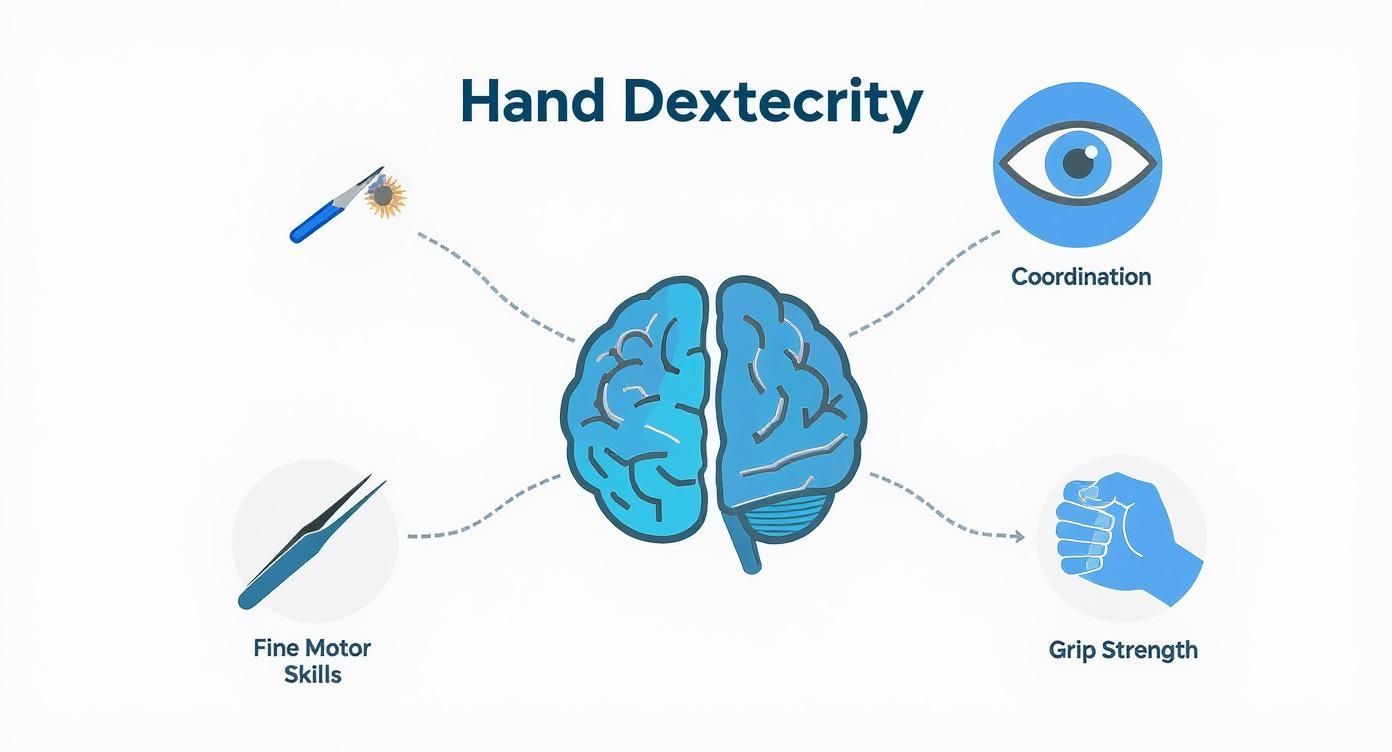
As you can see, dexterity is a team effort. Each component plays a vital role, and if one part is lagging, it can impact your overall ability to perform tasks smoothly and accurately.
The Three Pillars of Hand Dexterity
To really get a feel for what makes up dexterity, let's break it down into its three core components. These are the building blocks that allow us to perform complex actions, often without a second thought.
Here’s a quick look at what they are and how you use them every single day.
| Component | What It Is | Example in Daily Life |
|---|---|---|
| Fine Motor Skills | The use of small hand and wrist muscles for delicate, controlled movements. | Threading a needle or typing on a keyboard. |
| Hand-Eye Coordination | Your brain's ability to sync what you see with how your hands move. | Catching a ball or tracing a line with a pencil. |
| Grip Strength | The force your hand can generate to hold, carry, or manipulate objects. | Opening a stubborn jar or carrying groceries. |
Each of these pillars is essential. Together, they create the fluid, controlled movements that define good hand dexterity.
Our hands are a big part of what makes us human. In a fascinating study of 95 primate species, researchers found a direct link between larger brains and better dexterity for handling small objects. It seems our amazing hands and clever brains evolved together.
Assessing hand function often involves looking at joint flexibility. Professionals use specialized range of motion measurement tools to get a clear picture of a person's physical capabilities.
Why Your Hand Dexterity Matters Every Day
Hand dexterity isn’t some specialized skill reserved for concert pianists or brain surgeons. It's something you rely on every single moment, the unsung hero of your daily routine. From the second your alarm goes off, your hands are at work, performing an intricate ballet of movements you probably never even think about.

Just consider your morning. That simple act of picking up a toothbrush requires a delicate pinch grip. Squeezing out the right amount of toothpaste takes controlled pressure. Twisting the lid off a jar of coffee? That’s all dexterity, a seamless conversation between your brain and your hands.
It doesn't stop there. As you get dressed, you’re putting your fine motor skills to the test. Buttoning a shirt, zipping up a jacket, and tying your shoelaces are all complex maneuvers that demand precise hand-eye coordination. Before you've even had breakfast, you've completed dozens of tasks that lean heavily on your dexterity.
From the Office to Your Hobbies
This reliance on our hands becomes even more obvious at work. Think about how quickly you type an email or how fluidly you sign your name on a document. Even just navigating with a mouse involves constant, tiny adjustments. Every keystroke is a small feat of motor control.
Even something as mundane as pulling a credit card from your wallet showcases an incredible level of skill. Your fingertips provide sensory feedback, allowing you to find the right card without even looking—a perfect example of the sophisticated link between touch and movement.
This skill is central to our hobbies and leisure time as well. Imagine the simple pleasure of cooking a meal.
- Chopping vegetables: This needs a firm, steady grip on the knife handle and precise control to get those clean, even slices.
- Stirring a sauce: You're using smooth, rhythmic movements from the wrist and arm to keep it from sticking.
- Plating the dish: Arranging the food beautifully requires a delicate touch and a careful hand.
Dexterity is about more than just getting things done. It's a cornerstone of our independence and a key to self-expression. It lets us care for ourselves, do our jobs, and enjoy the hobbies that make life rich, whether that's gardening, playing an instrument, or painting.
Ultimately, taking care of your hand dexterity is an investment in your overall quality of life. It’s what allows you to move through the world with confidence and ease.
How Hand Dexterity Fuels Art and Creativity
There's a deep, almost magical connection between our hands and our creative minds. For any artist, musician, or crafter, their hands aren't just tools—they're the very instruments that bring ideas to life. It's hand dexterity that bridges the gap between a creative vision and a tangible reality, whether that’s a detailed painting, a soaring melody, or a delicate sculpture.
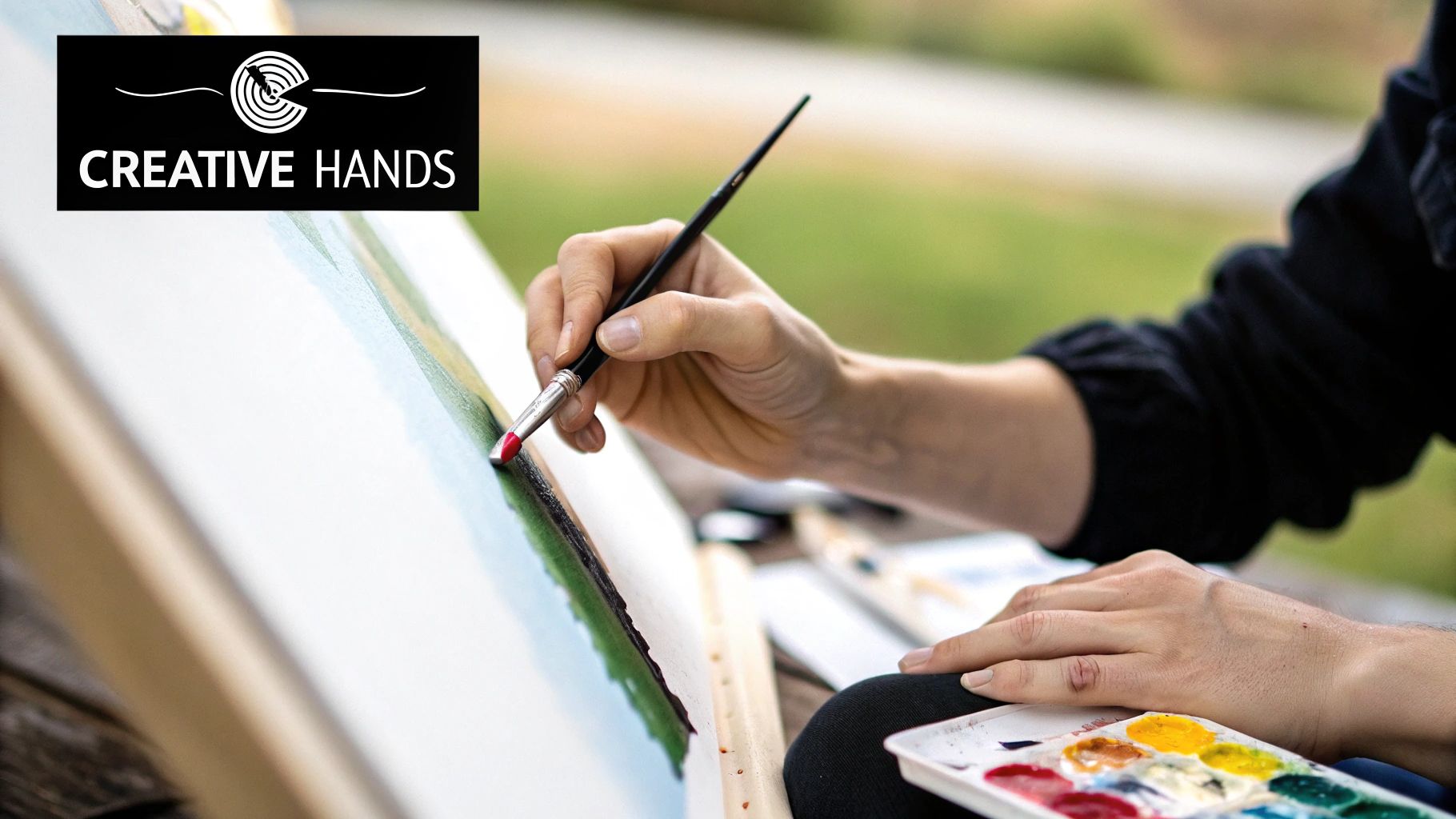
Think of an artist as a different kind of athlete. A basketball player practices thousands of shots to perfect their form; a painter does the same, training their hands to execute the perfect brushstroke. This skill is built on the same foundations of dexterity we all use daily, just honed to an incredibly fine point.
The ability to apply the perfect amount of pressure, hold a steady hand for the finest lines, and coordinate every tiny movement is what separates a beginner from a master. This isn't just true for painters. The same principle is at play when a guitarist’s fingers fly across the fretboard to form a complex chord or a sculptor gently shapes a lump of clay into a recognizable form. It all comes down to highly developed fine motor control and hand-eye coordination.
Turning Hobbies into Skill Building
The best part? You don't have to be a professional artist to tap into the creative benefits of better dexterity. Plenty of hobbies offer a fun, low-pressure way to sharpen these skills without feeling like a chore. Think of it as a workout for your hands that strengthens the neural pathways between your brain and your fingertips.
Here are a few creative exercises to get you started:
- Building Models: Assembling tiny, intricate pieces is a masterclass in precision, patience, and having a delicate touch.
- Knitting or Crocheting: The rhythmic, repetitive motions are fantastic for improving finger coordination and control.
- Playing an Instrument: Learning piano or guitar is a phenomenal way to build independent finger strength and movement.
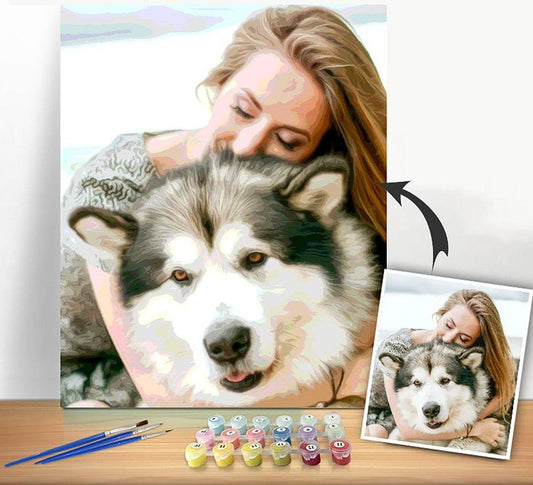
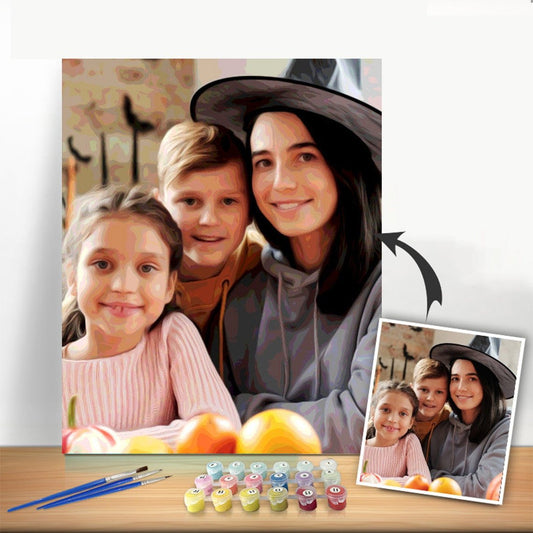
- Paint-by-Numbers: This is an especially powerful tool. It trains you to control a brush within small, defined areas, directly improving your precision and steadiness with every stroke.
Improving hand dexterity through creative hobbies is a wonderful reminder that building a skill can be a joyful act of self-expression. It unlocks new artistic possibilities and delivers a real sense of accomplishment with every project you finish.
How Aging and Lifestyle Impact Your Hands
Let's face it, we all wonder if our hands will lose their touch as we get older. Does dexterity just naturally fade away? Well, while some physical changes are a normal part of aging, a steep decline in your hand control is definitely not a given.
As the years go by, it's true that we naturally lose some muscle mass. This can make your grip feel a little weaker or your hand a little less steady than it used to be. Suddenly, tasks that were once second nature might require a bit more concentration.
But here’s the good news: our hands are incredibly responsive. The old saying "use it or lose it" couldn't be more accurate when it comes to the complex network of muscles, nerves, and bones that make fine motor skills possible.
The Power of Practice and Proactive Care
We now know that you can actively fight back against age-related dexterity loss. When you consistently and mindfully practice precise movements, you're essentially reinforcing the neural pathways that control your hands, keeping them sharp and efficient.
The science backs this up. While some studies show that aging can lead to a 25-45% decrease in hand force, that's not the end of the story. One recent study found that after only six training sessions, older adults cut their task completion time by an average of 20-30%. They were effectively turning back the clock on their dexterity.
It’s a powerful reminder that your hands have a remarkable ability to adapt and improve at any age.
The biggest factor in keeping your hands nimble isn't your age—it's how active you keep them. Regularly engaging your hands in challenging tasks tells your brain to maintain and even strengthen these crucial connections.
Modern Habits and Their Hidden Impact
It’s not just the passing years that can affect our hands. Our modern lifestyles play a massive role, too. Think about how much time you spend on a phone or computer. All that screen time can lead to stiffness and repetitive strain, which can mess with anyone's fine motor control.
This is where hands-on, mindful activities can make a real difference. They act as a perfect counterbalance to our digital habits. Hobbies like paint-by-numbers are especially great because they give your hands a structured, enjoyable, and rewarding workout. If this sounds interesting, you might want to check out our guide on paint-by-numbers for seniors for more ideas.
Simple Exercises to Improve Hand Dexterity
You don't need a fancy gym membership or complicated gadgets to improve your hand dexterity. In fact, you can start building stronger, more nimble hands right now with things you already have at home. The goal of these exercises is to target the three pillars of dexterity: grip, precision, and coordination.
Before diving in, it’s always a good idea to know where you stand. Try a quick and easy self-assessment, like the coin flip test. How many times can you flip a coin from your thumb to your index finger in 30 seconds without it falling? This simple count gives you a solid benchmark to track your improvement.
Once you have your starting number, weave these targeted exercises into your daily routine. The real magic happens with consistency. Just 10-15 minutes a day can make a world of difference over time.
Exercises for Strength and Precision
Think of this as building your foundation. These first two exercises focus on waking up and strengthening the small muscles in your hands and fingers, getting them ready for more delicate work.
- Stress Ball Squeeze: A true classic for a reason! It’s fantastic for building overall grip strength. Squeeze a stress ball or some therapy putty as firmly as you can for 3-5 seconds, then slowly relax your grip. Aim for 10-12 repetitions with each hand.
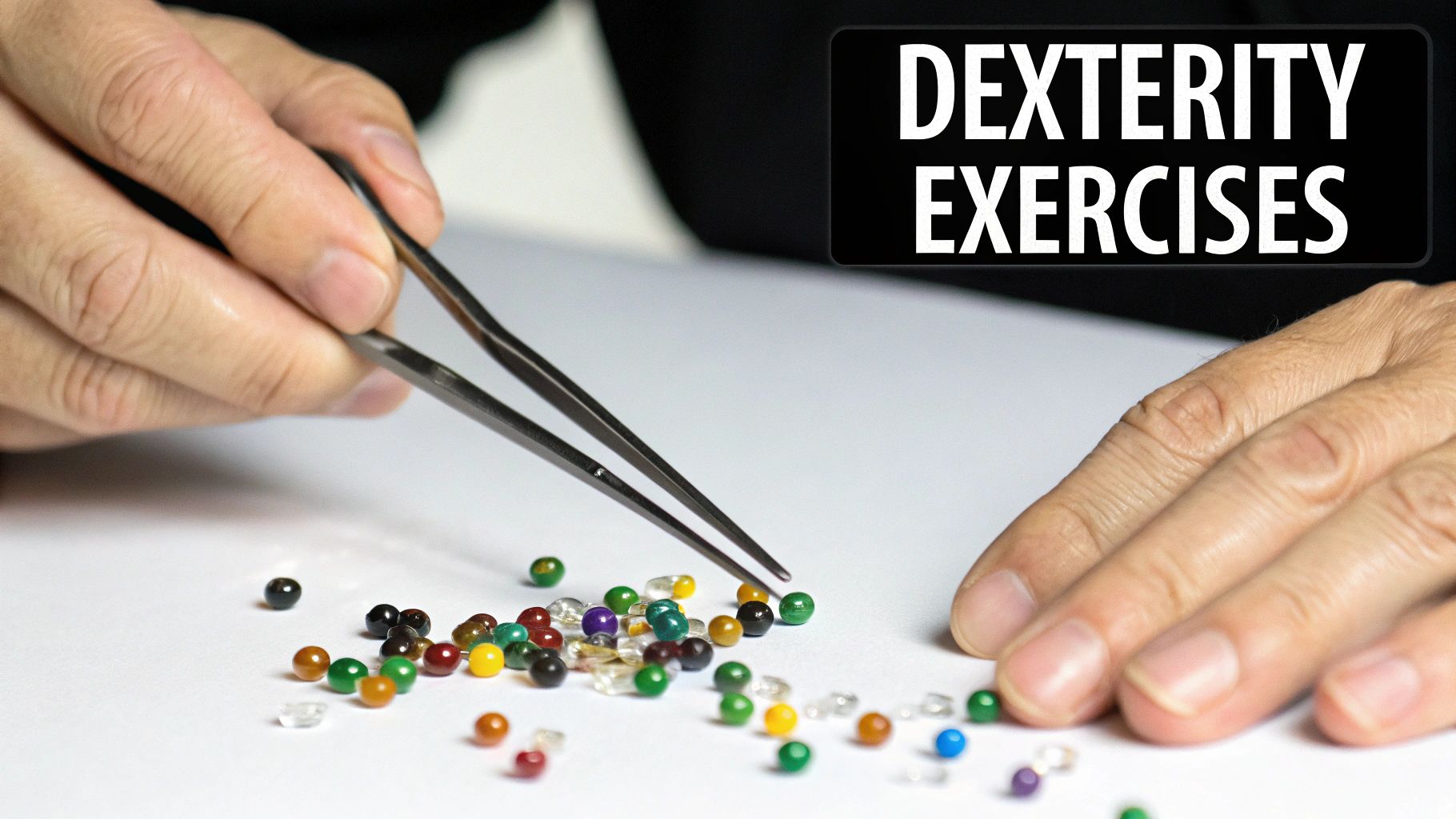
- Tweezer Pick-Up: This one is all about fine-tuning your precision. Grab a pair of tweezers and two bowls. Fill one with small items—beads, grains of rice, or paperclips work great. Your mission is to move them one by one to the empty bowl. This exercise directly hones your pincer grasp and sharpens fine motor control.
Keeping our hands agile is important at any age. Finding enjoyable ways to do it helps, which is why looking into engaging games for seniors can be a great source of inspiration for activities that challenge motor skills playfully.
Boosting Coordination and Control
Now that you've started building strength, it's time to improve the conversation between your brain and your hands. The following movements are designed to refine your ability to perform complex, coordinated actions. A huge part of this is the connection between what you see and what your hands do, which you can read more about in our guide on how to improve hand-eye coordination.
Remember, the goal of these exercises is progress, not perfection. Start slowly, focus on making clean, controlled movements, and gradually increase the difficulty as you feel more comfortable and confident in your abilities.
A great challenge for coordination is finger tapping. Lay your hand flat on a table and tap each finger one at a time, from your thumb all the way to your pinky and back again. Got that down? Try creating more complex patterns, like tapping your index and ring fingers together. It might feel awkward at first, but this simple drill trains the neural pathways that allow for independent finger movement—a cornerstone of what is hand dexterity.
Your Top Questions About Hand Dexterity, Answered
As we’ve explored the ins and outs of hand dexterity, a few specific questions might still be on your mind. Let's tackle some of the most common ones to round out your understanding.
Think of this as a quick reference guide to clear up any lingering curiosities.
Can Medical Conditions Affect Hand Dexterity?
Yes, definitely. Certain health issues can really get in the way of your hand dexterity. Conditions like arthritis, carpal tunnel syndrome, and neurological disorders from a stroke or Parkinson's disease are common culprits.
These can bring on pain, stiffness, tremors, and inflammation, making even simple fine motor tasks feel like a huge challenge. If you ever notice a sudden drop in your dexterity or have persistent pain in your hands, it's always best to talk to a healthcare professional. They can help figure out what's going on and suggest the right course of action.
Are There Tools or Gadgets to Help Improve Dexterity?
You bet. There are plenty of simple tools out there designed to give your hands a good workout. Therapy putty, stress balls, and finger exercisers are fantastic for building strength and control in a targeted way.
But you don't always need specialized equipment. You probably have some great tools lying around the house right now.
- Tweezers: Try picking up tiny items like rice or beads. It’s a brilliant exercise for precision.
- Video Game Controllers: The fast-paced button mashing and joystick movements are a surprisingly good way to improve finger speed and coordination.
- Creative Hobbies: Things like knitting, building models, or playing the piano are all enjoyable ways to use different "tools" to give your dexterity a natural boost.
The best way to think about these tools is as partners in your practice. The right one can turn a repetitive exercise into a fun, engaging activity, which makes it so much easier to stick with it.
How Long Does It Take to See Improvements?
This is a classic "it depends" situation. The timeline for improvement is different for everyone and hinges on things like your starting skill level, how often you practice, and the types of exercises you're doing.
That said, with consistent effort—even just 10-15 minutes a day—most people begin to feel a little more control and steadiness within a few weeks. For more noticeable, lasting changes, you might be looking at a few months. Patience and consistency are your best friends here.
Does Typing or Using a Smartphone Help or Hurt Dexterity?
It’s a double-edged sword, really. On the one hand, the quick, precise finger movements you use for texting and typing can absolutely sharpen your fine motor skills and speed. It's a form of practice, whether you realize it or not.
However, overdoing it without breaks can lead to repetitive strain injuries, stiff muscles, and fatigue, which actually hurts your dexterity in the long run. The secret is balance. Go ahead and use your devices, but make sure you mix in regular stretching and strengthening exercises to keep your hands healthy and happy.
Ready to turn your favorite memories into a fun dexterity-building project? At Custom Paint By Numbers, we make it easy to create a personalized masterpiece from your own photos. Discover the joy of painting and sharpen your skills at the same time. Create your custom kit today at paint-by-number.com